
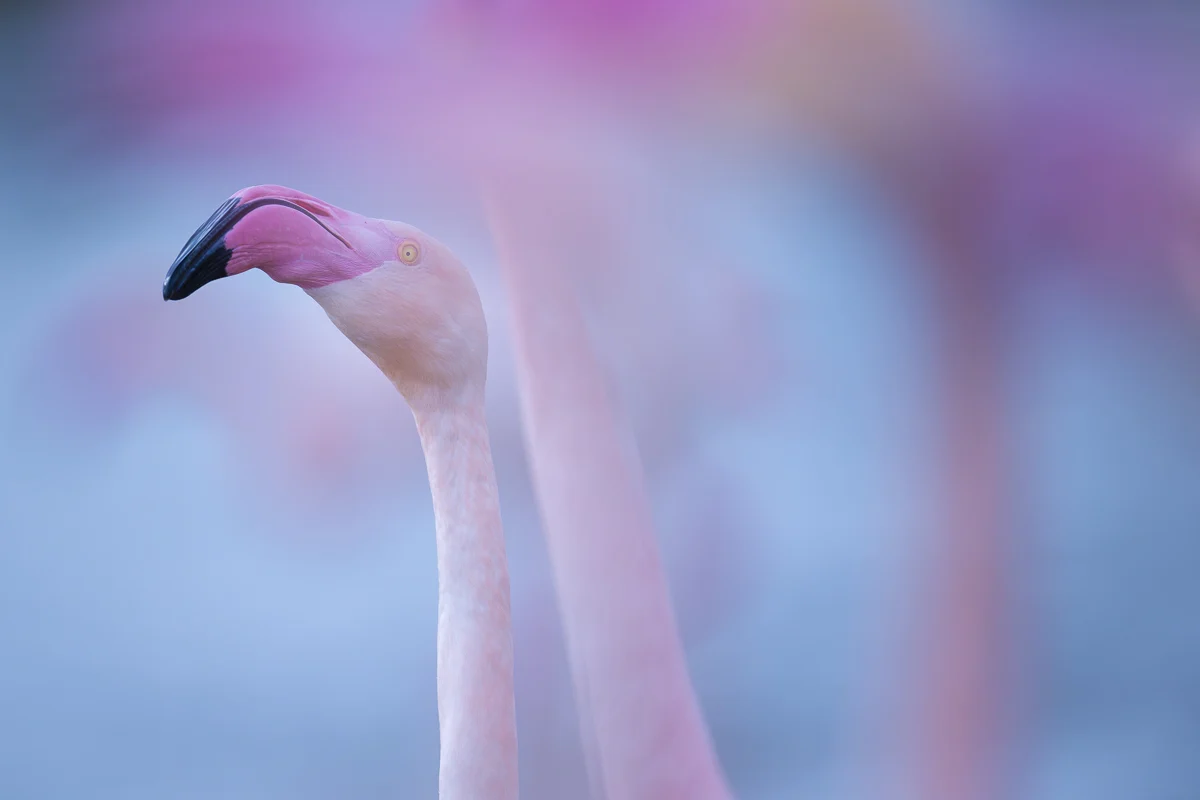
In the dynamic and often technically demanding realm of wildlife photography, where clarity and precise detail have long been paramount, a burgeoning artistic movement is challenging conventional norms. This shift embraces the power of selective focus and intentional blurring, particularly in the foreground, to transform mere visual records into evocative, emotionally resonant narratives. What lies out of focus, rather than distracting, can become a subtle yet profound element, guiding the viewer’s eye, establishing mood, and imbuing an image with layers of emotional depth that sharpness alone often struggles to convey. At its core, photography is the pursuit of moments translated into meaningful visual statements, and foreground blurs are emerging as sophisticated tools in this quest, helping to elevate a simple scene into an image that not only depicts but truly expresses and suggests.
The Art of Intentional Obscurity

Foreground blurs are a deliberate photographic technique involving the strategic placement of an object or element between the camera lens and the primary subject. This element, rendered out of focus in the immediate foreground, creates soft, ethereal veils that partially obscure or frame the subject without diminishing its visual weight. Far from being a distraction, these carefully orchestrated blurs enhance the image by introducing depth, dimension, mystery, and a nuanced emotional quality. The objective is not to hide the subject, but to reveal it through a filter of atmosphere, inviting a more intimate and interpretive viewing experience. For instance, a lone Arctic fox might be glimpsed through a gentle haze of frosted branches, or a European bison’s powerful form softened by the dappled light filtering through tall grasses, lending a sense of timelessness and connection to its environment.
When masterfully employed, foreground blurs serve as a visual pathway, directing the viewer’s gaze along a meticulously composed trajectory. The main subject remains the anchor of this journey, yet the surrounding blurs provide subtle yet potent cues about the scene’s environment, prevailing mood, or even the underlying narrative. This technique transcends a mere compositional trick; it evolves into a powerful storytelling device, compelling the viewer to delve deeper and forge a more profound connection with the photograph as a cohesive whole. An undeniable benefit is the painterly quality that foreground blurs can impart, evoking the meticulous composition of a canvas painting, where every element is carefully considered from the initial stroke. This artistic rendering moves beyond pure documentation, positioning the photograph as an interpretation, an artist’s vision rather than a stark factual record.
Beyond Sharpness: A Historical Perspective

Historically, the pursuit of absolute sharpness dominated photographic discourse, particularly in genres like wildlife and documentary photography. The advent of increasingly sophisticated lenses and camera technology consistently pushed the boundaries of detail and clarity. However, as photography matured as an art form, photographers began to explore expressive techniques that moved beyond literal representation. Pictorialism, an early 20th-century movement, championed soft focus and atmospheric effects to evoke painterly qualities and emotional depth, challenging the notion that photography must merely replicate reality.
While modern digital photography offers unprecedented sharpness, contemporary artists are increasingly drawing inspiration from these earlier movements, reinterpreting techniques like selective focus and intentional blur. This resurgence reflects a broader trend in visual arts where the subjective experience and emotional resonance often take precedence over purely objective rendering. Foreground blurs in wildlife photography stand as a testament to this evolution, allowing photographers to infuse their work with a sense of wonder, vulnerability, or even melancholy, aligning with the complex emotional landscape of the natural world. This approach acknowledges that a photograph can be both a record and a poem, a fact and a feeling.
The Mechanics of Atmospheric Blurs

Achieving effective foreground blurs is not accidental; it relies on a firm understanding of photographic optics, primarily depth of field. Key factors influencing the degree and quality of blur include:
- Aperture: A wider aperture (smaller f-number, e.g., f/2.8, f/4) creates a shallower depth of field, resulting in more pronounced background and foreground blur. This allows the subject to pop while surrounding elements melt into a soft wash of color and light.
- Focal Length: Longer focal lengths (telephoto lenses) inherently compress perspective and reduce depth of field, making them ideal for isolating subjects and creating significant blur. A 400mm or 600mm lens at a wide aperture will produce much more dramatic blur than a wide-angle lens.
- Subject-to-Camera Distance: The closer the camera is to the foreground element, and the further the subject is from both the camera and the foreground element, the more exaggerated the blur will appear. This separation is crucial for achieving the desired effect.
- Foreground Element-to-Subject Distance: The greater the distance between the blurred foreground element and the sharp subject, the softer and more abstract the foreground blur will be. Conversely, placing the element closer to the subject can allow for more recognizable, yet still blurred, framing.
Mastering these elements allows a photographer to precisely control the aesthetic outcome, from a subtle, hazy overlay to an almost abstract wash of color that envelops the subject.
Nature’s Palette: Utilizing Foreground Elements

The beauty of foreground blurs in wildlife photography lies in the organic integration of the environment. Photographers must be opportunistic, experimenting with whatever natural elements are available. This improvisational approach often yields the most unique and authentic results.
- Plant-based Elements: Branches, leaves, flowers, and grasses are perhaps the most common and versatile tools. A Pyrenean capercaillie, for instance, might be captured through a delicate filter of local shrubs and underbrush, creating a natural veil that softens the composition and adds depth. This layer of vegetation not only contributes to the ethereal quality but also contextualizes the bird within its specific habitat. Similarly, the vibrant pink of flamingos can be framed by blurred reeds or water plants, adding a textural, dreamlike quality to the scene.
- Water and Snow: These elements offer unique blurring opportunities. Rippling water can create shimmering, abstract foregrounds, while falling or settled snow can produce a soft, diffuse overlay that enhances a sense of cold or tranquility.
- Geological Features: Rocks, cave entrances, or even natural arches can serve as strong, albeit blurred, frames, adding a sense of grandeur or enclosure.
- Light and Shadow: Beyond physical objects, light itself can be manipulated to create atmospheric blurs. As seen in an image of a Goshawk, a carefully adjusted exposure combined with a warm white balance can enrich the atmosphere, making it almost tactile. The interplay of illuminated and shaded areas sculpts the subject, enhancing its three-dimensionality and guiding the viewer’s eye towards the focal point with both clarity and profound depth. This subtle layering allows the viewer to intuit more than what is explicitly shown, creating a more immersive experience.
The Living Veil: Animals as Foreground Elements
In situations where multiple animals are present, as with a gathering of vultures at a feeding site in the Pyrenees, the birds themselves can become the foreground blur elements. While achieving a perfectly precise overlap might be rare, the experimental spirit allows for capturing dynamic compositions where the blurred forms of some individuals frame or partially obscure others. This technique not only adds layers to the image but also speaks to the collective nature of the species, hinting at the bustling activity of a colony or flock. The same principle can apply to schools of fish, herds of mammals, or even a multitude of seabirds like razorbills, where the blurred bodies of nearby individuals create a sense of scale and environment.

Crafting Narrative and Emotion
Foreground blurs are exceptionally potent narrative tools. They allow photographers to suggest, rather than explicitly state, details about the subject’s environment, behavior, and the fleeting moment of capture. An arctic fox peeking through a snowy haze conveys more about its stealth and the harshness of its habitat than a stark, perfectly sharp portrait might. This subtle layering of visual cues encourages viewers to engage their imagination, drawing them into the scene and fostering a deeper, more personal connection.
The emotional impact is also profound. A blurred foreground can evoke feelings of intimacy, as if the viewer is peering into a private moment; mystery, by partially concealing elements; or tranquility, by softening harsh lines and distracting details. It can transform a routine observation into a poetic statement, reflecting the photographer’s emotional response to the scene and inviting the viewer to share in that sentiment. The technique effectively transcends the purely documentary, pushing wildlife photography into the realm of fine art, where interpretation and feeling hold sway.

The Ethical Lens: Considerations in the Field
While the creative potential of foreground blurs is vast, ethical considerations in wildlife photography remain paramount. The pursuit of compelling compositions must never compromise the well-being of the animals. This means:
- Minimizing Disturbance: Photographers must exercise extreme caution to avoid startling, stressing, or interfering with wildlife. Creating a foreground blur should ideally utilize elements already present and require minimal physical manipulation of the environment.
- Patience and Observation: Often, the most rewarding foreground blur opportunities arise from patient waiting and keen observation. Animals naturally move into positions that offer compositional possibilities. The "art of waiting" becomes an integral part of the creative process, fostering a deeper understanding and respect for the subject.
- Utilizing Hides: For less skittish species, working from a hide can provide a controlled environment where minor adjustments to the foreground might be possible without disturbing the animal. However, this must always be done with careful planning and an unwavering commitment to ethical practices.
In essence, the technique demands not only technical skill but also a profound respect for nature, allowing the wild to dictate the unfolding of the photographic moment.

Practical Application and Creative Freedom
The application of foreground blurs varies significantly depending on the photographic genre and specific circumstances. It is particularly well-suited for portrait photography, where the subject is relatively static, allowing for careful composition and focus. An image of a fallow deer standing gracefully amidst a misty, blurred forest floor can achieve an ethereal atmosphere that harmonizes perfectly with the intended meaning of the image – perhaps highlighting its serene presence.
Conversely, in highly dynamic scenes such as birds in flight (like a Kite soaring), mammals in pursuit, or rapid action sequences, the speed at which events unfold often renders deliberate compositional intervention with foreground blurs nearly impossible. In these scenarios, the primary focus must remain on capturing the decisive moment with sharpness, as opportunities for intricate framing are significantly reduced or entirely absent.

Regarding the types of blur, photographers can vary the abstraction level:
- Abstraction vs. Context: Objects placed closer to the camera tend to create greater abstraction, whereas those closer to the subject might retain some recognizable form, adding valuable contextual content to the image.
- Veils vs. Partial Coverage: Blurs can be used to create an ethereal veil across the entire image or strategically cover specific parts of the animal, often preserving the subject’s gaze as a focal point.
- "Look-throughs" vs. "Look-overs": A "look-through" involves shooting through a small opening in the foreground, creating a natural frame. If a clear opening isn’t available, a "look-over" technique fills the bottom of the frame with a blurred foreground, leading the eye upwards.
It is important to note that when utilizing complex foreground blurs, photographers may need to switch to manual focus. Autofocus systems can struggle to identify the main subject amidst the blurred elements. While this might lead to a slight loss of pinpoint sharpness in some areas, the artistic gain in mood and atmosphere often far outweighs this minor compromise, as seen in a captivating image of a song thrush partially obscured by soft, green foliage.
Conclusion: Elevating Wildlife Photography

Foreground blurs represent a powerful and versatile creative technique with broad applicability in wildlife photography. Its appeal lies in its capacity to transform images, allowing photographers to move beyond mere documentation to craft evocative visual stories. While demanding some control over the photographer’s position or the subject’s environment, the technique fosters improvisation and inspiration in diverse contexts. It offers a fresh and original perspective on familiar species, enabling photographers to revisit "recurring" subjects with renewed artistic vision.
Furthermore, this technique is fully compatible and often enhanced by integration with other creative photographic methods, including intentional over- or underexposure, dynamic movement through shutter speed manipulation, dramatic backlighting, experimental double exposures, and abstract compositions.
Embraced by masters and influential visionaries in the field who infuse their work with unique aesthetics, the deliberate use of foreground blurs encourages a deeper exploration of photographic expression. It invites wildlife photographers to experiment, to fail, and ultimately, to discover new ways of seeing and sharing the profound beauty and mystery of the natural world. The journey into soft atmospheres promises not just striking photographs, but truly moving works of art.
