
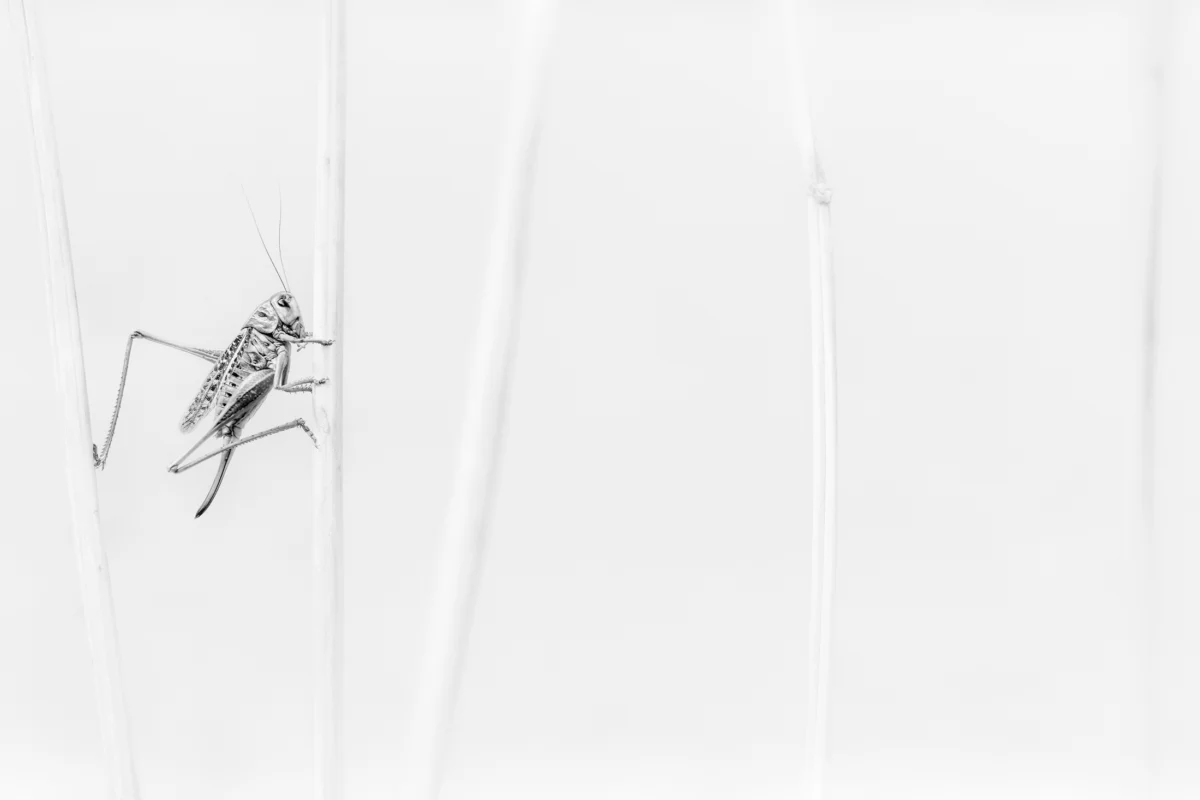
Elisa Confortini, a distinguished nature photographer, has cultivated a profound passion for documenting the intricate lives of arthropods, utilizing macro photography as her primary lens. Her work transcends mere documentation, delving into an artistic exploration that frequently employs the powerful, evocative medium of black and white. This approach, she explains, allows her to reveal behaviors and characteristics that often elude casual observation, captivating viewers with a fresh perspective on a familiar yet often unseen world.
A Deep Dive into the Microcosm: Elisa Confortini’s Vision

Confortini’s journey into nature photography began with macro, drawn specifically to arthropods due to their accessibility and the endless fascination they offer. Unlike larger, more elusive wildlife, these minute creatures are readily found, often in one’s immediate surroundings, providing a rich, accessible ecosystem for study. "They were the easiest subjects to find, even close to home, and observing them up close was always fascinating and instructive," Confortini notes. This proximity fosters an intimate connection, enabling long-term observation crucial for capturing subtle behaviors that typically escape human attention. Her annual photographic quest involves revisiting favorite species or discovering new ones, continually refining her ability to portray them in ways that convey their inherent traits and habits, ultimately aiming to forge a deeper connection with the viewer.
The realm of macro photography itself has seen a surge in popularity, driven by advancements in camera technology and an increasing global interest in biodiversity. According to recent surveys by photographic associations, macro photography constitutes a significant segment of amateur and professional nature photography, with a notable percentage of enthusiasts dedicating their efforts to insects and arachnids. This niche not only serves artistic expression but also contributes inadvertently to citizen science, offering valuable data on species distribution and behavior. Confortini’s meticulous work exemplifies this dual role, merging scientific curiosity with artistic execution.
The Enduring Fascination with Arthropods

Insects and other arthropods have always occupied a complex, often contradictory, place in human culture. Across civilizations and epochs, they have been simultaneously admired for their beauty, reviled for their perceived nuisance, venerated in spiritual contexts, and feared for their venom or destructive capabilities. From the sacred scarab beetles of ancient Egypt symbolizing rebirth and protection, to the intricate insect motifs found in Japanese ukiyo-e art reflecting the transient beauty of life, arthropods have consistently inspired artists and thinkers. In contemporary times, the scientific study of entomology continues to uncover astonishing diversity and ecological significance, further fueling this enduring fascination.
Confortini observes, "Admired or despised, insects have always been part of our daily lives, forming a long and complex relationship of love, hate, veneration, and fear." This intrinsic human connection to the insect world is reflected in its continuous inspiration for artists globally. Their intricate forms, diverse life cycles, and often surprising behaviors serve as an inexhaustible source of wonder, prompting artists like Confortini to explore new ways of representation. This artistic portrayal, in turn, often mirrors humanity’s evolving relationship with the natural world, urging a closer look at the often-overlooked components of our shared ecosystem. The critical role of insects in pollination, nutrient cycling, and as a food source underscores their ecological importance, making artistic appreciation a vital step towards broader conservation awareness.
Black and White Photography: A Deliberate Artistic Statement

In an era saturated with vibrant, often digitally enhanced colors, black and white photography stands as a testament to timeless artistic expression. Its enduring appeal lies in its ability to strip away chromatic distractions, compelling the viewer to engage with the core elements of an image: form, texture, light, and shadow. While modern technology allows for effortless color manipulation, Confortini embraces monochrome as a deliberate aesthetic and stylistic choice, a powerful means to convey raw emotion and profound essence.
The history of photography is rooted in monochrome, dating back to the daguerreotypes of the 19th century. Despite the advent of color film in the mid-20th century and the digital revolution that made color photography ubiquitous, black and white has never truly faded. It remains a preferred medium for many artists seeking to evoke a sense of timelessness, drama, or introspection. For Confortini, working in black and white is not a limitation but an expansion of creative possibilities, allowing her to sculpt light and shadow with unparalleled control and emotional depth.
The Technical and Emotional Advantages of Monochrome

Confortini meticulously outlines several compelling reasons for her choice to employ monochrome, particularly within the demanding field of macro photography:
- Undivided Focus: Color can often be a powerful attractant, but it can also distract from the primary subject. By removing color, the viewer’s gaze is directed solely to the arthropod, its form, and its immediate interaction with its environment. In the often "chaotic" natural settings of arthropods, this chromatic isolation proves invaluable in emphasizing the subject.
- Highlighting Intricacies: The absence of color inherently magnifies textures, contrasts, and shapes. The minute hairs on an insect’s leg, the delicate veining of a butterfly’s wing, or the rough exoskeleton of a beetle become pronounced, revealing details that might be overlooked in a color image. This emphasis on tactile and structural qualities allows for the conveyance of emotions and characteristics that are uniquely articulated through tonal variations.
- Evoking Drama and Mystery: Black and white imagery naturally lends itself to creating a sense of drama and mystery. The interplay of light and shadow, stripped of color’s explanatory hues, often imbues subjects with an enigmatic quality, inviting deeper contemplation. This technique harks back to classical chiaroscuro in painting, where strong contrasts were used to create volume and dramatic tension.
- Compositional Clarity: Monochrome photography forces both the photographer and the viewer to concentrate on fundamental compositional elements: light, shadow, lines, shapes, and contrast. These are the bedrock of any compelling image, and without the allure of color, their importance is amplified. The structure of the image becomes paramount, leading to more deliberate and impactful compositions.
- Revealing True Essence: By transcending the immediate visual information provided by color, black and white photography encourages a deeper engagement with the subject. It pushes both the creator and the observer to look beyond superficial appearances and discover the intrinsic essence, character, and narrative within the image.
- Enhanced Post-Processing Control: In the digital darkroom, converting to black and white offers a vast spectrum of control over tonal nuances, contrast, and luminosity. Modern editing software allows photographers to precisely manipulate individual color channels to achieve desired grey tones, create intricate masks for dodging and burning, and sculpt light in ways that would be "impossible or less effective in color," especially with digital tools. This granular control allows for a highly personalized and refined artistic output.
Mastering the Monochrome Workflow: Approaches and Strategies
There are two primary approaches to black and white photography, each with its merits. The first involves photographing as usual but maintaining an awareness of scenes that might translate effectively into monochrome. This approach requires a mental shift, envisioning the world in shades of gray even while capturing it in full color. The second, more immersive method, involves deliberately setting the camera to monochrome mode. Confortini explains, "In this case, setting your camera to monochrome can be extremely helpful in training yourself to see and think in tones and contrasts rather than colors." This dedicated practice hones a "new visual sensitivity" and significantly improves one’s ability to create impactful black and white images.

However, perceiving the world solely in a grayscale spectrum is challenging, especially amidst the vibrant hues of natural environments. For photographers, understanding how colors translate into various shades of gray is a critical skill that develops over time. Experimenting by photographing brightly colored subjects and then converting them to black and white helps to reveal these transformations.
Personally, Confortini prefers to capture images in color (RAW format) and then convert them to black and white during post-processing. This workflow offers maximum flexibility and "more precise control over tonal nuances and details." It allows her the luxury of deciding, post-capture, which images are best served by retaining their natural colors and which are enhanced by the timeless quality of monochrome. While some images are immediately conceived in black and white, others require careful conversion and meticulous adjustments to unlock their full potential. This hybrid approach ensures that no creative avenue is prematurely closed.
Strategic Applications: When Black and White Transforms the Image

Confortini also highlights specific scenarios where black and white conversion proves particularly advantageous:
- Subject Isolation in Busy Environments: Arthropod habitats are often dense and visually cluttered. Monochrome effectively "reduces distractions," allowing the subject to stand out with greater clarity and impact.
- Harnessing Harsh Lighting: In conditions with strong, unforgiving light and deep shadows, black and white excels. It transforms what might be problematic color dynamics into powerful contrasts, enhancing shadows and allowing for effective utilization of negative space.
- Transforming Noise into Atmosphere: High-ISO images, often necessitated by low-light macro photography, can introduce significant chromatic noise. In black and white, this noise can be artistically reinterpreted, lending a textural, almost film-like "atmosphere" rather than a distracting flaw.
- Correcting Unwanted Color Casts: Environmental factors, such as murky water or artificial light sources, can sometimes introduce undesirable color casts that are difficult to correct in color images. Monochrome offers a clean solution, neutralizing these problematic hues.
- Enhancing Experimental Techniques: For techniques like double exposures or intentional camera movement (ICM), where color might appear unnatural or disorienting, black and white can maintain compositional integrity and focus on the abstract qualities of the image.
It might appear that monochrome serves as a remedial tool for technically imperfect images, but Confortini strongly refutes this notion. "The opposite is true," she asserts. "I convert only a few images—those that already possess strength, graphic clarity, or expressive potential beyond color." This underscores that black and white is a creative enhancer, not a fixer of fundamental photographic weaknesses.
Embracing Minimalism and Abstraction in Macro

In the intricate world of macro photography, monochrome is an exceptional tool for exploring minimalism. By stripping away color, it inherently reduces "clutter, complexity, and distraction," allowing for compositions that are strikingly simple yet profoundly impactful. The silhouette of an arthropod, for instance, becomes a powerful graphic element against a toned background.
The exploration of shapes—whether geometric or irregular—becomes central to creating compelling compositions. Geometric forms impart order and structure, while irregular shapes introduce dynamism and unpredictability. Without the interference of color, the subtle differences in light and shadow are magnified, allowing contrasts to emerge with striking clarity.
Confortini emphasizes that "composition is often the key to creativity." Even in macro photography, the subject does not always need to dominate the frame. Extreme close-ups can lead to powerful abstraction, moving beyond literal representation to evoke feelings or highlight specific forms. Limited depth of field, another crucial macro technique, can be employed creatively in monochrome. By isolating a single sharp element, the surrounding environment dissolves into an elegant blur, guiding the viewer’s eye and offering "unexpected perspectives."

Furthermore, the introduction of grain can evoke strong emotional responses, reminiscent of classic film photography. In black and white macro, grain can enhance the overall atmosphere, especially when mood and environment take precedence over hyper-fine detail. While grain can result from underexposure or high ISO, Confortini prefers to maintain clean images during capture and add grain judiciously during editing, experimenting with its intensity to achieve the desired effect.
Beyond Color: A New Perspective on Nature’s Intricacies
While black and white photography is often recommended as a fundamental learning tool for beginners to grasp light and composition, Confortini believes that in macro photography, "this choice comes later, once a personal visual language has already developed." For her, it represents an advanced stage of creative exploration, a path that became deeply rewarding. In certain photographic situations, she finds that color can "limit creative interpretation," distracting from the atmosphere, emotion, and the profound sensations experienced during the act of photography.

The ability to create vibrant, detailed color close-ups of insects is undoubtedly valuable. However, Confortini’s monochrome work demonstrates that there is also immense artistic merit in expressing their beauty by evoking their environment, behavior, or character in a more interpretive, evocative manner. This approach is ultimately a deeply personal creative choice, one that has the power to reveal a "small yet immense universe: rich, unfamiliar, fascinating, and sometimes unsettling, seen from another perspective." Through her compelling black and white macro photography, Elisa Confortini invites us to slow down, look closer, and appreciate the hidden wonders of the arthropod world, not just for their color, but for their intrinsic forms, textures, and behaviors, rendered with timeless artistry.
The Broader Impact of Microcosmic Artistry
Confortini’s artistic endeavor in black and white macro photography carries broader implications for how we perceive and value the natural world. By presenting arthropods in such a refined and emotionally resonant manner, her work subtly challenges preconceived notions and biases many hold against these creatures. It encourages a shift from fear or indifference to curiosity and admiration. This artistic recontextualization can foster greater ecological empathy, reminding viewers of the intricate beauty and vital roles these small beings play in our ecosystems. In an era of rapid biodiversity loss and increasing environmental awareness, art like Confortini’s serves as a powerful advocate for the overlooked, transforming the mundane into the magnificent and inspiring a deeper appreciation for all life forms.
