
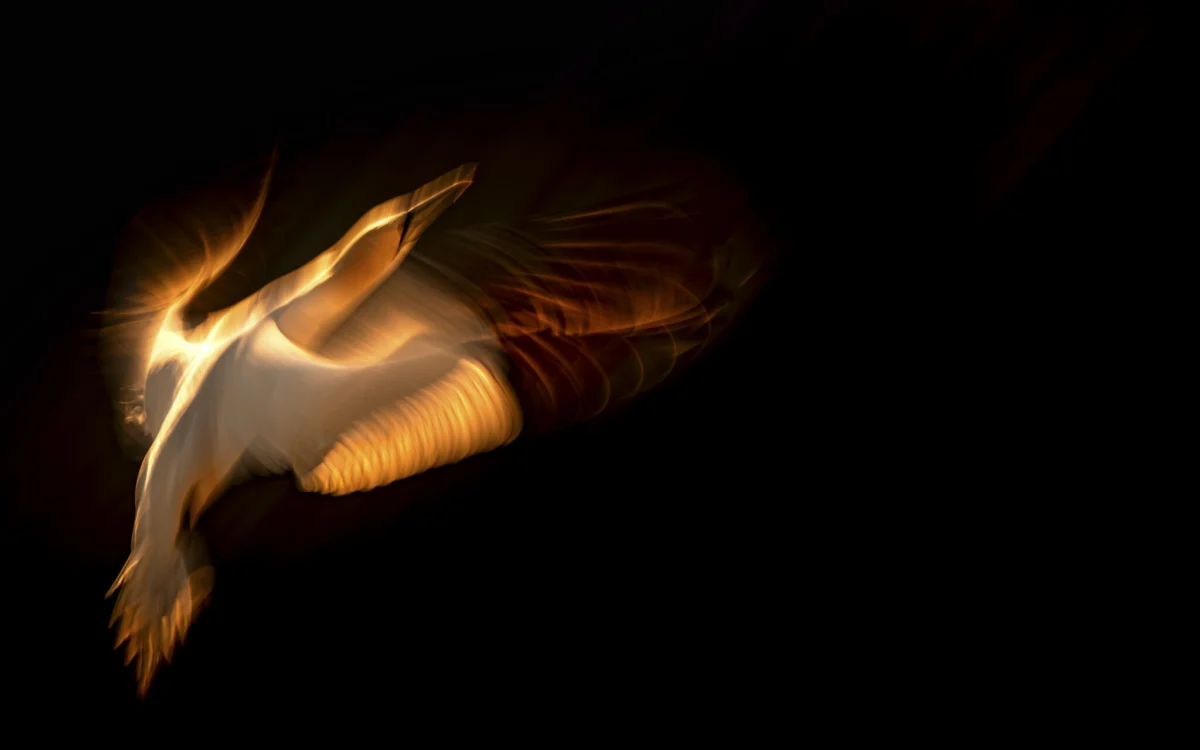
In a field often dominated by technical precision and rigid adherence to photographic rules, acclaimed wildlife photographer Rachel Bigsby presents a compelling philosophy that redefines the essence of the craft. Bigsby champions "natural artistry," an approach that transcends mere image capture to focus on profound witnessing, emotional translation, and an intimate understanding of the natural world. Her work aims to convey not just what a creature looks like, but "what it feels like to be near them," transforming wildlife photography from a pursuit of objects into a dialogue with the wild.
Bigsby’s philosophy posits that true wildlife photography is an art of witnessing, a meticulous process of learning the "grammar of nature" through sustained patience and deep presence. This understanding allows her to translate complex ecological narratives into images that resonate deeply with viewers, conveying emotions and experiences that extend beyond the physical scene. For Bigsby, "natural artistry" is not an aesthetic imposed upon a subject, but rather the recognition and revelation of inherent beauty—the fluid grace of a seabird, the delicate interplay of light on feathers, the raw energy of a storm-tossed colony. It seeks to express the "essence" and "deeper story" of a species through a masterful orchestration of light, movement, texture, color, behavior, environment, and perspective. This approach stands in contrast to conventional methods that often prioritize clinical sharpness and textbook compositions, which Bigsby argues can result in images that are competent yet ultimately forgettable.
A Deep-Rooted Connection: Bigsby’s Formative Years
Rachel Bigsby’s profound connection with the natural world predates her photographic career, tracing back to early childhood influences. Her late grandfather, a dedicated naturalist and fisherman, instilled in her a fundamental reverence for nature, teaching her to "truly see" rather than merely observe. This foundational education focused on attention and respect, shaping her perception of the environment as a living entity rather than a collection of facts.

At the age of six, Bigsby joined the Scout Association, an experience that inadvertently charted the course of her life. Weekends were spent immersed in rugged landscapes, navigating trails with weathered maps, and developing a practical intimacy with the outdoors. These prolonged periods in nature allowed the land to evolve from mere "scenery" into a trusted companion, establishing the wild as her primary classroom.
Photography entered her life more subtly. A childhood friend introduced her to the medium, prompting Bigsby to experiment with an iPod camera. These initial forays were small, observational experiments: capturing the intricate sparkle of dewdrops in morning light or the striking silhouette of a dandelion. While her friend’s interest waned, Bigsby’s deepened, marking the nascent stages of her artistic journey.
The true turning point arrived one afternoon when she witnessed a Northern Fulmar gliding effortlessly along coastal cliffs near her home. The bird’s stiff, confident wings moved with an almost oceanic mastery, a defiance of gravity that captivated her imagination. This encounter ignited a fervent curiosity, leading Bigsby to research the Fulmar’s connections to the legendary Albatross, a bird that had long held a mythical status in her childhood dreams. This moment was not just an interest; it was a calling that profoundly claimed her artistic direction. From that point forward, seabirds became not merely a photographic subject, but the focal point of her entire world.
Immersive Learning and Unconventional Access
Driven by her newfound passion, Bigsby diligently saved for her first DSLR camera. This acquisition broadened her horizons, opening doors to new species, unexplored colonies, and a wealth of unanswered questions. As her images began to gain public recognition, opportunities emerged, and Bigsby quickly learned that her path would be far from conventional. She actively sought out volunteer positions, exchanging labor for unparalleled access to remote seabird colonies. Her tasks ranged from the mundane, such as scrubbing compost toilets and scything bracken in sweltering summer heat, to the more demanding, like repairing weather-battered doors with tools significantly older than herself.

These experiences were invaluable. By day, she worked tirelessly, contributing directly to conservation efforts and maintaining vital habitats. By dusk, as the human activity subsided, the seabird colonies reclaimed their natural rhythm, and Bigsby would immerse herself among them, observing, listening, and learning. This extended period of hands-on engagement, often without a camera in hand, proved fundamental to her photographic credibility. It allowed her to develop an intimate understanding of seabird behaviors, biology, and ecology – a depth of knowledge that informs every frame she captures. This direct, immersive experience distinguishes her work, providing an authentic foundation that goes far beyond superficial observation.
Challenging the Pursuit of Perfection in Wildlife Photography
Bigsby critically examines the conventional framing of wildlife photography, which often prioritizes technical perfection: "razor-sharp eyes, clean backgrounds, textbook compositions, the reassurance of rules followed well." She argues that an overly zealous pursuit of such perfection can lead to images that are "competent and forgettable," failing to capture the true essence and character of the subject. These photographs, while technically proficient, often merely depict what a bird looks like, rather than revealing its inherent spirit or the feeling of its presence.
Her own artistic revelation came with an image that defied these conventional standards. The first photograph that truly moved her was of an Atlantic Puffin in flight, a shot that many would deem "imperfect." The focus was soft, the shutter speed deliberately slow, and the background cluttered. Yet, the golden light piercing through the puffin’s delicate wings transformed its movement into a captivating blur, a "whisper of motion dissolving into atmosphere like breath on wind." This image resonated precisely because it evoked a feeling rather than merely documenting a form. It was a pivotal moment, confirming her belief that wildlife photography is fundamentally about storytelling, emotion, and artistry, rather than strict documentation.
Bigsby emphasizes that the wild is inherently untamed and unpredictable. Seabirds, she notes, do not perform for photographers; their lives are governed by weather, tides, hunger, fear, devotion, and instinct. They do not await ideal backdrops or perfect lighting conditions. Their world is dynamic, chaotic, and vibrantly alive. To impose an artificial sense of order or perfection on such a reality, she contends, is to misrepresent it.

A transformative experience on a remote island further solidified this perspective. Initially disheartened by a week of relentless rain, fog, and mist, Bigsby felt she had arrived at the "wrong time," convinced the lack of "glowing sunrise" or "cinematic sunset" would hinder her work. However, she eventually recognized that her perception of these conditions as a "problem" stemmed from an attempt to impose an external ideal of perfection. For the seabirds, these were not "bad weather" but simply "life." By relinquishing her preconceived notions, she began to "collaborate" with the environment. The fog became a blank page, the whiteness a natural canvas, leading her serendipitously into high-key imagery—an approach that has since become a distinctive element of her visual signature. This experience profoundly altered her understanding of light, teaching her that the most meaningful images often emerge when one ceases to demand what is desired and instead embraces what is authentically present.
The Elements of Expressive Composition: Light, Shape, Texture, Environment
At the heart of Bigsby’s "natural artistry" lies a nuanced understanding and application of photographic elements. Light, she asserts, is far more than a technical setting; it is the "emotional spine of an image." While a subject’s physical presence is constant, light fundamentally shapes how it is perceived, felt, and remembered. She recalls a morning on the Shetland cliffs where the colony below remained in darkness, while the highest rock peaks caught the first rays, glowing against the abyss. A single Gannet then lifted from shadow into illumination, its white wings appearing like a brushstroke against the dark cliff. This moment, she explains, taught her that light creates not just clarity, but also drama and visible mood.
Color, too, is approached with intentionality. Bigsby rarely pursues bold colors for their own sake, instead considering whether they enhance the emotional tone of a scene. She notes that Northern Fulmars, with their subtle, stormy slate-grey tones, are often overwhelmed by bright blue backgrounds. A chalk-white cliff or dark grey rock, however, can cradle their natural palette, allowing their inherent mood to emerge. When color risks becoming a distraction, Bigsby intentionally opts for monochrome, viewing black and white not as a shortcut to seriousness, but as a deliberate choice to draw attention to the fundamental elements of shape, light, and texture—the "bones of the image."
Texture, for Bigsby, is what imbues a photograph with tangibility, allowing the viewer to "feel salt in the air." Shape provides intentionality, transforming wildlife into deliberate design through curves, arcs, symmetry, and contrast. One of her most compelling insights is that the environment is never merely a background; it is an intrinsic "character" in the narrative. A bird devoid of its context remains "just" an animal. However, a bird honestly situated within its world tells a complete story, conveying scale, struggle, intimacy, resilience, and fragility. Bigsby acknowledges that the environment can also communicate difficult truths—beauty intertwined with grief, life alongside loss. She believes that photography has the capacity to hold this complexity truthfully, respectfully, and intentionally, without exploiting the subject.

The Language of Birds: Patience, Presence, and Deep Observation
Patience, in Rachel Bigsby’s practice, is redefined not as passive waiting, but as an active state of "knowing what you are waiting for." This profound understanding is cultivated by learning the intricate "language" of animal behavior. By recognizing patterns and subtle cues, the wild transforms from a random collection of events into a readable narrative, allowing her to anticipate rather than merely react. Photography, in this context, becomes an act of intention rather than serendipity.
Bigsby dedicates countless hours to observing seabirds engaged in seemingly ordinary activities: preening, shifting, calling, settling, rising. Yet, she has learned that the smallest changes—a tightening posture, a fleeting glance, a repeated gesture—often serve as vital signals for impending actions. This depth of observation fosters a unique relationship between photographer and subject, shifting from "taking" an image to "listening" to the story unfolding.
When one listens long enough, Bigsby notes, moments emerge that feel like genuine gifts: a tender reunion ritual, an intricate courtship exchange, a synchronized movement between bonded birds, or a sudden moment of stillness amidst the cacophony of a bustling colony. These are more than mere behaviors; they are profound narratives of devotion, endurance, and survival, played out on precarious cliff edges perpetually shaped by the wind and sea.
Seabirds, for Bigsby, remain her ultimate muse because they embody "freedom and resilience given form." They are sculpted by the ceaseless forces of time and tide, inhabiting environments that often feel like the very edge of the world. In their presence, she experiences a profound sense of liberation and connection, a testament to the enduring power of wild places.

An Invitation to Authentic Expression: Impact and Implications
Rachel Bigsby’s work and philosophy represent a significant invitation rather than a rigid rulebook for wildlife photographers. While acknowledging the importance of technical proficiency—viewing settings as "scaffolding" that enable an image—she firmly believes they cannot imbue a photograph with "soul." The enduring power of an image, she contends, is rooted not in technical specifications but in the photographer’s unique vision: "the way you see, the way you feel, the way you connect."
In a photographic landscape where loud voices often insist on strict adherence to rules, Bigsby champions the images that endure—those that carry honesty and evoke genuine emotion, rather than those that merely follow convention. She extends "permission" to photographers to create work that truly matters to them, even if it diverges from established expectations.
The implications of Bigsby’s "natural artistry" extend beyond the photographic community. In an era of escalating environmental challenges and diminishing biodiversity, images that "educate through beauty" and "honor the wild by telling the truth of it" are more crucial than ever. Her approach fosters a deeper public connection with nature, inspiring empathy and a sense of responsibility. By moving beyond formulaic depictions, Bigsby’s work encourages a more profound appreciation for the complexity and inherent artistry of the natural world, potentially catalyzing greater engagement in conservation efforts. Her philosophy is a call to action for authenticity and emotional resonance in a genre that holds immense potential to bridge the gap between humanity and the wild.
Her concluding advice to fellow photographers—to "go gently," "look closely," "wait longer than you think you should," "let the weather shape the frame rather than ruin it," and "photograph the world not only as it is, but as it feels"—underscores the unique value of individual perspective. "No one else sees like you do," she reminds us, emphasizing that the most impactful contributions to wildlife photography will always emerge from a place of genuine personal vision and heartfelt connection.
