
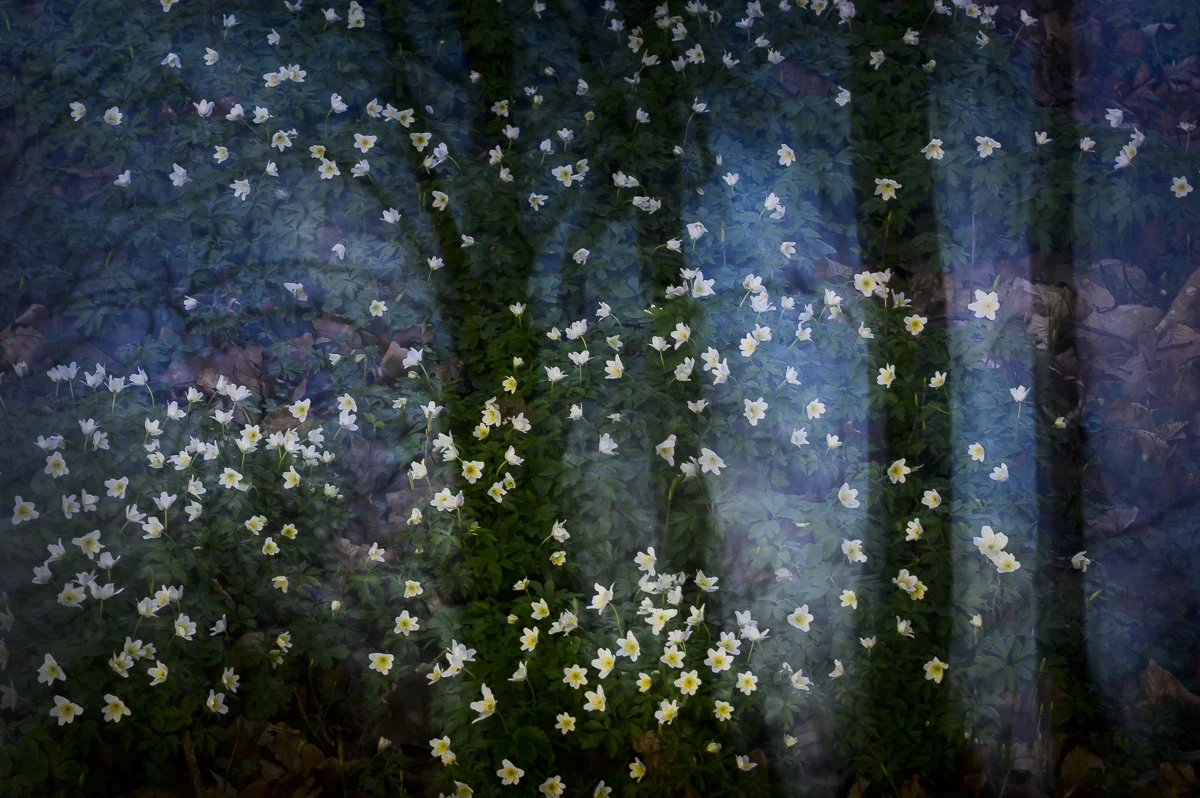
For many aspiring photographers, the quest for a "good photo" often begins and ends with the final product: a perfectly composed frame, executed with impeccable technique and harmonious colors. While these elements undeniably contribute to a captivating image, a burgeoning philosophy in nature photography champions a different, more dynamic starting point—the unfolding process itself. This approach prioritizes responsiveness to the environment and the moment over rigid pre-visualization, suggesting that the most compelling images often emerge from an intuitive dialogue between the photographer and the scene.
Challenging Conventional Wisdom: The Emergent Image
Conventional photographic wisdom frequently guides practitioners to conceive a "target photo" before even arriving on location. Photographers might arm themselves with checklists of compositional rules, ideal lighting conditions, and specific subjects. However, this method, while providing a valuable framework, can inadvertently limit creative potential by imposing predetermined outcomes on inherently unpredictable natural environments.
The alternative perspective, advocated by a growing number of nature photographers, suggests that true artistry flourishes when the photographer acts as a receptive observer, allowing the path to an image to unfold organically. This involves actively shedding preconceived notions upon arrival, acknowledging that natural conditions—such as shifting light, unexpected animal behavior, distracting elements, or sudden weather changes—rarely conform to initial plans. Instead of forcing a scene into a mental template, the photographer’s primary role becomes one of continuous adaptation and sensitive response.

This adaptive methodology is not to be confused with a lack of preparation or skill. On the contrary, it demands a deep well of experience, technical knowledge, and compositional understanding. These are not prescriptive rules to dictate the image, but rather a robust toolkit that enables the photographer to fluidly react to the evolving situation. The essence lies in allowing the scene to dictate its own priorities, with the photographer’s expertise serving as a means to interpret and capture those emergent possibilities.
The Foundational Triad: Nature, Perception, Design
Central to this responsive philosophy is an interactive "triad" comprising nature, perception, and design. This framework provides a structured yet flexible lens through which to approach the photographic process:
- Nature: This is the unscripted reality, the raw, dynamic situation presented by the environment. It is the canvas, constantly changing and offering an infinite array of visual information.
- Perception: This refers to the photographer’s selective attention—what registers, what is prioritized, and what fades into the background. Perception reduces the overwhelming complexity of nature, condensing it into potential points of interest and continually shifting the photographic focus. It is the initial act of "seeing" beyond mere looking.
- Design: This is the photographer’s active response to nature filtered through perception. It encompasses technical choices (aperture, shutter speed, lighting, lens selection) and compositional decisions (framing, perspective, timing). Crucially, design in this context is not about imposing a pre-decided image but about crafting an image that is forming in real-time. By embracing this fluidity, the process creates ample room for chance and serendipity, which often contribute more significantly to the final outcome than any initial plan.
The interaction within this triad is iterative. The first photograph taken is rarely the final one; instead, it serves as immediate feedback. This initial capture then informs and alters subsequent perception, prompting new observations and guiding the next set of design decisions. This continuous loop of observation, capture, and refinement is what allows the image to truly "emerge."
Case Study 1: The Frost Leaf – A Dance with Light and Chance

One compelling illustration of this triad in action involved a photographer’s spontaneous visit to a park pond after a sudden drop in temperature. The scene was rich with visual detail: frozen water, intricate ice patterns, bald cypress branches, and snow. Amidst this complexity, a single leaf, encased in the ice, captured the photographer’s attention.
The initial impulse led to a photograph focusing on the delicate crystal structure of the ice. However, upon review, the leaf felt disconnected, a mere object adrift on the surface. This feedback loop—the image informing perception—prompted a shift in focus. The challenge became to establish a clearer relationship between the leaf and its icy environment.
This led to a series of design decisions. A flash was introduced, wirelessly triggered and positioned directly on the ice to create low, directional side light. Small adjustments in the flash’s position dramatically altered the interplay of light and shadow, revealing new textures and depths. The photographer meticulously moved the light, reviewed the results on the camera’s display, and adjusted again, witnessing the image evolve in real-time. An LED light was then added to subtly open up shadows, further refining the scene.
A pivotal moment arrived through an accidental shift: the flash slipped, redirecting its beam more intensely into the ice. This unintended alteration, noticed on the display, unexpectedly transformed the scene. The leaf now appeared to separate from the surface in a novel way, and previously unseen structures beneath the ice became visible. What began as an attempt to photograph "a leaf on ice" morphed into a profound exploration of leaf, ice, and light as an interconnected, coherent system, demonstrating the powerful role of chance within a responsive photographic process.
Case Study 2: Dragonfly in Backlight – Mastering Movement and Focus

Another instance of the triad in practice unfolded at a nearby lake, a location previously visited for dragonfly photography. While initial expectations might have leaned towards replicating past successes, the conditions had changed, necessitating a fresh approach.
The photographer’s perception was first drawn to backlit reed grass, its stems glowing in the low sun. The immediate design challenge was to find an angle where the background would recede into darkness, allowing the radiant reeds to dominate the frame. As this framing process unfolded, dragonflies began to dart through the scene, their rapid movements catching the light.
This dynamic interplay of light, motion, and structure seized the photographer’s attention, shifting the focus from the static reeds to the ephemeral insects. The design evolved to accommodate the unpredictable subjects: framing with ample space for the dragonflies to enter, and setting a very fast shutter speed to freeze their rapid flight. The choice of continuous shooting underscored the commitment to capturing fleeting moments.
Recognizing the difficulty of tracking such fast-moving subjects through the viewfinder, the photographer adopted a "soft gaze," allowing peripheral movement to register more readily. Bursts of shots were fired whenever motion was sensed. The subsequent review of these initial bursts provided critical feedback: the dragonflies were almost consistently out of focus. This informed a crucial design adjustment: switching to manual focus and stopping down the aperture. This trade-off sacrificed some background softness for a deeper depth of field, creating a broader zone where both the reeds and the dragonflies’ flight path would remain sharp. After further patient waiting and numerous bursts, a single frame emerged, perfectly aligning focus and position, a testament to persistent adaptation and technical finesse in the face of dynamic natural elements.
Case Study 3: The Microcosm of Slime Moulds – Unveiling the Unseen

The responsive approach is equally potent in uncovering the subtle wonders of nature, as demonstrated in a quiet autumn woodland. Initially, the environment offered no obvious focal point; trees, leaves, and mushrooms were photographed without a strong sense of purpose. The camera’s display, acting as a feedback mechanism, consistently showed images lacking "weight" or a compelling narrative.
It was through this iterative review that a subtle detail in one frame emerged: fine, threadlike structures on a fungus, revealing the presence of slime moulds. This was a classic example of the camera "showing" the photographer something previously unseen by the naked eye. This discovery immediately shifted perception, drawing the photographer into a miniature world.
The design phase then began, involving moving closer, sitting on the forest floor, and intentionally framing this tiny ecosystem. As the photographer spent more time observing, small swellings at the ends of the threads became apparent, providing a natural center of gravity for the composition.
Introducing an LED light dramatically transformed the scene. Shadows formed and shifted, enhancing the interplay of light, blur, and structure. Each adjustment, checked against the display, guided the next decision, pulling the photographer deeper into the intricate world of the slime moulds, frame by frame. This process highlights how patient observation, coupled with technical experimentation and responsive adjustment, can reveal extraordinary beauty in the most unassuming subjects. Macro photography, a field often requiring immense precision and patience, particularly benefits from such an iterative, discovery-driven methodology.
Implications for Photography Education and Practice

This philosophy of the emergent image carries significant implications for both photography education and practice. In an era dominated by digital tools and instant gratification, it advocates for a return to a more profound engagement with the subject and the creative process.
For aspiring photographers, it offers a liberating alternative to rigid rule-following. While technical competence and compositional principles are invaluable, this approach emphasizes that they are tools to facilitate expression, not masters to dictate it. The more fluent a photographer becomes in these fundamentals, the less conscious thought is required, freeing up mental space to truly "see" and respond to the moment. This fosters adaptability, critical thinking, and a unique artistic voice.
Photography educators might integrate this framework by encouraging students to engage in exercises that prioritize observation, iterative feedback, and responsive decision-making over pre-planned shots. This could involve "un-assignment" projects where students are challenged to create compelling images from unexpected observations, or workshops focused on reacting to dynamic natural conditions.
Expert Perspectives and Community Reception
This responsive approach resonates with a growing number of contemporary nature photographers and educators who advocate for a more intuitive and mindful engagement with their craft. Many leading figures in the photographic community, including those associated with platforms like the Nature Photographers Network, often emphasize the blend of technical mastery and artistic sensibility that emerges from such interaction. They argue that the most impactful images often arise not from perfect execution of a plan, but from an authentic connection with the subject and a willingness to be surprised and led by the environment.

This perspective challenges the consumerist notion of photography as merely capturing a pre-conceived ideal, instead promoting it as an exploratory journey. It encourages a deeper appreciation for the iterative nature of creativity, where "failures" or unexpected turns become valuable data points for subsequent refinement.
Conclusion: Embracing the Unforeseen
The three scenarios—the frost leaf, the dragonfly in backlight, and the slime moulds—despite their inherent differences, underscore a consistent underlying logic: the power of shifting attention and decisions that organically grow from that attentiveness. What truly elevates a photograph, in this view, is not the flawless application of rules, but the synergy between seeing and choosing.
Rules, experience, and technique are indispensable components of a photographer’s toolkit. They provide the foundation upon which to build, to experiment, and to respond effectively. However, their true value lies in their ability to support the emergent image, not to constrain it. When these tools become limiting, the responsive photographer is prepared to set them aside, allowing the unpredictable beauty of nature and the intuitive flow of perception to guide the creative act.
The triad of nature, perception, and design thus remains a central guiding principle for many, serving as a constant reminder that the most profound photographic experiences, and indeed the most compelling images, often arise when one embraces the unforeseen and allows a small piece of chance to shift everything. In a world increasingly saturated with images, this philosophy offers a pathway to creating work that is not only technically proficient but also deeply personal, authentic, and truly reflective of the moment it was born.
