
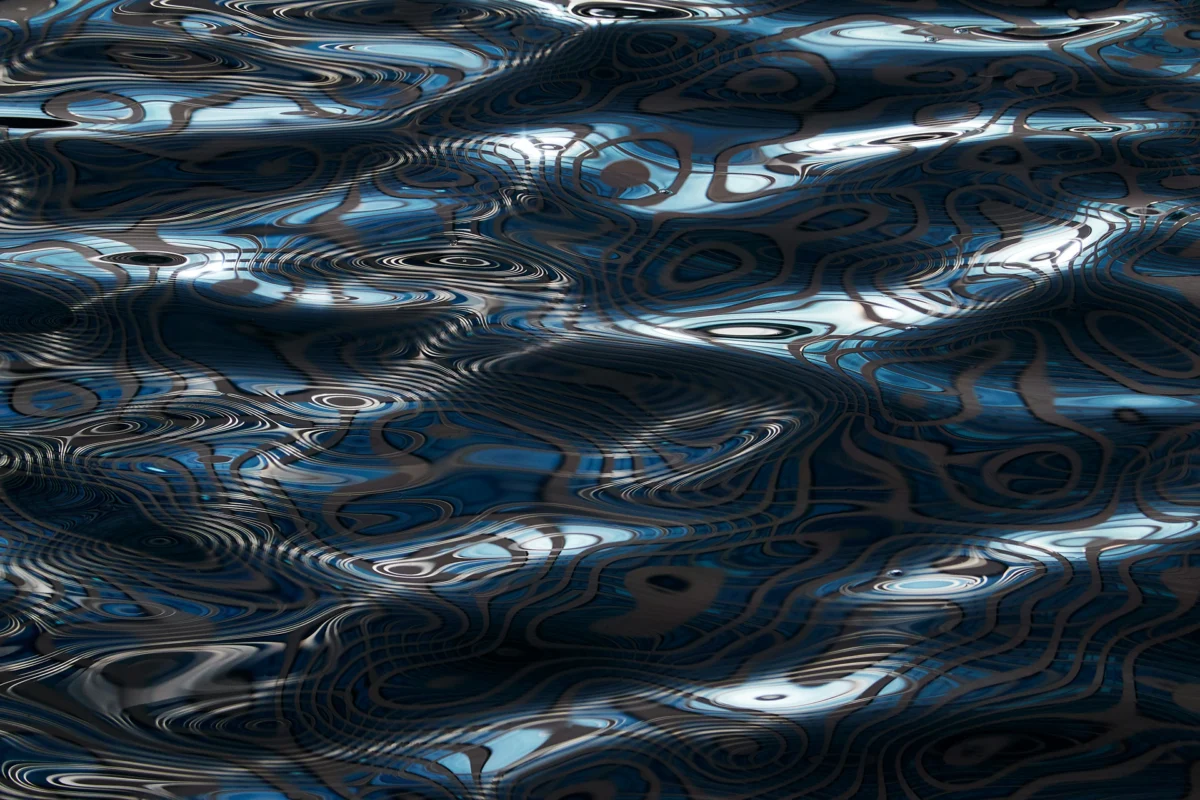
The captivating abstract images of the "Fleeting Reflections" series, often mistaken for digital manipulations, are in fact the meticulous result of light, glass, steel, and water captured entirely in-camera. This remarkable body of work, spanning over a decade, challenges conventional notions of nature and abstract photography by demonstrating that profound artistry can emerge from the most unexpected and accessible urban environments. The photographer behind the series, whose name is not provided in the original text but whose artistic philosophy is central, reveals that these striking visual compositions—sometimes single frames, sometimes carefully layered in-camera multiple exposures—are the product of unwavering attention, sustained repetition, and profound patience. This dedication has culminated in a critically acclaimed collection, including two published books and multiple gallery exhibitions.
The Genesis of "Fleeting Reflections": A Decade in Canary Wharf
The "Fleeting Reflections" project began more than ten years ago, centered on an unlikely muse: the docks of Canary Wharf in London. This financial district, renowned globally for its towering glass and steel skyscrapers, might seem antithetical to the serene beauty typically associated with nature photography. Yet, for the artist, Canary Wharf is not merely a commercial hub but a dynamic "set of light sources." The colossal structures reflect and refract light onto the water’s surface, where natural elements like wind and passing boats transform these urban reflections into an ever-changing canvas of waves, ribbons, and fractured patterns. This unique interaction between man-made architecture and natural forces forms the core subject matter of the series.

The artist’s long-term engagement with this specific location has allowed for an intimate understanding of its visual language. Unlike the pursuit of dramatic, remote landscapes often romanticized in nature photography, this project thrives on the ordinary and the immediate. The sustained exploration of a single square mile of water, surrounded by office towers, has revealed a depth of visual possibility that belies its urban setting. This choice of location is not merely pragmatic; it is a deliberate philosophical stance that underpins the entire creative process.
Unveiling the "No Tricks" Approach: Technical Mastery and Artistic Integrity
A hallmark of the "Fleeting Reflections" series is its unwavering commitment to in-camera capture, a point of pride for the photographer. Upon seeing the complex, almost painterly quality of the images, viewers frequently assume the intervention of sophisticated digital editing software like Photoshop. The artist, however, emphasizes that the works are authentic records of light interacting with its environment. This involves observing light bouncing off glass and steel, breaking on the surface of water, and being recorded directly by the camera. The techniques employed include capturing single, precise frames or utilizing carefully layered in-camera multiple exposures to achieve richer, more complex abstractions.
This dedication to "no tricks" underscores a deeper artistic integrity. In an era where digital manipulation is commonplace and often indistinguishable, the photographer’s method stands as a testament to the power of observation and skilled camera work. It foregrounds the photographer’s role as a discerning observer and a master of optical phenomena rather than a post-production wizard. The resulting images are not fabricated interpretations but honest revelations of what was genuinely present in the fleeting moments at Canary Wharf. The artist’s processing philosophy further reinforces this: global adjustments for levels, clarity, sharpness, and contrast are applied in software like Capture One, but crucial to the integrity of the work, shapes are never manipulated. This philosophical choice ensures that the final image genuinely represents the observed reality, allowing the photographer to state, "this happened," with absolute conviction.

The Three Pillars of Profound Photography
The success and depth of the "Fleeting Reflections" series are attributed by the artist to three fundamental pillars: accessibility, repeatability, and patience. These elements, often overlooked in the broader discussion of photographic technique, form the true "engine" of meaningful creative work in both nature and abstract photography, transcending the mere technical specifications of cameras and lenses.
Pillar 1: Accessibility – Redefining the "Nature" in Nature Photography
The first pillar, accessibility, challenges a pervasive myth in nature photography that equates worth with remoteness. Many photographers feel compelled to travel to distant, dramatic locales to capture compelling images. The "Fleeting Reflections" project decisively refutes this, having been almost entirely created within a single square mile of water in an urban setting. Canary Wharf, though a steel-and-glass financial district, is reimagined by the artist as an inexhaustible source of light and reflection. Its towering structures cast dynamic colors and lines onto the water, which the wind then sculpts into ever-evolving patterns.

The profound advantage of accessibility lies in the ability to engage with the subject frequently and intimately. The photographer can visit Canary Wharf on a whim, with just 40 minutes to spare, without the need for extensive travel, permits, or elaborate planning. This ease of access allows for visits during conventionally "bad" light, or in inclement weather like rain, when the water’s surface transforms into a shimmering, hammered metal. Such frequent, low-effort engagement fosters a level of familiarity that would be impossible with a distant subject. It allows the photographer to move beyond superficial observations and delve into the nuanced, ever-changing character of the location. This pillar suggests that a truly deep connection with a subject, essential for moving "past the obvious," is cultivated through consistent presence, proving that proximity can be a powerful catalyst for profound artistic expression.
Pillar 2: Repeatability – The Dynamic Canvas of Urban Waters
Repeatability, the second pillar, refers to the deliberate choice of a subject that is inherently dynamic and capable of constant transformation, offering fresh possibilities with each encounter. The docks of Canary Wharf exemplify this principle. No two moments are ever precisely alike. A calm morning might present long, glassy stretches of color, while a gusty afternoon can shatter the same reflections into sharp, serrated lines reminiscent of the iconic waveform from Joy Division’s Unknown Pleasures. A passing boat leaves behind a smear of reflections, appearing hand-drawn, while patches of diesel on the surface create ephemeral, iridescent interference patterns that may last only minutes.
This inherent variability is crucial. Because the environment is repeatable yet perpetually changing, the photographer can return to the "same" scene hundreds or thousands of times and still discover new artistic material. This sustained engagement transforms the act of photography from merely documenting architecture into capturing the behavior of light and water. The palette of colors shifts with the weather, the geometry bends with the wind, and the overall mood changes with the tide.

This dynamism is where in-camera techniques truly shine. Fast burst rates are employed to freeze micro-moments in the water before they dissipate, while multiple exposure modes are used to layer gestures and deepen the inherent abstraction. These techniques are not ends in themselves but tools activated by the subject’s ceaseless offering of new raw material. The artist posits that without repeatability, one merely produces "postcards"; with it, one builds a cohesive and evolving body of work.
Pillar 3: Patience – The Unseen Investment in Visual Discovery
The final and most underestimated pillar is patience, which permeates every stage of the "Fleeting Reflections" project. This patience is far from passive; it is an intensely active and deliberate investment of time and attention.
Patience begins long before the shutter is pressed. It involves waiting for the perfect alignment of weather conditions with the photographer’s available time. The interplay of hard sun on still water produces vastly different results from flat light during drizzle, and not every combination yields useful material. This often means walking for miles, checking various angles, and finding nothing that fits the day’s conditions, yet still returning.

Once promising conditions are found, patience becomes a physical exercise. The photographer might stand at a single location for up to four hours, capturing as many as 3,000 frames of what a casual passerby might perceive as "the same scene." This obsessive focus is driven by the search for that precise instant where color, rhythm, structure, and tension converge into a perfect composition. Such moments cannot be rushed; they demand prolonged presence and an acute readiness to recognize them.
The patience continues post-capture, during the rigorous editing process. Thousands of nearly identical-looking images are downloaded and subjected to a slow, deliberate sifting on an iMac. This phase requires immense discipline, as the photographer purposefully seeks the single, exact frame where everything aligns, ruthlessly rejecting the vast majority. The "keep rate" is, by the artist’s admission, "brutally low," emphasizing the relentless pursuit of perfection.
Finally, there is the longest form of patience: allowing the work to mature. The "Fleeting Reflections" project was not publicly showcased in any significant way for many years. The photographer consistently returned to Canary Wharf, shooting, refining, and learning to discern what was essential from mere visual noise. It took approximately seven years before the artist felt the work had achieved sufficient coherence to be presented to a publisher. This profound commitment to letting the work evolve organically speaks volumes about the artist’s dedication.
Chronology of "Fleeting Reflections" Milestones

The "Fleeting Reflections" project, born from a decade of consistent effort, has achieved significant milestones:
- 2017: The first volume, Fleeting Reflections, was published by Triplekite. This marked the public debut of the artist’s extensive work, validating years of dedicated practice.
- 2017: Following the book’s release, the series was exhibited at the prestigious Greenwich Gallery in London, providing a physical space for viewers to engage with the abstract urban landscapes.
- 2019: The project gained further recognition with an exhibition at the Anise Gallery, also in London, reinforcing its artistic merit within the contemporary art scene.
- 2023: A second volume, Fleeting Reflections II, was published, indicating the ongoing nature of the project and the continuous discovery of new visual narratives within the Canary Wharf docks.
These achievements, while appearing as distinct milestones, are the visible tip of an enormous iceberg of effort. The artist emphasizes that the journey was neither quick nor smooth, but rather "slow, deliberate, and obsessive." Beneath the final photographs lie thousands of hours spent walking, watching, waiting, shooting, editing, rejecting, and, most importantly, returning to the subject again and again.
Broader Implications and Lessons for Aspiring Photographers
The enduring message of the "Fleeting Reflections" series extends far beyond the realm of abstract photography; it offers profound lessons for any aspiring visual artist. The central takeaway is that truly personal and distinctive work does not necessitate dramatic landscapes or exotic locations. Instead, it hinges on the more fundamental, yet often overlooked, principles of accessibility, repeatability, and patience.

This philosophy democratizes artistic creation, encouraging photographers to look inward, at their immediate surroundings, rather than outward for grand spectacles. It suggests finding a subject that is easily and frequently accessible—be it a local canal, a harbor wall, a marsh on the edge of town, or even rainwater pooling in a car park. The key is to return to this chosen subject repeatedly, observing it in all moods and all weathers, until its patterns, responses, and inherent character become predictable.
The final, crucial step is the commitment to "slow work": walking, waiting, refining, and maintaining rigorous honesty during the editing process. Patience, in this context, is not a passive virtue but a highly active decision—a conscious investment of oneself into a subject for as long as it takes to achieve a deep, intuitive understanding. Over time, this sustained attention becomes palpable within the photographs themselves. While viewers may initially perceive only striking colors and shapes, what they are truly encountering is the profound depth of the photographer’s attention, distilled into a powerful visual narrative. The "Fleeting Reflections" project stands as a compelling testament to the idea that extraordinary art can indeed be found in the ordinary, provided one is willing to invest the time and presence to truly see it.
