
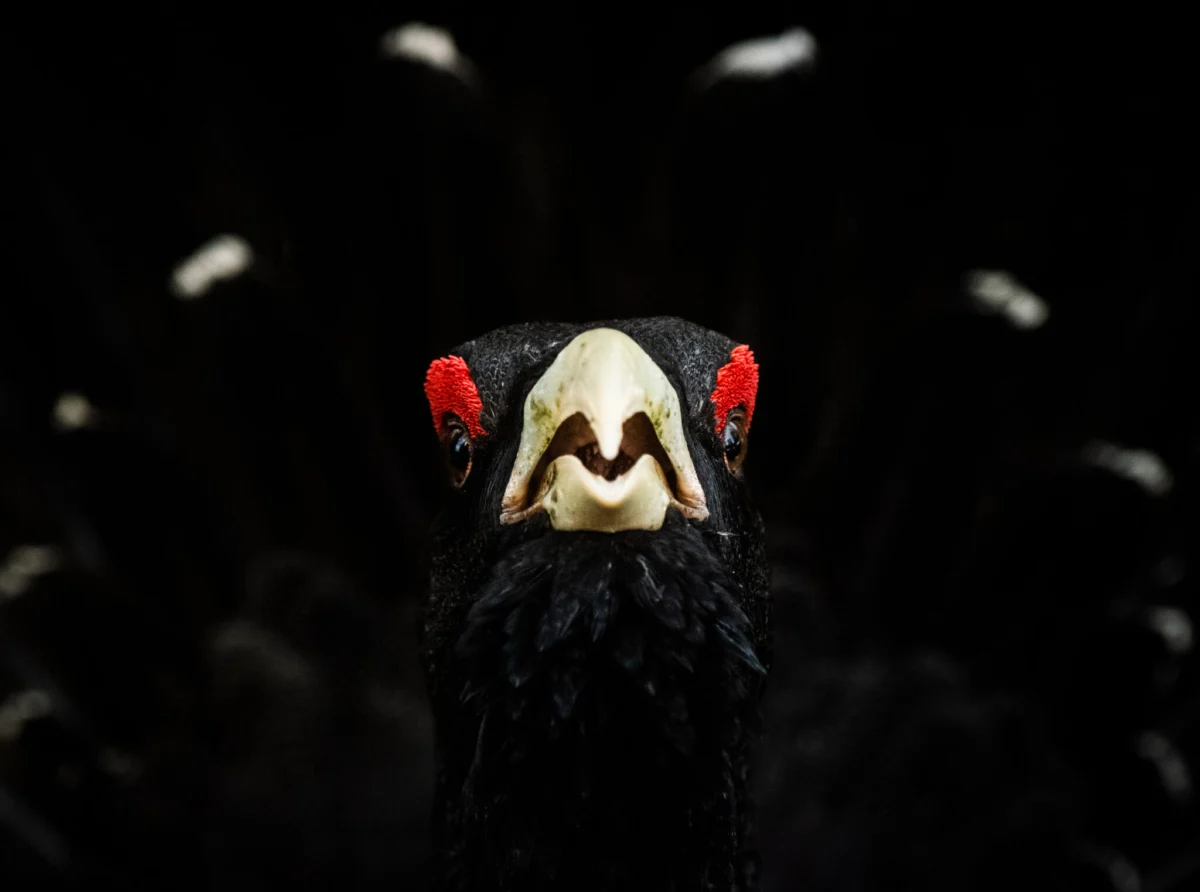
In the dynamic realm of nature photography, a growing number of artists are transcending traditional methods, deliberately pushing the boundaries of photographic techniques to convey deeper impressions and emotions experienced in the wild. This pursuit often leads them to the extreme ends of the photographic spectrum—be it ultra-wide or super-telephoto lenses, deliberate blackout or whiteout exposures, extended shutter speeds, or unconventional compositions. At these extremities, the extraneous distractions recede, essential elements are amplified, and the narrative embedded within the image gains profound strength and resonance.

The essence of photography, particularly in natural settings, often lies in the endeavor to establish order amidst inherent chaos. Nature frequently presents itself as an overwhelming tapestry of elements—dense forests, migrating herds, or the intricate plumage of a bird. The skilled nature photographer, however, endeavors to discern the latent structures and patterns within this apparent disarray, translating them into compelling visual forms. This task, while seemingly straightforward, demands considerable expertise and a discerning eye. The deliberate choice to present nature’s complexity through visually striking, often extreme, photographic techniques allows for the creation of a more potent narrative, one capable of transmitting the photographer’s intrinsic emotions and profound experiences directly to the viewer.
The Art of Atmospheric Immersion: Extreme Exposure as Emotional Language

Our perception and experience of nature are multifaceted, shaped by a symphony of sensory inputs. The amalgamation of scents, tactile sensations, and ambient sounds often contributes as much to a scene’s overall impression as its visual components. Capturing this holistic experience presents a significant challenge for still photographers, who are inherently limited to the visual medium. It is a common sentiment among nature photographers to feel a sense of inadequacy when reviewing their images after a particularly moving encounter in the field, as the photographs often fail to evoke the same intensity of emotion felt amidst the full spectrum of sensory engagement.
To effectively recreate and immortalize these nuanced atmospheres and profound emotions, photographers frequently employ extreme exposure techniques, specifically "blackout" and "whiteout." These methods involve significant underexposure or overexposure, respectively, transforming the photographic image from a mere record to an expressive interpretation. Dark, moody images achieved through heavy underexposure—the blackout technique—tend to imbue scenes with a dramatic intensity, emphasizing mystery and a palpable atmosphere. Conversely, bright, airy images produced via deliberate overexposure—the whiteout technique—often convey a sense of purity, elegance, and ethereal beauty. This approach is particularly effective for highlighting these qualities, whether inherent in the subject species or its surrounding environment.

The manipulation of exposure transcends a purely technical decision; it evolves into a sophisticated language for expressing emotion. By consciously controlling the luminosity of a scene, photographers guide the viewer’s interpretation, channeling the specific feelings and experiences they encountered in the field. For instance, a blackout image of a forest in deep fog might evoke feelings of solitude or foreboding, while a whiteout portrait of a snow leopard could communicate grace and vulnerability. Modern camera technology, particularly advancements in dynamic range and sensor sensitivity, provides photographers with greater latitude to explore these extreme exposures without compromising image quality, enabling subtle gradations even within deeply shadowed or brightly highlighted areas.
Redefining Engagement: The Narrative Power of Extreme Focal Lengths

Just as exposure dictates the emotional atmosphere, focal length profoundly influences the viewer’s spatial relationship with the subject. Within a photographer’s technical arsenal, focal length stands as a primary tool for altering the perceived appearance of a subject in relation to its habitat. Each extreme of the focal length spectrum—from expansive wide-angle to highly compressed super-telephoto—tells a distinct story, and the further one deviates from standard focal lengths, the more pronounced and impactful this narrative becomes.
Ultra-wide lenses, typically ranging from 14mm to 24mm (on full-frame equivalent), are adept at capturing vast landscapes, immersing the subject within its broader environmental context. They can convey a sense of scale, vulnerability, or the grandeur of nature, often incorporating strong foreground elements that draw the viewer into the scene. While wide-angle lenses can introduce perspective distortion, skilled photographers leverage this characteristic creatively to exaggerate distances or emphasize leading lines, enhancing the visual drama.

On the opposite end, super-telephoto lenses, extending from 400mm to well over 1000mm, offer unparalleled reach and subject isolation. These lenses excel at capturing intimate details of wildlife from a distance, compressing backgrounds to create a blurred, painterly effect (bokeh) that minimizes distractions and focuses attention solely on the subject. This compression also has the effect of making distant elements appear closer to the subject, creating a unique visual tapestry. Technological advancements in recent years have dramatically expanded the possibilities for photographers utilizing these extra-long focal lengths. The advent of mirrorless camera technology, in particular, has led to the development of telephoto lenses that are not only lighter and more compact but also more affordable and accessible. Crucially, even mid-range telezoom lenses can now be effectively paired with teleconverters, maintaining usable autofocus capabilities and good image quality, thereby opening up a new universe of perspectives previously confined to specialized, high-cost equipment.
A compelling example of this multifaceted approach can be seen in documenting the European shags on Hornøya, an island situated above the Arctic Circle in Norway. Here, a photographer might employ a focal length range spanning from 24mm to an astonishing 1200mm to construct a comprehensive visual narrative. Wide-angle shots (e.g., 24-70mm) could depict the harsh, snow-covered island landscape and the overall colony, illustrating the challenging environmental conditions the birds face as they return for the breeding season. Mid-range telephoto lenses (e.g., 70-300mm) could capture the shags establishing territories or engaging in displays within their immediate surroundings. Finally, super-telephoto lenses (e.g., 400mm-1200mm, often achieved with teleconverters) would allow for incredibly detailed close-ups, revealing the texture of their plumage, the intensity of their gaze, or intimate moments of interaction, even battling snowstorms. This strategic deployment of extreme focal lengths enables the photographer to paint a rich, layered picture of the shags’ story, covering both expansive environmental contexts and precise, emotive details.

The Dance of Time: Capturing the Magic of Movement
Photography, at its fundamental core, is about seizing moments and preserving movements to tell a story. For many, the allure lies in manipulating shutter speeds to create images that transcend the capabilities of the human eye, revealing unseen dimensions of time and motion.

Long exposures, especially when combined with Intentional Camera Movement (ICM), unlock a new frontier of photographic possibilities. This technique moves beyond merely capturing the static landscape, its colors, or the shapes of a subject. Instead, ICM allows the photographer to literally "paint" the image with the abstract structures and textures of the entire landscape within a single exposure. By deliberately moving the camera during a long exposure, the resulting images become uniquely ethereal, abstract, and impossible to precisely replicate. Each ICM photograph is a one-of-a-kind creation, blurring the lines between photography and impressionistic art. It is a technique that demands considerable patience and a significant learning curve, often yielding a high number of "failed" images before a successful, expressive piece emerges. However, the reward is a photograph that conveys mood, energy, and the passage of time in a deeply artistic manner.
Conversely, mirrorless camera technology has also pushed the limits of ultra-fast shutter speeds, which were previously unattainable. In the era of digital single-lens reflex (DSLR) cameras, the typical mechanical shutter speed limit was 1/8000th of a second. This often meant that extremely bright scenes, such as direct shots into the midday sun, risked blown-out highlights. Modern mirrorless cameras, however, frequently offer electronic shutter speeds reaching several ten-thousandths of a second (e.g., 1/32000s or even 1/64000s). This capability is invaluable in intensely bright conditions, allowing photographers to freeze fleeting moments and capture intricate details even when shooting directly into powerful light sources. The human eye cannot simultaneously perceive the full detail of both the sun and backlit clouds in such scenarios, but the camera can record an intriguing image, revealing textures and forms that remain hidden to direct observation. This ability to capture motion beyond human perception, both by blurring and by freezing, fundamentally expands the visual language available to nature photographers.

Challenging the Canon: The Power of Unconventional Compositions
Composition in photography is often governed by a clear set of rules, such as the rule of thirds or the golden ratio, which are generally embraced for their ability to produce balanced, harmonious, and aesthetically pleasing images. These guidelines serve as invaluable foundational tools for photographers. However, no rule in art is absolute, and rigid adherence can, paradoxically, stifle creative expression.

Composition is fundamentally about balance and how elements within the frame interact. A classic guideline, for instance, advises leaving ample space in the direction a subject is facing to create a sense of movement or anticipation. Yet, consistently following such a rule might lead photographers to overlook more compelling images where an alternative element establishes balance, even if the primary subject is deliberately positioned off-center or against conventional wisdom. For many advanced photographers, composition evolves beyond a strict adherence to prescribed rules, becoming a more intuitive process of understanding the dynamic interplay of shapes, lines, light, and negative space within the frame. In certain instances, an unconventional composition—one that intentionally breaks traditional rules—can result in a far more powerful, impactful, and memorable image. Developing the "eye" to perceive how elements in a scene interact, and knowing when to defy convention for greater artistic effect, is widely considered one of the most crucial skills for elevating one’s photography. It allows for a fresh perspective, inviting viewers to engage with the image in unexpected ways.
The Catalyst of Creativity: Embracing Playfulness and Experimentation

A prevalent norm in photography advocates for intentionality: every choice, from composition to shutter speed, should be executed with a clear purpose and a preconceived vision. While this systematic approach often yields consistent results, balanced exposures, and predictable outcomes, effectively bringing order to visual chaos, it can also inadvertently curtail true creative exploration.
The act of being creative purely for the sake of creativity, devoid of an explicit purpose or a specific pre-visualization, holds equal, if not greater, importance for artistic growth. This approach serves as a vital counterbalance to overly systematic methodologies, fostering an environment of playfulness and serendipity. Not every exceptional photograph can be entirely pre-visualized; the human eye and mind are often incapable of predicting the fortuitous coincidences and random occurrences—such as ephemeral reflections, unexpected light patterns, or spontaneous movements—that can infuse an image with that elusive "missing piece of magic."

For many, nature photography is an ongoing journey of exploration and experimentation. This mindset encourages photographers to question established norms: could a static subject be enhanced by a deliberate camera movement? Might underexposing a scene, when conventional wisdom dictates overexposure, reveal a more profound mood? While this experimental approach inevitably leads to a significant number of "unsuccessful" shots, it is precisely within this volume of trial and error that true breakthroughs emerge. Sometimes, this manifests as a spectacular, groundbreaking image. More frequently, it leads to the discovery of a subtle effect, a novel technique, or a fresh perspective that can then be refined and integrated into the photographer’s evolving style. This continuous cycle of curiosity, experimentation, and learning is arguably the most potent creative tool available to nature photographers. It is through daring to "fail" that innovation flourishes, allowing for the development of a truly unique and expressive photographic voice.
Broader Implications and the Evolving Landscape of Nature Photography

The embrace of extreme techniques in nature photography carries significant broader implications for the art form, its practitioners, and its audience. Artistically, it propels nature photography beyond mere documentary representation, elevating it to a realm of profound personal expression. By deliberately manipulating light, perspective, movement, and composition, photographers are not just showing viewers what nature looks like, but inviting them to experience how nature feels. This artistic evolution challenges conventional notions of beauty and authenticity, encouraging a deeper, more emotional engagement with the natural world.
From a conservation perspective, highly emotive and unique images often forge a stronger connection with viewers than purely factual depictions. An abstract ICM photograph of a forest, imbued with a sense of wonder or fragility, might resonate more deeply with an audience, stirring empathy and a desire for protection. Similarly, an intimate telephoto portrait of an endangered species can foster a personal connection, highlighting the value and vulnerability of wildlife in a way that statistics alone cannot. These artistic approaches can thus become powerful tools for conservation storytelling, translating scientific or environmental concerns into compelling visual narratives that inspire action.

Furthermore, the increasing accessibility of advanced camera technology, particularly mirrorless systems with their enhanced capabilities, democratizes these once-specialized techniques. What was once the exclusive domain of a few elite photographers with expensive, cumbersome gear is now within reach of a broader community. This increased accessibility fosters a vibrant ecosystem of creative experimentation, pushing the boundaries of what is possible and enriching the overall genre of nature photography.
In conclusion, the relentless curiosity and daring experimentation with extreme photographic techniques—from precise exposure control and varied focal lengths to innovative movement and unconventional compositions—are reshaping the landscape of nature photography. By bravely stepping beyond established norms and embracing a spirit of playful discovery, photographers are not merely capturing moments; they are reinterpreting the natural world, transforming it into a canvas for profound emotional and artistic expression. This journey, marked by both challenge and revelation, invites viewers into a deeper, more visceral dialogue with the planet’s enduring beauty and intricate wonders.
