
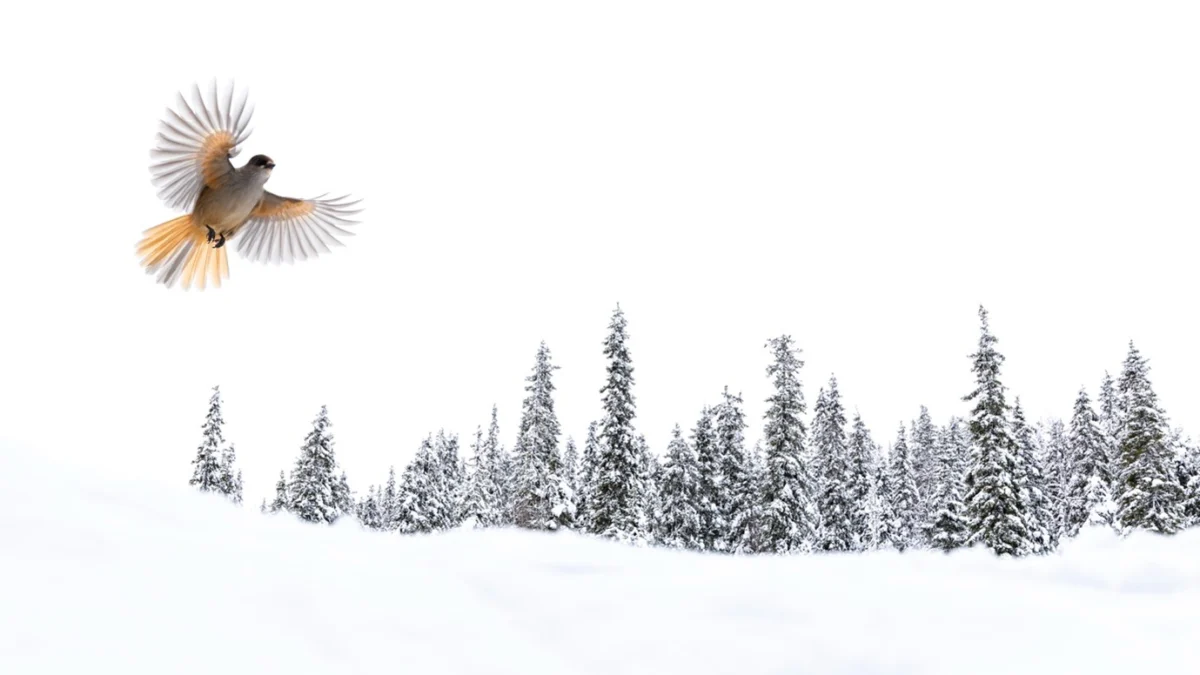
The Nordic countries of Europe, often simply referred to as "the North," evoke a powerful sense of place that transcends mere geography for many, including acclaimed nature photographer Stefan Gerrits. For Gerrits, the North represents a distinct philosophy of seeing, feeling, and experiencing the world—a realm where, paradoxically, less truly becomes more. This expansive region, characterized by its profound calmness, unique interplay of light and shadow, and pervasive silence, offers a vast emptiness that fosters a deep sense of peace. Amidst the snow, the pervasive darkness, and often extreme cold, there lies a profound simplicity and timelessness that Gerrits endeavors to encapsulate in his photography. His distinctive style—minimalistic, imaginative, two-dimensional, flat, graphic, and quiet—serves as his personal interpretation of, and emotional connection to, the Nordic landscape.

Gerrits, a native of Sambeek, Netherlands, now resides in Sundsberg, Kirkkonummi, southern Finland, providing him with direct immersion in the environment that inspires his work. Over more than a decade, he has honed his craft in nature and wildlife photography, leading tours across the Nordics both independently and in collaboration with NatureTalks (NL), and frequently sharing his insights at various events. His work has graced the pages of numerous European magazines and was prominently featured in his solo exhibition in Helsinki, titled imaginature. Central to his photographic ethos is a deep respect for nature, striving to present subjects and their surroundings in their most unadorned and authentic form, prioritizing function over elaborate aesthetics. This approach, rooted in his direct experience of nature, has been the cornerstone of his artistic evolution.
The Allure of the Nordic Landscape: A Photographer’s Muse

The Nordic region, encompassing countries like Finland, Sweden, Norway, Denmark, and Iceland, presents a unique palette for photographers. Its dramatic seasonal shifts, from the endless daylight of the summer solstice to the prolonged darkness of polar winters, create an extraordinary quality of light. The vast, often sparsely populated landscapes, blanketed by snow for significant portions of the year, naturally lend themselves to a minimalist aesthetic. This environment, where temperatures can plummet far below freezing, forces a focus on resilience and stark beauty. Gerrits finds in this challenging yet serene setting an unparalleled opportunity to explore themes of isolation, tranquility, and endurance. The quietude of these expanses, broken only by the whispers of wind or the calls of hardy wildlife, becomes a profound element in his visual storytelling.
Mastering Minimalism: Beyond "Less is More"

Minimalism in photography is not merely a stylistic choice but a deliberate methodology aimed at enhancing emotional resonance and direct communication. It is, as Gerrits articulates, about simplifying reality by intentionally removing or disregarding elements and details that he deems extraneous. The objective is to reduce the frame to its absolute essentials, thereby directing immediate and undivided attention to the primary subject. This approach diverges from simply having fewer objects in a frame; it is about creating more impact by eliminating perceived distractions. Historically, minimalism emerged in the arts as a reaction against abstract expressionism, advocating for clarity, simplicity, and a direct engagement with the viewer. In nature photography, it allows the subject to "breathe," providing viewers with space for contemplation and emotional connection.
Gerrits shares practical insights into cultivating simplicity in one’s photographic practice. He emphasizes that simplicity is a skill developed incrementally, through consistent practice and a growing confidence in the power of omission. The more one dares to leave out, the more trust one places in the remaining elements to convey a strong and powerful message. He underscores that "simple" is far from boring; instead, it often fortifies an image, making it more emotional and memorable. The fundamental question guiding this process is: "What does this image truly need to be powerful?"

This simplification process begins in the field. Photographers can achieve a cleaner frame by adjusting their position—moving a few steps, tilting the camera, or even adopting a low vantage point to exclude a cluttered background or foreground. Framing a subject against a neutral backdrop, such as pristine snow or an expansive sky, is a common and effective technique. When on-location adjustments are not feasible, post-processing tools offer further opportunities for simplification through cropping, refining tonal ranges, or selectively removing distracting elements. The essence, Gerrits reiterates, is to remove anything that does not serve or strengthen the core message of the image.
The Art of High-Key Photography: Illuminating Emotion

A cornerstone of Gerrits’ technique, particularly in conveying the ethereal quality of the North, is high-key photography. This method involves intentionally overexposing an image to create a predominantly light and bright aesthetic, often characterized by subtle tones and minimal shadows. Technically, achieving high-key often requires deliberate exposure compensation, typically adding positive exposure values (+EV) to the meter’s reading, especially when photographing bright scenes like snow, to prevent underexposure and retain detail in the highlights. The goal is not merely to create a bright image but to utilize this brightness to evoke specific emotions—calmness, purity, hope, or even a sense of otherworldly isolation.
In high-key imagery, the delicate balance between bright whites and subtle details is crucial. Overexposure must be controlled to prevent "blowing out" highlights entirely, which would result in a loss of texture and form. Gerrits uses this technique not just for its technical outcome but for its profound emotional impact. The soft, luminous quality of high-key imagery harmonizes perfectly with the serene and often monochromatic landscapes of the Nordics, enhancing the feeling of spaciousness and peace that defines his vision.

Embracing Monochrome: A Deliberate Artistic Choice
The decision to convert an image to monochrome or black and white is another potent tool in Gerrits’ minimalistic arsenal, but it is one made with careful consideration. Not all subjects benefit from the absence of color. Vibrant subjects, like a butterfly’s iridescent wings, often lose their intrinsic character when rendered in black and white. However, for subjects where color is not the primary conveyor of impact, such as a mountain hare camouflaged against a snowy backdrop, a monochrome approach can be transformative.

By stripping away color, black and white photography emphasizes form, texture, light, and shadow. It can amplify mood, evoke a profound sense of silence, enhance harmony, and sharpen focus on the subject’s essence. Gerrits finds this particularly effective in the subdued palettes of the Nordic winter, where the subtle tones of white, grey, and black can convey the stark beauty and quiet dignity of wildlife. For precise control over the black-and-white conversion process, Gerrits regularly employs tools like Silver Efex Pro, which allows for meticulous adjustments of contrast, structure, and tonality—elements that become paramount in the absence of color. He stresses that black and white should never be a fallback option but a deliberate creative choice, employed strategically for maximum artistic effect.
Compositional Foundations: Shapes, Lines, and Repetition

Basic geometric forms—angles, triangles, circles, and lines—are fundamental building blocks in minimalistic design and photography. These elements provide clarity, structure, and balance, drawing the viewer’s eye and creating strong visual focal points. Gerrits advises photographers to compose images around a distinct shape, or even a segment of one, such as a graceful curve suggesting a half-circle. Lines, whether horizontal, vertical, or diagonal, serve as powerful guides for the eye, leading it through the composition and contributing to a sense of scale and depth within a two-dimensional plane.
Repetition, whether symmetrical or mirrored, is another highly effective compositional tool in minimalistic photography. It generates rhythm, order, and a playful visual harmony without introducing clutter. A series of similar lines, shapes, or even multiple subjects—like the common guillemots captured in a silent conversation—can create compelling patterns that are both aesthetically pleasing and, at times, almost hypnotic. This recurrence of elements fosters a sense of unity and reinforces the minimalistic message by demonstrating that impact can be achieved through arrangement rather than abundance.

The Power of Space: Negative Space and Subject Isolation
The concept of "negative space," "isolation," or "visual balance" refers to the deliberate inclusion of "breathing space" around a subject. By strategically incorporating more negative space, photographers not only enhance the aesthetic appeal but also amplify the sense of isolation, imbuing the image with an artistic and minimalistic quality. While the term "isolation" might sound theoretical, its practical effect is to strengthen the connection between the viewer and the sole subject. Like other minimalistic techniques, negative space guides the eye and mind toward a single focal point, stripping away distractions to reveal the subject’s core presence.

In minimalistic images, where few elements are present, the subject must bear a greater emotional weight to create a "wow" effect. Gerrits suggests choosing subjects that inherently express fragility, vulnerability, rarity, or evoke feelings of danger, mystery, solitude, or even something mystical. Elusive or endangered species, such as the great grey owl hunting in freshly fallen snow, resonate more quickly with viewers due to their rarity and sought-after status, instantly generating an emotional response.
Crucially, negative space does not necessitate a large expanse of a single, uniform color. It can still contain visually attractive elements that capture attention without competing with the main subject. For instance, in an image of a white-throated dipper, the bird is rendered small within the frame, surrounded by a calm yet visually interesting environment. The simplicity of this setting supports the subject, rather than vying for attention. This thoughtful application of negative space allows the primary subject to stand out, commanding attention and conveying its narrative more powerfully.

Stefan Gerrits’ Vision: A Deeper Connection to Nature
Stefan Gerrits’ photographic philosophy, rooted in the serene yet stark beauty of the Nordics, offers a compelling invitation to slow down and observe with heightened intentionality. His mastery of high-key photography, minimalism, and deliberate compositional choices challenges both the photographer and the viewer to be selective and bold in what they include and, more importantly, what they choose to omit. For Gerrits, what is not in the frame is just as eloquent as what is present, speaking volumes about the subject, the ephemeral moment, the profound feeling it evokes, and ultimately, the artistic vision of the person behind the lens.

This approach transcends mere aesthetics; it fosters a mindful engagement with nature, encouraging deeper appreciation for subtle details and the inherent beauty found in simplicity. By stripping away complexity, Gerrits’ work allows the emotional core of his subjects and the Nordic landscape to emerge with striking clarity, offering viewers a quiet yet powerful experience.
Implications and Broader Impact

The minimalistic and high-key approach championed by Stefan Gerrits carries significant implications for nature photography as an art form and for how audiences connect with the natural world. In an era saturated with visual information, this style offers a refreshing counterpoint, inviting introspection and a slower, more deliberate form of viewing. It emphasizes that powerful narratives and profound emotions can be conveyed without elaborate compositions or overwhelming detail.
By focusing on isolation and essential forms, Gerrits’ work subtly critiques the tendency towards visual clutter, advocating for a return to fundamental principles of design and emotional honesty. This not only elevates the artistic merit of nature photography but also encourages a more contemplative relationship with the environment. It inspires photographers to seek out the extraordinary in the ordinary, to find beauty in the subtle interplay of light and shadow, and to distill the essence of a moment. His contribution, as seen in his acclaimed exhibition imaginature and numerous publications, solidifies his place as an artist who uses the lens to not just document, but to interpret and evoke the spirit of the North, fostering a deeper, more respectful appreciation for the natural world.

Stefan Gerrits’ work and insights are regularly shared through the Nature Photographers Network, a community dedicated to thoughtful critique, creative growth, and meaningful connection with nature, led by David Kingham and Jennifer Renwick. His dedication to capturing nature in its "simplest, most honest form—function over form" resonates deeply within this community, underscoring the enduring power of a focused and respectful artistic vision.
