
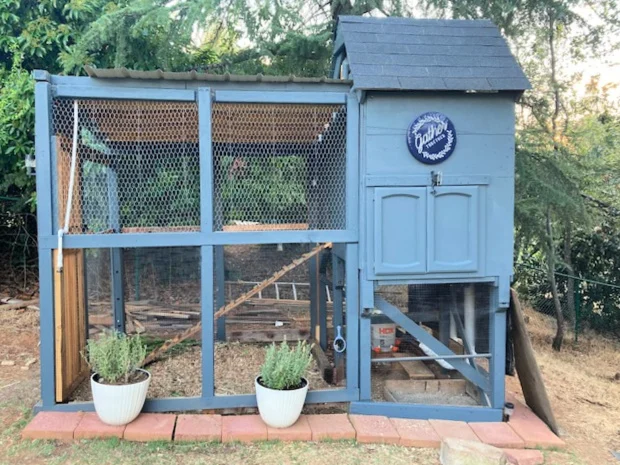
As the cost of living continues to fluctuate and interest in sustainable food sources grows, a family in Redding, California, has demonstrated a cost-effective approach to backyard agriculture by repurposing a children’s playhouse into a high-functioning chicken coop. The project, completed for approximately $300, highlights a growing national trend toward "upcycling" existing structures to mitigate the high entry costs associated with poultry husbandry. While retail chicken coops often range from $500 to several thousand dollars, this DIY conversion underscores the viability of using recycled materials and family labor to create a sustainable domestic environment.

The initiative began when the Redding-based family sought to establish a backyard flock but found the market prices for new poultry housing to be a significant barrier. By utilizing a playhouse that the children had outgrown, the family was able to bypass the most substantial expense of chicken keeping: the structural frame. This case study serves as a blueprint for other homeowners looking to integrate small-scale livestock into their suburban or rural properties without incurring heavy debt.
The Economic Context of Backyard Poultry
The surge in backyard chicken keeping has been well-documented over the last five years, accelerated initially by the COVID-19 pandemic and later by significant spikes in commercial egg prices. According to data from the U.S. Bureau of Labor Statistics, egg prices saw a historic increase in 2023 due to a combination of avian influenza outbreaks and rising feed costs. This economic pressure led many American households to investigate self-sufficiency.

However, the "start-up" costs of a poultry operation can be prohibitive. A standard coop designed for six to eight hens requires adequate square footage, nesting boxes, roosting bars, and predator protection. By choosing to convert an existing outbuilding, the Redding family managed to reduce their capital expenditure by an estimated 60% to 80% compared to purchasing a pre-fabricated "luxury" coop of similar dimensions.
Project Chronology and Construction Phases
The conversion process followed a logical progression from structural assessment to final aesthetic finishing. The family’s approach was rooted in the principles of the circular economy—minimizing waste by using what was already available on-site or within their community.

Phase 1: Structural Sourcing and Demolition
The foundation of the project was a standard wooden playhouse. The family began by assessing the structural integrity of the unit to ensure it could withstand the weight of additional modifications and provide adequate shelter from the elements. Simultaneously, the family reached out to their local network to source supplemental materials. This phase resulted in the acquisition of tin roofing pieces, roof tiles, and scrap lumber, all provided at no cost by friends and neighbors.
Phase 2: Modification and Integration
The most critical aspect of a playhouse-to-coop conversion is the modification of the interior to suit avian needs. The Redding family repurposed old cabinet doors to create access points and ventilation. An old closet door was integrated into the design to serve as a primary entrance for cleaning and maintenance. One of the more innovative features included the repurposing of a hinged storage box, previously used for pool supplies, which was transformed into a dedicated brooder box for young chicks.

Phase 3: Predator Proofing and Safety
Safety is a paramount concern in Redding, where local predators such as raccoons, hawks, and coyotes can threaten a flock. The family utilized hardware cloth and secure latches to ensure the playhouse was impenetrable. While chicken wire is often used by novices, professional-grade conversions like this one prioritize heavy-gauge mesh to prevent intrusion.
Phase 4: Aesthetic Finishing
To ensure the new structure complemented their property, the family opted to paint the coop the same color as their primary residence. This step, involving the children and even family friends, transformed a utilitarian agricultural structure into an attractive landscape feature.

The Human Element: Educational and Social Impact
The project was not merely a construction task but a multi-generational educational endeavor. The Redding family includes four children: Mya (17), Ezra (12), Eden Rose (10), and Joel (8). Each child played a specific role in the development of the coop and the management of the birds.
Ezra, specifically, took on the responsibility of the "labor of love" involved in hatching chicks. The family attempted to hatch eight eggs, successfully bringing two Barred Rock chicks to term. Ezra was tasked with turning the eggs three times daily, a process essential for the development of the embryo. When the hatch rate was lower than expected—a common occurrence in home incubation—the family used it as a teaching moment regarding the realities of biology and agriculture. To supplement their flock, they purchased additional chicks to ensure the children remained engaged and the flock reached a sustainable size.

The involvement of children in these projects provides significant developmental benefits, including:
- Responsibility: Daily care, feeding, and cleaning routines.
- STEM Education: Understanding incubation temperatures, humidity, and structural engineering.
- Environmental Stewardship: Learning the connection between waste (scraps) and production (eggs).
Technical Specifications and Analysis of Repurposed Structures
From a technical standpoint, playhouses are uniquely suited for chicken coop conversions because they are typically designed for human-scale interaction, making them easier for owners to clean than small, low-profile commercial coops. However, several modifications are non-negotiable for a successful transition.

Ventilation Requirements
Chickens produce a significant amount of moisture and ammonia through their droppings. A playhouse, designed for children, often lacks the high-level ventilation required for poultry. The Redding family addressed this by incorporating repurposed cabinet doors that could be opened or screened off, allowing for cross-breeze without creating drafts at the level of the roosting bars.
The Brooder Box Innovation
The use of a repurposed pool supply box as a brooder is a highlight of this project’s efficiency. A brooder must be draft-free and easy to clean. The Redding family enhanced their brooder with a "Dollar Tree" mirror, which provides visual stimulation for the chicks, and a feather duster placed near a warming plate to mimic the tactile comfort of a mother hen. This attention to detail reduces stress in young birds and increases survival rates.

Broader Implications for Sustainable Living
The Redding family’s success is part of a larger movement toward "homesteading" in suburban environments. This trend has implications for urban planning and local legislation. As more residents move toward self-sufficiency, municipal governments are increasingly being asked to clarify or expand ordinances regarding the number of hens allowed on residential lots.
The use of recycled materials also speaks to a growing environmental consciousness. By diverting scrap wood, old doors, and tin roofing from landfills, the project reduces the carbon footprint associated with the manufacturing and shipping of new materials. This "upcycling" approach is a cornerstone of sustainable development goals at the grassroots level.

Conclusion and Outlook
The conversion of a $300 playhouse into a "chicken mansion" in Redding, California, serves as a compelling case study for the intersection of economy, education, and environment. It proves that the barrier to entry for backyard farming does not have to be high, provided there is a willingness to apply "elbow grease" and creative problem-solving.
As the family prepares for the upcoming spring season, they anticipate expanding their flock to compensate for the natural slowing of egg production in their older hens. Their experience offers a clear roadmap for others: start with an existing structure, source materials locally, involve the whole family, and prioritize the health and safety of the animals. In doing so, households can secure a local food source while fostering a deeper connection to the land and the community.

For those without a playhouse, experts suggest monitoring digital marketplaces and community forums, where such structures are often offered for free or at a low cost to those capable of hauling them away. The Redding project stands as a testament to the idea that with a modest investment and a collaborative spirit, the dream of a backyard flock is well within reach for the average American family.
