
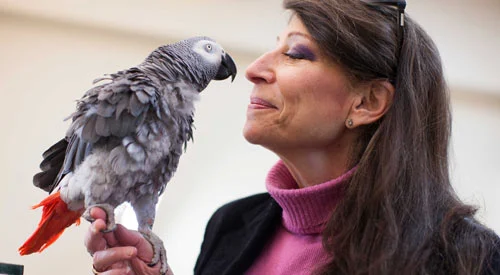
Dr. Irene Pepperberg, a renowned avian cognition researcher, recounted her harrowing experience of being stranded in Dubai amidst escalating geopolitical tensions, detailing a prolonged ordeal that saw flight cancellations, bureaucratic hurdles, and ultimately, a life-changing intervention from her foundation’s donors. Her narrative, shared in a personal blog post that has since been adapted for a broader audience, highlights the profound impact of unforeseen circumstances on international travel and the critical role of private support in navigating such crises. The account underscores the vulnerability of civilians caught in volatile regions and the complexities of governmental assistance during international disruptions.
A Descent into Uncertainty: The Initial Stranding in Dubai
Dr. Pepperberg’s predicament began when her scheduled flights out of Dubai were repeatedly cancelled, leaving her indefinitely stranded. The initial disruptions were attributed to a deteriorating security situation in the region, which led to widespread flight cancellations and airspace restrictions. While the U.S. State Department offered sympathetic, yet ultimately unhelpful, counsel, Dr. Pepperberg found herself facing a labyrinth of administrative challenges. Her attempts to secure a flight to Washington Dulles, a potential gateway to her home in Boston, were met with further frustration. A promising evening call from the State Department, offering a flight, dissolved into a four-and-a-half-hour wait for an email that never arrived. Subsequent attempts to contact the department revealed a fractured communication system, with "input" and "processing" desks operating in silos, incapable of bridging the gap to provide concrete assistance.
This bureaucratic disconnect left Dr. Pepperberg extending her hotel stay multiple times. She discovered that the United Arab Emirates’ offer to cover accommodation and food for stranded travelers was exclusive to passengers flying on Emirates Airlines. Fortunately, Dr. Pepperberg had been independently sourcing her meals from a nearby supermarket, thus avoiding additional costs. However, the lack of commercial flights from Dubai, particularly on her chosen carrier Qatar Airways, meant her planned route back to the U.S. via Doha was impassable. The situation was compounded by nightly "shelter in place" alerts, which offered little practical guidance as no designated shelters were available.
A Lifeline from Supporters: The Turning Point
The monotony of waiting was punctuated by ongoing communication with her colleagues in Dubai, ensuring mutual well-being amidst the pervasive uncertainty. Friends in the U.S. also attempted to offer support, but their efforts were similarly stymied by the same unhelpful State Department channels. During this period, Dr. Pepperberg made a video call to her lab, specifically to her African Grey parrot, Griffin, to reassure him that she had not abandoned him, a testament to the emotional toll of her isolation. She attempted to maintain a semblance of routine by reviewing papers, transcribing data, and reading journal articles, all while monitoring BBC news and relentlessly checking airline schedules. The financial burden of this extended stay was significant, with her phone bill alone exceeding $1,200 due to constant communication needs.
The turning point in Dr. Pepperberg’s ordeal arrived unexpectedly via an email from a donor to The Alex Foundation, seeking standard tax documentation. Upon learning of her situation, the donor’s response was immediate and profound: "Do whatever you have to do to get out and we’ll cover the expense!" This pledge of unconditional financial support offered a crucial lifeline. At the time, the primary alternative route discussed involved an arduous and costly 10.5-hour drive to Oman, followed by a potential onward journey. However, this option was only viable for British citizens who could access chartered flights organized by the U.K. government. As a U.S. citizen, this avenue was closed.
The U.S. government’s response, despite public pronouncements of evacuation efforts, appeared to prioritize embassy and consulate staff and their families, leaving private citizens to navigate the crisis independently. Dr. Pepperberg and her supportive donors remained in constant contact. The following day, an airline alert proved fortuitous: Emirates was slated to resume direct commercial flights to select U.S. cities. A swift online search revealed a single available seat on a business class flight to New York City scheduled for March 9th. Despite the substantial cost, Dr. Pepperberg, emboldened by her donors’ generosity, booked the ticket. This development brought a significant sense of hope, a "light at the end of the tunnel," amidst the grim news of the ongoing regional conflict.

The Perilous Final Leg: Navigating Dubai Airport and the Journey Home
The impending departure was not without its own anxieties. On Friday morning, just as Dr. Pepperberg was preparing to leave her hotel, a loud explosion reverberated, a disturbing sign given the hotel’s soundproofing and its proximity to the airport. News reports confirmed that an incident on the airport’s periphery, possibly involving a drone or shrapnel from an interception, had temporarily closed the airport. Fortunately, the closure was brief, lasting only a few hours.
With her flight scheduled for 1 a.m. on Sunday, the lack of clear check-in procedures created further stress. While Emirates typically allowed check-in 48 hours in advance, Dr. Pepperberg was informed she could not complete a partial check-in until 12 hours prior to departure. The uncertainty surrounding when she was expected at the airport led her to arrive early. She spent approximately an hour navigating the terminals with her luggage, seeking assistance. Eventually, a remarkably helpful woman inquired about her needs, her age, and arranged for personal assistance. A wheelchair was provided, an offer Dr. Pepperberg, by this point, gratefully accepted due to the overwhelming stress.
After several hours in an "elegant lounge," a perk of her business class ticket, she boarded the plane. The flight offered Wi-Fi, allowing her to immediately send emails to those tracking her situation, informing them, "I’m in the air." The relief of reaching U.S. soil was immense. However, the journey was not entirely over. She still had to navigate U.S. Customs, another TSA security screening, a lengthy layover in New York City, a subsequent flight to Boston, and the final leg from Boston Logan International Airport to her home. Yet, none of these subsequent steps seemed daunting; the critical element was that she was no longer in a war zone.
Lingering Impacts and Future Directions
The month following her return was consumed by rescheduling appointments and addressing the cascading effects of her prolonged absence. Dr. Pepperberg admitted to experiencing lingering post-traumatic stress symptoms, a testament to the psychological impact of being in a war zone, even for a limited period. Her experience offered a stark glimpse into the realities faced by individuals living in such environments for extended durations, prompting deep empathy and a profound appreciation for their resilience.
She remains in contact with her colleagues in Dubai, who, while safe, are undoubtedly experiencing considerable stress. The group is actively exploring options to conclude their ongoing research studies without requiring Dr. Pepperberg to return to the region the following year.
Looking Ahead: A Return to Science and Gratitude
Dr. Pepperberg’s immediate plan is to resume her regular blogging schedule next month, shifting focus back to the fascinating world of avian cognition and scientific discoveries. However, before concluding, she reiterated her profound gratitude to the donors whose timely and generous support was instrumental in facilitating her safe return from Dubai. Their intervention not only resolved her immediate crisis but also underscored the power of private philanthropy in enabling individuals to overcome extraordinary circumstances. The incident serves as a powerful reminder of the interconnectedness of global events and the personal ramifications they can have on individuals, highlighting the importance of both robust governmental support systems and the compassion of private citizens during times of crisis.
