
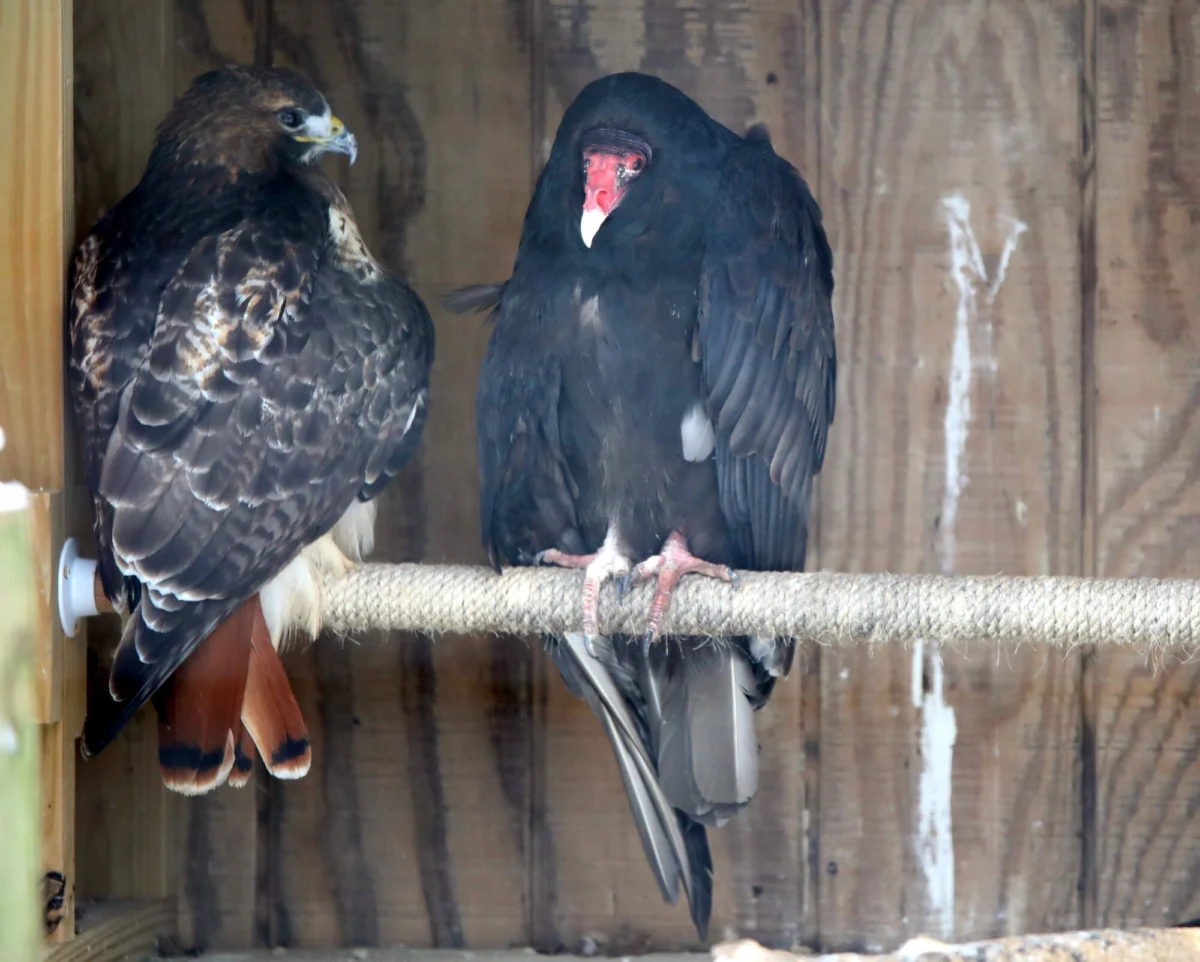
The profound capacity for connection, a hallmark of sentient life, often manifests in ways that transcend expected boundaries. This is vividly illustrated by the remarkable bond shared between Stan, a venerable Turkey Vulture, and Hunter, a seasoned Red-tailed Hawk, residents of the Elmwood Park Zoo in Norristown, Pennsylvania. Their story is not merely one of cohabitation but of a deep, enduring friendship that has blossomed over a decade, challenging conventional understandings of interspecies relationships in the animal kingdom.
Both Stan and Hunter arrived at the zoo under similar, unfortunate circumstances, each bearing the lasting impact of severe wing injuries sustained in the wild. These injuries, sustained by projectile trauma, rendered them unable to fly with the full capacity of their species. It is this shared vulnerability and the subsequent need for rehabilitation and a life of care that appears to have laid the foundation for their extraordinary companionship. The Elmwood Park Zoo, dedicated to providing sanctuary for injured wildlife, has become the unlikely arena where this remarkable avian alliance has flourished.
A Chronicle of Shared Trauma and Developing Camaraderie
The genesis of Stan and Hunter’s intertwined lives can be traced back to 2005, a year marked by significant arrivals at the Elmwood Park Zoo. Hunter, a Red-tailed Hawk, was the first to enter this narrative. Arriving in July 2005, she was transferred from a rehabilitation center that has since ceased operations. Her condition upon arrival was grave: a debilitating injury to her right wing, inflicted by an air-rifle pellet that had fractured her humerus. The severity of this trauma prevented the bone from healing correctly, leaving her with permanently impaired flight capabilities.
A mere month later, in August 2005, Stan, a Turkey Vulture, joined the zoo’s growing population of rescued birds. Her story echoed Hunter’s in its tragic origin. Found by the Newark Police Department, Stan, too, was suffering from a pellet lodged in her right wing. This injury likely resulted in fractures to her radius and ulna, necessitating immediate veterinary intervention. Like Hunter, the healing process was compromised, leading to a permanent reduction in her ability to fly.
The zoo staff, recognizing their shared physical limitations and the need for specialized care, made the decision to house them together in a spacious aviary. This decision, driven by practical considerations for their well-being, inadvertently created the environment for an unprecedented bond to form. Over the ensuing years, their initial coexistence evolved into a profound and visible friendship.
The Dynamics of Their Unusual Friendship
For at least ten years, Stan and Hunter have been recognized by zoo personnel as a "bonded pair." This designation signifies a level of mutual interaction and reliance that goes far beyond mere tolerance. Their shared enclosure, designed to mimic their natural habitats as much as possible while accommodating their physical limitations, has become their shared world.
Observations by zookeepers have illuminated the unique ways in which their friendship manifests. Food provision, a critical aspect of daily care, reveals a striking pattern of cooperation. It is often Hunter, the hawk, who takes the initiative in gathering and sharing food with Stan, the vulture. This behavior, particularly notable given the typical predatory instincts of hawks towards smaller creatures, underscores the depth of their connection.
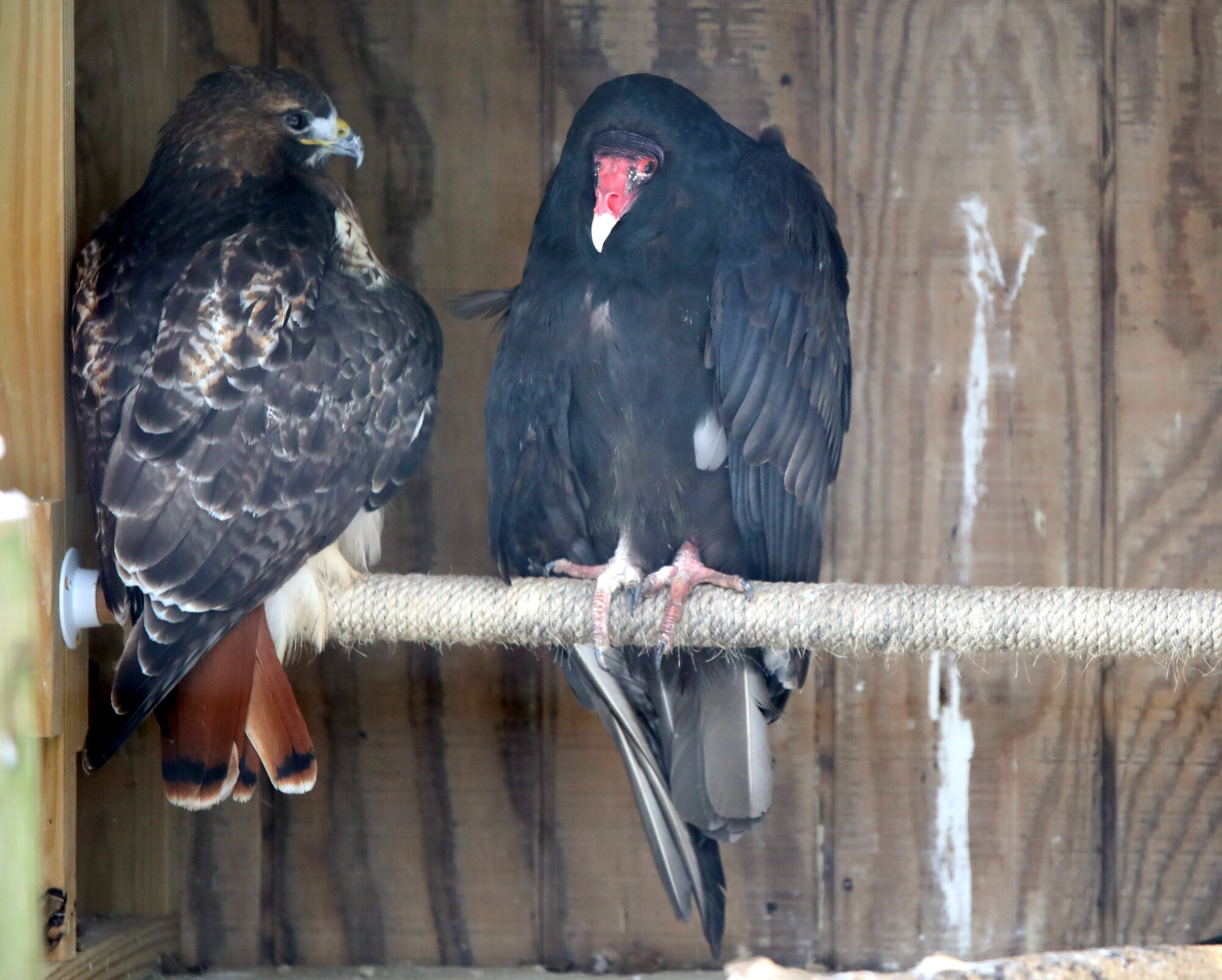
Furthermore, the pair has been frequently observed engaging in "allopreening," a behavior where birds preen each other’s feathers. This mutual grooming is a significant social activity in avian communities, typically reserved for mates or close family members. It signifies trust, affection, and a desire to maintain each other’s well-being. In the case of Stan and Hunter, allopreening serves as a tangible expression of their deep bond.
Perhaps one of the most touching demonstrations of their interdependence occurs when Hunter lays eggs. Despite being unable to lay eggs herself, Stan has been observed consistently sitting on Hunter’s eggs, providing warmth and comfort. This maternalistic behavior, directed towards the offspring of another species, is a powerful testament to the strength of their emotional connection and their integrated family unit within the aviary.
The Role of Shared Experience and Environment
The zoo staff at Elmwood Park Zoo has speculated that the birds’ shared experience of injury and their subsequent reliance on each other may have been instrumental in forging their unique bond. Being housed together without other conspecifics in their enclosure has undoubtedly fostered an environment where they have come to depend on each other for companionship and social interaction.
Dr. Evelyn Reed, a leading ornithologist specializing in avian behavior, commented on such interspecies friendships: "While rare, these cross-species bonds are not entirely unheard of, especially in captive environments where social dynamics can be altered. Animals that share similar social needs, physical limitations, or are introduced at a young age can form surprisingly strong attachments. The key often lies in mutual benefit, whether it’s for comfort, security, or even shared resources. In Stan and Hunter’s case, their shared history of injury and their placement together have likely created a powerful impetus for forming a cohesive unit."
The success of their cohabitation also highlights the importance of careful management and understanding of individual animal needs within zoological settings. The Elmwood Park Zoo’s commitment to observing and facilitating these natural behaviors has allowed a unique friendship to flourish, providing a valuable case study in animal welfare and interspecies interaction.
Broader Implications and Future Considerations
The story of Stan and Hunter resonates beyond the confines of the Elmwood Park Zoo. It serves as a poignant reminder of the complex emotional lives of animals and their capacity for deep connection, even across species lines. In an era increasingly focused on conservation and the ethical treatment of animals, their bond offers a compelling narrative that can foster empathy and a greater appreciation for the intricate web of life.
For the Elmwood Park Zoo, Stan and Hunter represent more than just popular residents. They are ambassadors for the often-overlooked avian species and living examples of the positive outcomes of dedicated wildlife rehabilitation and sanctuary. Their story can inspire further research into interspecies social dynamics in captive environments and inform best practices for the care of rescued wildlife.
Looking ahead, the zoo continues to monitor their health and well-being, ensuring their environment remains conducive to their continued comfort and companionship. While their future is intrinsically linked to their ongoing care at the zoo, the legacy of their extraordinary friendship is already firmly established, a testament to the power of connection in the most unexpected of places. Their story, etched in shared moments of preening, food sharing, and quiet companionship, stands as a beacon of hope and a profound illustration of the universal language of friendship.
