
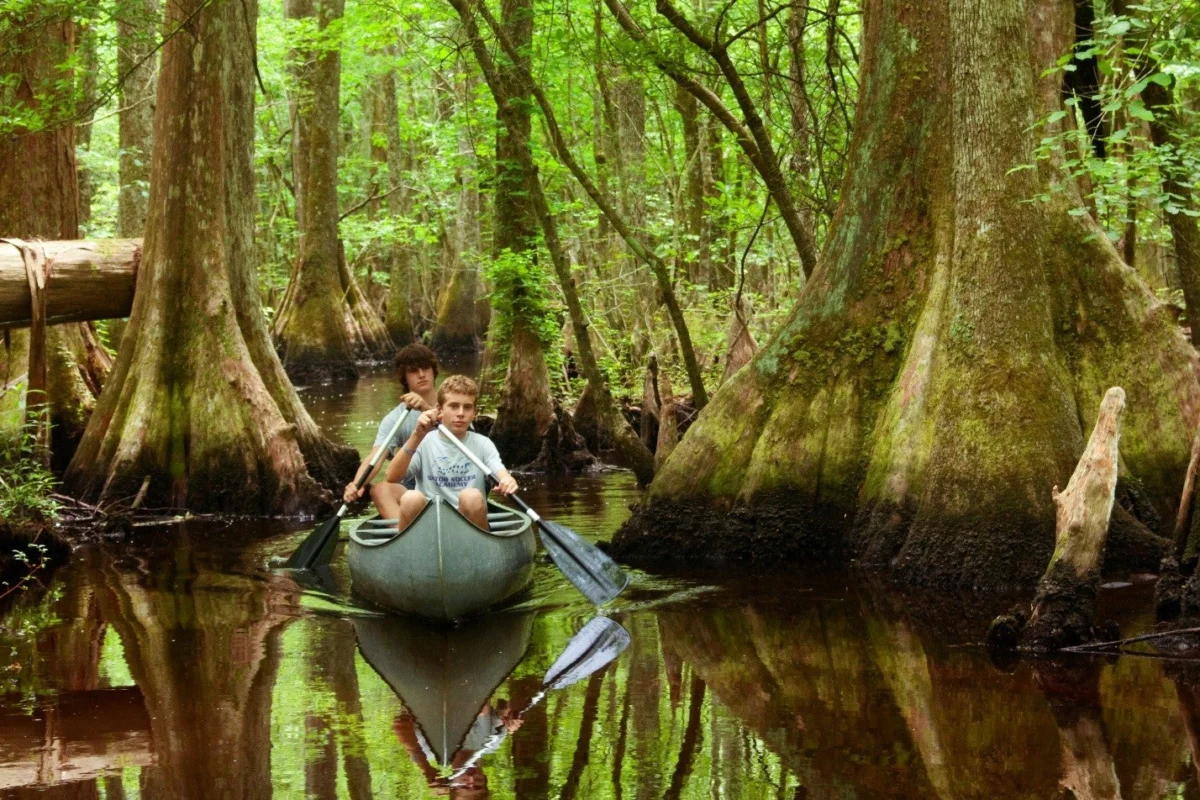
HARLEYVILLE, S.C. – The Francis Beidler Forest Audubon Center & Sanctuary, a critical ecological preserve protecting the largest tract of old-growth cypress-tupelo swamp in the world, is set to receive national recognition for its profound beauty and unparalleled biodiversity. On Saturday, May 9, 2026, Beidler Forest will be formally inducted into the prestigious Old-Growth Forest Network (OGFN) during a ceremony at its visitor center in Harleyville, South Carolina. This significant honor underscores the forest’s immense ecological value and its pivotal role in the preservation of ancient ecosystems.
The induction ceremony, scheduled to commence at 10:30 a.m., will feature remarks from representatives of Audubon South Carolina and the Old-Growth Forest Network. Following the formal proceedings, attendees are invited to participate in a family-friendly, guided interpretive hike along the sanctuary’s 1.75-mile, ADA-accessible boardwalk. This unique opportunity will allow visitors to immerse themselves in the pristine environment of the ancient swamp, witnessing firsthand the towering cypress and tupelo trees that define this remarkable landscape. Admission to the event is free, though registration for the guided walk is required to ensure proper group management and an optimal visitor experience. Interested parties can secure their spot via the Audubon website.
A Testament to Enduring Wilderness: The Francis Beidler Forest
The Francis Beidler Forest, often simply referred to as Beidler Forest, represents an ecological marvel, a living testament to the primeval forests that once covered vast portions of the American Southeast. Spanning approximately 18,000 acres within the Four Holes Swamp, a blackwater creek system flowing into the Edisto River, the sanctuary is globally renowned for safeguarding a magnificent 1,800-acre stand of old-growth cypress-tupelo forest. These ancient trees, some estimated to be over 1,000 years old, have stood largely undisturbed for centuries, forming a complex and resilient ecosystem that supports an extraordinary array of flora and fauna.
The unique hydrology of the cypress-tupelo swamp is central to its ecological function. The slow-moving, tannin-stained waters create an acidic environment that inhibits the decomposition of organic matter, leading to nutrient cycling that sustains the massive trees and myriad aquatic organisms. The characteristic "knees" of the bald cypress trees, protruding from the water, are believed to aid in gas exchange and structural support in the flooded conditions. This intricate system provides crucial habitat for a diverse range of wildlife, including over 140 species of birds, such as the colorful Prothonotary Warbler, various wading birds like egrets and herons, and raptors like Ospreys and Barred Owls. Mammals such as white-tailed deer, otters, and raccoons thrive here, alongside numerous reptiles and amphibians, including alligators and various snake and turtle species. The sheer scale and undisturbed nature of this old-growth tract make it an invaluable living laboratory for scientists and a sanctuary for endangered and threatened species.
The Old-Growth Forest Network: A National Conservation Imperative
The Old-Growth Forest Network is a national organization dedicated to preserving America’s vanishing ancient forests. Its mission is to identify, recognize, and ensure the preservation of at least one forest in every forested county in the United States, creating a "roadmap of family-friendly hikes that showcase the beauty, complexity and diversity of our nation’s oldest forests." By inducting forests like Beidler, the Network aims to raise public awareness about the irreplaceable value of old-growth ecosystems and inspire future conservation efforts.
Beidler Forest marks the third location in South Carolina to be recognized by the OGFN, joining a growing network of over 300 forests nationwide. This inclusion signifies that Beidler meets stringent criteria for old-growth status, typically defined by factors such as tree age, minimal human disturbance, diverse tree species, multi-layered canopy, and the presence of standing dead trees (snags) and fallen logs, all of which contribute to a unique ecological structure. The OGFN’s comprehensive list and interactive map, available at www.oldgrowthforest.net, serve as a vital resource for nature enthusiasts and conservationists alike, guiding them to these pockets of ancient wilderness across the country.
Voices from the Conservation Front
The induction of Beidler Forest into the OGFN has been met with enthusiasm from conservation leaders. Tim Evans, Director of Land Conservation at the Francis Beidler Forest Audubon Center, articulated the significance of this recognition: “The Francis Beidler Forest Audubon Center & Sanctuary protects the largest tract of old-growth, cypress-tupelo swamp in the world. We are proud to be a part of the Old-Growth Forest Network in an effort to bring more attention to the remaining ancient forests across the country.” His statement underscores both the unique global importance of Beidler and the broader mission of advocating for ancient forest preservation.
Ciera Wilbur, Southeast Regional Manager for the Old-Growth Forest Network, echoed this sentiment, emphasizing the unparalleled nature of Beidler Forest. “The Old-Growth Forest Network is thrilled to recognize the Beidler Forest in our Network as an unparalleled example of primary growth cypress tupelo. The stewardship of Audubon South Carolina protects this incredible place for generations to come.” Wilbur’s remarks highlight the critical role of organizations like Audubon in safeguarding these irreplaceable natural treasures through dedicated stewardship and long-term commitment.
Beyond these official statements, the recognition is expected to resonate with local community leaders and environmental advocates. A representative from Dorchester County might comment on the economic benefits of increased eco-tourism, stating, "This national recognition will undoubtedly draw more visitors to Harleyville and Dorchester County, boosting our local economy while fostering a deeper appreciation for our natural heritage." Similarly, a local environmental science educator could emphasize the enhanced educational opportunities, noting, "Beidler Forest has always been a living classroom, and this induction elevates its status, making it an even more compelling site for students to learn about ecology, biodiversity, and the importance of conservation."
Audubon South Carolina: A Legacy of Conservation
The Francis Beidler Forest is managed by Audubon South Carolina, a state program of the National Audubon Society, an organization with a venerable history dating back to 1905. Audubon South Carolina operates with a core mission to protect birds and the places they need, employing a multi-faceted approach that includes science, advocacy, education, and on-the-ground conservation. The organization’s commitment extends beyond mere protection, aiming to create sanctuaries that not only provide critical habitat for birds and wildlife but also offer public access to green spaces, inclusive educational programming, and vital ecosystem services for nearby communities.
Audubon’s involvement with Beidler Forest dates back to 1969 when the National Audubon Society purchased the initial 3,415 acres, saving it from logging interests. This act of foresight preserved the heart of the old-growth swamp. Over the decades, through strategic land acquisitions and partnerships, the sanctuary has grown to its current size, creating a formidable buffer against encroaching development and maintaining the ecological integrity of the Four Holes Swamp ecosystem. The organization’s ongoing efforts at Beidler include scientific research to monitor bird populations and habitat health, active management to control invasive species, and extensive educational outreach to engage visitors of all ages in the wonders of the natural world. Through social media channels like @BeidlerForest on Facebook and Instagram, Audubon provides updates on ongoing projects, wildlife sightings, and upcoming events, fostering a vibrant online community dedicated to the forest’s preservation.
The Broader Implications and Future Outlook
The induction of Francis Beidler Forest into the Old-Growth Forest Network carries significant implications, both locally and nationally. On a local level, it is expected to significantly boost eco-tourism, attracting a broader demographic of national and international visitors keen to experience a globally recognized ancient forest. This influx of visitors will likely stimulate local businesses, from hospitality to retail, contributing to the economic vitality of Harleyville and the surrounding Dorchester County. Furthermore, the enhanced visibility will likely translate into increased volunteer engagement and philanthropic support for Beidler Forest, strengthening its capacity for long-term stewardship.
From a conservation perspective, Beidler’s inclusion in the OGFN elevates its status as a critical natural heritage site, potentially leading to stronger protective measures and greater advocacy for its continued preservation. It underscores the urgent need to conserve remaining old-growth forests, which are increasingly rare and under threat from climate change, habitat fragmentation, and development pressures. These ancient ecosystems are not just repositories of biodiversity but also play a crucial role in climate change mitigation through their immense capacity for carbon sequestration. Old-growth forests store significantly more carbon per acre than younger forests, making their protection a vital strategy in the global fight against climate change. The cypress-tupelo swamp, in particular, acts as a natural sponge, absorbing floodwaters, filtering pollutants, and recharging groundwater, providing essential ecosystem services that benefit downstream communities.
Moreover, Beidler’s recognition serves as an inspirational precedent for other conservation efforts across South Carolina and the Southeast. By showcasing a successful model of preserving an ancient forest and making it accessible for public education, it encourages other landowners, communities, and conservation groups to identify and protect similar tracts of invaluable natural heritage. The OGFN’s goal of creating a national network of accessible old-growth forests contributes to a broader understanding and appreciation of America’s natural landscapes, fostering a conservation ethic that is crucial for future generations.
The ceremony on May 9, 2026, will not merely be an event; it will be a celebration of enduring wilderness, a recognition of dedicated conservation, and a call to action for continued stewardship. As the Francis Beidler Forest takes its rightful place within the Old-Growth Forest Network, it stands as a shining example of what can be achieved when humanity commits to protecting the planet’s most irreplaceable natural wonders.
For more information regarding the Francis Beidler Forest Audubon Center & Sanctuary or the upcoming induction ceremony, please contact Ben Graham, Senior Communications Manager, at 919-880-3793 or [email protected]. For inquiries about the Old-Growth Forest Network, Ciera Wilbur, Southeast Regional Manager, can be reached at 916.217.1894 or [email protected].
