
Thousands of years ago, on the lush, ancient Caribbean island of Hispaniola, a dramatic sequence of events unfolded, leaving behind a fossilized riddle for future generations. A colossal barn owl, a native rodent known as a hutia, and a burrowing bee all played a part in this prehistoric drama. The owl, a formidable predator of its time, carried its captured prey—a hutia—back to its cavernous roost to feed its hungry young. The swift, decisive meal concluded, leaving the unfortunate rodent’s skeletal remains scattered across the cave floor, slowly becoming part of the geological record. Much later, an industrious bee arrived, not in pursuit of prey, but in search of a secure sanctuary to construct its delicate nest amidst the accumulating debris and sediment. The question then arises, which one stayed behind? The answer, as science now reveals, is not as simple as merely stating "the one that cannot fly," but rather a testament to life’s extraordinary capacity for adaptation and the meticulous detective work of paleontologists. The bee, through an astonishing feat of natural engineering, chose to make a permanent home within the fossilized remains of the hutia, leaving behind a unique ichnofossil record that speaks volumes about ancient ecosystems and unexpected biological interactions.
This unusual chain of events, stretching back millennia, has recently been brought to light through an extraordinary discovery in the Cueva de Mono (Monkey Cave) in the southern Dominican Republic. It’s a narrative that intertwines predation, decay, fossilization, and an ingenious act of repurposing, painting a vivid picture of a long-lost Caribbean world. The finding provides an unprecedented glimpse into the adaptability of ancient insects and the intricate ways in which life finds a foothold even in the most improbable of circumstances, transforming the remnants of one life into the cradle for another.
An Ancient Ecosystem’s Unfolding Drama: Predators, Prey, and Preservation
The story begins with the apex predator of Hispaniola’s ancient nocturnal skies: the Giant Barn Owl (Tyto ostologa). Far larger than its modern relatives, this formidable avian hunter, estimated to stand up to a meter tall, was a dominant force in the island’s ecosystem. Its keen eyesight and silent flight made it a terror for the endemic rodents, particularly the hutias. Hutias, belonging to the family Capromyidae, are a group of large, guinea pig-like rodents native to the Caribbean. While several species of hutia still exist today, many, like the ones likely preyed upon by Tyto ostologa, are now extinct, victims of habitat loss and the arrival of humans and invasive species. The cave, Cueva de Mono, was not just a random resting place; evidence suggests it served as a long-term feeding site, a "paleo-midden" where generations of giant barn owls repeatedly brought their catches, leading to a significant accumulation of prey remains. This continuous deposition of bones, teeth, and other skeletal elements created a rich paleontological archive, a natural library of the island’s past fauna.
Over vast stretches of time, as the owl generations came and went, the cave’s environment played a crucial role in preserving these remains. Fine, clay-rich silt, washed in by rain or blown in by wind, began to accumulate, gradually burying and protecting the bones. This sediment, often damp and oxygen-poor in the darker recesses of the cave, provided ideal conditions for fossilization, a process where organic material is replaced by minerals, turning bone into stone. The cave itself, a product of Hispaniola’s pervasive karst geology—a landscape characterized by soluble limestone bedrock, sinkholes, and underground drainage systems—acted as a natural vault, shielding its contents from erosion and decay on the surface. It was within this slowly forming geological tapestry that the next protagonist, the burrowing bee, would eventually arrive, seeking not food, but shelter.
From Meal Remains to Miraculous Nests: The Bee’s Ingenious Adaptation
Fast forward thousands of years, to a period when the hutia bones were no longer fresh remains but hardened, fossilized structures embedded within the cave’s sediment. It was then that a burrowing bee, likely a species adapted to the challenging karst environment, began its search for a suitable nesting site. Burrowing bees, a diverse group including species from families like Andrenidae (mining bees) or Halictidae (sweat bees), typically construct their nests by excavating tunnels in stable soil. However, Hispaniola’s karst landscape, as researchers would later attest, is famously rugged and lacks widespread, stable soil deposits. The sharp, edgy limestone terrain makes digging arduous, if not impossible, in many areas.
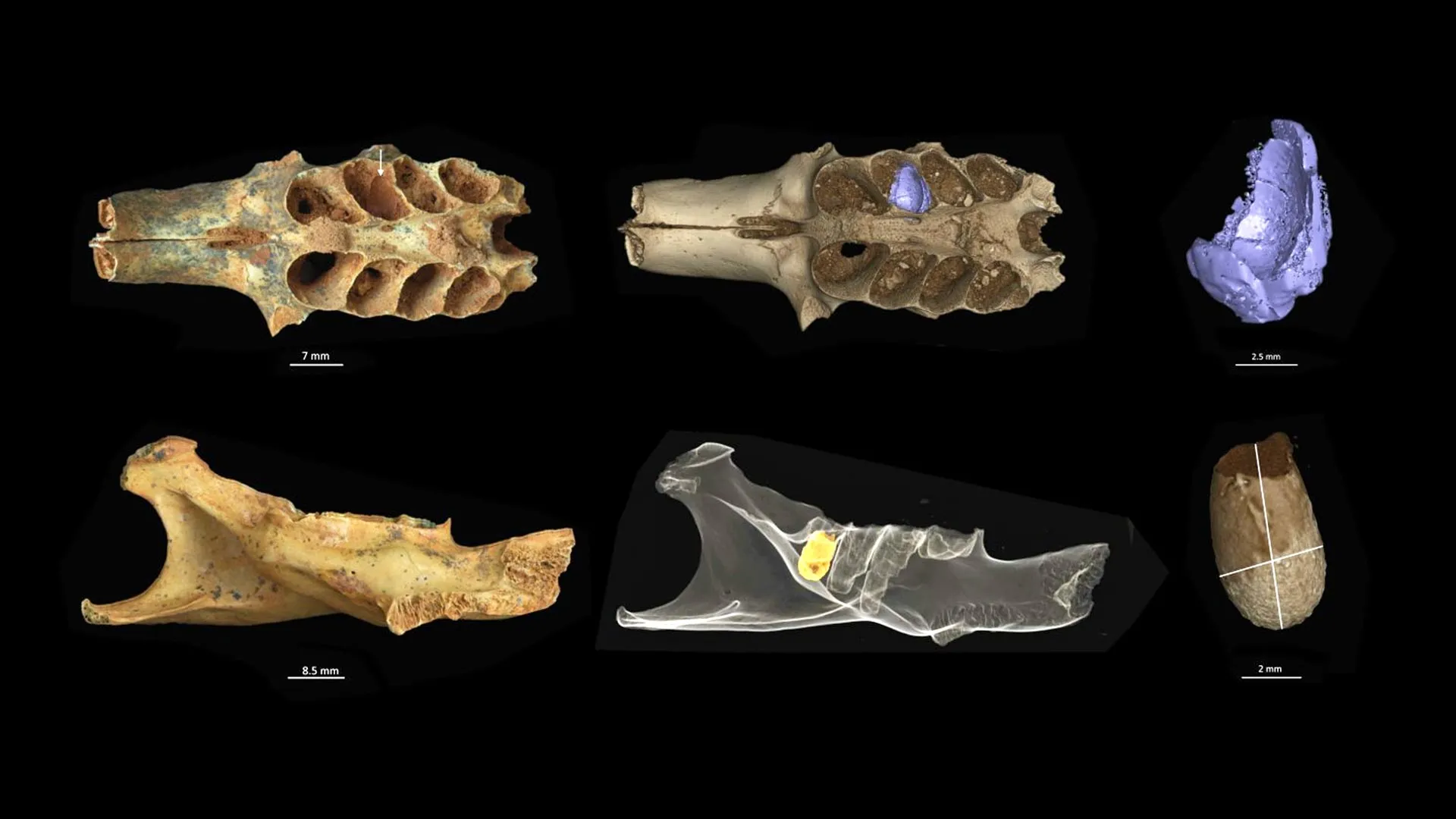
It was this environmental constraint that likely led the bee to an extraordinary, and until now, unprecedented adaptation. As the bee diligently dug into the fine, clay-rich silt within the cave, it encountered the fossilized remains of the hutia. Rather than an impediment, these ancient bones presented a serendipitous solution. Specifically, the hutia’s jaws, where teeth were once anchored in small sockets known as alveoli, offered ready-made cavities. Although the teeth themselves had long since fallen out or dissolved, the alveoli remained intact and empty. Crucially, their size and shape closely matched the bee’s requirements for constructing individual nest cells.
This discovery turned out to be far from an isolated incident. Over time, more bees followed, recognizing and utilizing these natural, pre-existing cavities within fossilized bones as ideal nesting sites. What makes this particular discovery so remarkable is not just the act of nesting within a cave, which is rare in itself for burrowing bees, but the utilization of fossilized bone structures without altering them. Bees are known to construct nests from various materials, often coating their nest cells with a waxy secretion to create a waterproof, polished interior, a detail that would prove crucial in identifying the true architects of these ancient structures. This adaptation not only highlights the incredible plasticity of insect behavior but also demonstrates how seemingly disparate elements of an ecosystem, separated by vast spans of time, can become intimately linked in the paleontological record.
The Journey of Discovery: From Cave to Lab and a Scientific Revelation
The remarkable discovery might have remained hidden if not for the meticulous attention to detail during the excavation process. Lazaro Viñola Lopez, then a doctoral student at the Florida Museum of Natural History, was deeply engrossed in his research on Hispaniola’s extinct hutia species. He had uncovered thousands of fossils from what appeared to be the same species within Cueva de Mono, recognizing the cave as a crucial site for understanding the island’s paleoecology. Typically, during fossil preparation, sediment is carefully removed from all cavities, including the alveoli, to clean and reveal the specimen’s features. However, Viñola Lopez, driven by a keen observational eye, chose a different approach.
Instead of immediately cleaning the thousands of collected fossils, he inspected them closely. One particular cavity stood out. Its inner surface was unusually smooth, a stark contrast to the rough, porous texture of the surrounding bone. This anomaly triggered a memory. "Usually, when collecting fossils, you get all the sediment out of the alveoli while cleaning the specimen," Viñola Lopez recalled. But this instance was different.
His mind flashed back to 2014, when he had encountered similar structures while collecting dinosaur fossils in Montana, where he and his colleagues had found wasp cocoons mixed with fossil material. His initial hypothesis for the Hispaniola discovery was that these smooth-walled structures were also wasp nests. "I’d seen something similar in Montana when I was collecting dinosaur fossils in 2014," he stated. He recalled thinking, "it would be nice to write a short paper reporting the occurrence of these wasp nests in the mandibles."
He shared this intriguing idea with his colleague, Mitchell Riegler, another doctoral student at the museum. Riegler, initially focused on his own extensive research, was not immediately swayed. "I was like, Lazaro, that’s a niche project, and I have a lot of other things to do." The idea was temporarily shelved, a fascinating but seemingly minor observation. However, the opportunity resurfaced when Riegler accepted a challenge from a former advisor: to write a scientific paper within a week. This playful yet rigorous exercise rekindled their interest in the peculiar cavities. "He and I played this game back and forth in which we tried to write a paper in a week," Riegler recounted.
Their initial assumption held: they believed they were documenting wasp nests. But as they delved deeper into the scientific literature, particularly research on ichnofossils—trace fossils that record past biological activity such as footprints, droppings, or nests—a critical inconsistency emerged. Wasp nests, typically constructed from chewed plant material mixed with saliva, possess characteristically rough, fibrous walls. The structures within the hutia fossils, however, were distinctly smooth. This crucial detail led them to a re-evaluation. Bees, particularly many species of burrowing bees, are known to coat the interior of their nest cells with a waxy, waterproof secretion, creating a polished, smooth lining. This distinction was the key that unlocked the true identity of the ancient nest builders. They had been studying bees, not wasps. This correction elevated the discovery from an interesting anecdote to a finding of profound scientific significance.
Unprecedented Insights into Ancient Bee Behavior and the Race Against Time
The accurate identification of the nest builders as bees, rather than wasps, dramatically amplified the importance of the discovery. This finding represents only the second known instance of burrowing bees nesting inside a cave globally, and critically, the first ever recorded case where bees utilized pre-existing fossil structures as nesting sites without any modification or excavation. Previous reports have described bees drilling into human bones, but never simply occupying natural cavities within fossilized remains in such an unaltered state. This distinction underscores the unique nature of the Hispaniola discovery, pushing the boundaries of what was previously understood about insect paleoichnology and adaptive behaviors.
Realizing the unprecedented nature and significance of their findings, Viñola Lopez and Riegler slowed their pace, expanding the scope of their study. They consulted with leading experts in modern bee ecology and reviewed vast quantities of scientific literature to ensure the accuracy and completeness of their interpretations. Viñola Lopez even returned to Cueva de Mono, undertaking further geological surveys to meticulously examine the cave’s stratigraphy and better understand the environmental context of the fossil layers.
Amidst this rigorous scientific investigation, the site faced a sudden and alarming threat. A plan emerged to develop the land surrounding Cueva de Mono, with the ominous intention of converting the invaluable paleontological site into a septic tank. This alarming development spurred the research team into immediate action. Understanding the irreversible loss such a conversion would entail, they embarked on an urgent "rescue mission" to salvage as many fossils as possible. "We had to go on a rescue mission and get as many fossils out as possible, and we got a lot of them," Viñola Lopez recounted, highlighting the constant, often precarious, balance between scientific discovery and the pressures of modern development. This heroic effort ensured that a substantial portion of the cave’s irreplaceable paleontological record was preserved for future study.
The final comprehensive study, published in the esteemed journal Proceedings of the Royal Society B, offered a detailed and multifaceted view of the cave’s long history and the extraordinary nesting behavior of these ancient bees. The investigation revealed that the bees’ ingenious use of fossilized cavities was not limited to hutia jaws. In one astonishing instance, a bee nest was discovered within the pulp cavity of a sloth tooth. Tree sloths, once a diverse and widespread group across the Caribbean islands, tragically vanished after the arrival of humans, making this particular finding a poignant connection between multiple extinct species. Another nest was identified inside a hutia vertebra, specifically within the neural canal, the space that once housed the animal’s spinal cord.
Advanced imaging techniques, specifically CT scans, further illuminated the intricate details of these ancient nests. These scans revealed that some cavities contained multiple layers of nests, stacked one inside another like Russian dolls. This indicated that rather than digging new tunnels, certain bees efficiently reused existing ones if they were found empty, a behavior that speaks to both resourcefulness and a potentially limited availability of suitable nesting sites. In one remarkable example, six distinct nests were found stacked within a single alveolus, each representing a separate act of construction and reproduction.
The Karst Conundrum: Why the Cave? And Broader Implications
The study also provided a compelling environmental explanation for this highly unusual nesting behavior. The surrounding landscape of Hispaniola, as previously noted, is dominated by karst topography. This geological feature, characterized by sharp, often inhospitable limestone formations, severely limits the presence of stable, diggable soil on the surface. "The area we were collecting in is karst, so it’s made of sharp, edgy limestone, and it’s lost all of its natural soils," Riegler explained, adding a personal anecdote of a fall to emphasize the challenging terrain.
Any soil that does accumulate on the surface in such environments is frequently washed into underground fissures and caves by rainfall, where it settles into pockets of fine, often clay-rich, sediment. These subterranean deposits, protected from surface erosion, may have provided some of the only viable nesting conditions for burrowing bees in the entire region. Thus, the cave, with its accumulation of fine silt and an abundance of pre-formed cavities within fossilized bones, became an indispensable haven, a rare oasis for life in an otherwise barren landscape for a burrowing insect. This highlights a profound example of ecological opportunism and extreme adaptation, where an organism reshapes its fundamental behavior to exploit a unique environmental niche.
The implications of this discovery extend far beyond merely identifying ancient bee nests. It significantly advances the field of paleoichnology, offering a unique window into the behavioral ecology of past insect life and the complex interactions within ancient ecosystems. The findings provide critical insights into the resilience and adaptability of life in challenging environments, demonstrating how organisms can creatively repurpose existing resources over vast geological timescales. For paleontology, it underscores the importance of meticulous observation and the potential for unexpected discoveries within seemingly mundane fossil collections.
Furthermore, this research contributes to a broader understanding of Caribbean paleoecology, helping scientists reconstruct the intricate web of life that once thrived on Hispaniola. The presence of nests within sloth teeth and hutia vertebrae provides tangible evidence of species interactions and environmental conditions that shaped the island’s unique biodiversity. It also serves as a powerful reminder of the irreplaceable value of paleontological sites like Cueva de Mono, emphasizing the urgent need for their protection from human development and destruction. Caves, as these findings demonstrate, are not merely dark holes in the ground but invaluable archives, teeming with stories of ancient life still waiting to be told.
The researchers continue to study other fossils recovered from the cave, anticipating additional findings that will further enrich our understanding of this remarkable prehistoric ecosystem. Their work, published in a leading scientific journal, stands as a testament to the power of careful observation and interdisciplinary collaboration, revealing how an ancient cave, once a site of predation and decay, transformed into a shelter for a completely different kind of inhabitant, forever preserving a moment of extraordinary adaptation in the stone record of time.
