
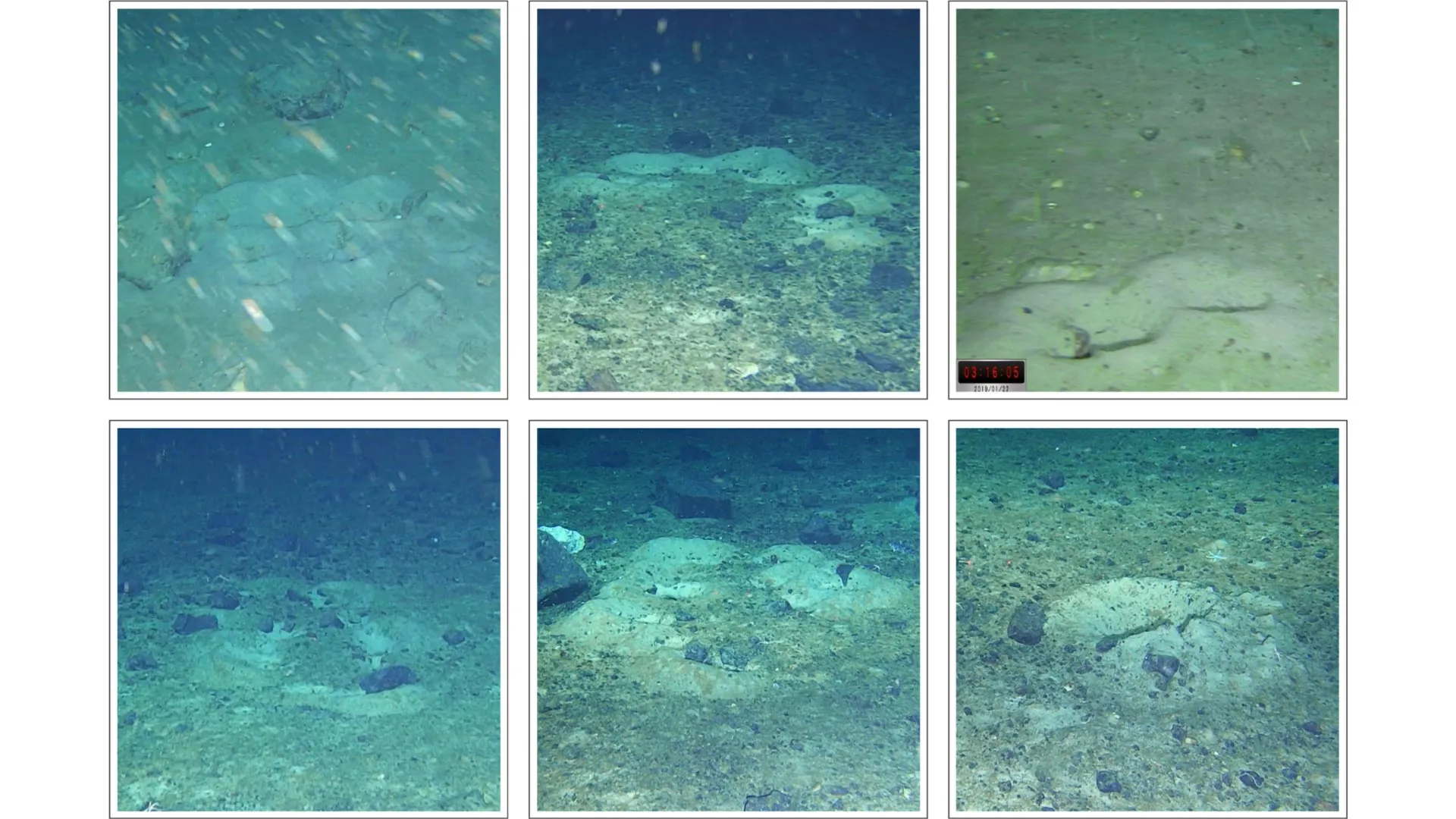
In a secluded section of Antarctica’s western Weddell Sea, an area once concealed beneath 200 meters of solid ice, researchers have made an extraordinary discovery. Beneath the surface, vast, organized fields of fish nests, meticulously maintained and arranged in striking patterns, have been found, offering an unprecedented glimpse into the hidden ecosystems thriving beneath the continent’s colossal ice shelves. This remarkable finding underscores the dynamic nature of Antarctic marine environments and highlights the urgent need for their protection.
The opportunity for this groundbreaking find emerged in the wake of the colossal A68 iceberg’s calving in 2017. Spanning an astonishing 5,800 square kilometers—an area comparable to the size of a small nation like Delaware or twice that of Luxembourg—A68 broke away from the Larsen C Ice Shelf, one of the largest remaining ice shelves on the Antarctic Peninsula. This monumental event opened a new, previously inaccessible window for scientific exploration into a seabed that had been shielded from direct observation for millennia.
Utilizing advanced underwater technology, specifically a remotely operated vehicle (ROV), scientists embarked on a journey into this newly exposed frontier. Their observations revealed a mesmerizing landscape: more than a thousand circular nests meticulously constructed on the seafloor. Each nest was found to be swept clean of the plankton debris that typically blankets the surrounding sediment, creating a stark contrast and an undeniable pattern of geometric order across the ocean floor. Images captured during the expedition vividly illustrate these sandy depressions: some stand alone along the perimeter, others form intricate curved lines at the center, and still others cluster together in dense groupings. All appear conspicuously free from the layer of phytoplankton detritus covering the nearby seabed, a sharp distinction easily visible in the central portions of the captured imagery.
The Weddell Sea Expedition: A Confluence of Science and History
This discovery was a direct outcome of the Weddell Sea Expedition of 2019, an ambitious undertaking with a dual mandate. Its primary objectives were to conduct a wide-ranging scientific survey in the waters around the Larsen C Ice Shelf and to search for the wreck of Sir Ernest Shackleton’s legendary ship, the Endurance, which was lost to the crushing pack ice in 1915 during his ill-fated Imperial Trans-Antarctic Expedition.
Scientists on the expedition were particularly focused on understanding the vital role played by Antarctica’s floating ice shelves. These massive extensions of land ice act as crucial barriers, effectively slowing the flow of glaciers from the continent’s interior into the ocean. When these shelves thin, fracture, or disintegrate—a process accelerated by rising ocean temperatures—that stabilizing effect diminishes significantly. This allows land ice to move more quickly into the ocean, directly contributing to global sea level rise. The calving of iceberg A68, therefore, presented a rare and invaluable scientific opportunity: researchers could now study a part of the seabed that had been completely sealed off until the ice broke away, providing a real-time, undisturbed look at how the region was responding to environmental change and the rapid exposure of new habitats.
Aboard the South African polar research vessel SA Agulhas II, the expedition team deployed an array of sophisticated autonomous underwater vehicles (AUVs) and remotely operated vehicles (ROVs) to navigate the challenging conditions. They faced the same kind of dense, formidable sea ice that had crushed Shackleton’s ship over a century earlier. The pack ice once again proved to be an insurmountable barrier, preventing the team from locating the Endurance in 2019. However, their experience maneuvering through these extreme conditions and operating advanced underwater technology in such a hostile environment paved the way for the later Endurance22 expedition. This subsequent mission, launched in March 2022, successfully located the remarkably preserved wreck of the Endurance, resting an astonishing 3,008 meters below the surface, a testament to both technological advancement and enduring human perseverance.
Guardians of the Deep: The Yellowfin Notie and Collective Survival
The architects of these intricate deep-sea nurseries were identified as a species of Antarctic rockcod known as the yellowfin notie (Lindbergichthys nudifrons). Each circular nest is believed to be meticulously tended by a parent fish, diligently guarding its precious clutch of eggs from potential predators. This dedicated parental care, observed in such a challenging environment, suggests a profound investment in offspring survival.
Researchers hypothesize that this communal nesting behavior reflects a highly evolved collective survival strategy. The dense groupings of nests illustrate a concept known as the "selfish herd," a theory in behavioral ecology where individuals in the center of a group gain protection from predators by being surrounded by others, while those on the edges bear a greater risk. Conversely, the solitary nests observed along the perimeter are thought to belong to larger, stronger, or more experienced fish, capable of defending their territory and offspring independently. The result is a finely balanced mix of cooperation and competition that collectively enhances the entire colony’s chances of survival against the myriad threats of the deep Antarctic waters. This complex social structure demonstrates an impressive adaptation to an environment characterized by scarce resources and intense predatory pressures.
A Vulnerable Marine Ecosystem: The Imperative for Conservation
This discovery holds far more than mere academic interest; it carries profound implications for marine conservation. The presence of such a vast, organized, and actively maintained breeding ground offers strong evidence that this specific region represents a Vulnerable Marine Ecosystem (VME). VMEs are defined by the United Nations Food and Agriculture Organization (FAO) as fragile yet vital habitats that support significant biodiversity, making them particularly susceptible to damage from human activities. The discovery of these Lindbergichthys nudifrons nests adds compelling data to the growing body of evidence supporting the VME designation for the Weddell Sea.
Significantly, this finding complements and strengthens earlier studies, including the landmark discovery published by Purser et al. in Current Biology in January 2022. That research identified an even larger, previously unknown breeding colony of a different Antarctic fish species, the icefish (Neopagetopsis ionah), in the same general region of the Weddell Sea, comprising an estimated 60 million nests. While the yellowfin notie nests represent a distinct discovery, both findings underscore the Weddell Sea’s unparalleled importance as a critical reproductive hotspot for Antarctic fish, serving as a fundamental pillar of the entire Antarctic food web.
Together, these extraordinary discoveries significantly bolster the scientific and political case for designating the Weddell Sea as a Marine Protected Area (MPA). MPAs are geographically defined zones where human activities are regulated or prohibited to achieve conservation objectives. Establishing such a protected status for the Weddell Sea would help preserve not only its iconic, charismatic wildlife—such as emperor penguins, Weddell seals, and various whale species—but also the hidden nurseries like these fish nests that sustain the entire Antarctic ecosystem from its very foundation. Currently, the Commission for the Conservation of Antarctic Marine Living Resources (CCAMLR), an international body responsible for conserving Antarctic marine life, is deliberating proposals for new MPAs in the region, including one for the Weddell Sea. This new evidence provides further impetus for these crucial conservation efforts.
Broader Implications: Climate Change, Ecosystem Response, and Future Research
The context of this discovery—an area exposed by the calving of a massive iceberg due to warming trends—underscores the profound impact of climate change on polar ecosystems. The rapid retreat of ice shelves is not merely a physical phenomenon but a catalyst for dramatic ecological shifts, revealing previously unknown habitats and potentially altering established food webs. The ability to observe these "new" environments in real-time provides invaluable data for understanding how marine life adapts, or struggles to adapt, to rapidly changing conditions. Scientists can now study the colonization rates, species succession, and the overall resilience of these newly exposed ecosystems, offering crucial insights into the broader ecological responses to a warming planet.
The discovery also highlights the sheer vastness and mystery that still pervade the planet’s deep oceans, especially in extreme environments like the Antarctic. Despite decades of exploration, much of the deep-sea floor remains uncharted, harboring countless unknown species and ecological interactions. The deployment of advanced autonomous and remotely operated vehicles is revolutionizing deep-sea exploration, allowing researchers to venture into areas previously deemed inaccessible due to ice cover, extreme depths, or harsh weather conditions.
Statements and Reactions
Lead scientists involved in the discovery, such as those from the Alfred Wegener Institute Helmholtz Centre for Polar and Marine Research, expressed profound awe at the scale and organization of the nests. Dr. Autun Purser, a deep-sea biologist and lead author on the related icefish colony paper, remarked, "The sheer density and vastness of this breeding area, whether it’s the icefish or these yellowfin notie, is truly astonishing. It fundamentally changes our understanding of Antarctic fish reproduction and the critical importance of these deep-sea habitats. It’s a clear signal that this region deserves the highest level of protection."
Conservation advocates from organizations like the Antarctic and Southern Ocean Coalition (ASOC) are expected to leverage these findings to intensify their calls for the swift establishment of the Weddell Sea MPA. "These discoveries are not just scientific curiosities; they are irrefutable evidence of a globally significant marine ecosystem at risk," stated a spokesperson for ASOC. "Protecting these nurseries is paramount not only for Antarctic biodiversity but for the health of our global oceans." Glaciologists and oceanographers have also weighed in, emphasizing that the exposure of these habitats serves as a stark reminder of the accelerating pace of ice loss in Antarctica and the cascading effects this has on all aspects of the polar environment.
Looking Ahead: Protecting Antarctica’s Hidden Wonders
The discovery of the yellowfin notie nests, alongside the monumental icefish colony, serves as a powerful reminder that even in the planet’s most extreme and seemingly inhospitable environments, life finds extraordinary ways to organize, adapt, and thrive. These hidden nurseries are not just biological marvels; they are critical components of a complex and fragile global ecosystem.
Future research will undoubtedly focus on the long-term monitoring of these newly exposed areas, studying the population dynamics of the yellowfin notie, and further investigating the intricate ecological relationships within these deep-sea communities. Understanding the full extent of biodiversity in the Weddell Sea, and how it is impacted by both natural processes and anthropogenic climate change, will be crucial for effective conservation. The imperative to designate the Weddell Sea as a Marine Protected Area grows stronger with each new discovery, aiming to safeguard these invaluable habitats for future generations and to preserve the enduring mystery and resilience of life at the bottom of the world.
