
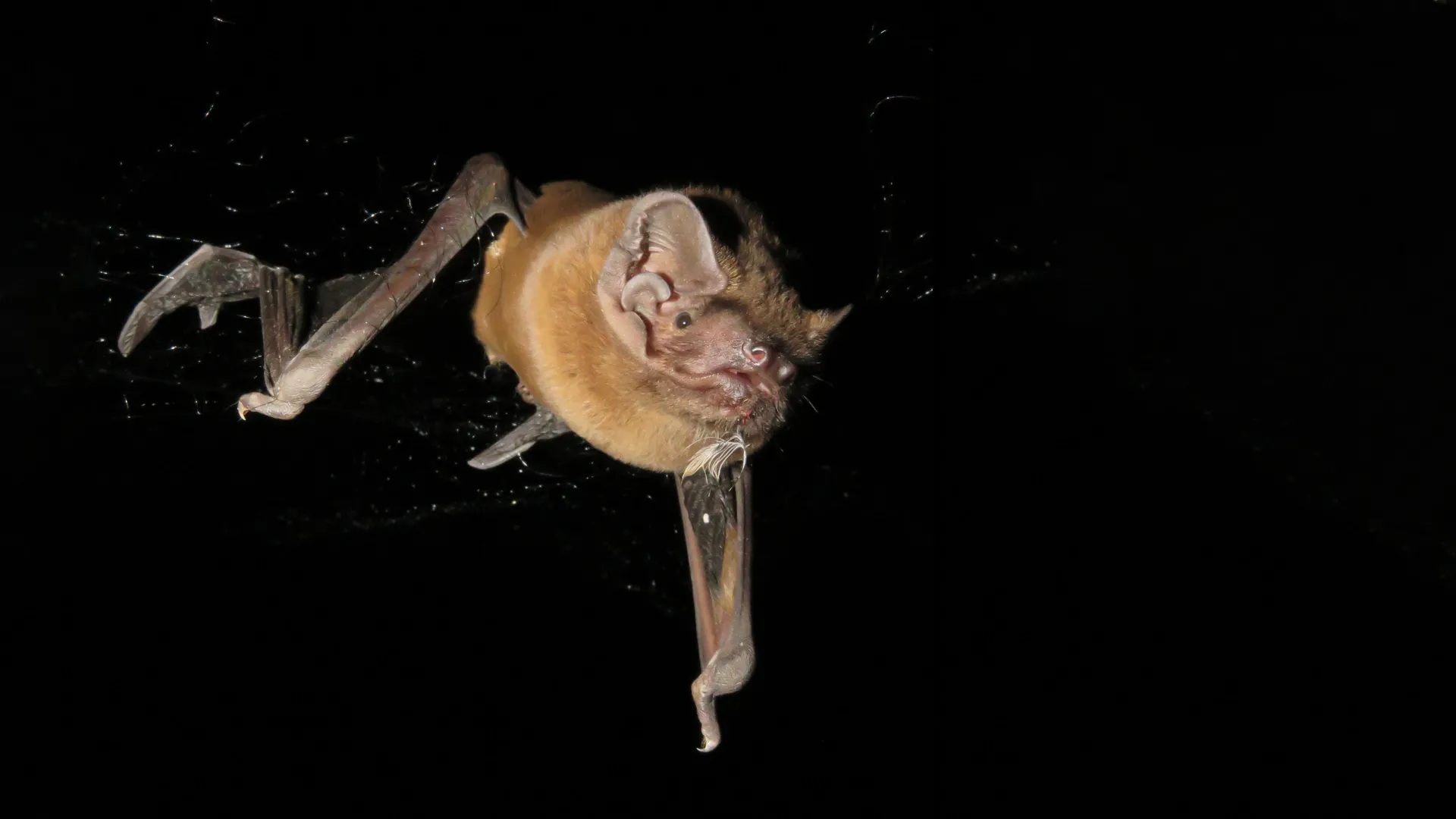
After nearly a quarter-century of dedicated investigation, an international team of scientists has conclusively solved a remarkable mystery surrounding Europe’s largest bat, the greater noctule (Nyctalus lasiopterus). Far from merely supplementing its diet with small birds, this formidable mammal actively hunts, captures, and consumes avian prey more than a kilometer above the ground, all while still in flight. This groundbreaking discovery, detailed in the prestigious journal Science, offers an unprecedented glimpse into the complex and often brutal world of nocturnal aerial predation, redefining our understanding of predator-prey dynamics in the night skies.
The Unveiling of a Nocturnal Predator
The findings reveal an astonishing narrative of high-stakes night-time aerial chases, precision attacks, and the remarkable ability to process prey in total darkness. Each year, billions of songbirds embark on arduous migrations between their breeding and wintering grounds, often choosing to travel under the cover of night and at high altitudes. This strategy is primarily a defense mechanism, designed to evade the keen eyes of diurnal predators such as hawks and falcons. However, as this research vividly illustrates, the darkness presents its own set of formidable dangers, with bats reigning supreme in the nocturnal aerial arena. The greater noctule, previously known to occasionally consume birds, is now definitively proven to be a skilled and dedicated avian predator, executing complex maneuvers and sophisticated hunting strategies that challenge previous assumptions about bat ecology.
A Quarter-Century Quest: The Hypothesis Takes Flight
The journey to confirm the greater noctule’s predatory prowess has been a long and arduous one, spanning nearly 25 years and involving numerous scientific endeavors and technological hurdles. The initial hypothesis that large bat species might prey on small birds during flight largely originated from the pioneering work of Spanish bat expert Carlos Ibáñez and his colleagues at the Doñana Biological Station (CSIC) in Seville.
It was nearly 25 years ago that Ibáñez first discovered compelling, albeit circumstantial, evidence: the presence of bird feathers within greater noctule droppings. This initial observation sparked a persistent curiosity and ignited years of meticulous effort to gather further evidence. His team embarked on a sustained monitoring program for this elusive forest-dwelling species, deploying innovative "smart" roosts. These specially designed roosts were equipped with antennas capable of detecting implanted microchips in the bats, allowing researchers to track movements, store valuable data, and receive real-time alerts on their mobile devices. Despite the accumulating indirect evidence, the scientific community largely remained skeptical. The sheer athleticism required for a bat to catch a bird mid-flight, especially considering that a bird can weigh nearly half as much as the bat itself, seemed an almost insurmountable challenge. Direct observation, crucial for definitive proof, proved impossible in the shroud of night.
Over the decades, researchers experimented with a variety of cutting-edge, yet ultimately insufficient, technologies. Attempts included using high-definition roost cameras, military-grade radar systems, hot-air balloons equipped with ultrasound recorders, and various iterations of GPS trackers. The primary obstacle remained the same: creating tracking devices light enough for bats to carry without impeding their natural flight and hunting behaviors, while simultaneously being robust enough to collect meaningful data in a challenging, high-altitude environment. The confirmation of this long-held hypothesis, therefore, represents not only a triumph in ecological discovery but also a testament to the relentless pursuit of scientific inquiry and technological innovation.
Technological Breakthrough: Riding on the Bats’ Backs
The decisive breakthrough arrived with the development of miniature biologgers by Aarhus University. These revolutionary devices, weighing mere fractions of a gram, were ingeniously designed to be fitted onto individual greater noctules like tiny "backpacks." This innovative approach allowed scientists to effectively "ride along" with the bats, gaining an unprecedented, first-person perspective on their nocturnal activities.
The biologgers were sophisticated instruments, capable of continuously measuring a suite of critical parameters. They recorded the bats’ altitude, providing precise information on their operational height above the ground. Accelerometers within the devices meticulously tracked the bats’ movements, revealing intricate details about their flight dynamics, including speed changes, turns, and dives. Crucially, the biologgers also captured the bats’ acoustic emissions, specifically their echolocation calls. This comprehensive dataset offered an unparalleled window into the bats’ high-altitude hunting strategies, confirming that these hunts occurred more than a kilometer above the ground, an astonishing feat for any aerial predator. The data streamed from these biologgers provided the missing pieces of the puzzle, validating decades of suspicion with concrete, measurable evidence.
The Mechanics of a Mid-Air Hunt
The data unveiled a highly specialized and effective hunting strategy. The greater noctules were observed soaring high into the night sky, often reaching altitudes exceeding 1,000 meters, to locate and ambush unsuspecting birds. A key advantage for the bats lies in the prey’s sensory limitations: unlike insects, birds are generally unable to detect the ultrasonic calls emitted by bats. This sensory disparity means that birds often only become aware of the imminent danger moments before they are caught, leaving little time for evasive action.
The bats’ success hinges on their ability to emit powerful, low-frequency echolocation calls. While higher frequency calls offer greater detail for close-range navigation and prey identification, lower frequencies possess superior penetration and a longer range, enabling the bats to detect birds at significant distances in the vast expanse of the night sky. Once a potential target is identified and the bat begins to close in, its echolocation strategy undergoes a rapid transformation. The powerful, long-range calls give way to rapid bursts of short, high-frequency calls, often referred to as a "terminal buzz." This acoustic shift signals the final, critical stage of the attack, allowing the bat to precisely track and intercept its agile prey.
The Dramatic Pursuit and Capture
Information extracted from the biologgers painted a vivid picture of the bats’ predatory maneuvers, showing them plunging towards their prey in steep, high-speed dives. These descents were described as reminiscent of fighter jets engaging in combat, highlighting the incredible agility and speed involved. The study documented two particularly illuminating chases, providing granular detail on the bats’ pursuit tactics. In the first instance, a bat dove for an impressive 30 seconds, continuously flapping harder and tripling its acceleration, all while emitting a barrage of attack calls. This pursuit, however, was eventually abandoned – a testament to the agility and evasive capabilities of migratory birds.
The second documented chase proved successful and offered a complete narrative of a successful hunt. This pursuit lasted an astonishing 176 seconds, or nearly three minutes, culminating in the bat capturing a robin near the ground. The biologger’s integrated microphone captured a chilling sequence: 21 distinct distress calls from the struggling robin, followed by a prolonged 23 minutes of chewing sounds. Crucially, this entire feeding process occurred while the bat continued to fly, albeit at a lower altitude, demonstrating its remarkable ability to manage both flight and consumption simultaneously.
Complementing the in-flight recordings, the research team conducted X-ray and DNA analysis of bird wings discovered beneath known hunting areas. These forensic analyses corroborated the in-flight observations, providing a clearer understanding of the post-capture events. The bat kills the bird with a decisive bite, then proceeds to remove its wings. This action is believed to serve a dual purpose: to reduce aerodynamic drag, making it easier for the bat to continue flying with its prey, and potentially to facilitate easier consumption of the main body. The bat then utilizes the membrane between its hind legs, a natural adaptation, as a temporary pouch to hold and eat the prey while still airborne, a truly extraordinary feat of aerial dexterity.
An Aerial Ballet of Life and Death
Assistant Professor Laura Stidsholt from the Department of Biology at Aarhus University, a lead author of the study, articulated the extraordinary nature of these interactions. "We know that songbirds perform wild evasive maneuvers such as loops and spirals to escape predators like hawks during the day – and they seem to use the same tactics against bats at night," Stidsholt explained. "It’s fascinating that bats are not only able to catch them but also to kill and eat them while flying. A bird like that weighs about half as much as the bat itself – it would be like me catching and eating a 35-kilo animal while jogging." This vivid analogy underscores the immense physical exertion and specialized adaptations required for such a predatory act.
Stidsholt herself has dedicated years to refining biologger technology for bat research, leading to numerous significant discoveries. Her work on this project, including data collection and analysis, was conducted during her tenure as a Postdoc at the Leibniz Institute for Zoo and Wildlife Research (Leibniz-IZW) in Berlin, highlighting the collaborative international effort behind this breakthrough. The energy expenditure for a bat to engage in such high-speed chases, capture, and then consume prey of significant relative mass, all while maintaining flight, represents an exceptional physiological adaptation. It paints a picture of a nocturnal ecosystem far more dynamic and competitive than previously understood.
Scientific Validation: Beyond Observation
The comprehensive nature of the study, combining advanced bio-logging data with forensic analysis, provides undeniable scientific validation for the long-standing hypothesis. The convergence of real-time flight data, acoustic recordings, and physical evidence (bird remains) leaves no room for doubt regarding the greater noctule’s capabilities as a mid-air avian predator. This multi-faceted approach significantly strengthens the credibility of the findings and establishes a new benchmark for studying elusive nocturnal species. The publication in Science further underscores the profound impact and significance of this discovery within the broader scientific community, marking it as a major advancement in the fields of ecology, ethology, and conservation biology.
The Human Element: Reactions and Significance
For the research team, the moment of confirmation was deeply profound. Co-author Elena Tena described hearing the recording of the robin’s distress calls and the subsequent chewing as both thrilling and sobering. "While it evokes empathy for the prey, it is part of nature," Tena reflected. "We knew we had documented something extraordinary. For the team, it confirmed what we had been seeking for so long. I had to listen to it several times to fully grasp what we had recorded." This emotional response highlights the human dimension of scientific discovery, where years of effort and intellectual curiosity culminate in moments of awe and profound understanding. The confirmation, particularly for Carlos Ibáñez as he neared retirement, served as a powerful validation of his life’s work and persistent belief.
Ecological Context: A Rare Predator’s Place
Despite the dramatic nature of this discovery, the greater noctule’s predatory behavior is not considered a threat to songbird populations. This is primarily due to the bat’s extreme rarity and its endangered status across many regions of Europe. The species faces significant challenges, predominantly habitat loss stemming from deforestation and the degradation of mature woodland ecosystems that provide essential roosting and foraging grounds. Its specialized hunting strategy, while remarkable, is likely a response to specific ecological pressures and opportunities, rather than a widespread threat to avian biodiversity.
The confirmation of the greater noctule as a dedicated avian predator fundamentally reshapes our understanding of nocturnal food webs and the intricate ecological roles played by species in these less-explored environments. It adds another layer of complexity to the already fascinating field of bat ecology, revealing an apex predator adapted to exploit a unique aerial niche.
Broader Implications for Conservation
Understanding the intricate behavior and ecology of the greater noctule is now more vital than ever for developing effective conservation and management strategies. The species’ dependence on specific forest habitats, combined with its specialized hunting techniques, means that conservation efforts must consider the full spectrum of its ecological needs. Protecting and restoring mature forest ecosystems, ensuring the availability of suitable roosting sites, and mitigating threats such as pesticide use (which can impact both bat prey and the bats themselves) are paramount.
This research not only sheds light on an extraordinary biological phenomenon but also underscores the urgent need to safeguard one of Europe’s most unique and elusive nocturnal predators. The continued survival of the greater noctule depends on a deeper appreciation of its ecological role and dedicated efforts to preserve its diminishing habitats. This study serves as a powerful reminder of the hidden wonders and delicate balances that exist within our natural world, urging us to protect these incredible species and the complex ecosystems they inhabit. The advancement in biologger technology, proven so effective in this study, also opens new avenues for researching other elusive and high-flying species, promising further revelations about the secret lives of animals in the most inaccessible parts of our planet.
