
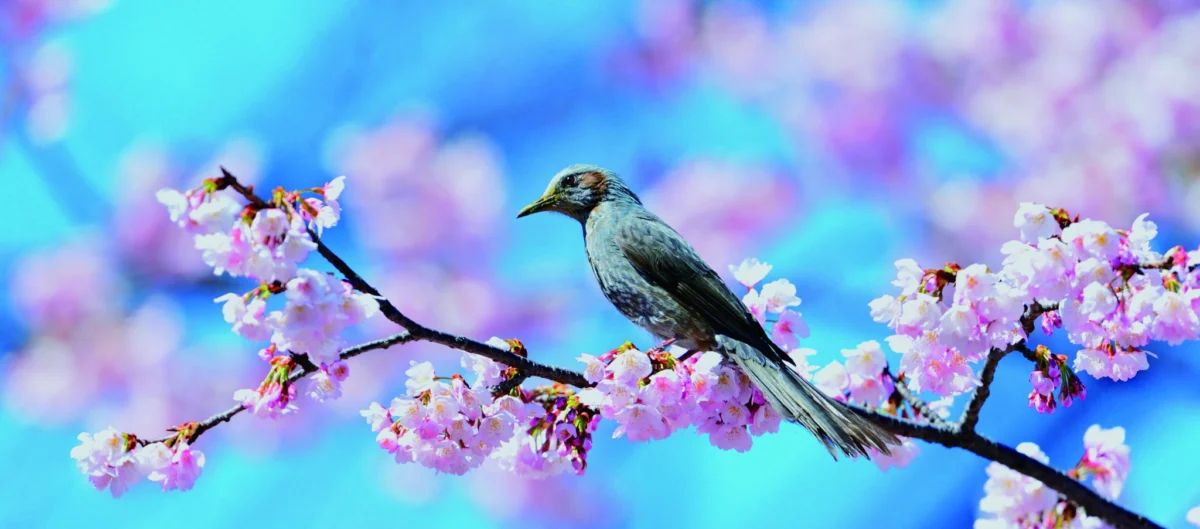
HIH Princess Takamado, a renowned ornithologist and passionate advocate for bird conservation, has penned a compelling article in Fujingahou Magazine (April 2026 issue) urging the public not to overlook the humble yet fascinating Brown-eared Bulbul. Through her personal observations and exquisite photography, the Princess highlights the species’ resilience, ecological significance, and the evolving challenges it faces, particularly in the context of global climate change and urban expansion. Her piece serves as a poignant reminder that even the most common birds hold unique stories and crucial roles within their ecosystems, deserving of closer observation and deeper appreciation.
The Royal Perspective: A Call for Renewed Appreciation
Princess Takamado’s contribution, titled "Through the Lens," underscores a sentiment often overlooked: the beauty and complexity inherent in everyday species. She laments the shortening of spring and autumn seasons, attributing this climatic shift to broader environmental changes, which she notes with regret given their inherent beauty. It is within this context that she champions the Brown-eared Bulbul (Hypsipetes amaurotis), a bird whose distinctive "hee-yo, hee-yo" calls earned it the Japanese name hiyodori. Despite its ubiquity, often ranking just behind sparrows and crows in familiarity among Japanese people, the Princess notes a prevailing dismissive attitude, where it is often considered "hardly worth observing" by even ardent birders.
Her photographs, accompanying the article, reveal a bird of unexpected charm – a characteristic that belies its sometimes-unpopular traits. The Princess acknowledges the Bulbul’s territorial aggression, often driving away other birds from cherry blossoms and camellias, and its piercing cries that can shatter the calm. These behaviors, she suggests, contribute to its lack of widespread affection among the Japanese populace. However, she presents an intriguing counterpoint: the species’ popularity among international birders. This interest stems largely from its restricted distribution, primarily across East Asia with a significant presence in Japan, making it a sought-after sighting for foreign visitors. This dichotomy of perception highlights a cultural blind spot, where familiarity may breed indifference, while rarity ignites enthusiasm.
Species Profile: The Brown-eared Bulbul (Hypsipetes amaurotis)

The Brown-eared Bulbul, scientifically known as Hypsipetes amaurotis, is a medium-sized passerine bird belonging to the bulbul family Pycnonotidae. It is characterized by its distinctive brown cheek patch, often giving it a somewhat "tousled" appearance, and a crest that stands erect when the bird is excited or alarmed. Its plumage is generally drab, ranging from grayish-brown to olive-brown, but the Princess’s photographs reveal subtle beauty, particularly the broad pale band visible on the underside of its wings during flight, which can appear strikingly whitish in certain light.
These birds are highly vocal, with their characteristic "hee-yo" calls serving various functions, from territorial defense to communication within flocks. Their adaptability is a hallmark of the species, allowing them to thrive in diverse habitats. While the Princess notes their historical preference for satoyama forests, their presence in urban and suburban environments today is a testament to their opportunistic nature and flexible dietary habits. The species exhibits a range of migratory patterns; populations in colder northern regions like Hokkaido and Tohoku undertake seasonal migrations to warmer southern areas, returning north in late spring. These diurnal migrations are a spectacular sight, often observed across Japan.
From Satoyama to Cityscapes: An Urban Adaptation Story
Princess Takamado’s article touches upon a significant ecological shift: the Brown-eared Bulbul’s expansion into urban areas. She recounts that in her childhood, in central Tokyo, despite abundant greenery, these loud birds were noticeably absent from gardens and residential areas. This aligns with historical records indicating that as recently as 50 to 60 years ago, Brown-eared Bulbuls predominantly inhabited satoyama forests—secondary woodlands traditionally managed by local communities—at elevations between 400 to 1,000 meters, descending to lower plains primarily during winter.
The transition of the Brown-eared Bulbul from its traditional satoyama habitat to thriving urban centers is a fascinating case study in avian adaptation, directly linked to two primary factors: increased "greening" in urban spaces and an abundance of diverse food sources. As Japanese cities developed, there was a concerted effort to integrate green infrastructure, including parks, street trees, and private gardens. These spaces, initially intended for human aesthetic and recreational benefit, inadvertently created new, viable habitats for wildlife. The dense foliage of urban trees and shrubs provides ample nesting sites, shelter from predators, and pathways for movement.
Moreover, the Bulbul’s omnivorous diet has been a critical enabler of its urban success. Unlike specialists, Hypsipetes amaurotis demonstrates remarkable dietary flexibility. They feed on nectar from a wide array of blossoms, including plum, apricot, cherry, and camellia. They consume willow buds and young leaves, various insects, and the berries of ornamental street trees such such as nandina and pyracantha. In suburban areas, they readily exploit human-provided food sources, including fully ripened fruits like persimmons, mandarins, grapes, and apples, as well as leafy vegetables such as cabbage and Chinese cabbage. Their ability to even drink sap from broken branches further ensures a year-round food supply, mitigating seasonal scarcities that might challenge more specialized species. This dietary opportunism makes them highly resilient to habitat changes and fluctuations in natural food availability.

Their breeding habits further demonstrate their urban adaptability. Brown-eared Bulbuls construct nests in city parks, residential areas, and private gardens, utilizing not only natural materials like twigs and plant fibers but also readily available anthropogenic materials such as vinyl and plastic. This "skillful use of materials found within human living spaces," as Princess Takamado observes, is a stark indicator of their robust survival strategies and their capacity to integrate seamlessly into human-dominated landscapes.
Ecological Role and Dietary Habits
Beyond their urban adaptation, Brown-eared Bulbuls play a significant ecological role. As prolific consumers of nectar and fruit, they act as important pollinators and seed dispersers, contributing to the health and propagation of various plant species in both natural and urban environments. Their insectivorous tendencies also help regulate insect populations, balancing the ecosystem. Their presence, though sometimes perceived as noisy or aggressive, is a sign of a functioning urban ecosystem capable of supporting avian life.
The Princess’s anecdote about the Bulbul flapping its wings against her sunroom window when the feeding table was empty vividly illustrates their intelligence and resourcefulness. This behavior, she notes, often led to the replenishment of food, which subsequently benefited other birds, suggesting a "small act of mutual support among the birds." While the Bulbul’s territorial nature is well-documented, this observation offers a glimpse into a more complex social dynamic, where even a dominant species can indirectly facilitate access to resources for others.
Taxonomic Intricacies and Conservation Implications
Perhaps one of the most intriguing aspects highlighted by Princess Takamado is the complex taxonomy of the Brown-eared Bulbul. Despite its widespread distribution across the Japanese archipelago and surrounding regions (including the southern Korean Peninsula and Sakhalin), populations from Hokkaido to Kyushu, the Izu Islands, Ogasawara, Amami, and Okinawa are currently classified into eight distinct subspecies. These subspecies exhibit variations in form and coloration, reflecting adaptations to their specific island or regional environments.

Ornithologists and taxonomists are actively studying these variations, and preliminary research suggests that these eight subspecies might be grouped into three larger categories. There is even a strong possibility that, with further genetic and morphological analysis, these three groups could eventually be reclassified as separate, distinct species. This potential taxonomic revision carries significant conservation implications. At present, the Brown-eared Bulbul is not considered globally threatened by organizations like BirdLife International, largely due to its wide distribution and robust overall population. However, if the species were to be divided into three separate species, the smaller, more isolated island populations—which often have unique genetic lineages and face specific threats—could easily be re-designated as "Endangered" or "Vulnerable." This reclassification would trigger increased conservation efforts, research, and protection measures tailored to their specific needs, underscoring the critical importance of ongoing taxonomic research in conservation biology.
Climate Change and Avian Habitats
Princess Takamado’s initial observation about the shortening of spring and autumn due to climate change connects the Brown-eared Bulbul’s story to a broader, global crisis. Climate change is impacting avian populations worldwide through altered migratory patterns, shifts in breeding seasons, habitat loss, and changes in food availability. For a species like the Brown-eared Bulbul, which exhibits both resident and migratory populations across its range, these changes can have profound effects. Warmer winters in northern Japan, for example, might reduce the migratory imperative for some populations, while altered flowering times of nectar-producing plants could disrupt crucial feeding cycles. The Princess’s keen awareness of these environmental shifts adds a layer of urgency to her call for observing and appreciating common species, as they too are indicators of ecological health.
A Call for Deeper Observation and Appreciation
Princess Takamado concludes her article with a powerful plea: rather than dismissing the Brown-eared Bulbul with a casual "Oh… it’s just a Brown-eared Bulbul," she hopes for a shift in perspective. She advocates for people to "warmly observe and appreciate its handsome appearance and acrobatic movements." This message transcends the specific species, serving as a broader call to connect with the natural world around us, especially the familiar elements we often take for granted.
In an era where biodiversity loss is a critical concern, fostering an appreciation for common species is paramount. These birds, thriving amidst human landscapes, are ambassadors of resilience and adaptation. Their continued presence provides an accessible entry point for ecological awareness, allowing individuals to witness nature’s dynamism firsthand. By encouraging a closer look at the Brown-eared Bulbul, HIH Princess Takamado not only celebrates a unique Japanese bird but also inspires a more mindful and appreciative relationship with the natural environment, vital for the future of all species, common and rare alike. Her initiative, supported by Fujingahou Magazine and BirdLife International, reinforces the idea that conservation begins with observation and understanding, transforming the seemingly ordinary into a subject of wonder and respect.
