
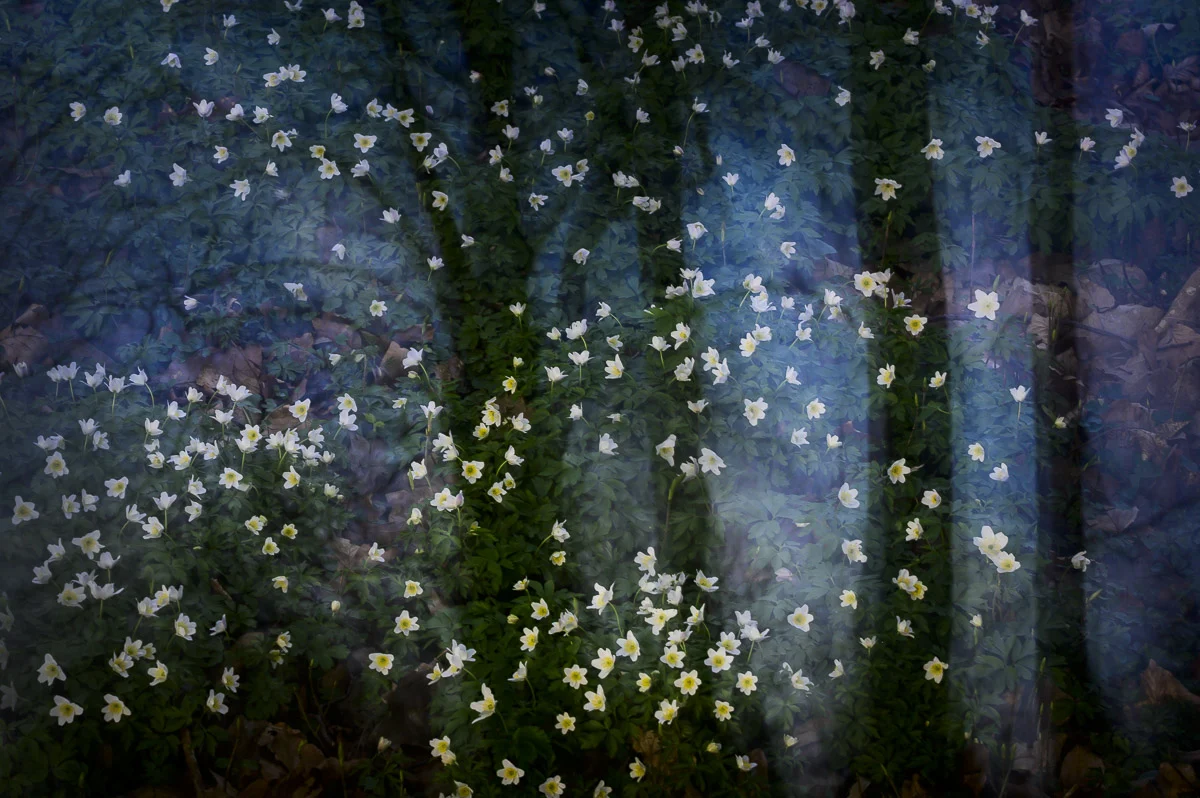
How does one truly capture a compelling photograph? While many often point to the finished image’s attributes—strong composition, impeccable technique, or pleasing color—the profound artistry often unfolds long before the shutter clicks, within the crucible of the creative process itself. This philosophy, championed by practitioners within the nature photography community, posits that the most impactful images are not pre-visualized targets but rather emergent discoveries born from a dynamic interaction with the environment.
The Genesis of the Emergent Image
The conventional wisdom in photography frequently emphasizes mastering a checklist of technical and compositional rules. While these are undoubtedly valuable qualities, providing a foundational grammar for visual communication, they represent only one facet of the photographic journey. For a growing number of photographers, the crucial phase begins on location, in the throes of the moment. It’s about how one arrives in a scene, what captures attention amidst prevailing conditions, and how one remains receptive to the unfolding reality. This approach moves beyond striving for a predefined result, instead prioritizing an authentic engagement with the process, allowing a visual narrative to emerge rather than being forced into a preconceived mold.

Often, initial ideas or "target photos" fade upon arrival. The light might deviate from expectations, wildlife may not appear as imagined, or an unexpected element might disrupt a planned frame. Weather shifts, landscapes transform, and the scene itself dictates new priorities. The photographer’s role then becomes one of active response. Experience, knowledge, and technical prowess are vital, but they serve as a toolkit to be deployed as needed, not as an inflexible blueprint. The ultimate destination of the image remains an open question, an ongoing discovery. This iterative method stands in contrast to a purely analytical approach, fostering a more intuitive and adaptive photographic practice.
The Interactive Triad: Nature, Perception, and Design
At the heart of this philosophy lies an interactive triad: nature, perception, and design. Each element plays a distinct yet interconnected role, shaping the photographic outcome in a continuous feedback loop.
- Nature: This is the raw, untamed canvas, providing the initial situation. It’s the unpredictable force of light, the ephemeral presence of wildlife, the intricate patterns of a frost-laden landscape, or the subtle textures of a forest floor. Nature dictates the initial conditions, presenting both opportunities and challenges that demand a flexible approach. Data from conservation photography, for instance, often highlights the transient nature of ideal conditions, underscoring the need for photographers to be ready to adapt to sudden changes in weather, animal behavior, or light quality.
- Perception: This is the photographer’s internal filter, the active process of seeing. It determines what stands out, where the gaze lingers, what details are consciously or subconsciously ignored, and what elements begin to accrue significance. Perception reduces complexity, condenses vast information, and constantly shifts the center of gravity within a scene. It’s a highly subjective yet trained act, honed through countless hours in the field. Neuroscientific studies on visual perception suggest that attention is a dynamic process, constantly re-evaluating and prioritizing stimuli, a phenomenon directly applicable to how a photographer navigates a complex visual environment.
- Design: This represents the photographer’s creative response to the interplay of nature and perception. Technical execution, from aperture and shutter speed to focal length and lighting, is integral to design but serves the evolving image, not a predetermined one. By not locking into a fixed outcome, the photographer creates space for serendipity, allowing chance occurrences—a sudden gust of wind, an unexpected ray of light, a subject’s fleeting movement—to profoundly shape the work, often in ways that far exceed any initial plan. The first photograph taken in a sequence is rarely the final. Instead, it acts as feedback, returning to perception, altering what is noticed next, and nudging subsequent decisions in an organic, responsive flow.
This dynamic interplay is not merely theoretical; it manifests concretely in the field. The following case studies, drawn from actual photographic expeditions, vividly illustrate this triad in action, demonstrating how an image is sculpted through continuous engagement and adaptation.

Case Study 1: Frost Leaf – A Dance with Light and Serendipity
One particularly cold night, the photographer embarked on an impromptu journey to a local park pond, famous for its bald cypress trees. The severe temperature drop had transformed the familiar landscape: the water was frozen solid, adorned with intricate patterns of ice, fallen branches, and snow. Amidst this detailed tapestry, a single leaf, encased in the frozen surface, captured the photographer’s attention.
The initial image, while capturing the delicate crystal structure of the ice, left the leaf feeling isolated, disconnected from its surroundings. The relationship between the subject and the surface remained ambiguous. This feedback prompted the first significant design response: the introduction of artificial light. A flash, equipped with a wireless trigger, was positioned directly on the ice to cast a low, raking side light. The immediate effect was transformative; even minute adjustments to the flash’s position dramatically altered how the ice crystals and the leaf interacted, the display screen becoming an instant canvas for iterative refinement.
As the light began to articulate the surface with greater clarity, an LED panel was introduced to gently open up the shadows, adding another layer of depth and dimension. This, too, involved a process of test, reject, and adjust. Then, an unforeseen moment of chance occurred: the flash slipped, inadvertently aiming more directly into the ice rather than across it. This accidental shift, visible only on the camera’s display, proved to be a pivotal turning point. Suddenly, the leaf separated from the surface in a profoundly new way, and previously hidden structures beneath the ice emerged into view. The entire scene shifted, evolving beyond a mere "leaf on ice" into a complex, coherent system exploring the intricate interplay of leaf, ice, and light. This instance underscores how technical tools, combined with an open mind and a willingness to embrace accident, can unlock unforeseen artistic possibilities.

Case Study 2: Dragonfly in Backlight – The Art of Patient Adaptation
A visit to a nearby lake, a familiar haunt for dragonflies, began with the implicit expectation of replicating previous photographic successes. However, the conditions had changed, demanding a complete reset of the photographer’s approach. What initially drew the eye was not the dragonflies themselves, but the reed grass, bathed in glorious backlight as the sun hung low, causing the stems to glow with an ethereal luminescence. The photographer began to meticulously search for an angle that would allow the background to recede into darkness, thereby accentuating the radiant glow of the reeds.
As this initial composition was being refined, dragonflies began to dart through the scene, appearing and vanishing with dizzying speed. The combination of the striking light, the rapid motion, and the structural beauty of the reeds irrevocably shifted the photographer’s attention, leading to a state of highly focused waiting. The camera was framed to anticipate the insects’ entry, and a very fast shutter speed was selected—a critical technical decision given the dragonflies’ inability to hover politely for the camera. Wildlife photography often demands such rapid, decisive technical adjustments, with modern cameras offering burst rates of 15-30 frames per second to increase the odds of capturing a fleeting moment.
Initially, despite the anticipation, no decisive moments materialized. The photographer switched to continuous shooting and, crucially, softened their gaze, allowing peripheral vision to register movement more effectively than intensely staring through the viewfinder. Bursts of frames were fired whenever a dart of motion was sensed. Reviewing these initial images revealed a persistent problem: the dragonflies were almost invariably outside the plane of focus. This feedback prompted another technical adaptation: switching to manual focus and stopping down the aperture. This decision sacrificed some background blur but created a deeper zone of sharp focus, effectively covering both the reeds and the anticipated flight corridor of the dragonflies. More patient waiting and repeated bursts followed. Out of hundreds of frames, a testament to persistence and adaptive technique, one image finally harmonized focus, position, and the dramatic backlight, yielding the desired result.

Case Study 3: Slime Moulds – Unveiling the Microcosm
Autumn woods often present a symphony of muted tones and intricate details, but sometimes, the most captivating subjects remain hidden until actively sought. On one such outing, the photographer initially found nothing particularly compelling. Trees, leaves, and mushrooms were photographed, but the resulting images, repeatedly checked on the display, lacked impact. They served as feedback, indicating a deeper search was required.
It was within one of these initial, seemingly unremarkable frames that a revelation occurred: fine, threadlike structures on a fungus, identifying them as slime moulds. The camera had acted as an extension of perception, revealing a world invisible to the naked eye. This discovery immediately shifted the focus. Moving closer, the photographer sat on the forest floor, the earthy scent of decomposition filling the air, and began the meticulous process of deliberately framing this tiny microcosm.
As time was spent observing, small swellings at the ends of the threads became apparent, providing a crucial focal point, a "center" around which attention could tighten. The introduction of an LED light dramatically transformed the scene. Shadows formed, danced, and returned, creating dynamic interplay between light, blur, and structure. Each frame became a step deeper into this minute world, a continuous cycle of checking the display, adjusting, and refining, until the intricate beauty of the slime moulds was fully realized. Macro photography, a specialized field, often relies on such meticulous attention to detail and controlled lighting to bring hidden worlds to life, emphasizing the role of tools in expanding human perception.

Broader Implications and The Enduring Triad
These three distinct scenarios—the frozen leaf, the fleeting dragonfly, the hidden slime moulds—share a common underlying logic. They exemplify how photographic attention shifts and how decisions organically grow out of that shifting awareness. This philosophy transcends the faithful application of rules, instead highlighting the pivotal moment when intuitive seeing and deliberate choosing coalesce.
Technical competence, far from being a rigid adherence to dogma, becomes a liberating force. The more fluent a photographer is in the mechanics of composition, exposure, and lighting, the less cognitive load is expended on these elements in the field. This mastery allows the technical aspects to recede into the background, freeing the mind to be fully present and responsive to the nuances of the unfolding scene. Rules, accumulated experience, and advanced techniques are not ends in themselves but rather indispensable tools. They support the creative work but do not define its limits. The skilled photographer knows when to employ them to serve the emerging image and, crucially, when to discard them if they become an impediment to genuine expression.
This responsive, iterative approach has significant implications for photographic education and artistic development. It encourages a deeper, more mindful engagement with subjects, fostering patience, observation, and adaptability—qualities that extend beyond the viewfinder into a broader appreciation of the natural world. It challenges the notion of a single "correct" way to photograph, instead promoting a fluid, exploratory mindset where the journey of discovery is as vital as the final destination.

Ultimately, the triad of nature, perception, and design remains central. Nature sets the stage, with its boundless beauty and inherent unpredictability. Perception directs the gaze, filtering and focusing the photographer’s attention. And design, the creative response, sculpts the visual narrative, always leaving room for that invaluable element: chance, which, every now and then, utterly transforms everything. This dynamic interplay defines the emergent image, a testament to the power of responsive creativity in the art of photography.
