
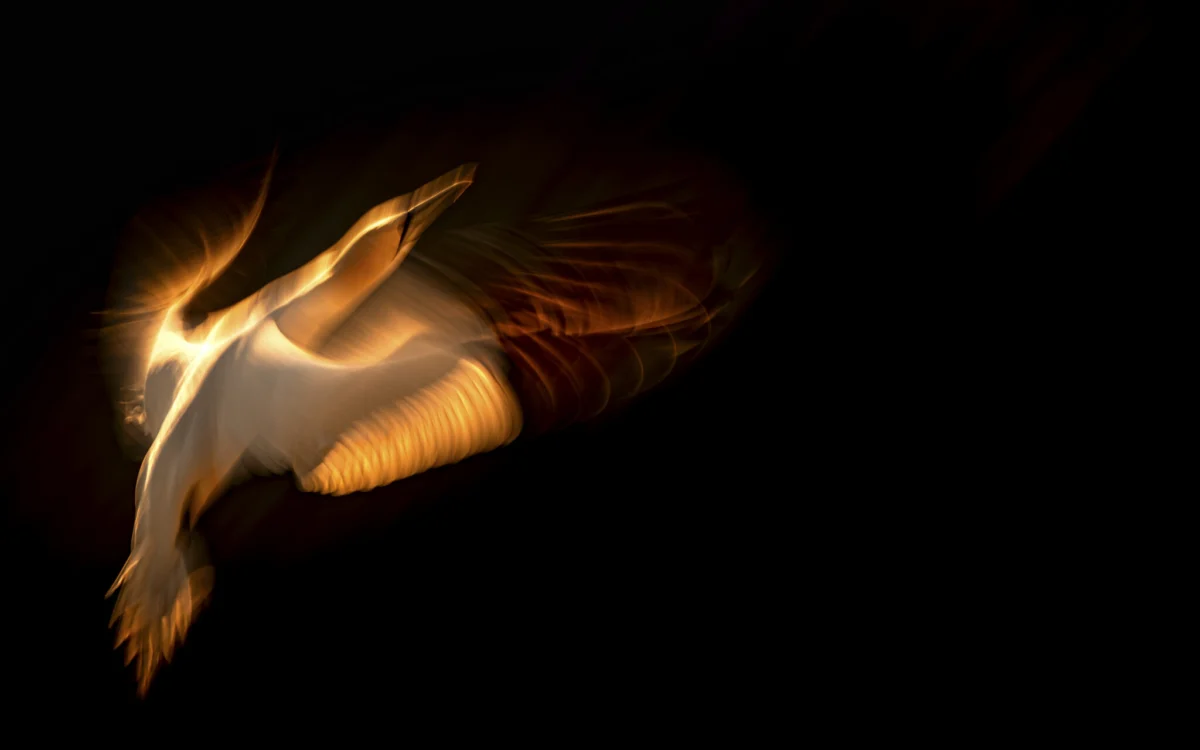
In an era where wildlife photography often prioritizes technical precision and textbook compositions, photographer Rachel Bigsby advocates for a more emotive and profound approach, which she terms "natural artistry." This philosophy transcends mere image capture, seeking instead to translate the intrinsic essence of nature into a visual language that resonates deeply with viewers, aiming to evoke the feeling of being present with wildlife rather than simply documenting its appearance. Her work, particularly focused on seabirds, challenges conventional notions of photographic perfection by embracing environmental elements and the raw, often imperfect, reality of the wild.
Central to Bigsby’s artistic vision is the concept of a "moment just before the shutter," a heightened state of awareness where external distractions fade, allowing for a profound connection with the subject. She describes this as perceiving a "sentence being written in a language older than any of us," emphasizing that wildlife photography is fundamentally about witnessing and understanding nature’s inherent grammar through patience and presence. This perspective views nature not as a static subject to be cataloged, but as a dynamic entity with its own narrative, which the photographer endeavors to interpret and share.

The phrase "natural artistry" is carefully chosen by Bigsby to denote an inherent aesthetic that exists within the natural world, rather than an imposed style or interpretation by the photographer. She posits that this artistry resides in the fluid grace of a seabird riding the wind, the interplay of light on feathers, the stillness preceding a dive, or the vibrant chaos of a storm-tossed colony. It is not just about capturing beauty, but about revealing the deeper story—the "essence" of a species expressed through light, movement, texture, color, behavior, environment, and perspective. Her guiding principle is to photograph what it feels like to be near seabirds, transforming them from mere objects into subjects imbued with character and emotion.
A Lifelong Connection Forged in the Wild
Bigsby’s profound connection with the natural world predates her photographic career. Her late grandfather, a naturalist and fisherman, instilled in her a reverence for nature, teaching her to "truly see" rather than merely observe. This early mentorship fostered a foundational appreciation for the intricate details and processes of the environment. At the age of six, her involvement with the Scout Association further cemented this bond, exposing her to rugged landscapes and long periods outdoors, transforming "scenery" into a living companion. This period served as an informal classroom, deepening her understanding and intimacy with nature.
Photography entered her life more subtly. Initially experimenting with an iPod camera, Bigsby explored how light interacted with dewdrops or how a dandelion’s silhouette could appear drawn rather than grown. Her interest solidified dramatically after an encounter with a Northern Fulmar gliding along coastal cliffs near her home. This moment, witnessing the bird’s "oceanic mastery" and "defiance of gravity," sparked an urgent research expedition into the species, revealing its connection to the legendary albatross. This discovery was a pivotal turning point, transforming seabirds from a photographic subject into the very focus of her world.

Her path to becoming a recognized seabird photographer was marked by dedication and hands-on experience. Bigsby saved for her first DSLR camera, which opened doors to exploring new species, colonies, and photographic challenges. Recognizing that direct experience was paramount, she actively sought opportunities to immerse herself in seabird habitats. This included extensive volunteering on remote islands, where she undertook physically demanding tasks like scrubbing compost toilets, scything bracken, and repairing weather-beaten structures. These experiences, often involving arduous labor during the day, provided her with invaluable access to colonies at dusk when the birds reclaimed their spaces. This sustained period of observation, listening, and learning about seabird behaviors, biology, and ecology forms the bedrock of her credibility and informs her artistic vision.
Beyond Conventional Perfection: The "Imperfect" Shot
Bigsby critically assesses the conventional pursuit of technical perfection in wildlife photography, which often prioritizes razor-sharp focus, clean backgrounds, and adherence to established compositional rules. She argues that this singular focus can lead to images that are "competent and forgettable," showing what a bird looks like but failing to capture its essence.
A formative experience reinforced this belief: her first truly moving photograph was of an Atlantic Puffin in flight. Despite being technically "imperfect"—soft focus, slow shutter speed, cluttered background—the golden light piercing its delicate wings transformed its movement into a "whisper of motion," dissolving into the atmosphere. This image, she recounts, resonated deeply because it conveyed a feeling rather than merely documenting a species. It demonstrated that emotional impact often outweighs strict technical adherence.

This realization led Bigsby to embrace the inherent chaos and fluidity of the wild. Seabirds, she notes, do not conform to human expectations of perfect backdrops or ideal lighting; their lives are governed by weather, tide, hunger, fear, and instinct. Consequently, her images aim to reflect this reality rather than creating an artificial sense of order. She recalls a week volunteering on an island where persistent rain, fog, and mist initially disheartened her, as these conditions were antithetical to traditional "perfect light." However, she eventually understood that for the birds, this was not "bad weather," but simply life. By ceasing to resist and instead collaborating with the environment, she discovered new artistic avenues, inadvertently stepping into high-key imagery that later became a signature style. This experience underscored that meaningful images often emerge when photographers respond honestly to their surroundings, rather than imposing preconceived notions of perfection.
The Elements of Natural Artistry
Bigsby’s "natural artistry" is a multi-faceted approach that emphasizes seeing beyond the obvious and recognizing the intrinsic artistic elements within nature. She identifies several key components:
- Light as Emotional Spine: For Bigsby, light is far more than a technical setting; it is the "emotional spine" of an image. It dictates how a subject is perceived, felt, and remembered, adding drama and mood. She recounts observing a Shetland gannet colony where the first light illuminated high peaks against darkness, and a single gannet lifted from shadow into brilliant light, appearing like a "brushstroke." This experience taught her that light conveys not just clarity, but profound emotional depth.
- Purposeful Color and Monochrome: She rarely seeks bold colors for their own sake, instead considering how color supports the emotional tone of a scene. For instance, the subtle, stormy tones of Northern Fulmars are best complemented by chalk-white cliffs or dark grey rock, allowing their inherent mood to emerge, whereas a bright blue background might overwhelm them. When color becomes a distraction, she intentionally uses monochrome, not as a shortcut to seriousness, but as a deliberate choice to direct attention to the fundamental elements of shape, light, and texture.
- Texture and Shape: Texture, in her view, makes a photograph tangible, allowing the viewer to "feel salt in the air." Shape provides intentionality, transforming wildlife into design through curves, arcs, symmetry, and contrast. These elements combine to create images that are both aesthetically pleasing and deeply evocative.
- Environment as Character: Bigsby stresses that the environment is never merely a background; it is an integral part of the narrative and character of the subject. A bird isolated from its context is "just" an animal, but when honestly situated in its world, it tells a story of scale, struggle, intimacy, resilience, and fragility. This includes acknowledging difficult truths within nature—beauty braided with grief, life alongside loss—and presenting them truthfully and respectfully without exploitation.
The Language of Birds: Patience and Presence
Patience, for Bigsby, is not passive waiting but an active understanding of what one is waiting for. This understanding stems from learning the "language" of nature, specifically the behaviors, biology, and ecology of seabirds. Countless hours spent observing seemingly ordinary actions—preening, shifting, calling, settling, rising—have taught her to recognize subtle cues: a tightening posture, a lifted glance, a repeated gesture that signals an imminent action. This deep observational practice transforms photography from a game of chance into an intentional pursuit.

This level of immersion fosters a reciprocal relationship between photographer and subject, moving beyond "taking" images to "listening" to the wild. Such profound listening, she believes, yields moments that feel like gifts: reunion rituals, courtship exchanges, synchronized movements between bonded birds, or unexpected softness amidst the chaos of a colony. These are not just behaviors but compelling stories of devotion, endurance, and survival, playing out on exposed cliff edges where the wind is a constant presence.
Seabirds remain her primary muse because they embody freedom and resilience, sculpted by millennia of time and tide. They inhabit the "edge of the world," and in their presence, Bigsby finds her own sense of liberation. Her work with species like the King Penguin (Aptenodytes patagonicus) on Macquarie Island, Northern Gannets (Morus bassanus) at Noss NNR in Shetland and RSPB Bempton Cliffs, Australasian Gannets (Morus serrator) at Muriwai in New Zealand, and Razorbills (Alca torda) on Skomer Island in Wales, exemplifies this dedication to depicting the species within their dynamic, often challenging, environments. These locations represent critical breeding grounds for millions of seabirds globally, many of which face significant conservation challenges, including habitat degradation, climate change impacts, plastic pollution, and overfishing. Bigsby’s images serve as powerful reminders of these fragile ecosystems.
Implications for Conservation and Photographic Practice
Rachel Bigsby’s "natural artistry" philosophy carries significant implications for both the field of wildlife photography and broader conservation efforts. By prioritizing emotional resonance and authentic storytelling over technical dogma, she encourages photographers to connect more deeply with their subjects and their environment. This approach can lead to more impactful images that foster genuine empathy and understanding in viewers, which is crucial for inspiring conservation action.

In a world increasingly disconnected from nature, compelling visual narratives are vital. Bigsby’s work demonstrates that photographs which convey the feeling of the wild can educate and engage audiences more effectively than purely documentary shots. Her willingness to embrace "imperfection" – blurred motion, atmospheric conditions, or unconventional compositions – expands the artistic vocabulary of wildlife photography, suggesting that truth and emotion are often found outside the confines of rigid rules. This aligns with a growing movement in nature photography that values artistic expression and emotional depth alongside scientific accuracy.
Furthermore, her emphasis on extensive observation and understanding of animal behavior before photographing highlights ethical best practices. Minimizing disturbance and truly understanding a species ensures that images are not only authentic but also captured respectfully, reinforcing the role of the photographer as a witness rather than an intruder. This stands in contrast to practices that might prioritize a "perfect" shot at the expense of animal welfare or natural behavior.
Bigsby’s work serves as an invitation to fellow photographers: to look closely, wait longer, allow the unpredictable elements of weather to shape the frame, and to photograph the world not just as it appears, but as it profoundly feels. In doing so, she champions a form of wildlife photography that educates through beauty and honors the wild by telling its complex, unvarnished truth, ultimately asserting that the most memorable and impactful images are born from the unique vision and heart of the individual photographer.
