
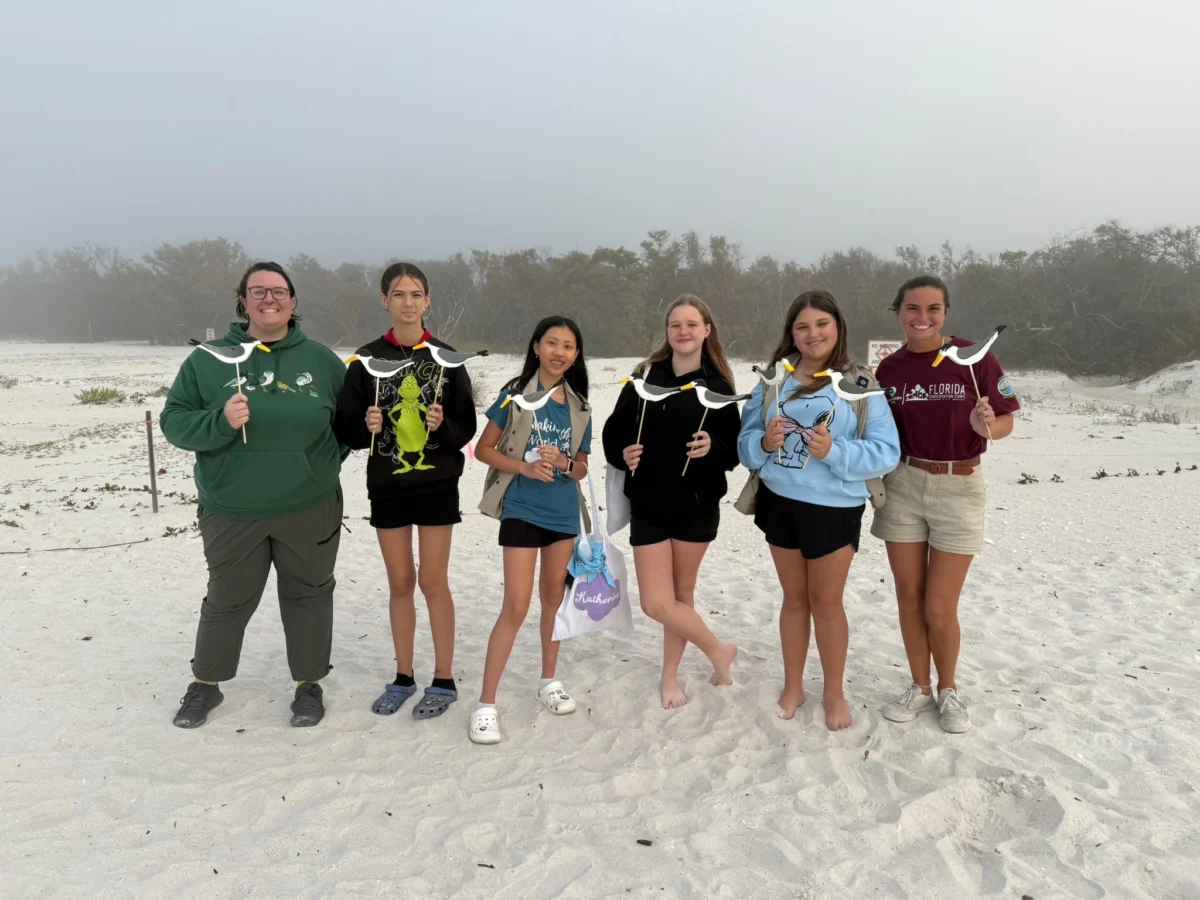
A dedicated group of Girl Scout Cadettes, forming the "Coastal Education Team" from Troops 328 and 446 of the Girl Scouts of Gulf Coast Florida Council, has embarked on an ambitious journey to earn their Silver Award, focusing their "Take Action" project on a vital mission: the protection of Florida’s fragile coastal ecosystems. Their initiative centers specifically on the Least Tern, a charismatic yet vulnerable shorebird whose nesting populations have faced significant declines across its range due to persistent habitat loss and escalating human disturbance. This proactive youth-led conservation effort is unfolding at Delnor-Wiggins Pass State Park, a critical coastal habitat still navigating the complex recovery from multiple recent hurricane seasons.
The Imperiled Least Tern: A Species in Need of Protection
The Least Tern (scientific name: Sternula antillarum) is the smallest tern species in North America, a delicate migratory bird known for its distinctive black cap, yellow bill, and agile flight. These highly social birds nest colonially on open, sandy beaches, barrier islands, and dredged material sites, laying their camouflaged eggs directly in shallow scrapes on the ground. This nesting strategy, while effective in undisturbed environments, renders them exceptionally vulnerable to a myriad of threats in developed coastal areas.
Historically, Least Tern populations thrived along coastlines, but the relentless march of coastal development, increased recreational use of beaches, and the escalating impacts of climate change have severely eroded their nesting success. Studies indicate that human disturbance, ranging from unleashed pets to recreational vehicles and even unintentional trampling, can cause adult terns to abandon nests, leaving eggs and chicks exposed to predators and extreme weather. Habitat loss due as coastal erosion and rising sea levels further exacerbate their plight. According to the National Audubon Society, many shorebird populations, including terns, have seen declines of over 70% in recent decades, underscoring the urgency of targeted conservation actions. The Least Tern is listed as a threatened species in several states, including Florida, highlighting its precarious status within the state’s diverse avian fauna. Their presence or absence serves as a vital indicator of the overall health of coastal ecosystems.
Delnor-Wiggins Pass: A Park Forged by Storms, Ripe for Restoration
The setting for this crucial conservation project, Delnor-Wiggins Pass State Park in Naples, Florida, is itself a testament to both the beauty and the powerful forces shaping Florida’s coast. Known for its pristine beaches, mangrove forests, and abundant wildlife, the park serves as a vital recreational area and a critical ecological corridor. The opportunity for the Girl Scouts arose at a truly pivotal moment for the park. Following a series of significant hurricanes in late 2024, and still grappling with the lingering devastation and ongoing recovery from 2022’s catastrophic Hurricane Ian, park staff made a strategic and forward-thinking decision. These powerful storms, while causing widespread destruction, also dramatically reshaped the park’s coastline, creating new expanses of beach habitat. Recognizing this rare opportunity for ecological restoration, park management promptly designated and protected these newly formed areas with signs and fencing. The immediate goal was to provide undisturbed space for foraging shorebirds during the winter months, with the ambitious hope that these resilient birds, particularly nesting species like the Least Tern, would return to breed in the upcoming summer.
The significance of this proactive measure cannot be overstated. According to park staff, Delnor-Wiggins Pass State Park has not hosted nesting shorebirds since the 1980s, a stark indicator of the long-term impact of human activity and habitat degradation. The creation of this new, protected habitat thus represents a singular opportunity to reverse decades of decline and re-establish a critical breeding ground for these imperiled species. The dedication of park personnel in identifying and safeguarding these nascent ecological zones, even amidst ongoing hurricane recovery efforts, demonstrates a profound commitment to long-term environmental stewardship.
The Silver Award Challenge: A Call to Action for Coastal Conservation
The Girl Scout Silver Award is the highest honor a Cadette (girls in grades 6-8) can achieve, requiring a minimum of 50 hours of work on a "Take Action" project that identifies an issue, builds a team, explores the community, chooses a project, develops a plan, puts the plan into motion, and educates and inspires others. It demands leadership, problem-solving skills, and a commitment to making a lasting difference in the community. The "Coastal Education Team" exemplified these principles by independently identifying a pressing local environmental issue and taking concrete steps to address it. Rather than merely being assigned a task, the girls chose to champion the Least Tern after connecting directly with staff at Delnor-Wiggins Pass State Park. This direct engagement allowed them to understand where conservation efforts were most acutely needed, fostering a sense of ownership and deep connection to their chosen cause.
Katherine J., a member of the team, articulated the group’s motivation: "My group chose this specific project because Delnor-Wiggins reached out to us and told us about their Least Terns. We thought that it was a very unique and fun project to do. I personally hope to learn leadership skills and more information about the types of birds and how to teach others about sharing the shore." Her statement underscores the dual purpose of the Silver Award – not only to effect positive change but also to cultivate personal growth, leadership capabilities, and a deeper understanding of environmental issues among young women.
For Develynn S., the project opened an entirely new perspective on coastal ecosystems. "When I was informed about it, I was very intrigued. I never knew that shorebirds were so important, and I immediately wanted to be involved," she explained. "Shorebirds are key species in our ecosystem, so we should make sure we do our best to keep them safe." This newfound awareness highlights the educational power of such projects, transforming abstract ecological concepts into tangible, personal commitments. Iris S. echoed concerns about human impact, stating, "I chose this project because shorebirds keep leaving nesting sites because of boaters approaching sandbars and because of habitat loss. I hope to learn more about shorebirds, especially Least Terns, from this experience." Her insights reflect a keen observation of direct human pressures on wildlife.
From Concept to Creation: The Decoy Project Takes Flight
To actively encourage Least Terns to return and reclaim the newly designated nesting site, the Coastal Education Team developed a clever and scientifically proven strategy: a decoy project. With invaluable support from Delnor-Wiggins Pass State Park staff and expert guidance from Audubon Florida, the girls delved into the intricacies of avian conservation techniques. They learned that lifelike decoys can be highly effective in attracting nesting terns. These decoys serve a crucial psychological purpose, signaling to real birds that an area is already occupied by their species and, by extension, safe and suitable for nesting. This technique, often combined with auditory playback of bird calls, has been successfully employed in various shorebird conservation projects worldwide to establish or re-establish nesting colonies. Audubon Florida, with its extensive experience in coastal bird protection, provided the critical expertise needed to ensure the decoys were placed optimally for maximum impact.
The project quickly garnered enthusiastic support from community partners, transforming the conceptual idea into a tangible reality. Rick Schalk of the Thomas Riley Artisans’ Guild generously donated his time, specialized materials, and considerable woodworking skills to meticulously craft the wooden decoy frames. His contribution was pivotal, providing the foundational elements for the project. Further community support came from Kathy, Carey, and Amy Slavin of Family Hobby Center, who supplied the necessary paints and art materials. Armed with these resources, the Girl Scouts took on the hands-on task of painting each decoy. With careful attention to detail, they transformed raw wooden cutouts into remarkably lifelike models, replicating the distinctive plumage and features of adult Least Terns. This artistic component not only fostered creativity but also deepened their understanding of the birds’ characteristics.
Deployment Day: A Step Towards a Shared Shore
The culmination of months of planning, learning, and community collaboration arrived on February 13, when the project literally took to the sand. Joined by their adult Girl Scout project adviser, dedicated Delnor-Wiggins Pass State Park staff, and expert representatives from Audubon Florida, the Cadettes carefully transported and strategically placed the hand-painted decoys within the fenced and posted protection area. This deployment was not merely a physical act but a profound educational experience. As they worked, the girls received further instruction on the broader principles of shorebird conservation, learning firsthand how seemingly small actions by beachgoers can have monumental positive impacts. Key messages reinforced during the deployment included the importance of respecting posted conservation areas, keeping pets leashed at all times, and maintaining a respectful distance from birds and their potential nesting sites.
These simple yet powerful actions form the core of the "Share the Shore" message that the Coastal Education Team hopes to disseminate widely. Develynn S. powerfully articulated this sentiment: "We can do things that may seem simple to us but are huge for shorebirds. The next time you’re at the beach during nesting season, making sure you stay away from nesting areas can make a big difference." This emphasis on individual responsibility underscores the project’s educational imperative.
Voices of the Future: Girl Scouts Reflect on Their Impact
Education remains the central pillar of the Coastal Education Team’s Silver Award project. Leveraging the resources and expert advice gleaned from Delnor-Wiggins Pass State Park and Audubon Florida, the girls are now meticulously preparing to share their newfound knowledge with their wider community. Their goal is to empower others to understand how even minor adjustments in behavior can significantly contribute to the protection of vulnerable coastal wildlife. This phase of their project, focused on outreach and advocacy, is crucial for amplifying their impact beyond the park’s boundaries.
Abi N. reflected on the transformative nature of the experience: "In this project we have learned about how shorebirds are important to the coastline and why we should help increase their numbers. Everyone can contribute to sharing the shore by giving the birds personal space and not entering their homes." Her statement encapsulates the comprehensive understanding the team has developed regarding ecological importance, conservation goals, and actionable public engagement. The project has not only instilled in them a passion for conservation but has also equipped them with the skills and confidence to advocate for it effectively.
Broader Horizons: Implications for Coastal Stewardship and Youth Leadership
In a region continually reshaped by the powerful forces of nature and the ongoing processes of recovery, the Least Tern decoy project at Delnor-Wiggins Pass State Park offers something profoundly lasting: compelling evidence that effective conservation is best achieved when diverse segments of a community unite. This initiative stands as a powerful testament to the efficacy of collaborative efforts, bringing together the enthusiastic energy of youth, the dedicated expertise of park staff, the scientific guidance of conservation organizations like Audubon Florida, and the generous support of local businesses.
This "Share the Shore" endeavor transcends mere bird protection; it serves as a robust model for empowering the next generation to assume leadership roles in environmental stewardship. The Girl Scouts, through this project, are not just learning about conservation; they are actively practicing it, developing invaluable leadership skills, fostering a sense of civic responsibility, and becoming vocal advocates for the natural world. Their project demonstrates that youth are not merely recipients of environmental education but active agents of change, capable of initiating and sustaining significant conservation outcomes.
The implications of such a project extend far beyond the immediate goal of attracting Least Terns. It builds community resilience, fosters cross-sector partnerships, and cultivates a new generation of environmental leaders who possess both the knowledge and the practical experience to address complex ecological challenges. As Florida’s coastlines face increasing pressures from population growth, climate change, and intensified storm activity, the model of collaborative, youth-led conservation exemplified by the "Coastal Education Team" offers a beacon of hope for a sustainable future. It underscores that by investing in and empowering young people, communities can forge powerful alliances that protect vital ecosystems and ensure their health for generations to come.
This article was originally featured in the 2025 Coastal Report, highlighting the significance of such grassroots efforts in the broader context of regional conservation strategies.
