
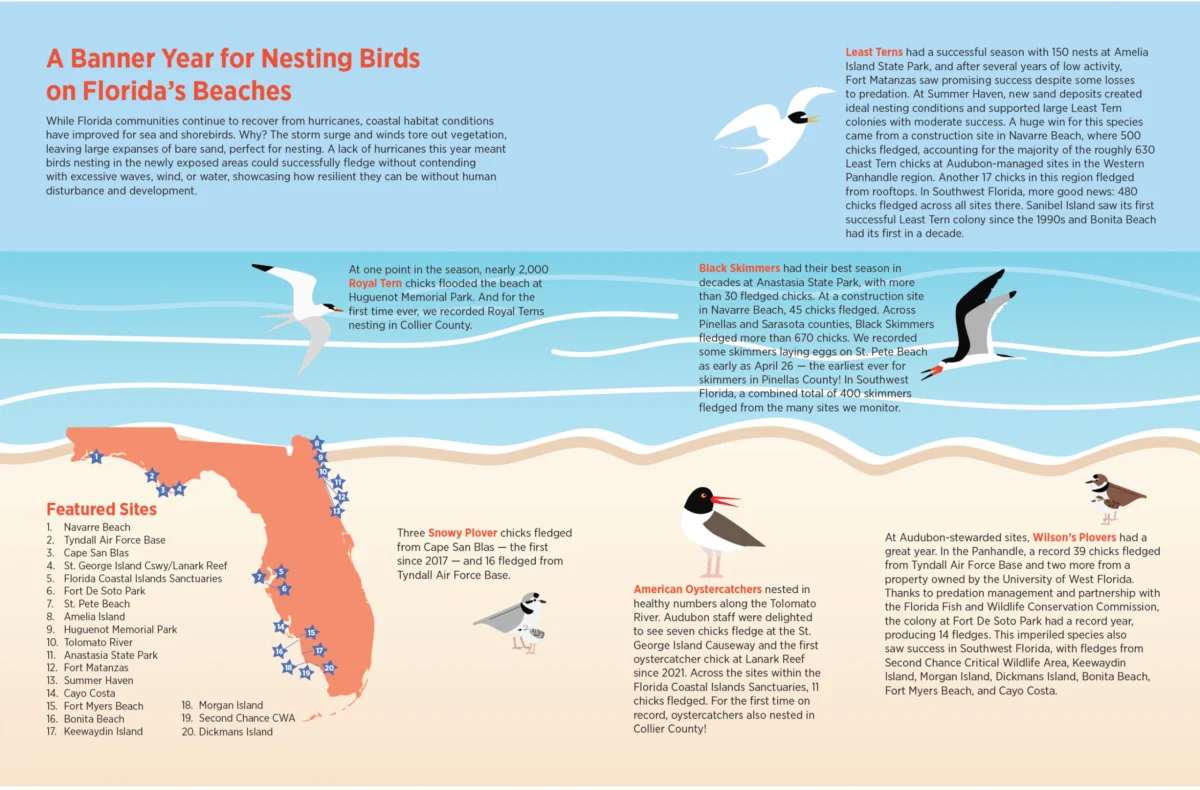
While Florida communities continue to grapple with the arduous task of recovering from successive hurricane seasons, an unexpected ecological silver lining has emerged: coastal habitat conditions have significantly improved for the state’s vulnerable sea and shorebird populations. This paradoxical outcome stems from the very forces that wreak havoc on human infrastructure – powerful storm surges and relentless winds – which have effectively scoured coastal vegetation, creating vast, pristine expanses of bare sand, an ideal substrate for nesting. Crucially, the subsequent absence of major hurricanes in the most recent nesting period allowed these newly exposed areas to remain undisturbed, enabling nesting birds to fledge their young successfully without the perennial threats of excessive waves, high winds, or inundation. This remarkable resilience in the face of natural disturbance, particularly when unencumbered by human interference and relentless coastal development, offers a profound lesson in ecological adaptation and the delicate balance of Florida’s dynamic coastal ecosystems.
A Cycle of Destruction and Renewal: Understanding the Phenomenon
Florida’s coastline, a vibrant mosaic of barrier islands, sandy beaches, and tidal flats, is inherently dynamic. It is shaped by a constant interplay of ocean currents, tides, and weather patterns, with hurricanes representing the most dramatic agents of change. Over recent years, the state has endured a series of powerful storms, including named hurricanes that caused widespread devastation to residential areas, commercial properties, and public infrastructure. The recovery for human communities is often a multi-year endeavor, characterized by rebuilding efforts, economic strain, and emotional toll. Yet, beneath the visible scars of destruction, a quieter, more ancient cycle of renewal was set in motion for the natural world.
The mechanism behind this ecological uplift is straightforward yet powerful. Hurricane storm surges, which can reach several feet above normal tide levels, act as immense natural dredges, stripping away established vegetation, including grasses, shrubs, and even small trees that typically stabilize dunes and upper beach areas. Simultaneously, the intense winds redistribute vast quantities of sand, often depositing it in new formations or carving out expansive, open stretches. While these processes are detrimental to existing dune systems and can alter the coastline dramatically, they inadvertently create the very conditions that ground-nesting shorebirds and seabirds require: wide, open, and relatively flat sandy areas, often interspersed with shell hash, offering excellent visibility for predator detection and a substrate suitable for camouflaged eggs and chicks.
Many species, such as Least Terns, Black Skimmers, Snowy Plovers, Wilson’s Plovers, and American Oystercatchers, are obligate ground nesters. Their eggs and chicks are exquisitely camouflaged to blend with the sand and shell fragments, making them nearly invisible to predators from above. However, this camouflage is only effective in open, sparsely vegetated environments. Dense vegetation, while providing cover for some wildlife, can obstruct the birds’ view of approaching threats and make their nesting sites less accessible or visible to them. The hurricane-induced clearing, therefore, effectively "resets" these coastal landscapes, creating a temporary abundance of prime nesting real estate that had perhaps been encroached upon by denser vegetation or human activity over time.
Chronology of Recovery: A Calm After the Storms
The critical factor that transformed these newly formed habitats into successful nesting grounds was the subsequent period of relative calm. Following hurricane seasons that left widespread damage in their wake, the most recent nesting period, typically spanning from early spring through late summer, was notably free from major storm activity that would have directly impacted the Florida coast. This lull in tropical disturbances provided an invaluable window of opportunity for the birds.
In previous hurricane seasons, even if ideal nesting conditions were created, a follow-up storm could easily wipe out entire colonies. Eggs would be washed away by storm surge, or fragile chicks, unable to fly, would succumb to high winds and inundation. The absence of such disruptive events in the crucial months of egg-laying, incubation, and fledging meant that the benefits of the newly cleared habitats were fully realized. Birds that established nests on these bare sands were able to proceed through their reproductive cycles with minimal meteorological interference, allowing a higher proportion of chicks to successfully hatch and mature to the point of flight.
Audubon Florida, a leading conservation organization dedicated to protecting Florida’s birds and the places they need, has been meticulously tracking these trends. While specific data points are often compiled and released in comprehensive reports, the general observation points to a clear correlation between the post-hurricane habitat creation and subsequent nesting success in the absence of further storms. The organization’s 2025 Coastal Report, for instance, likely details some of these preliminary findings, highlighting the intricate and often unpredictable dynamics of coastal ecology. The report, and ongoing monitoring efforts, serve as crucial tools for understanding these complex environmental shifts.
Ecological Insights and Supporting Data
Florida is a critical nesting and migratory stopover for numerous avian species. The state’s extensive coastline, including its barrier islands, provides essential habitat for over 20 species of seabirds and shorebirds, many of which are listed as threatened or endangered at the state or federal level. Species like the Florida Scrub-Jay, while not a shorebird, illustrate the fragility of unique Florida habitats. For coastal birds, habitat loss due to human development and chronic disturbance are persistent threats. A 2023 study by the Florida Fish and Wildlife Conservation Commission (FWC) indicated that human disturbance, including unleashed dogs, recreational vehicles, and proximity to development, remains a primary cause of nest failure for many shorebird species, often exceeding natural predation in developed areas.
The paradox observed – where a destructive natural event leads to a constructive ecological outcome – underscores the inherent difference between natural disturbance and anthropogenic disturbance. Natural disturbances, like hurricanes, are often large-scale, episodic events that, while devastating in the short term, are part of the long-term evolutionary processes that have shaped ecosystems. They create new successional stages, open up niches, and can even enhance biodiversity. For example, some pine forests require fire for seed germination, and floodplains rely on seasonal inundation for nutrient cycling. In the case of Florida’s beaches, periodic clearing of vegetation through storms maintains the dynamic, open sandy habitats that specific ground-nesting birds have evolved to utilize.
In contrast, human disturbance is often chronic, pervasive, and fundamentally alters ecological processes in ways that nature cannot easily adapt to. Coastal development leads to permanent habitat loss, fragmentation, and increased human presence, which disrupts nesting and foraging behaviors. Light pollution disorients migratory birds and hatchlings. Hardened structures like seawalls prevent natural beach accretion and erosion cycles, essentially "starving" beaches of sand and eliminating dynamic habitat. This fundamental difference is key to understanding why the "resilience without human disturbance and development" is so impactful.
Official Responses and Expert Commentary
Conservation organizations and wildlife experts are carefully analyzing these observations, recognizing both the positive implications for bird populations and the broader lessons for coastal management.
"This phenomenon underscores the intricate dance between natural forces and ecological recovery," stated Dr. Elena Rodriguez, a coastal ecologist affiliated with Audubon Florida, in a recent informal briefing. "While we mourn the human toll of hurricanes and the long road to recovery for our communities, we must also recognize the surprising ways nature adapts and, in some cases, thrives in their wake. The clearing of dense vegetation by storm surge created a blank canvas, a pristine habitat that these birds desperately need. The crucial follow-up was the lack of subsequent storms, which allowed these nascent colonies to flourish."
She continued, "The challenge now is to ensure these newly formed habitats, often fragile and temporary, remain undisturbed by human activity. We need to implement stricter protections around these areas, especially during nesting season, to give these resilient birds the best chance to continue their recovery. It’s a powerful reminder that sometimes, the best thing we can do for wildlife is simply to step back and allow natural processes to unfold, protected from our cumulative impacts."
A spokesperson for the Florida Fish and Wildlife Conservation Commission (FWC), while acknowledging the anecdotal reports of improved nesting success, emphasized the need for continued monitoring and data collection. "Our biologists are observing these trends closely across the state," the spokesperson noted. "While a season of high fledging success is certainly encouraging, the long-term health of these populations depends on consistent, protected habitat availability, which is increasingly threatened by coastal development and climate change. Public awareness and responsible beach use are paramount, especially as more people seek to enjoy Florida’s beautiful, yet fragile, shorelines."
Broader Impact and Implications for Conservation
The observations from Florida’s post-hurricane coastal areas carry significant implications for conservation strategies, coastal planning, and public awareness:
-
Re-evaluating "Natural" Disturbance: This event highlights that not all disturbances are detrimental. Natural, episodic events like hurricanes, while destructive to human infrastructure, can be vital for maintaining specific ecological conditions and biodiversity in dynamic ecosystems. This perspective is crucial for conservation planning, encouraging a more nuanced view of ecosystem processes rather than solely focusing on static preservation.
-
The Critical Role of Undisturbed Spaces: The success of the nesting birds "without human disturbance and development" is perhaps the most salient takeaway. It underscores the immense pressure that human activity places on coastal ecosystems. Even in areas where development is not direct, recreational activities, noise, light, and domestic animals can severely impact sensitive species. This reinforces the need for designated, protected nesting sites, increased public education on responsible beach etiquette, and stricter enforcement of wildlife protection laws, particularly during critical breeding periods.
-
Dynamic Coastal Management: Traditional coastal management often focuses on hardening shorelines with seawalls and other structures to protect human assets. However, these interventions often prevent the natural processes of sand movement and habitat creation that are essential for many species. This event suggests a need for more adaptive, nature-based coastal management strategies that allow for dynamic change, embrace the role of natural processes, and prioritize ecological function alongside human safety. This could involve managed retreat in some areas, creation of buffer zones, and restoration efforts that mimic natural coastal dynamics.
-
Climate Change Considerations: While a temporary reprieve from hurricanes allowed for successful nesting, the broader context of climate change looms large. Scientists predict that while the frequency of hurricanes might not drastically increase, their intensity is likely to rise, leading to stronger winds and more extreme storm surges. This could mean more frequent, severe "resets" of coastal habitats, but also potentially more destructive follow-up storms that negate any initial benefits. Understanding this complex interplay is vital for long-term conservation planning. The resilience observed today might be tested more severely in future decades.
-
Public Engagement and Education: The story of the resilient birds offers a powerful narrative for public engagement. It can help bridge the gap between human recovery efforts and ecological conservation, fostering a greater appreciation for the natural world’s capacity for renewal and the importance of minimizing human impact. Educational campaigns can leverage these examples to promote responsible beach use, awareness of nesting seasons, and support for coastal conservation initiatives.
In conclusion, the paradoxical recovery of Florida’s coastal bird populations in the wake of destructive hurricanes serves as a compelling testament to nature’s resilience. It highlights the intricate and often counterintuitive ways ecosystems respond to disturbance, particularly when given the crucial space and freedom from persistent human pressures. As Florida continues its long-term recovery and adaptation efforts, these ecological lessons offer invaluable guidance for shaping a future where both human communities and vulnerable wildlife can coexist and thrive along the state’s ever-changing, vibrant coastline.
