
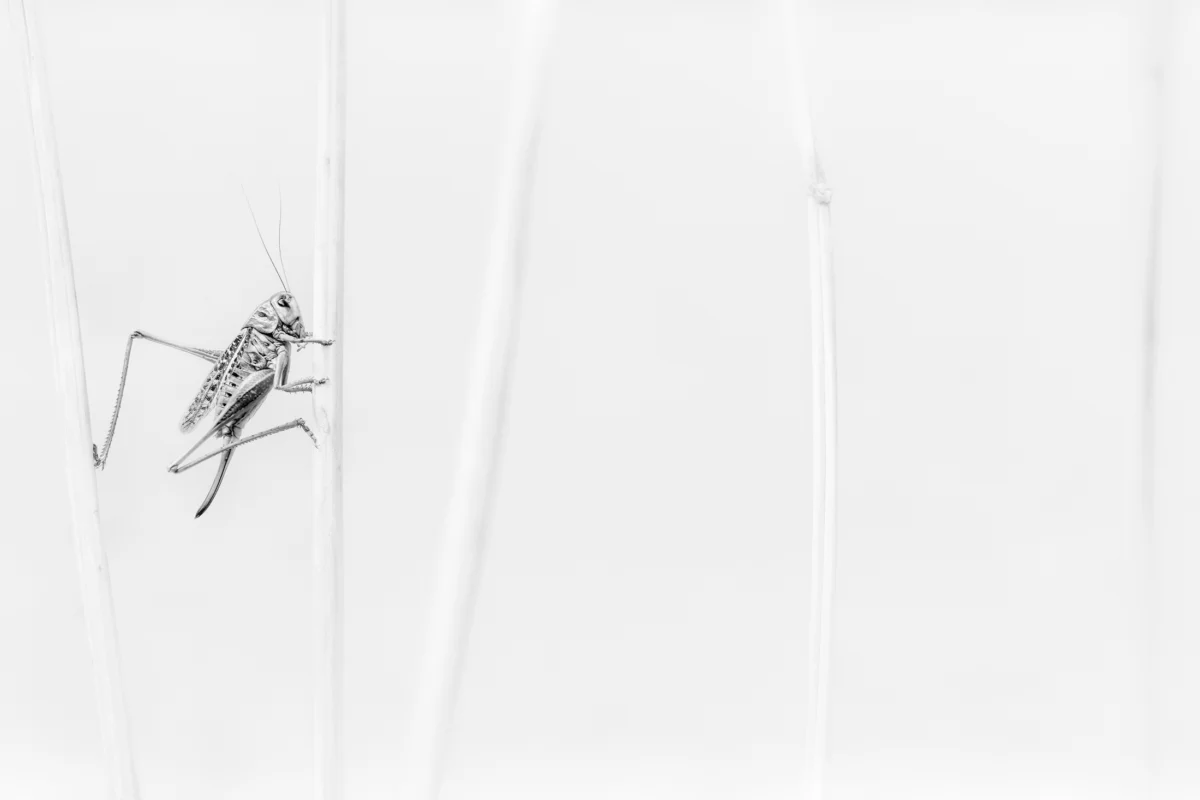
Elisa Confortini, a distinguished nature photographer, has cultivated a profound passion for documenting the intricate lives of arthropods through the specialized lens of macro photography. This unique photographic discipline allows her to explore a miniature universe, transforming what might seem mundane into a realm of astonishing detail and profound beauty. Her work stands out not only for its meticulous capture of these often-overlooked creatures but also for her deliberate and masterful use of black and white imagery, a choice that transcends mere aesthetics to convey deeper emotional and narrative truths.

Confortini’s journey into nature photography began with macro, drawn specifically to arthropods. These creatures, she notes, are remarkably accessible subjects, often found in one’s immediate surroundings, making them ideal for sustained observation. This proximity fosters an intimate relationship with her subjects, allowing her to delve into their complex behaviors and characteristics. Each year, she embarks on a quest to rediscover beloved species or uncover new ones, driven by a curiosity that fuels her long-term photographic projects. This dedication to prolonged observation is crucial, as it enables her to capture fleeting behaviors and nuanced interactions that typically escape casual human perception. Her artistic objective is to portray these creatures in a multitude of ways, aiming always to encapsulate their essence, habits, and ecological roles in a manner that deeply engages and captivates the viewer, inviting them into their hidden world.
The World of Arthropods Through a Macro Lens

Arthropods, encompassing insects, arachnids, myriapods, and crustaceans, represent the most diverse phylum in the animal kingdom, accounting for over 80% of all known animal species. Their presence is ubiquitous, from the deepest oceans to the highest mountains, and intimately woven into the fabric of human history and culture. Throughout millennia, humanity’s relationship with these creatures has been complex and multifaceted, oscillating between admiration and revulsion, veneration and fear. Insects, in particular, have inspired countless myths, legends, and artistic expressions across diverse civilizations, reflecting humanity’s enduring fascination with their alien forms, remarkable adaptations, and vital ecological roles. From the scarabs of ancient Egypt symbolizing rebirth to the intricate patterns of a butterfly wing inspiring modern designers, their diversity and complexity continue to be an inexhaustible source of artistic inspiration globally. Confortini’s work taps into this primal connection, reminding us that the natural world, even in its smallest manifestations, remains an infinite wellspring of wonder, reflection, and artistic potential.
A Timeless Medium: The Enduring Appeal of Black and White

In an era saturated with vibrant, often digitally enhanced colors, where sophisticated technology allows for effortless manipulation of hues, black and white photography stands as a powerful, timeless, and resilient medium. Its enduring appeal lies in its ability to strip away the distractions of color, forcing both the photographer and the viewer to confront the raw essence of an image. Historically, monochrome was the only option, defining early photography’s aesthetic through the works of masters like Ansel Adams, whose landscapes captured the majesty of the American West in stark, luminous tones, or Henri Cartier-Bresson, who chronicled the human condition with profound graphic clarity. Today, the choice to work in black and white is a deliberate aesthetic and stylistic statement, a conscious decision to express and convey emotion, mood, and form with an intensity that color might dilute.
Confortini articulates several compelling reasons for her preference for monochrome in her macro photography:

- Undivided Focus: Color, while often beautiful, can be a powerful attractor of attention, sometimes diverting the viewer’s eye from the primary subject. In the intricate, often chaotic environments inhabited by arthropods – a tangle of leaves, soil, or diverse flora – eliminating color reduces visual noise, allowing the viewer to concentrate exclusively on the form, texture, and behavior of the creature itself.
- Highlighting Fundamental Elements: The absence of color inherently emphasizes textures, contrasts, and shapes. Without the chromatic information, the intricate patterns of an insect’s exoskeleton, the delicate veins of a wing, or the subtle undulations of its movement become strikingly apparent. This shift allows for the conveyance of emotions and structural details that might otherwise be overshadowed or overlooked in a colorful image.
- Evoking Drama and Mystery: The tonal nuances of black and white – from deep, velvety blacks to pristine whites and a spectrum of grays – are inherently dramatic. This palette can effortlessly evoke feelings of mystery, solemnity, or even a sense of the sublime, lending a profound gravitas to the otherwise miniature world of arthropods.
- Enhancing Composition and Light: Monochrome photography demands a heightened awareness of compositional elements, light, shadow, and contrast. These are the foundational pillars of any compelling photograph, and in black and white, their significance is amplified. The interplay of light and shadow sculpts the subject, defining its contours and creating depth, which becomes the central visual language.
- Revealing True Essence: By stripping away color, monochrome photography compels both the creator and the observer to look beyond superficial hues and discover the true essence, character, and underlying structure of the image. It encourages a deeper, more analytical engagement with the visual information presented.
- Unparalleled Post-Processing Control: In the digital darkroom, converting an image to black and white offers an extensive range of control over tonal values, contrast, and local adjustments that would be significantly more challenging or less effective with color imagery. This allows for meticulous fine-tuning, sculpting the light and shadow to achieve the desired emotional and graphic impact.
Monochrome, for Confortini, is not merely a filter; it is an entirely different mode of artistic operation, demanding a distinct way of seeing and interpreting the world.
The Art of Seeing in Shades of Gray: Techniques and Approaches

Photographers adopting black and white can follow two primary approaches. The first involves photographing as usual, maintaining an awareness of scenes that inherently possess strong monochromatic potential. This requires a mental calibration, an ability to pre-visualize how colors will translate into shades of gray, focusing on light, form, and texture even when shooting in full color. The second, more immersive approach, involves committing to monochrome from the outset. By setting the camera to a black and white mode, photographers actively train their eye to perceive and think solely in terms of tones and contrasts, rather than the distraction of color. This method, while initially challenging, especially when confronted with the vibrant hues of natural subjects like flowers and insects, is invaluable for developing a new visual sensitivity and honing the skills necessary to create impactful monochromatic images. It forces the brain to interpret the world through a continuous scale of grays, a skill that takes time and practice to master. Experimenting by photographing brightly colored subjects and then converting them to black and white helps reveal the transformative power of monochrome, demonstrating how subjects are re-imagined without their natural pigmentation.
Confortini, however, prefers to convert her images to black and white during post-processing. This choice offers maximum flexibility and precise control over the tonal nuances and intricate details that define her work. Since monochrome is not her exclusive mode of expression, this approach allows her to thoughtfully evaluate each image, deciding whether it is best served by its original color palette or if its impact would be profoundly enhanced by the dramatic starkness of black and white. Some images immediately present themselves as ideal candidates for monochrome, their inherent graphic qualities or emotional resonance shining through. Others, she notes, require careful conversion and meticulous post-processing work before their full monochromatic potential becomes clear.

Strategic Applications: When Monochrome Transcends Color
Beyond initial capture, Confortini also finds immense value in revisiting older images within her extensive archive. Converting these archival photographs to black and white often reveals new perspectives, evoking different emotions and inspiring fresh creative ideas for future projects. This retrospective analysis is a critical part of her creative process, though she emphasizes the importance of a discerning eye, acknowledging that not every image benefits from monochrome conversion. If color plays a meaningful and irreplaceable role in the story she aims to tell, she refrains from converting it. However, when the atmosphere, mood, or graphic qualities of a scene are paramount, monochrome can significantly elevate the final result.

Confortini identifies several specific scenarios where monochrome proves to be an exceptionally powerful tool in her macro photography:
- Subject Isolation: In the often-dense and visually complex environments where arthropods reside, black and white aids in reducing clutter and distraction. By isolating the subject, even chromatically, from its busy surroundings, monochrome emphasizes the creature itself, drawing the viewer’s eye directly to its form and detail.
- Leveraging Harsh Light and Shadow: Conditions of strong, contrasting light and deep shadows, which can be challenging for color photography, become artistic opportunities in monochrome. Black and white accentuates these dramatic elements, allowing for more effective use of negative space and the creation of striking graphic compositions. The interplay of light and dark becomes a narrative element in itself.
- Transforming Noise into Atmosphere: High-ISO images, often necessitated by low-light macro conditions, can introduce significant chromatic noise. Instead of viewing this as a flaw, monochrome can convert this noise into a tangible atmosphere, a textural element that adds character and mood to the image, rather than detracting from its quality.
- Correcting Unmanageable Color Casts: Certain environmental factors, such as the color of water in specific ponds or unusual artificial lighting, can produce undesirable color casts that are difficult or impossible to correct satisfactorily in color photography. Monochrome offers an elegant solution, neutralizing these problematic hues and allowing the focus to return to the subject and its form.
- Enhancing Experimental Techniques: When employing experimental photographic techniques such as double exposures or intentional camera movement (ICM), where colors might appear unnatural or disorienting, monochrome provides a unifying aesthetic. It allows the photographer to prioritize composition, movement, and abstract form without the distraction of potentially jarring color interactions.
It might be tempting to perceive monochrome as a "rescue tool" for technically imperfect images, but Confortini firmly refutes this notion. In her experience, the opposite is true: she converts only a select few images – those that already possess inherent strength, graphic clarity, or a profound expressive potential that transcends their original color. This discerning approach ensures that every monochrome image she produces is a deliberate artistic statement, not a compromise.

Minimalism and Abstraction: Redefining Macro Composition
In the realm of macro photography, monochrome opens expansive avenues for exploring minimalism. By deliberately reducing clutter, complexity, and visual distractions, Confortini can focus on simple, yet profoundly impactful compositions. Enhancing the silhouette of an arthropod against a stark background, for instance, is one of the most intuitive and powerful applications of black and white. However, the possibilities extend far beyond simple outlines.

Exploring shapes – both geometric and irregular – becomes a particularly effective creative strategy. Geometric forms, with their inherent order and structure, can provide a sense of stability and balance, while irregular shapes introduce dynamic movement and unpredictability. Without the guiding cues of color, differences in light and shadow become intensely pronounced, allowing for dramatic contrasts that define the subject’s form and environment. Composition, Confortini asserts, is often the very key to creativity. Even in macro photography, the subject does not always need to fill the frame. In close-up work, abstraction emerges as a powerful tool, allowing for interpretive representations that evoke rather than explicitly describe.
Limited depth of field, a common characteristic of macro photography, can be wielded creatively in monochrome. By isolating a single, exquisitely sharp element within the frame, everything else can dissolve into an elegant, ethereal blur. This technique not only guides the viewer’s eye to a specific point of interest but also offers unexpected, almost dreamlike perspectives on the miniature world.

The intentional use of grain also serves as a potent emotional tool in black and white photography. In monochrome macro, grain can dramatically enhance the atmosphere, particularly when the environment and mood are prioritized over absolute detail. While grain can be a byproduct of underexposure or high ISO settings, Confortini prefers to maintain clean images during capture and introduce grain subtly during the editing phase, experimenting carefully with its intensity to achieve the desired emotional resonance.
It is often suggested that black and white photography is an excellent learning tool, especially for beginners. In Confortini’s view, however, particularly within macro photography, the conscious choice to embrace monochrome often comes later in a photographer’s journey, once a personal visual language has already begun to develop. For her, it became a path demanding deeper exploration. In specific situations, the presence of color can, paradoxically, limit creative interpretation, distracting from the essential atmosphere, raw emotion, and profound sensations experienced during the act of photographing.

While it is entirely possible to create vibrant, hyper-detailed close-ups of insects that celebrate their natural colors, Confortini offers an alternative. She chooses to express their beauty by evoking their environment, behavior, or character in a more interpretive, evocative manner. Ultimately, this choice is a deeply personal creative decision – one that holds the power to reveal a small yet immense universe: a world rich, unfamiliar, endlessly fascinating, and at times unsettling, all seen through a strikingly different, monochromatic perspective.
