
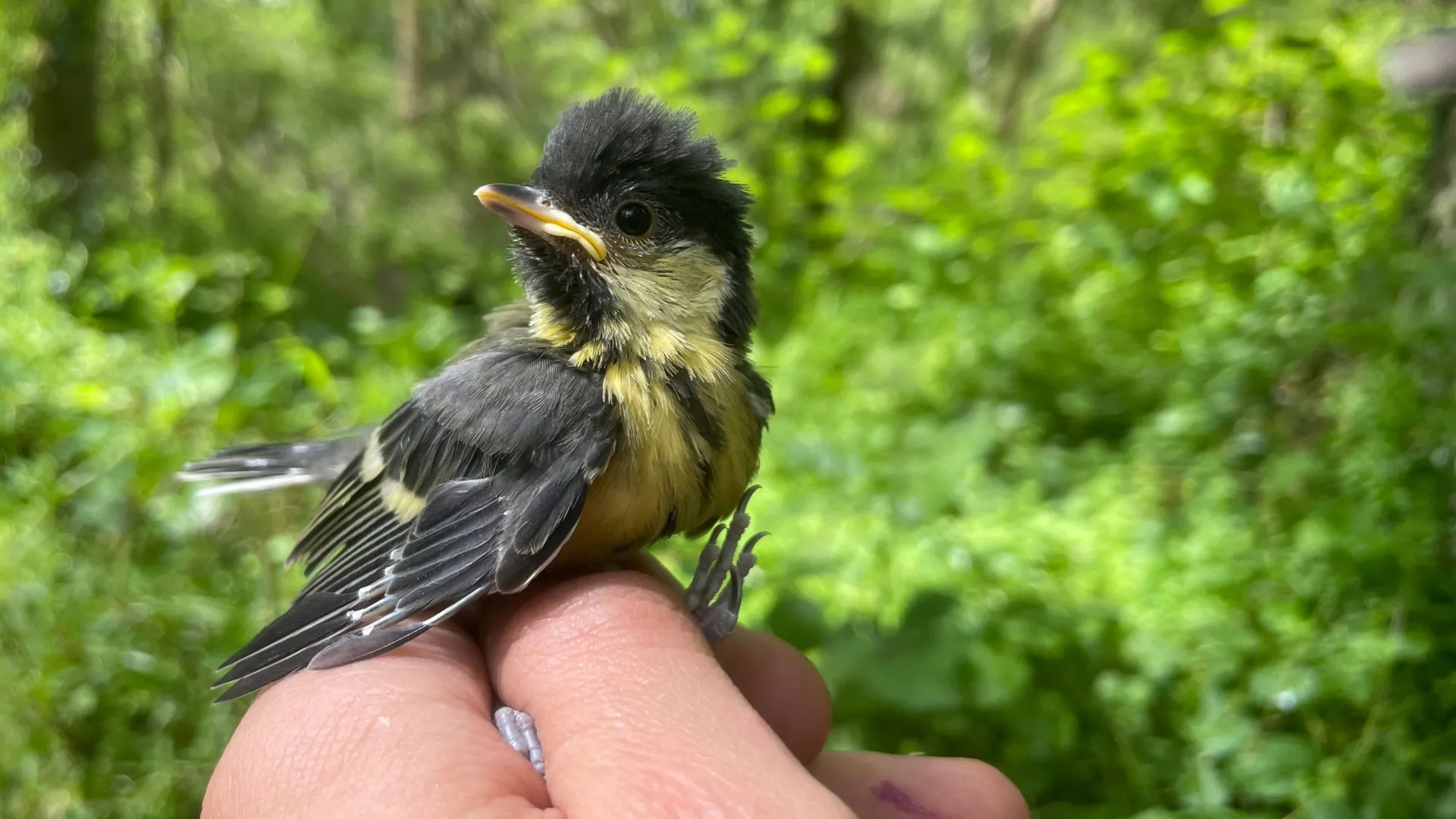
A landmark study from the University of Oxford, published on March 11, has provided unprecedented insights into how sudden cold spells and heavy rainfall are directly impeding the growth and reducing the survival prospects of young great tits across the UK. The comprehensive research, spanning six decades, also presents a compelling argument that birds initiating their breeding cycles earlier in the season may possess a crucial advantage, allowing them to circumvent many of the detrimental effects associated with these increasingly frequent weather extremes. This extensive investigation underscores the intricate challenges faced by wildlife in an era of rapid climate change and offers vital clues for future conservation strategies.
Decades of Data Unveil Environmental Pressures
The groundbreaking findings stem from an unusually robust and long-term ecological dataset, a testament to sustained scientific commitment. Researchers meticulously analyzed 60 years of continuous records, encompassing detailed life histories of over 80,000 individual wild great tits (Parus major) inhabiting Wytham Woods, a venerable research site managed by the University of Oxford. This monumental biological dataset was then cross-referenced with equally comprehensive daily weather records, allowing scientists to pinpoint the precise environmental conditions experienced by these birds throughout their critical breeding seasons. By accurately identifying the coldest, wettest, and hottest days within each annual cycle, the study rigorously measured the frequency and intensity of these extreme events during the most vulnerable stages of chick development. Crucially, it quantified their influence on the body mass of nestlings at the point of fledging – the moment they leave their nest – a metric long established as a powerful predictor of subsequent survival rates into adulthood. The sheer scale and duration of this data collection offer an unparalleled window into the long-term ecological dynamics of a wild population, providing a unique baseline against which to measure the subtle yet profound impacts of environmental shifts.
Wytham Woods: A Living Laboratory
Wytham Woods, situated just west of Oxford, has served as a pivotal ecological research site for over 75 years, making it one of the most intensively studied woodlands in the world. Its diverse habitats, including ancient semi-natural woodland, provide an ideal environment for long-term studies of resident bird populations, particularly great tits and blue tits. The continuous monitoring of individually ringed birds, coupled with detailed observations of nesting success, clutch sizes, and chick development, has generated an invaluable repository of data. This historical context is vital, as it allows researchers to track population trends and individual fitness over generations, offering a rare opportunity to observe evolutionary responses to environmental change in real-time. The meticulous record-keeping, often carried out by generations of researchers and field assistants, has made studies like this possible, providing the scientific community with an exceptional resource for understanding ecological processes.
The Perilous Grip of Cold and Rain on Nestling Survival
The study’s analysis unequivocally revealed that severe cold spells during the first week after hatching pose a particularly acute threat to newly emerged great tit chicks. This period is biologically critical, as hatchlings are altricial, meaning they are born underdeveloped and entirely dependent on parental care, lacking the feathers necessary for effective thermoregulation. Consequently, during cold snaps, these vulnerable chicks must expend a disproportionate amount of their limited energy reserves simply to maintain their body temperature, diverting crucial resources away from growth and development. This energy deficit can have lasting implications for their health and ultimate survival.
As chicks mature beyond their initial week, the nature of the weather threat subtly shifts. While cold remains a factor, heavy rainfall emerges as the greater danger during later developmental stages. Both intense cold and persistent heavy rain were found to significantly reduce the body mass of fledglings by as much as 3%. This seemingly small percentage can represent a critical difference in the survival odds for a young bird facing the demands of independence. Lighter fledglings are generally less robust, have smaller fat reserves, and may be less adept at foraging, making them more susceptible to predation and starvation in the challenging period immediately after leaving the nest.
The situation becomes alarmingly more severe when intense heat coincides with heavy rainfall. Such compound extreme events were shown to precipitate a dramatic decline in fledging mass, with reductions reaching up to 27%. This devastating impact was observed to be particularly pronounced among broods that hatched later in the breeding season, suggesting a cumulative vulnerability to adverse conditions. The confluence of high temperatures and saturation can create incredibly stressful conditions, potentially impacting both the chicks’ physiological well-being and their parents’ ability to forage effectively.
Devi Satarkar, the lead researcher from the Department of Biology at the University of Oxford, commented on these findings, highlighting the adaptive responses of the Wytham population. "In the Wytham population, great tits have adjusted to warmer springs by breeding earlier to track peak abundance of their main prey, caterpillars. This overall earlier laying is beneficial, buffering them against many impacts of extreme weather — but it also exposes them to cold spells early in the season. Even small early-life deficits can have large implications for survival. It will only get tougher for birds to keep up as extreme weather increases in frequency and intensity with climate change." Her statement underscores a critical dilemma: while early breeding offers a buffer, it simultaneously introduces new vulnerabilities, creating a complex evolutionary tightrope walk for these birds.
Understanding the Biological Mechanisms: Why Weather Matters
The physiological and ecological reasons behind these observed impacts are multi-faceted. For newly hatched great tit chicks, the primary challenge during cold spells is their inability to regulate their own body temperature (poikilothermy). Lacking insulating feathers, they rely heavily on parental brooding and huddling with siblings for warmth. When ambient temperatures drop significantly, their metabolic rate must increase to generate internal heat, consuming vital energy that would otherwise be allocated to rapid growth, muscle development, and feather production. This diversion of energy leads directly to reduced body mass and potentially impaired development, weakening their chances of survival.
Beyond the direct physiological stress on chicks, adverse weather profoundly impacts their food supply. Great tit chicks have extremely high energy demands, growing from a tiny hatchling to a fully feathered bird in just over two weeks. Their primary food source during this period is caterpillars, rich in protein and fat. Extreme cold and heavy rain significantly limit the foraging opportunities for parent birds. Parents may be reluctant to leave the nest during severe weather to protect their chicks, or their own metabolic demands increase, reducing their foraging efficiency. Furthermore, heavy rainfall can physically dislodge caterpillars from foliage, making them less accessible or washing them away, thereby reducing the overall availability of this crucial food source. A reduction in food delivery means chicks receive fewer calories and nutrients, directly translating to slower growth and lower fledging weights.
The Unexpected Upside of Mild Warmth
One of the more surprising revelations from the study was that warmer extremes, within the specific context of Oxfordshire’s climate, were linked to heavier fledging weights during the nestling stage. This finding initially appears counterintuitive, as high temperatures are frequently associated with heat stress and negative impacts on avian populations, particularly in hotter climates. However, the researchers emphasize that the "warmer periods" experienced in Oxfordshire during the breeding season are relatively mild when compared to the intense heatwaves observed in southern Europe or other arid regions, where temperatures regularly exceed 35°C and can be lethal to nestlings.
Devi Satarkar elaborated on this nuanced observation: "Extreme weather events are affecting wild bird populations in complex ways. The level of warmth we see in these heat extremes in Oxfordshire might boost growth because it can increase insect activity and visibility — making caterpillars easier to find — while letting parents forage more and reducing nestlings’ thermoregulatory costs. The high water content in caterpillars also helps against dehydration. This contrasts sharply with hotter regions like the Mediterranean, where similar events can exceed 35°C and harm nestlings." This insight highlights the geographical specificity of climate impacts, suggesting that a moderate increase in temperature in a temperate region can have beneficial effects by enhancing food availability and reducing the energy expenditure for thermoregulation, unlike scorching heat in hotter zones. It underscores the complexity of predicting climate change effects, where regional variations and species-specific tolerances play a significant role.
Early Breeding: A Timely Adaptation
The study’s analysis strongly supports the hypothesis that birds which breed earlier in the spring season tend to fare better. These early broods often coincide with the peak abundance of caterpillars – a critical period known as the "phenological window" – and experience temperatures that generally remain within safe, even beneficial, limits. This alignment ensures a plentiful food supply during the most demanding growth phase for chicks.
Conversely, great tits that breed later in the season face progressively tougher conditions. Their fledglings were found to be approximately one-third lighter on average, even though the warmest days they encountered reached similar temperatures of about 16-17°C. This suggests that factors beyond peak temperature, such as prolonged periods of less favorable conditions, reduced food availability due to the decline of caterpillar populations, or an increased likelihood of encountering severe rainfall events, accumulate to create a more challenging environment for later broods.
Over the long term, the implications for population dynamics are clear. Extreme cold and heavy rainfall were found to slightly reduce the overall odds that young birds would survive to adulthood. In stark contrast, warm extremes, within the Oxfordshire context, exhibited small but consistently positive effects on survival. Collectively, the evidence suggests that the evolutionary shift towards earlier breeding within a season acts as a vital adaptive mechanism, effectively shielding a significant portion of the great tit population from the worst consequences of increasingly unpredictable weather patterns. This temporal shift in breeding phenology represents a crucial survival strategy in a changing climate.
Broader Implications for Wildlife and Conservation
The findings from Wytham Woods have profound implications for understanding and mitigating the impacts of climate change on wider wildlife populations. As the frequency and intensity of weather extremes continue to escalate globally, scientists emphasize the growing importance of monitoring not just broad climate trends but also highly localized environmental conditions, such as microclimates and subtle habitat differences. A "microclimate" refers to the local atmospheric conditions differing from those of the surrounding area, often influenced by factors like vegetation cover, topography, and water bodies. For instance, a dense canopy in a woodland can provide cooler, more sheltered conditions than an open field, offering a critical refuge for vulnerable species during heatwaves or heavy rain.
This type of granular research can directly inform and guide more effective conservation strategies. For great tits and other cavity-nesting birds, this could include optimizing nestbox placement to leverage beneficial microclimates, perhaps positioning them in areas with better thermal regulation or more consistent food availability. Furthermore, woodland management practices, such as selective thinning or planting, could be tailored to create or maintain diverse microhabitats that offer shelter and resilience against extreme weather, thereby better protecting vulnerable chicks during their key developmental stages. The British Trust for Ornithology (BTO) and the Royal Society for the Protection of Birds (RSPB) frequently advocate for such localized, evidence-based conservation efforts, emphasizing the role of citizen science in collecting data that can contribute to these large-scale analyses.
The study’s revelations also underscore the concept of "phenological mismatch," a growing concern in ecology. This occurs when the timing of biological events, such as breeding or migration, no longer aligns with the availability of critical resources, like peak insect abundance. While great tits in Wytham have shown some adaptive capacity by breeding earlier, this adaptation is a delicate balance, as it introduces new vulnerabilities. As climate change continues to disrupt natural cycles, the ability of species to adjust their phenology will be crucial for their long-term survival, and for the stability of the ecosystems they inhabit.
Looking Ahead: The Evolving Climate Challenge
Researchers plan to continue their meticulous monitoring of the great tit population in Wytham Woods, recognizing that the current observations represent a snapshot in an ongoing environmental transformation. One pivotal question guiding future inquiry is whether the heatwaves that are currently perceived as "moderate" and even beneficial within the Oxfordshire context could eventually cross a critical threshold. As global temperatures continue their upward trajectory, these seemingly benign warm spells might intensify to levels that become genuinely harmful to nestlings, mirroring the severe impacts already observed in hotter regions. Understanding this potential tipping point is paramount for proactive conservation planning.
The Wytham Woods study serves as a powerful reminder of the complex, often subtle, ways in which climate change is reshaping the natural world. It highlights the indispensable value of long-term ecological research in deciphering these intricate interactions and developing informed strategies to safeguard biodiversity in the face of unprecedented environmental shifts. The future of great tits, and countless other species, will depend on our ability to understand, predict, and respond to these evolving climatic challenges.
