
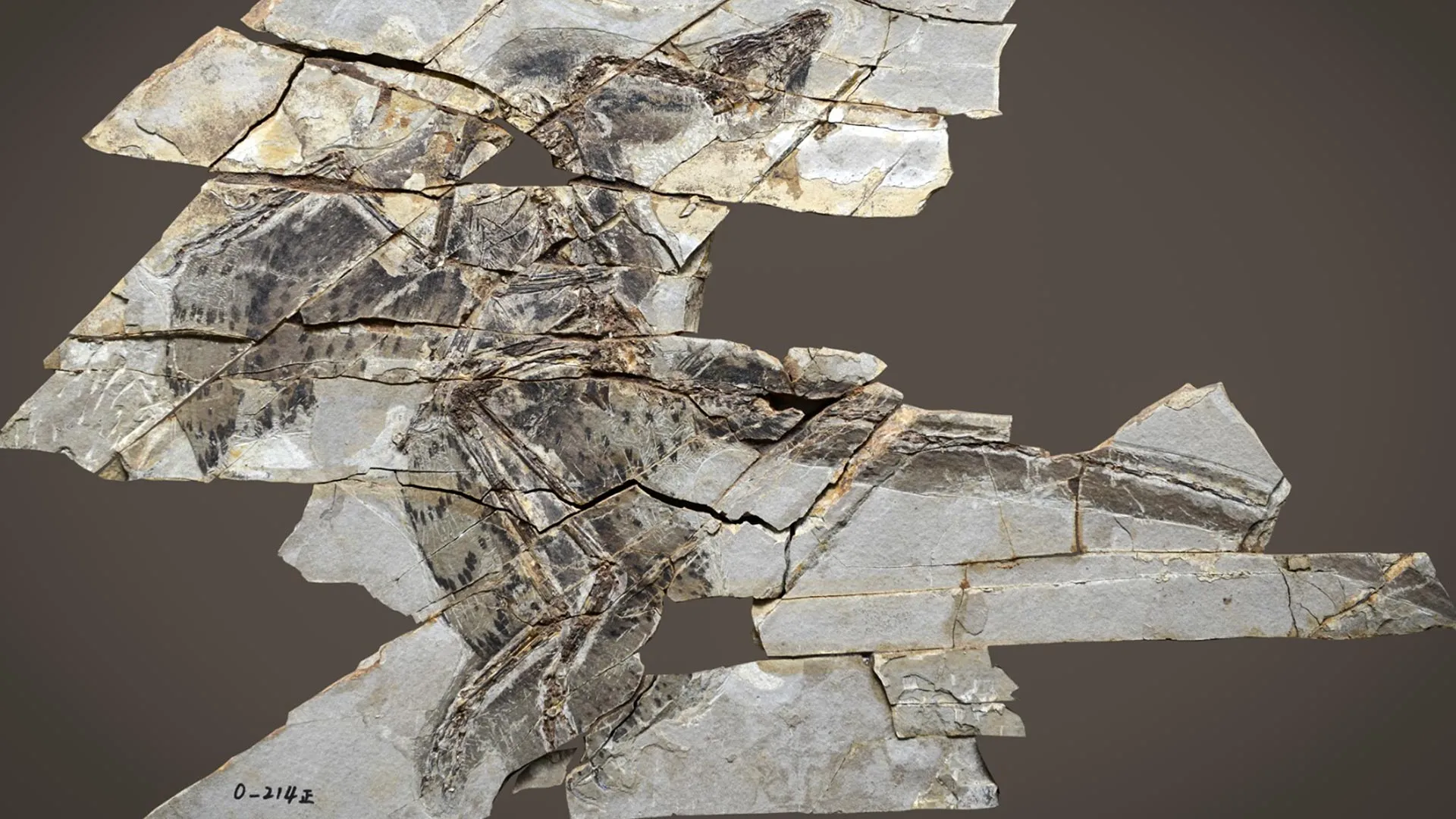
A groundbreaking study analyzing exquisitely preserved dinosaur fossils with intact feathers has revealed that some of these ancient animals, once thought to be on the cusp of avian flight, had already relinquished this aerial capability. The research, spearheaded by Dr. Yosef Kiat from the School of Zoology and the Steinhardt Museum of Natural History at Tel Aviv University, alongside international collaborators from China and the United States, provides a rare glimpse into the lives of creatures inhabiting Earth approximately 160 million years ago. This unusual discovery significantly reshapes prevailing theories on the evolution of flight in both dinosaurs and modern birds, suggesting a much more intricate and nuanced developmental trajectory than previously conceived. As the research team articulated, the seemingly minor technical detail of "feather molting" can, when meticulously examined in fossilized remains, "change everything we thought about the origins of flight, highlighting how complex and diverse wing evolution truly was."
Published in the esteemed journal Communications Biology by Nature Portfolio, the findings underscore a profound complexity in the evolutionary journey of flight. It posits that certain species may have indeed developed rudimentary flight abilities at one stage in their lineage, only to subsequently abandon them later in their evolutionary progression. This paradigm shift suggests that the path to sustained avian flight was not a simple, linear ascent but rather a labyrinthine network of trials, adaptations, and occasional reversals. The implication is that flight, a highly advantageous but energetically demanding trait, could be both gained and lost multiple times throughout the vast expanse of evolutionary history, depending on the specific ecological pressures and opportunities faced by a species.
Unraveling the Mystery: The Dinosaur-Bird Connection
The narrative of feathers begins long before the advent of flight. Dinosaurs, diverging from other reptilian lineages approximately 240 million years ago during the Triassic period, embarked on a remarkable evolutionary journey. Relatively early in their diversification, on an evolutionary timescale spanning millions of years, many species began to develop feathers. These intricate, protein-based structures initially served diverse purposes beyond aerial locomotion, primarily functioning in thermoregulation, display, and possibly even aiding in brooding nests, providing insulation for eggs. This early evolutionary phase saw a broad array of dinosaur species, including many non-avian theropods and even some ornithischians, sporting various forms of feathery or filamentous integument.
It was not until around 175 million years ago, in the Middle Jurassic, that a pivotal group of feathered dinosaurs emerged: the Pennaraptora. This clade, characterized by their more advanced, pennaceous (vaned) feathers, is widely recognized as the direct ancestral lineage to modern birds. Pennaraptoran dinosaurs, which include groups like oviraptorosaurs, troodontids, dromaeosaurids, and avialans (the group that includes birds), exhibited increasing avian features, including more bird-like skeletons and increasingly sophisticated feather structures. Crucially, the avialan lineage within the Pennaraptora were the sole dinosaurian group to survive the cataclysmic mass extinction event that marked the end of the Mesozoic era 66 million years ago, giving rise to all extant avian species. This makes the study of their early evolutionary steps, particularly regarding flight, paramount to understanding modern bird diversity.
For decades, paleontologists and evolutionary biologists have grappled with the precise mechanisms and timelines of flight evolution within this lineage. The prevailing hypothesis often centered on the gradual refinement of feathers and skeletal adaptations leading directly to powered flight, a concept often exemplified by iconic fossils like Archaeopteryx. However, the new study challenges this straightforward narrative, proposing that environmental pressures or ecological niches may have led some feathered dinosaurs to lose their flight capabilities over time, mirroring the evolutionary paths of modern flightless birds such as ostriches, emus, cassowaries, rheas, kiwis, and penguins. These contemporary examples serve as powerful analogues, demonstrating that the loss of flight is a recurrent evolutionary theme when selective pressures for flight diminish or when new terrestrial or aquatic niches become available.
The Enigmatic Anchiornis and the Jehol Biota
Central to this groundbreaking research were nine exceptionally preserved fossils from eastern China, identified as belonging to Anchiornis huxleyi. Anchiornis, a small, paravian dinosaur, holds a significant position in paleontological studies due to its early appearance in the fossil record and its extensive plumage. Discovered in the Daohugou Beds of Liaoning Province, China, these fossils date back to the Late Jurassic epoch, approximately 160 million years ago. This makes Anchiornis one of the earliest known feathered dinosaurs with clear avian characteristics, predating Archaeopteryx by several million years. Anchiornis was roughly the size of a crow, weighing around 110 grams, and possessed remarkably long feathers on its forelimbs, hind limbs, and tail, giving it a distinctive "four-winged" appearance, similar to the slightly later Microraptor. Before this study, Anchiornis was often considered a prime candidate for understanding the earliest stages of avian flight, with some researchers suggesting it possessed at least rudimentary gliding capabilities or was experimenting with aerial locomotion. Its small size and extensive feathering certainly made it a strong candidate for such abilities.
The fossils analyzed in this study are part of the renowned Jehol Biota, an extraordinary Lagerstätte (a sedimentary deposit that exhibits exceptional fossil richness and preservation) known for its remarkably detailed preservation of soft tissues, including feathers, skin, and even internal organs. The unique geological conditions in this region, characterized by rapid burial in fine-grained volcanic ash and sediments following volcanic eruptions, created an anaerobic environment that minimized decomposition and allowed for the fossilization of delicate structures typically lost to time. The ash layers often entombed animals almost instantly, preserving them in exquisite detail, down to individual filaments and melanosomes. It is these unparalleled preservation conditions that allowed Dr. Kiat and his team to conduct their meticulous analysis, a level of detail that would be impossible with less perfectly preserved specimens.
What made these specific Anchiornis specimens particularly invaluable was not just the presence of feathers, but the preservation of their original coloration. Through sophisticated analytical techniques, researchers were able to discern the presence of melanosomes – pigment-containing organelles – within the fossilized feathers. These melanosomes, which come in different shapes and sizes, correspond to different colors (e.g., elongated melanosomes for black/gray, spherical for reddish-brown). Previous studies had already reconstructed the full coloration of Anchiornis, showing it had a gray body, black and white striped wings, and a reddish-brown crest. This study focused specifically on the wing feathers, where each specimen displayed distinct primary feathers that were predominantly white, punctuated by a striking black spot at the tip. This rare retention of color provided an unprecedented opportunity to examine the microstructure and growth patterns of the feathers in ways previously deemed impossible with typical fossil material, offering a direct window into the biological processes of these ancient creatures.
Unlocking Secrets: The Science of Feather Molting
The key to understanding Anchiornis‘s flight capabilities lay in a seemingly mundane biological process: molting. Dr. Kiat, an ornithologist with a specialized focus on feathers, elaborates on this crucial mechanism. Feathers, being non-living structures once fully grown, are subject to wear and tear from environmental factors, daily activities, and microbial degradation. They grow from follicles over a period of two to three weeks, nourished by a rich blood supply within the feather shaft. Once they reach their final size and structure, they detach from these blood vessels, effectively becoming "dead material" composed primarily of keratin. Over time, these worn-out feathers are shed and replaced by new ones in a cyclical process known as molting. This process is vital for maintaining the integrity of the plumage, ensuring insulation, waterproofing, and, critically, aerodynamic efficiency.
The pattern of molting, however, holds significant implications for an animal’s aerial prowess. In birds that rely heavily on flight for survival – such as raptors that hunt on the wing, migratory birds that traverse continents, or even common songbirds that forage and escape predators aerially – molting is a highly organized, symmetrical, and gradual process. This ensures that the bird maintains aerodynamic balance and sufficient wing surface area to continue flying effectively even during the replacement phase. A bird cannot afford to lose too many primary flight feathers simultaneously, as this would severely compromise its ability to hunt, escape predators, or migrate. Therefore, molting occurs in a staggered, sequential fashion, often alternating between wings to maintain symmetry and lift, a process finely tuned by millions of years of natural selection. For example, many species molt their primary feathers one or two at a time, moving sequentially along the wing from the innermost to the outermost or vice versa, ensuring that the wing surface remains functional.
Conversely, in birds that have lost the ability to fly, such as ostriches, emus, kiwis, or penguins, the imperative for maintaining flight symmetry during molting is absent. Their locomotion is primarily terrestrial or aquatic, not aerial. Consequently, their molting patterns tend to be more random, irregular, and asynchronous. They can afford to shed feathers less predictably, often losing multiple feathers at once or in a less organized sequence, without suffering a significant functional disadvantage. This fundamental difference in molting strategy provides a reliable biological indicator of flight capability, a functional signature imprinted on the feathers themselves.
By meticulously examining the fossilized feathers of Anchiornis, the research team identified a continuous line of black spots along the wing edges, representing the tips of the primary flight feathers. Crucially, they also observed developing feathers whose black spots were distinctly out of alignment, indicating that these new feathers were still in various stages of growth and had not yet reached their full length or position. A detailed analysis of these observations revealed a molting pattern that was decidedly irregular and asynchronous, rather than the orderly, symmetrical process characteristic of volant (flying) birds. This irregular molting pattern strongly suggested that Anchiornis did not need to maintain aerodynamic symmetry for flight.
Evidence That Anchiornis Was Flightless
Dr. Kiat’s interpretation of these molting patterns was unequivocal. "Based on my familiarity with modern birds," he concluded, "I identified a molting pattern indicating that these dinosaurs were probably flightless." This conclusion represents a truly rare and particularly exciting finding, as it moves beyond mere skeletal morphology. While skeletal features can provide strong clues about muscle attachments and bone structure related to flight, the direct evidence from feather growth and replacement offers a behavioral and physiological insight rarely available in the fossil record. The preserved coloration of the feathers provided an unparalleled opportunity to discern a functional trait – the ability to fly – of these ancient creatures, going beyond the structural details typically preserved in fossils of skeletons and bones. This level of detail offers a unique window into the actual living dynamics of a Mesozoic animal.
He further emphasized the profound implications: "Feather molting seems like a small technical detail – but when examined in fossils, it can change everything we thought about the origins of flight." The addition of Anchiornis to the growing list of feathered dinosaurs that, despite their elaborate plumage, were incapable of powered flight, serves as a powerful testament to the intricate and diverse evolutionary pathways wings have taken. This discovery compels paleontologists to re-evaluate the assumption that the presence of well-developed feathers, even on forelimbs structured like wings, automatically equates to flight. It suggests that many early feathered dinosaurs may have been experimenting with various forms of aerial locomotion – perhaps gliding, parachuting, or using their wings for display or speed on the ground – without necessarily achieving sustained powered flight.
Broader Impact and Implications for Avian Evolution
The revelation that Anchiornis, a creature often placed near the base of the avian family tree and a critical taxon for understanding early paravian evolution, had likely lost its flight capabilities, introduces significant complexity into our understanding of avian evolution. For a long time, the dominant narrative suggested a gradual, unidirectional progression from rudimentary gliding to powered flight, with each new feather or skeletal adaptation representing a step closer to modern birds. This new evidence, however, suggests a more dynamic and less linear evolutionary trajectory, potentially involving multiple independent origins of flight, as well as instances of flight loss among lineages that may have possessed some aerial capacity.
This phenomenon, known as secondary flightlessness, is well-documented in modern birds, particularly on islands where the absence of predators reduces the selective pressure to fly, or in environments where abundant food resources on the ground make flight less necessary. Species like the dodo, kiwi, kakapo, and various rail species have all independently evolved flightlessness. The finding in Anchiornis suggests that this evolutionary flexibility – the ability to gain and then lose a complex trait like flight – was present much earlier in the dinosaur-bird lineage than previously appreciated. It implies that the early experiments with flight among feathered dinosaurs were not all successful endeavors leading to sustained aerial locomotion; some were evolutionary cul-de-sacs or adaptive diversions, where flight was either never fully achieved or was subsequently abandoned in favor of other adaptive strategies.
This study also enriches the ongoing debate regarding the "trees-down" (arboreal) versus "ground-up" (cursorial) hypotheses for the origin of avian flight. If early feathered dinosaurs like Anchiornis were already flightless or only rudimentary gliders, it prompts questions about the initial adaptive advantages of their elaborate feathers. Were they primarily for display to attract mates, for insulation in a changing climate, or perhaps aiding in rapid ground locomotion (e.g., "wing-assisted incline running" up steep slopes)? The complexity introduced by Anchiornis suggests that different feathered dinosaurs might have been exploring various adaptive strategies simultaneously, with flight being just one of many potential uses for their evolving plumage. This highlights the concept of exaptation, where a trait evolved for one purpose is later co-opted for another.
Expert Perspectives and Future Research
The findings are expected to resonate widely within the paleontological and ornithological communities, sparking renewed debate and inspiring further research. While Dr. Kiat’s team focused on Anchiornis, other researchers are likely to be inspired to re-examine other feathered dinosaur fossils with new scrutiny, particularly those from the Jehol Biota where exceptional preservation allows for such detailed analyses. The methodology employed – using feather molting patterns as a proxy for flight ability – provides a powerful new tool in the paleontologist’s toolkit, moving beyond skeletal interpretations alone. This functional approach to fossil analysis opens up new avenues for understanding ancient animal behavior and physiology.
Leading paleontologists not directly involved in the study have often emphasized the critical role of these fossil discoveries in bridging the gap between dinosaurs and birds, transforming our understanding from a speculative link to a well-supported evolutionary transition. This research further solidifies the direct evolutionary connection, while simultaneously highlighting the incredible diversity and experimentation that characterized this transitional period. It reinforces the idea that evolution is not a smooth, predictable path, but a messy, opportunistic process driven by a myriad of environmental pressures and genetic possibilities. The discovery also serves as a potent reminder of the incomplete nature of the fossil record and the constant potential for new findings to overturn long-held assumptions.
Future research could involve applying similar detailed analyses of feather microstructures and molting patterns to other early paravian fossils to determine the prevalence of flightlessness or rudimentary flight capabilities. Advancements in imaging techniques, such as synchrotron microtomography, and biomolecular analysis may also allow for even deeper insights into the functional morphology of ancient feathers, potentially revealing more about their stiffness, aerodynamics, and structural integrity, thereby refining our understanding of how these feathers might have functioned in life. Comparative studies with a broader range of modern birds, both flying and flightless, could also provide more robust baselines for interpreting fossilized molting patterns.
In conclusion, the study on Anchiornis molting patterns is far more than a technical detail; it is a profound reinterpretation of early avian evolution. It paints a picture of a Mesozoic world teeming with feathered creatures, some taking to the skies with increasing proficiency, while others, perhaps after brief forays into the air, chose or were compelled by their environment to return to a terrestrial existence. This complex tapestry of evolutionary innovation and adaptation underscores the dynamic nature of life on Earth and continually challenges our preconceived notions about the origins of one of nature’s most extraordinary feats: powered flight. The journey from ground-dwelling reptile to soaring bird was indeed, as the researchers suggest, "far more complex than previously believed," a testament to the ceaseless inventiveness of natural selection.
