
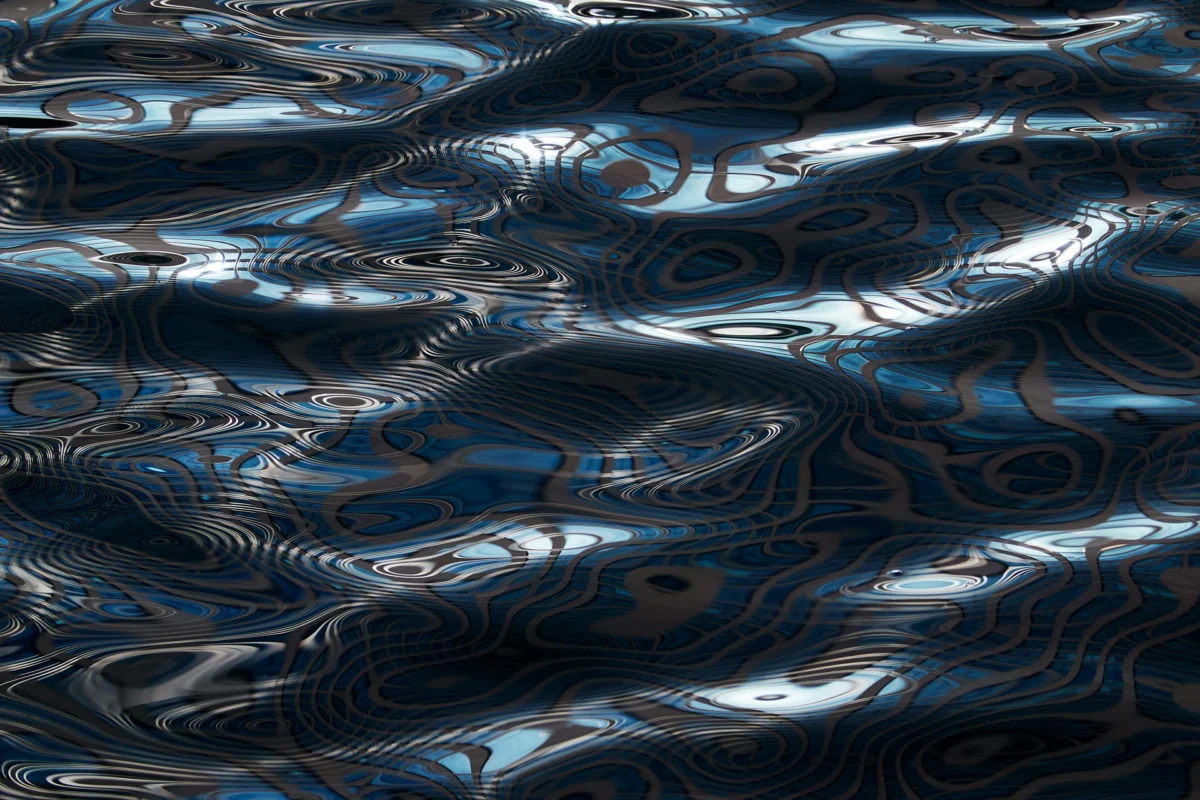
When an observer first encounters an image from the "Fleeting Reflections" series, the immediate assumption often points to sophisticated digital manipulation, specifically Photoshop. However, the artist behind this captivating body of work, whose name is not explicitly mentioned but whose voice guides the narrative, takes pleasure in clarifying that these intricate visuals are entirely the product of in-camera techniques. They are a testament to light’s dance off glass and steel, its intricate patterns as it breaks on water, and its faithful recording through the lens – sometimes as a singular, perfectly timed frame, at other times as meticulously layered in-camera multiple exposures. This rigorous methodology underscores a commitment to authenticity, eschewing digital tricks in favor of intense attention, disciplined repetition, and the profound investment of time.
This last element, time, is not merely a component but the very heartbeat of the "Fleeting Reflections" project. Spanning over a decade, the work has evolved from a sustained engagement with the docks of Canary Wharf in London. Through this prolonged immersion, the artist has distilled the essence of meaningful creative work in both nature and abstract photography into three foundational pillars: accessibility, repeatability, and patience. These are not merely technical guidelines but philosophical tenets that challenge conventional notions within the photographic community, particularly the prevailing emphasis on equipment and exotic locales. For this artist, cameras, lenses, and modes are secondary instruments; the true engine of the "Fleeting Reflections" series is the symbiotic relationship between a chosen place, unwavering persistence, and rigorous discipline.
Challenging Perceptions: The Authenticity of In-Camera Artistry
The initial reaction of viewers, mistaking the images for Photoshop creations, highlights a broader skepticism in an age saturated with digital artistry. In a photographic landscape where post-processing can fundamentally alter reality, the artist’s steadfast adherence to in-camera capture stands as a significant statement. This commitment to "no tricks" means that the complex interplay of light, colour, and form – from the ethereal glow of reflections to the fractured geometries on agitated water – is captured directly at the moment of exposure. This includes the use of carefully executed in-camera multiple exposures, a technique that predates digital photography but has found renewed artistic expression in contemporary practice. Such methods require a deep understanding of light, composition, and the camera’s capabilities, transforming the act of photography into a real-time interaction with the environment rather than a post-production construction.

The philosophical choice to maintain the honesty of the captured moment is paramount. The artist explicitly states, "I’m not ‘creating’ the forms; I’m revealing what was already there in the water." This distinction is crucial, positioning the work not as an invention but as a discovery, an act of heightened perception. It speaks to a desire to be able to declare, "hand on heart, ‘this happened.’" This ethos resonates deeply within discussions about photographic integrity and the representation of reality, particularly in genres like nature and abstract photography where the line between observation and manipulation can often blur.
The Canary Wharf Canvas: A Decade of Urban Discovery
The choice of Canary Wharf as the sole creative arena for over ten years is a central element of the "Fleeting Reflections" narrative. This bustling financial district, renowned for its towering steel and glass edifices, might seem an unconventional choice for a project delving into the nuances of light and natural abstraction. However, the artist perceives these structures not merely as buildings but as dynamic "sets of light sources." These architectural giants cast an ever-changing palette of colours and lines onto the water’s surface in the docks below. This urban environment, often overlooked for its artistic potential, becomes a constantly evolving canvas.
The interaction of these reflective surfaces with natural elements like wind and water transforms the mundane into the magical. Wind sculpts the reflected light into fluid waves, intricate ribbons, and sharp, angular fractures. The artist’s role becomes one of profound observation – "My job is to listen to it." This metaphor of "listening" encapsulates the deep engagement required to discern and capture the fleeting moments of beauty in this urban-aquatic interface. It’s a testament to how an artist can reframe their perception of a familiar environment, uncovering layers of aesthetic possibility where others might only see commerce and concrete.
Pillar 1: Accessibility – Redefining the "Nature" in Photography

A quiet but pervasive myth in nature photography posits that truly worthwhile images demand journeys to dramatic, often remote, wilderness locations. The "Fleeting Reflections" series directly challenges this notion, proving that profound artistic output can originate from the most accessible of places. The entire project, spanning a decade and resulting in two published books and multiple exhibitions, has largely emanated from a single square mile of water nestled amidst office towers.
The key to this profound exploration lies in accessibility. The artist can effortlessly reach this location, walk its perimeter, and return at will. There’s no need for flights, permits, extended time off, or arduous 4 a.m. hikes. This ease of access allows for spontaneous visits, even for as little as 40 minutes. It permits experimentation in conventionally "bad" light conditions or during rain, when the water’s surface transforms into what is vividly described as "hammered metal." Such frequent, unconstrained engagement is critical. Without the practical ability to consistently visit a subject, one cannot build the deep familiarity required to move beyond superficial observations. The more readily an artist can stand before their subject, the more honestly and intimately they can study it, peeling back layers of the obvious to reveal its hidden depths. This democratizes the artistic process, suggesting that inspiration is often closer than we think, requiring only a shift in perspective and dedicated observation.
Pillar 2: Repeatability – Unlocking Dynamic Evolution
The second foundational pillar, repeatability, centers on selecting a subject that possesses an inherent capacity for continuous change, surprise, and the offering of fresh possibilities with each encounter. The docks of Canary Wharf exemplify this principle in abundance. The environment is never truly static; each visit presents a unique permutation of light, wind, and water.
A calm morning might yield long, glassy pulls of colour, reflecting the skyline with serene precision. Conversely, a gusty afternoon can shatter these same architectural reflections into serrated lines, evoking the iconic waveform from Joy Division’s Unknown Pleasures. The passage of a boat can momentarily smear the reflections into fluid, hand-drawn-like gestures. Even more ephemeral are the iridescent interference patterns created by diesel on the water’s surface, which might last only minutes before vanishing forever. This constant, unpredictable flux ensures that the "same" scene is never truly identical twice.

This dynamic nature allows the artist to photograph the same location hundreds, even thousands, of times and still perceive the work as novel and evolving. The artist describes spending hours in a single spot, observing a patch of water cycle through myriad "personalities." At this point, the photography transcends mere architectural documentation; it becomes a study of behaviour – the behaviour of light, water, and their intricate interaction. This is where specific in-camera techniques become indispensable. Fast burst rates are employed to freeze micro-moments in the water before their collapse, while multiple exposure modes are utilized to layer gestures and amplify the inherent abstraction already present. These techniques, however, are effective only because the subject itself continuously offers new "raw material." The palette shifts with the weather, the geometry bends with the wind, and the mood changes with the tide, creating an inexhaustible wellspring of inspiration. As the artist succinctly puts it, "Without repeatability you get postcards. With repeatability you get a body of work."
Pillar 3: Patience – The Unseen Foundation of Mastery
The final and arguably most underestimated pillar is patience. This essential quality permeates every stage of the "Fleeting Reflections" project, far preceding the click of the shutter.
-
Pre-Capture Patience: The journey begins with waiting for the opportune alignment of weather conditions with the artist’s availability. Hard sun on still water produces one effect, while flat light during a drizzle yields something entirely different. Not every combination is creatively viable. It is common for the artist to walk for miles, meticulously checking angles in the water, only to find nothing suitable for the day’s conditions. This requires a profound acceptance of the ebb and flow of possibility.
-
In-Field Patience: Even when conditions are promising, patience transforms into a physical endurance test. The artist may remain at a single location for up to four hours, capturing as many as 3,000 frames of what a casual passerby might perceive as "the same scene." This intense, focused observation is driven by the search for that elusive instant where colour, rhythm, structure, and tension coalesce into perfect harmony. This process cannot be rushed; it demands unwavering presence and attentiveness to recognize the precise moment of alignment.

-
Post-Capture Patience and Discipline: The commitment to patience continues long after the shooting concludes. Upon returning home, thousands of near-identical images are downloaded, initiating a slow, deliberate culling process on an iMac. This is where rigorous discipline comes to the fore. The artist moves through the images with purpose, seeking the exact frame where everything aligns, rejecting the vast majority. The "keep rate" is described as "brutally low," underscoring the relentless pursuit of perfection and the willingness to discard all but the most exceptional captures.
-
Restrained Processing and Philosophical Honesty: The processing itself is equally restrained, reflecting the project’s foundational philosophy of honesty. Using software like Capture One, the artist applies only global adjustments – levels, clarity, sharpness, and contrast. There is no manipulation of shapes in Photoshop. This ensures that the forms revealed in the photographs were genuinely present in the water, not digitally constructed. This commitment is both philosophical and aesthetic, preserving the integrity of the captured moment and reinforcing the artist’s ability to confidently state, "this happened."
-
The Longest Form of Patience: Maturation: Beyond the daily grind, there is the most extended form of patience: allowing the work itself to mature. The "Fleeting Reflections" project was not publicly shared in any significant way for years. The artist continued to return, shoot, refine, and learn, discerning what was essential from what constituted visual noise. It took approximately seven years before the artist felt the body of work was coherent enough to present to a publisher. This slow burn eventually led to the publication of the first book, Fleeting Reflections, by Triplekite in 2017. This milestone was followed by exhibitions at the Greenwich Gallery in 2017 and the Anise Gallery in London in 2019, culminating in the release of a second volume, Fleeting Reflections II, in 2023. These public milestones, while appearing swift to an outsider, represent the visible tip of an enormous iceberg of dedication. Beneath them lie thousands of unseen hours of walking, watching, waiting, shooting, editing, rejecting, and persistently returning to the subject.
Industry and Critical Reception: Validation of a Unique Vision
The journey from a decade of solitary observation to international recognition underscores the compelling nature of the "Fleeting Reflections" series. The publication of two volumes by Triplekite, a respected publisher, signifies a significant endorsement within the photography and art world. Publishers typically invest in projects they believe possess both artistic merit and commercial viability, suggesting that "Fleeting Reflections" resonated with these criteria. The subsequent exhibitions at prominent London venues like the Greenwich Gallery and Anise Gallery further validate the work’s artistic standing. Gallery curators meticulously select works that offer unique perspectives, demonstrate exceptional skill, and provoke thought. The inclusion of "Fleeting Reflections" in these esteemed spaces implies a critical appreciation for its innovative approach to abstract and urban photography, its technical mastery, and its profound philosophical underpinnings. The recurring theme of viewers’ initial disbelief at the lack of Photoshop further highlights the project’s ability to surprise and engage, challenging preconceptions about photographic reality.

Implications for Contemporary Photography: A New Paradigm
The "Fleeting Reflections" project offers significant implications for both aspiring and established photographers, particularly those navigating the often-intimidating world of fine art and nature photography.
Firstly, it serves as a powerful counter-narrative to the pervasive idea that dramatic landscapes or exotic locales are prerequisites for creating distinctive and personal work. By demonstrating that an ordinary, accessible urban environment can yield an extraordinary body of abstract art, the project democratizes the photographic pursuit. It shifts the focus from geographical grandeur to the depth of an artist’s engagement with their immediate surroundings. This message is particularly resonant in an era where environmental concerns and travel limitations increasingly shape artistic practices.
Secondly, the emphasis on process – accessibility, repeatability, and patience – over gear and post-processing tools provides a vital lesson. It underscores that true mastery and originality stem from sustained interaction with a subject, meticulous observation, and a disciplined approach to both capture and curation. This can empower photographers to look inward, to their local environments, and to their own commitment, rather than constantly seeking external validation through expensive equipment or far-flung expeditions.
Finally, the project contributes to the ongoing discourse about authenticity and manipulation in digital photography. In a world where AI and advanced editing software blur the lines of reality, the artist’s unwavering commitment to "this happened" provides a refreshing and honest counterpoint. It champions the raw, unadulterated beauty that can be found and revealed through an attentive human eye and the faithful mechanics of a camera. This philosophical stance not only enriches the artistic value of "Fleeting Reflections" but also offers a compelling model for integrity in contemporary art.

Conclusion: The Enduring Power of Attentive Vision
Ultimately, the core message embedded within the "Fleeting Reflections" series is one of profound empowerment: the extraordinary can be found in the ordinary, given sufficient dedication. Photographers need not chase grand vistas; instead, they can cultivate a deep, sustained relationship with a subject that is easily accessible and endlessly changeable. Whether it’s a local canal, a harbour wall, a marshland at the town’s edge, or even rainwater pooling in a car park, the potential for meaningful art exists everywhere.
The directive to "return in all moods and all weathers until you can predict how that place will respond" encapsulates the essence of this philosophy. It advocates for an intimate understanding forged through countless encounters. Then, one must commit to the slow, deliberate work: walking, waiting, refining, and maintaining unflinching honesty during the editing process. Patience, in this context, is anything but passive. It is an intensely active decision to fully invest oneself in a subject for as long as it takes to truly comprehend its nuances. Over time, this deep patience becomes visibly etched into the photographs. While viewers may initially be drawn to the compelling colours and shapes, what they are, in fact, ultimately perceiving is the profound attention that underpins every single frame. It is a powerful reminder that the most impactful art often emerges not from spectacle, but from sustained, patient, and deeply attentive vision.
