
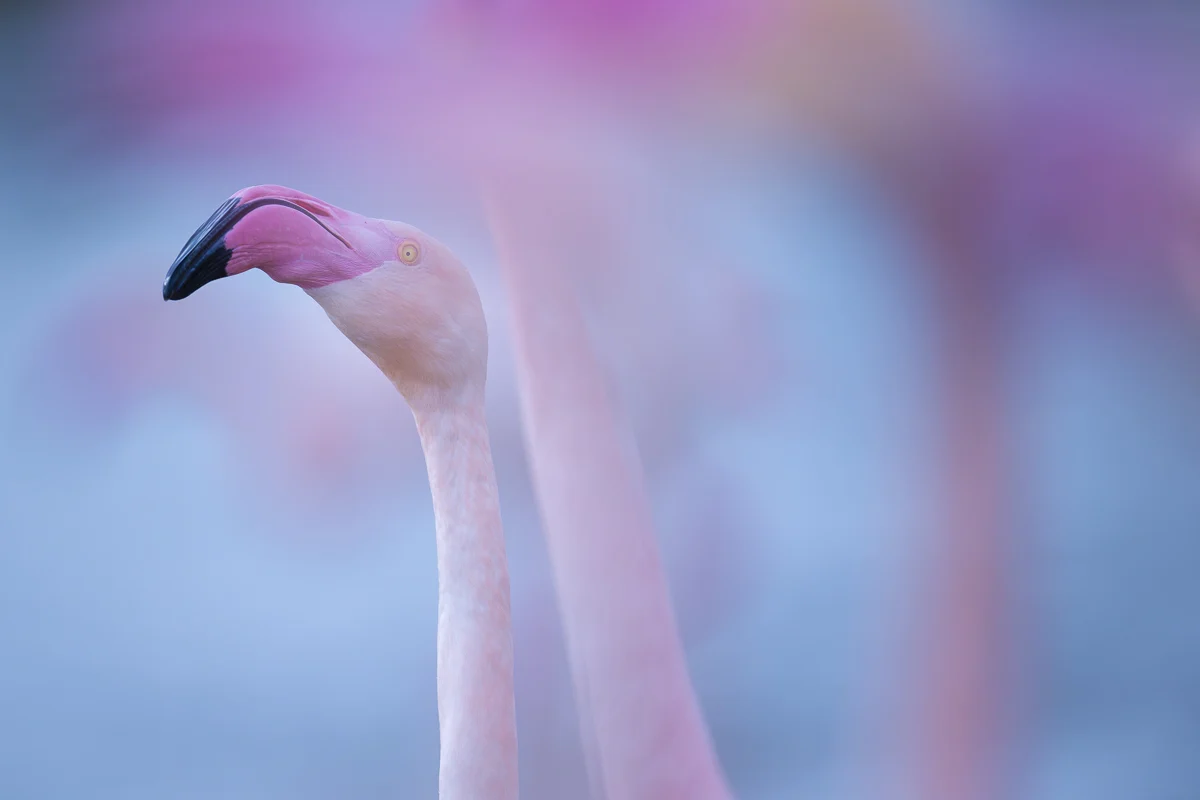
In photography, what lies out of focus can play a subtle yet powerful role in shaping the atmosphere of an image. Blurring the foreground doesn’t distract from the subject; rather, it can help guide the viewer’s eye, evoke a mood, or suggest an emotional layer that sharpness alone can’t always convey. At the core of photography is the pursuit of moments that can be transformed into meaningful images. And blurs can become part of that search – subtle tools that help transform a simple scene into an image that not only shows, but truly expresses and suggests. This deliberate artistic choice, known as foreground blur, elevates wildlife photography from mere documentation to a realm of evocative storytelling, inviting observers into a deeper, more personal interaction with the natural world.

The Art of Suggestion: Beyond Sharpness
Foreground blurs are a photographic technique that involves deliberately placing an object or element between the camera and the main subject of the image. This element, when rendered out of focus in the foreground, creates soft blurs that partially fall across the subject without diminishing its visual weight. Instead of distracting the viewer, these blurs are meant to enhance the image by adding layers of depth, space, mystery, and emotional nuance. It’s a sophisticated compositional device that encourages introspection, allowing the viewer’s imagination to fill in the obscured details and engage with the image on an emotional rather than purely literal level.
When used effectively, foreground blurs should guide the viewer’s gaze along a carefully composed visual path – the natural journey the eyes take when navigating the photograph. The main subject remains central to this journey, yet the presence of blurs introduces subtle cues about the environment, the mood, or even the narrative context of the scene. It becomes more than just a compositional trick; it’s a storytelling tool that invites the viewer to look closer and to connect more intimately with the image as a whole. An additional factor is that foreground blurs can also infuse an image with a painterly quality, evoking a sense of authenticity – as if the image had been carefully composed like a painting, starting from a blank canvas. This painterly effect often harks back to impressionistic art, where light and atmosphere are prioritized over precise detail, creating a dreamlike quality that resonates deeply with audiences.

A Historical Perspective on Depth and Emotion
The conscious manipulation of depth of field and the artistic use of blur are not novel concepts in photography, tracing their lineage back to the medium’s nascent years. Early photographers, particularly those associated with the Pictorialism movement of the late 19th and early 20th centuries, actively sought to emulate painting by employing soft focus and atmospheric effects. Figures like Alfred Stieglitz and Edward Steichen, though primarily focused on portraiture and urban landscapes, demonstrated how diffused focus could imbue an image with emotion and artistic interpretation, moving beyond the stark realism of earlier photographic practices.
In wildlife photography, the initial focus was largely on achieving maximum sharpness and clarity to document species scientifically. However, as photographic technology advanced and the genre matured, artists began to explore more expressive approaches. The transition from purely documentary to artistic wildlife photography gained momentum in the mid-20th century, with photographers experimenting with various techniques to convey the essence and spirit of their subjects rather than just their physical form. The deliberate use of foreground blur emerged as a powerful tool in this evolution, allowing photographers to suggest intimacy, vulnerability, or the hidden nature of wildlife within its habitat. This marked a significant shift, challenging the convention that absolute sharpness was the sole hallmark of a superior wildlife photograph and opening doors for more interpretive and emotionally resonant imagery. The works of influential photographers such as Art Wolfe and Frans Lanting, while not exclusively defined by foreground blur, often incorporate elements of atmospheric composition that prioritize mood and artistic vision.

Technical Mastery: Crafting the Foreground Blur
Achieving a compelling foreground blur is a delicate balance of photographic technique and artistic vision, relying heavily on understanding the interplay between aperture, focal length, and distance. A wide aperture (low f-number, e.g., f/2.8, f/4) is paramount, as it creates a shallow depth of field, rendering elements outside the focal plane beautifully blurred. The longer the focal length of the lens (e.g., 200mm, 400mm, 600mm telephoto lenses), the more compressed the perspective and pronounced the blur will be, making telephoto lenses a preferred choice for wildlife photographers aiming for this effect.
Crucially, the distance between the camera, the foreground element, and the subject is critical. For the foreground element to appear as a soft, ethereal blur, it must be positioned relatively close to the camera lens and significantly further from the main subject. This differential in distance, combined with a wide aperture, ensures that the foreground element falls completely out of focus, transforming into an abstract wash of color or light that frames or partially obscures the subject. Manual focus can often be advantageous in these situations, especially when the autofocus system struggles to differentiate between the intended foreground blur and the sharp subject. While a slight loss of absolute detail in the subject might occur with certain settings, the overall artistic gain in atmosphere and mood often far outweighs this trade-off. The psychological impact on the viewer is profound; the soft, dreamlike quality can evoke feelings of intimacy, mystery, and wonder, drawing them into the scene rather than simply presenting it.

Nature’s Palette: Utilizing Environmental Elements
An important aspect when using foreground blurs is the setting in which we find ourselves and the degree of control we can exert over it. As mentioned before, sometimes the environment itself offers natural elements – plants, light, snow, or animals – that we can incorporate creatively. We must experiment with whatever is available to us at any given moment, depending on our circumstances. This might include plant-based elements – such as branches, leaves, flowers, or grasses – as well as water or snow, geological features, other animals, or even light and shadow, either to highlight what we wish to draw attention to or, conversely, to eliminate distractions.
For example, the photograph of vultures at the beginning of this article was taken at a vulture feeding site in the Pyrenees, where the only available element was, in fact, the birds themselves. The subtle layering of a blurred vulture wing or body in the foreground creates a sense of depth and crowdedness typical of such a gathering, adding context without explicit detail. I’ve rarely achieved such a precise overlap as seen in this photograph, but that hasn’t stopped me from experimenting with this approach in other situations where the presence of multiple animals made it possible, such as with flamingos or a herd of bison.

The photograph featuring a Pyrenean capercaillie at its forest lek plays a central role in this technique. The soft blurs were created by local shrubs and underbrush typical of the region, forming a kind of natural filter between the subject and the lens. This layer of vegetation not only softened the composition, but also added depth and atmosphere, subtly framing the bird without overpowering it. The scene was further enhanced by the low, crepuscular light of early morning – the kind of light that casts long shadows and brings an air of quiet mystery to the forest. It is precisely in these fleeting moments, when light, subject, and environment align, that photography may become something more than documentation: it may become storytelling. Similarly, the dramatic contrast of light and shadow, as exemplified in the goshawk image, can be a powerful tool, sculpting the subject within its environment and naturally guiding the viewer’s eye to the focal point with both clarity and depth.
As can be seen, photographs that incorporate foreground blurs often lean toward minimalism, while still managing to convey a sense of the surrounding environment. In some cases, they even hint at the subject’s relationship with that environment, or suggest the specific moment in which the image was captured – and by extension, the animal’s behaviour and habits. This subtle layering of visual cues allows the viewer to intuit more than what is explicitly shown, creating a more immersive experience of the scene.

Ethical Storytelling: Scene Control and Patience
When photographing less skittish species from a hide, we may even be able to intervene or recreate the scene, shaping it according to our artistic vision and carefully planning the shot. This controlled environment allows for meticulous placement of foreground elements, ensuring ethical interaction with the wildlife while achieving the desired artistic outcome. However, in many cases, especially with truly wild and wary animals, photographers lack this level of control. In such instances, the approach must be cautious, always mindful of ethical considerations to avoid disturbing the animal. This often means relying on long telephoto lenses and extreme patience, waiting for natural elements to align perfectly with the subject. The art of waiting itself becomes an essential part of the creative process, a testament to the photographer’s respect for wildlife.
I love these reactive situations or “photographic hunts” with few preconceived ideas, because they involve a unique – and even somewhat serendipitous – interaction with the wild. This is true both because of the environment where these photographs typically take place and because of the very nature of the animals being photographed. In my case, without this element tied closely to the observation of wildlife itself, photography would lose much of its appeal. This approach demands a certain tolerance for failure, but it often brings significant rewards. It underscores a core tenet of ethical wildlife photography: prioritize the well-being of the animal above the shot. The ability to create stunning, atmospheric images without intrusive intervention reinforces the integrity of the photographer and the authenticity of the captured moment.

Strategic Application: Choosing the Right Moment and Modality
The most suitable genre for experimenting with foreground blurs is portrait photography, where the softness of an ethereal atmosphere often aligns harmoniously with the intended meaning of the image. This applies to wildlife portraits as well, allowing for a deep connection with the animal’s character. In contrast, in other contexts – such as birds in flight, mammals in pursuit, and similarly dynamic scenes – the speed at which events unfold can render this technique nearly impossible to apply effectively. In such cases, the opportunities for deliberate compositional intervention are significantly reduced, if not entirely absent. High-speed action demands fast shutter speeds and often wider apertures to freeze motion, which can conflict with the careful framing required for foreground blur.
The objects used to create foreground blurs can be placed closer to the camera to increase abstraction, or closer to the subject to maintain and highlight the element you’re working with – especially if it adds valuable content to the photograph. For instance, a blurred branch close to the lens might create a soft, abstract wash, while a blurred flower slightly further away might still be identifiable, adding contextual information. Similarly, you can create “veils” over the entire image or use blur to partially cover different parts of the animal, although often the subject’s gaze is carefully preserved, serving as the anchor for the viewer’s eye. A third distinction involves seeking what are called “look-throughs,” where the camera is pointed through a small opening in the foreground, or, when that’s not possible, “look-overs,” which involve filling the bottom of the frame with a blurred foreground. Each modality offers distinct artistic possibilities, allowing the photographer to tailor the effect to the specific narrative and mood of the scene. Depending on the type of blur you’re working with, be ready to switch to manual focus if the autofocus struggles. Keep in mind that you might lose a bit of sharpness (or detail), but you can often compensate for this by embracing a more artistic look in your photograph.

The Broader Canvas: Impact and Future of Atmospheric Wildlife Photography
Foreground blurs are a creative technique with broad applicability, which gives them considerable appeal. Nothing prevents you from using them in a wide range of situations, as long as you’re able to exert at least some control over your position and/or that of your subject. This versatility contributes to its growing prominence in contemporary wildlife photography, as evidenced by its frequent appearance in prestigious competitions and exhibitions. Judges and critics increasingly value images that transcend simple documentation, favoring those that evoke emotion, tell a story, or offer a unique artistic perspective.
I believe creativity often emerges through trial and error, and thus from the opportunity to work within your most familiar surroundings. That said, foreground blurs allow for improvisation and inspiration to arise in many different contexts. At the same time, this technique also gives you the chance to photograph species that are “recurring” or familiar to you in a fresh and original way. This pushes the boundaries of how familiar subjects are perceived, inviting viewers to see them through a new, more artistic lens. This approach aligns with calls from conservation organizations for more emotionally engaging imagery to raise awareness. A beautifully blurred image of a vulnerable species can often convey its fragility and beauty more effectively than a stark, hyper-realistic shot, fostering a deeper connection and encouraging advocacy.

Finally, it is fully compatible with other creative techniques related to composition or light – such as over- or underexposure, movement and shutter speed, backlighting, double exposures, abstraction, and so on. This synergistic potential means that foreground blurs are not a standalone trick but a foundational element in a broader artistic toolkit. This fusion of techniques allows photographers to continually innovate and produce truly unique visions of the natural world. This technique has been used by masters, visionaries, and influential photographers who bring their own unique aesthetic to their work – so I truly encourage you to give it a try! It’s a powerful invitation to explore the expressive capabilities of your camera and your artistic eye, transforming ordinary scenes into extraordinary visual poetry.
