
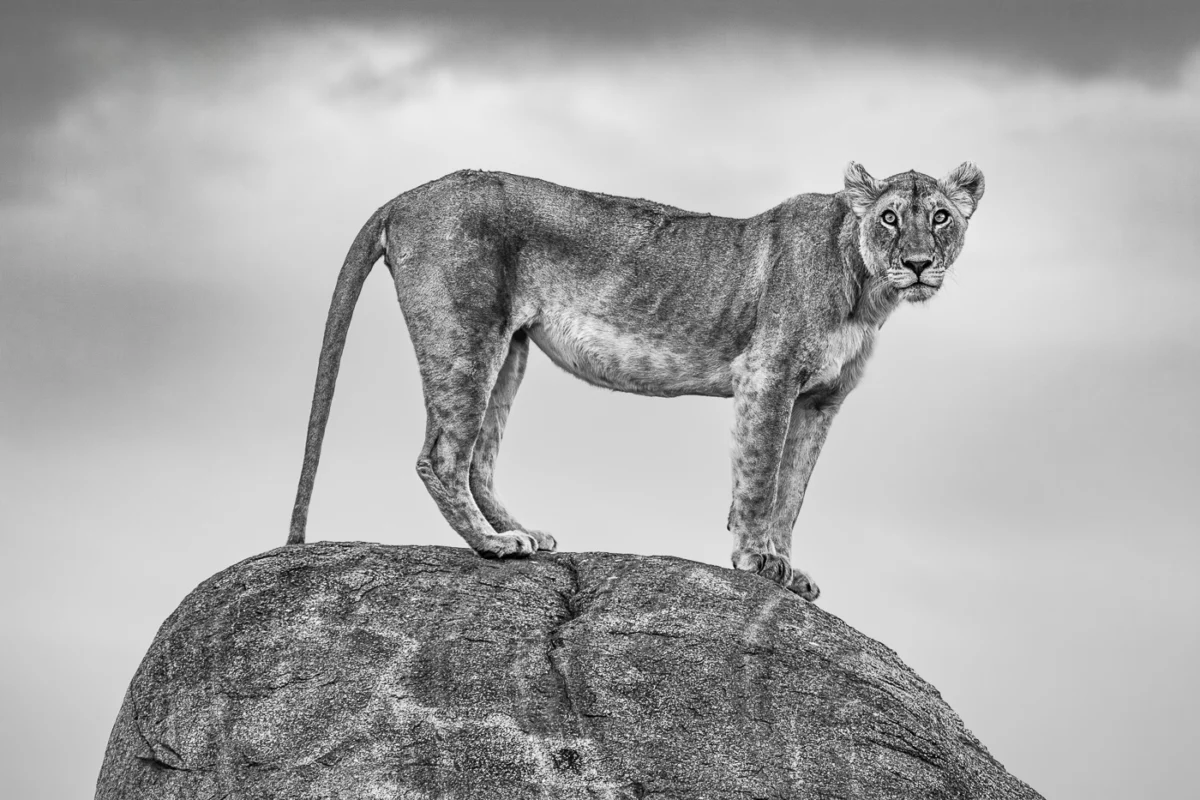
The journey into the profound world of wildlife photography for Gabi Guiard commenced not with a camera in hand, but with an innate, childhood fascination for animals. This early magnetism towards the natural world, a deep curiosity about animal behavior, and an enduring awe for their very presence, laid the foundational blocks for a perspective that would eventually define her artistic career. It was a natural attraction that evolved into a constant interest, fundamentally shaping her understanding and connection with the intricate tapestry of life around her. This deep-seated passion, while initially sidelined by a professional path in graphic design and art direction within the demanding advertising industry, ultimately resurfaced, guiding her towards a vocation where art and nature converge.
Guiard’s initial foray into the creative sphere saw her navigating the fast-paced world of advertising, a domain where visual communication is paramount. Her admiration for the iconic black-and-white fashion and advertising photographers of her time, coupled with her continuous immersion in the aesthetic principles of that industry, subtly cultivated her interest in photography. This burgeoning interest, initially a professional requirement, gradually transformed into a personal artistic pursuit. It became the perfect conduit, allowing her to apply her extensive knowledge of art direction and graphic composition to capture the essence of wildlife, thereby harmoniously blending two lifelong passions: the untamed beauty of nature and the expressive power of photography. This career pivot exemplifies a broader trend observed in the creative industries, where professionals often leverage transferable skills from one artistic discipline to another, finding new avenues for expression and impact.

The Deliberate Choice of Monochrome: Black and White as a Language
For Guiard, black-and-white photography is far more than a stylistic choice; it is her primary mode of communication, a deliberate artistic language. This isn’t a mere preference for "artistic" or "classic" aesthetics, but a conscious decision to strip away the potential distractions of color, allowing her to hone in on the core message and emotional truth she intends to convey. In an era saturated with vibrant digital imagery, the choice of monochrome is a powerful statement, forcing both the artist and the viewer to engage with the subject on a deeper, more elemental level. Historically, black-and-white photography has been revered for its ability to convey mood, texture, and form with unparalleled intensity, a legacy that contemporary artists like Guiard continue to uphold and evolve.
By eliminating color, Guiard meticulously removes layers of visual information that could divert attention. This deliberate reduction emphasizes textures, shapes, and contrasts, compelling the viewer to focus on the fundamental elements of the scene. It is, in her words, "an exercise in honesty," where the superfluous vanishes, leaving only the essential. This approach resonates with the principles of minimalist art, where simplicity and clarity are paramount, allowing the inherent power of the subject to emerge unhindered. This technique has been employed by renowned photographers throughout history, from Ansel Adams’ majestic landscapes to Henri Cartier-Bresson’s decisive moments, all demonstrating the profound expressive capabilities of a limited palette.

Stripping Away Distraction: The Essential Over the Superfluous
Guiard’s philosophy is rooted in the belief that true impact comes not from showcasing everything, but from highlighting what truly matters. She articulates this vision as "simplifying reality and taking it to the most essential so that the wild character of nature… takes center stage." This intentional reduction means that a fleeting gaze, a distinctive silhouette, or a subtle gesture is often sufficient to narrate a compelling story. In her black-and-white wildlife portraits, she aims for viewers to connect intimately with the raw power of the moment, to experience the profound "silence of the instant" that transcends the visual noise of the modern world. This focus on the essential fosters a deeper, more contemplative engagement, inviting observers to interpret and feel rather than merely observe.
This commitment to minimalism is encapsulated in the enduring adage, "less is more." By simplifying the visual elements within her frames, Guiard deliberately guides the viewer’s eye directly to the heart of the narrative. A singular gesture, the play of a shadow, an intense look, or a stark line can imbue a photograph with immense power. This strategic reduction of visual clutter ensures that the viewer is not overwhelmed by unnecessary details, but rather drawn instinctively to the core essence of the scene. The "apparent emptiness," or the noise-free space, she creates within her images serves a crucial purpose: it invites individual interpretation, allowing each person to complete the photograph with their own emotions, memories, and understanding, thereby transforming viewing into a deeply personal and interactive experience.

Mastering Composition: The Invisible Backbone of Vision
For Guiard, composition is not merely an arrangement of elements; it is the fundamental backbone of every photograph, the invisible structure that directs the viewer’s gaze and communicates the intended story. In black-and-white photography, where the guiding cues of color are absent, composition assumes an even more critical role. Lines, shapes, and the strategic use of space gain an elevated significance, becoming pivotal tools for expression. The precise placement of an animal within its environment, the delicate balance between areas of light and shadow, and the deliberate inclusion or exclusion of negative space all contribute to creating a harmonious yet tension-filled visual narrative.
Guiard frequently seeks simplicity in her compositions, diligently avoiding superfluous elements that might dilute the message. A diagonal line leading the eye to the intense gaze of a lion, the graceful curve of a tree framing a powerful silhouette, or the expansive negative space surrounding a solitary subject can all be potent compositional devices, creating both strength and intimacy. This mastery of composition allows her to distill complex natural scenes into impactful, digestible visual statements. While acknowledging the importance of established compositional rules, Guiard also understands when and how to artfully break them, often to evoke a stronger emotional response or to create a more dynamic and unexpected visual experience. For her, effective composition is the unseen framework that allows an image to breathe, simultaneously imbuing it with undeniable power and resonance.

Dynamic Play of Light and Shadow: Contrast as a Powerful Tool
In Guiard’s artistic lexicon, light and shadow are not merely photographic phenomena but essential "brushes" with which she paints each image. This strategic use of contrast extends beyond mere aesthetic preference; it is a profound method of articulating her message. The deep blacks in her photographs serve to obscure what she deems unnecessary to show, creating areas of mystery and focus, while the illuminating lights reveal precisely what she intends for the viewer to feel and understand. In the monochromatic realm, shadows are not just voids; they carry as much expressive weight and narrative importance as the illuminated subjects themselves, often becoming integral characters in the visual story.
This interplay of light and shadow, or chiaroscuro, allows Guiard to sculpt form, define texture, and create a sense of three-dimensionality that can be even more compelling than color. The dramatic shifts between light and dark evoke mood, from serene calm to raw intensity, and emphasize the inherent drama of the wild. This technique draws from a rich artistic tradition, spanning classical painting to film noir, demonstrating how contrast can be manipulated to evoke strong emotional responses and guide the viewer’s perception. Guiard harnesses this power to underscore the wildness, majesty, and sometimes, the stark reality of her subjects, making the unseen as important as the seen.

Evoking Profound Emotion: Beyond Mere Representation
While Guiard’s photographs are born from a meticulous observation of wildlife, her ultimate quest transcends mere documentation; it is the pursuit of profound emotion. She aims for her images to do more than simply display an animal or a landscape; she strives for them to convey a deeper sentiment—be it power, solitude, majesty, vulnerability, or the sheer raw essence of existence. This transformative approach elevates her work from reportage to art, inviting introspection and connection.
Her portrayal of lions exemplifies this emotional depth. For Guiard, these magnificent creatures are not just biological specimens but "kings and queens of a territory that breathes at its own rhythm." Each image is intended to preserve a fragment of their story: a tranquil gaze that subtly conceals immense strength, a serene posture that eloquently communicates dignity. By stripping away color, she intensifies this narrative, compelling viewers to concentrate on the intrinsic emotional qualities and the profound character of these animals. This deliberate focus on emotion over mere factual representation allows her work to resonate universally, tapping into shared human experiences of strength, vulnerability, and respect for the natural world. In an age where wildlife conservation is increasingly critical, such emotionally resonant imagery plays a vital role in fostering empathy and galvanizing support for environmental protection.

Crafting Timeless Narratives: The Enduring Appeal of Monochrome
A compelling aspect of Guiard’s commitment to black-and-white photography is its inherent timelessness. There is a magical quality to monochrome that detaches images from a specific era. A photograph captured today, when rendered in black and white, could seamlessly appear as if it were taken decades ago, and conversely, it retains its impactful resonance for decades to come. This enduring quality allows Guiard to present nature as an eternal entity, a mirror reflecting both our present selves and our historical connection to the wild.
Furthermore, by consciously removing the variable of color, Gui Guiard creates an open space within each image, inviting viewers to project their own memories, experiences, and emotions onto the scene. This absence of color stimuli encourages a more personal and intimate dialogue between the photograph and its observer. Black-and-white transforms every image into a unique, subjective experience, fostering a deeper, more introspective connection than might be achieved with a full-color palette. This timeless and introspective quality positions her work not just as visual art, but as a catalyst for personal reflection and a quiet commentary on the enduring presence of nature in a rapidly changing world.

The Synergy of Technique and Sensitivity: The Art of the ‘Silent Shutter’
Underpinning every one of Guiard’s evocative images is a rigorous technical foundation. The meticulous search for optimal light, the precise execution of composition, and the unwavering attention to detail are all critical elements of her craft. However, she firmly asserts that the true meaning and power of her work emanate from the profound sensitivity with which she observes her subjects and their environment. This blend of technical prowess and intuitive understanding is paramount.
For Guiard, it is crucial to make conscious decisions about what to reveal and what to leave veiled in shadow, when to activate the shutter, and, equally important, when to simply remain silent and observe. This concept of the "silent shutter" speaks to a deep respect for the moment and the subject, a patience that allows the true essence of the wild to unfold before her lens. She contends that technique, devoid of sensitivity, remains an empty gesture, failing to communicate anything meaningful. It is only when these two forces—technical mastery and profound sensitivity—converge that a photograph truly comes alive, capable of moving, inspiring, and inviting deep reflection from its audience. This harmonious fusion defines her distinctive artistic signature.

Implications and Broader Impact: Wildlife Photography in a Digital Age
In an increasingly digitized and visually saturated world, the work of photographers like Gabi Guiard carries significant implications, particularly for wildlife conservation and the broader appreciation of natural art. Her minimalist, black-and-white approach offers a refreshing counterpoint to the often-overwhelming visual data of contemporary media. By distilling images to their core, she creates art that is not only aesthetically powerful but also highly impactful in raising awareness for endangered species and fragile ecosystems.
The global wildlife photography market, estimated at several billion dollars annually, plays a crucial role in public education and conservation funding. However, with countless images vying for attention, Guiard’s distinctive style allows her work to stand out. By emphasizing emotion and timelessness, her photographs foster a deeper connection between humans and the wild, potentially inspiring greater action towards environmental protection. Organizations like the World Wildlife Fund (WWF) and National Geographic frequently leverage powerful imagery to convey conservation messages, and artists employing unique styles contribute significantly to this effort. Her work implicitly argues that the artistic interpretation of nature can be as potent a tool for advocacy as purely documentary photography, by appealing to the heart as much as to the intellect. This approach ensures that her subjects, such as the African lions she often photographs, are viewed not just as animals, but as symbols of a wildness that demands respect and protection, thereby extending her artistic reach into the realm of ecological consciousness.

Gabi Guiard’s Core Principles and Artistic Manifesto
In essence, Gabi Guiard’s powerful black-and-white wildlife photography is anchored by a set of core principles that guide her artistic output:
- Emphasis on the Essential: Stripping away extraneous detail to reveal the fundamental truth of the subject.
- Narrative Through Simplicity: Believing that "less is more" allows for a stronger, more direct message.
- Composition as Foundation: Utilizing lines, shapes, and space to direct the viewer’s eye and build tension.
- Contrast for Expression: Employing light and shadow as primary tools to evoke mood and highlight form.
- Emotion as the Ultimate Goal: Transcending mere representation to stir deep feelings and personal connection.
- Timelessness through Monochrome: Creating images that defy specific eras, fostering universal appeal.
- Sensitivity over Pure Technique: Valuing intuitive observation and emotional intelligence as much as technical skill.
For Gabi Guiard, black-and-white is not merely a filter or a stylistic choice; it is a vital, intentional artistic decision. It is her profound way of requesting silence from the bustling world, enabling her to truly listen to the nuanced narratives that nature perpetually unfolds. In this profound silence, she discovers the most authentic and powerful images, those that most truthfully represent her unique vision and her unwavering passion for the wild. Her work serves as a testament to the enduring power of monochrome to reveal the soul of nature and resonate deeply with the human spirit, securing her place as a significant voice in contemporary wildlife photography.
