
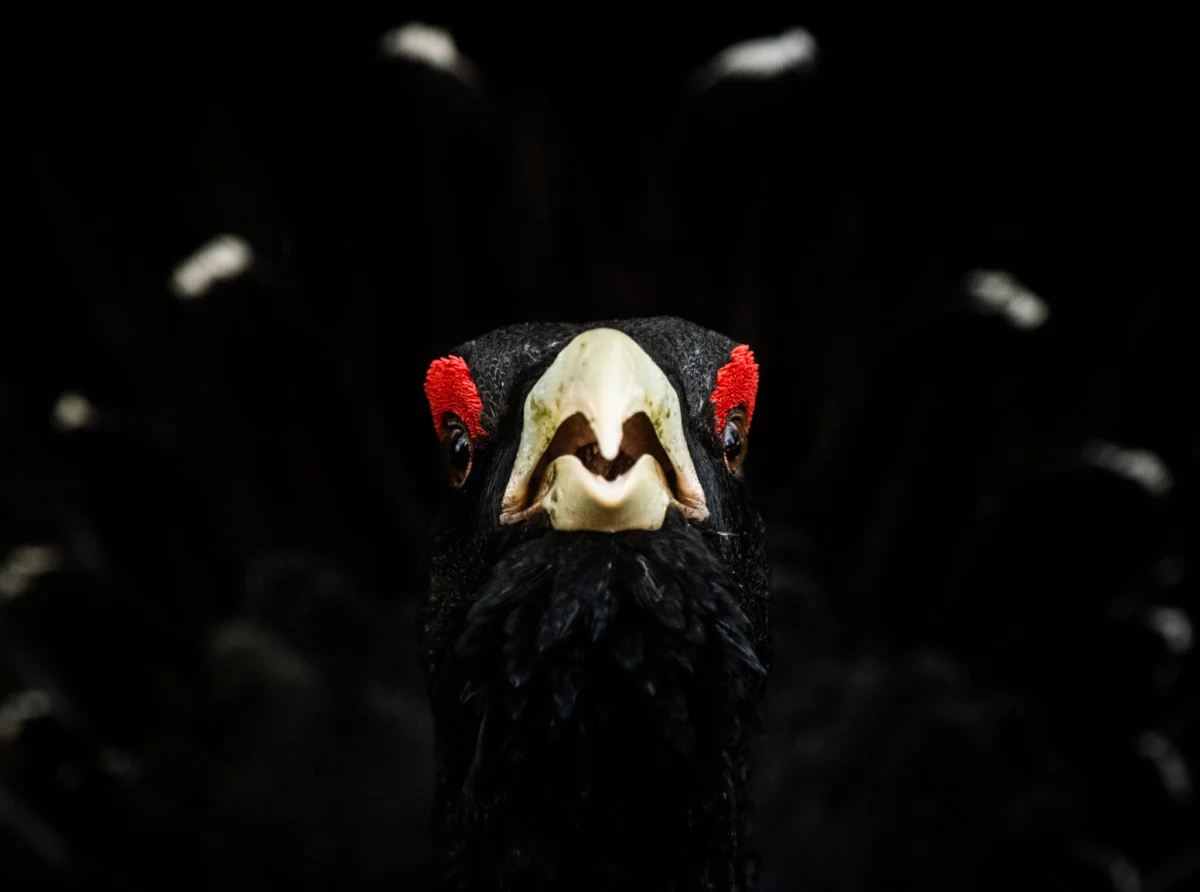
In the intricate and often overwhelming tapestry of the natural world, a growing number of photographers are deliberately gravitating towards the extreme ends of photographic techniques to capture and convey the profound impressions and raw emotions experienced in the field. This deliberate embrace of ultra-wide or super-telephoto lenses, dramatic blackout or ethereal whiteout exposures, extended shutter speeds, and unconventional compositions serves not merely as a stylistic choice but as a philosophical approach, aiming to strip away distractions, amplify essential elements, and imbue images with a potent, unforgettable narrative. The pursuit of order within nature’s inherent chaos is a central tenet, transforming a seemingly random collection of elements—from the dense canopy of a forest to the intricate plumage of a bird—into a structured visual story that resonates deeply with the viewer.

The Quest for Emotional Resonance in Nature Photography
Nature photography, at its core, is an endeavor to translate a multi-sensory experience into a singular visual medium. When encountering the grandeur of a mountain range or the subtle dance of wildlife, an individual’s perception is a rich amalgamation of sights, sounds, smells, and textures. For the still photographer, the inherent challenge lies in compressing this holistic sensory input into a two-dimensional image, often leaving the artist and viewer alike with a sense of inadequacy compared to the lived experience. This disparity frequently leads photographers to seek innovative methods to bridge the gap between their emotional encounter and the final photographic output. The reliance on extreme techniques represents a deliberate strategy to intensify the emotional impact, allowing the photographer to transcend mere documentation and instead craft an evocative interpretation.

Historically, nature photography has evolved from purely scientific documentation to a powerful art form capable of stirring public consciousness and advocating for conservation. Early pioneers like Ansel Adams demonstrated the expressive potential of landscape photography through mastery of light and composition. However, contemporary artists are now pushing beyond these foundational principles, leveraging advanced technology and a willingness to break conventions to create images that are less about literal representation and more about subjective experience. This shift reflects a broader trend in visual arts where authenticity is increasingly defined by emotional truth rather than objective fidelity.
Mastering Light: The Art of Blackout and Whiteout

One of the most potent tools in this extreme photographic arsenal is the manipulation of exposure to create distinct atmospheric moods. Techniques colloquially known as "blackout" and "whiteout" involve pushing exposure to its absolute limits, either heavily underexposing for dramatic, moody scenes or significantly overexposing for bright, ethereal qualities. This is far from a technical oversight; it is a conscious artistic decision.
Blackout photography, characterized by deep shadows and minimal highlights, imbues an image with a sense of mystery, drama, and sometimes solitude. It can transform a familiar landscape into an otherworldly realm, emphasizing stark silhouettes and the interplay of negative space. This approach is particularly effective for conveying the somber beauty of stormy weather, the quiet intensity of nocturnal scenes, or the powerful presence of a solitary subject against a dark backdrop. The viewer is invited to ponder what lies within the shadows, engaging their imagination and fostering a deeper emotional connection to the scene. The deliberate reduction of visual information forces the eye to focus on the essential form and emotion.

Conversely, whiteout photography, achieved through significant overexposure, creates images that often feel pure, elegant, and serene. By rendering much of the scene in bright whites and subtle pastels, distractions are eliminated, allowing the main subject to emerge with clarity and grace. This technique is frequently employed to highlight the delicate textures of snow-covered landscapes, the ethereal glow of fog, or the inherent beauty of a species in a pristine environment. The scarcity of detail in the background directs all attention to the subject, creating an intimate and often dreamlike quality. For instance, an animal photographed against a whiteout backdrop of snow can appear almost sculptural, its form celebrated in stark simplicity.
Both blackout and whiteout techniques demand a nuanced understanding of a camera’s dynamic range and careful post-processing to maintain detail in the extreme ends of the tonal spectrum. While they push the boundaries of conventional exposure, the goal is not merely to create an "incorrectly" exposed image but to craft a visually striking and emotionally resonant piece. Industry experts, like renowned landscape photographer Sarah Jenkins, often comment on the increasing sophistication of these techniques: "What might once have been considered a technical flaw is now, in the hands of a skilled artist, a powerful expressive device. It’s about seeing beyond the ‘correct’ histogram."

Redefining Perspective: From Ultra-Wide to Super-Telephoto
Beyond light, perspective profoundly shapes how viewers interact with a photographic subject. Focal length, a fundamental element of a photographer’s toolkit, dictates the relationship between a subject and its environment. Contemporary nature photographers are increasingly exploring the extreme ends of the focal length spectrum, from ultra-wide to super-telephoto, to craft distinct narratives that standard lenses cannot achieve.

Ultra-wide-angle lenses (e.g., 14mm to 24mm) distort perspective in a way that can create an immersive, expansive feel, pulling the viewer directly into the scene. They are used to emphasize vast landscapes, towering natural formations, or the intricate details of a foreground element in relation to a distant backdrop. This creates a sense of scale and grandeur, often making the viewer feel small and insignificant in the face of nature’s majesty. When used effectively, ultra-wide shots can highlight environmental context, showing a subject within its broader habitat, offering a sense of place and interconnectedness.
On the other end of the spectrum, super-telephoto lenses (e.g., 600mm to 1200mm and beyond, often achieved with teleconverters) compress perspective, isolating subjects and rendering distant elements seemingly close. This technique is invaluable for intimate wildlife portraits, capturing intricate behaviors, or abstracting patterns from a chaotic scene. The advancements in mirrorless camera technology have been pivotal in making these extreme focal lengths more accessible and functional. Mirrorless systems, with their superior autofocus capabilities, lighter bodies, and the ability to maintain image quality even with teleconverters, have democratized the use of very long lenses. Previously, pairing teleconverters with telephoto zooms often resulted in compromised autofocus and sharpness, limiting their practical application for fast-moving wildlife. Now, even mid-range telezoom lenses can effectively extend their reach, opening up new worlds of detailed perspectives.

A compelling example of using a full spectrum of focal lengths to tell a comprehensive story comes from the seabird island of Hornøya in Norway. Located north of the Arctic Circle, Hornøya is a breeding ground for European shags. Here, photographers can document the harsh conditions of early spring, where snow still blankets the island as the birds return. By employing focal lengths ranging from a broad 24mm to an extreme 1200mm, a photographer can construct a visual narrative that covers environmental context, showing the shags battling snowstorms, alongside detailed close-ups of their displays and territorial disputes. This holistic approach, combining sweeping landscapes with intimate portraits, paints a richer, more nuanced picture of the species’ struggle and resilience. The interplay between these perspectives offers viewers both a macro and micro understanding of the birds’ lives, enhancing the emotional depth of the storytelling.
Capturing the Unseen: Dynamic Movement and Shutter Speed Innovation

Photography’s unique ability to freeze or blur time offers another avenue for extreme artistic expression, particularly through the manipulation of shutter speed. This allows photographers to capture moments and movements that are imperceptible to the human eye, transforming the familiar into the extraordinary.
Long exposures, especially when combined with Intentional Camera Movement (ICM), represent a radical departure from traditional sharp imagery. ICM involves deliberately moving the camera during a long exposure, transforming elements of the landscape into painterly streaks and abstract forms. This technique allows the photographer to "paint" with light and color, capturing the essence of a scene rather than its precise details. The result is a unique, unrepeatable image that blurs the lines between photography and abstract art. While it often yields a high number of "failed" images, the successes can be profoundly impactful, conveying emotion, motion, and atmosphere in a way that static shots cannot. ICM is a process of discovery, requiring patience, experimentation, and a willingness to embrace serendipity. Art historians note its lineage in impressionistic painting, where the goal was to capture fleeting moments and subjective perceptions.

At the opposite extreme, mirrorless camera technology has unlocked incredibly fast shutter speeds, extending beyond the 1/8000th of a second limit common in the DSLR era to several tens of thousands of a second. This capability is revolutionary for capturing details in extremely bright conditions, such as directly facing the midday sun. Previously, attempting such a shot would often result in blown-out highlights and a loss of detail. Now, photographers can reveal the intricate structures of the sun, the textures of backlit clouds, or the rapid wing beats of a hummingbird with astonishing clarity. This ability to capture minute details in conditions previously deemed unphotographable adds a new dimension to nature photography, allowing for truly unique perspectives on the world’s most vibrant and intense light sources.
Breaking the Mold: Unconventional Compositions as Narrative Tool

Composition, often seen as the bedrock of effective photography, is governed by a set of established rules, such as the rule of thirds or the golden ratio, designed to create balanced and visually pleasing images. While these guidelines are invaluable for foundational learning, a growing number of photographers are finding power in deliberately flouting them. Unconventional compositions are not merely about breaking rules for the sake of it, but about using imbalance, asymmetry, and unexpected framing to amplify a specific emotion or narrative.
For example, the traditional advice to leave "leading space" in the direction a subject is facing aims to create a sense of movement and narrative flow. However, intentionally placing a subject at the very edge of the frame, or even cropping it partially, can create tension, suggest confinement, or draw the viewer’s eye to a specific, perhaps uncomfortable, detail. Similarly, centering a subject, often advised against in conventional rules, can sometimes convey monumentality, confrontation, or stark isolation. The key lies in understanding why a rule is being broken and what emotional or narrative effect that deviation achieves.

This approach transforms composition from a prescriptive set of instructions into a dynamic interplay of elements within the frame. It requires a highly developed visual intuition and a deep understanding of how different visual weights and lines interact to guide the viewer’s gaze and evoke a feeling. Training the eye to perceive these interactions, rather than just applying a formula, is considered by many leading educators to be one of the most critical skills for elevating one’s photographic artistry. This freedom from strictures allows for the exploration of new visual languages, pushing the boundaries of what a "well-composed" image can be.
The Power of Play: Embracing Experimentation and Curiosity

While intentionality and a clear vision are often lauded as hallmarks of professional photography, there is an equally crucial, albeit less discussed, aspect: creativity for creativity’s sake. This counterbalances the systematic, rule-bound approach and fosters a spirit of playfulness and experimentation. Not every captivating photograph can be meticulously pre-visualized; many emerge from fortunate coincidences, unexpected reflections, or spontaneous movements. These elements often inject a unique magic that defies planning.
Embracing experimentation means being willing to try techniques without a guaranteed outcome. It involves asking "what if?" – What if a static subject is photographed with intentional camera movement? What if a scene is deliberately underexposed when conventional wisdom dictates overexposure? This process inevitably leads to a significant number of "failed" shots, which are not truly failures but learning opportunities. Among these discards, a "golden" image might emerge, but more importantly, the process cultivates discoveries – a new effect, a novel way of seeing, or an understanding of how light and subject interact under unusual conditions. This iterative process of trial and error is fundamental to artistic growth.

Curiosity, therefore, becomes the ultimate creative tool for the nature photographer. It fuels the exploration of uncharted technical territories, the questioning of established compositional norms, and the willingness to see nature through an unconventional lens. This adventurous spirit is what drives innovation and allows photographers to continuously evolve their craft.
Broader Implications and the Future of Nature Photography

The embrace of extreme techniques in nature photography carries significant implications for the genre, its practitioners, and its audience. Artistically, it expands the lexicon of visual storytelling, moving beyond mere representation to a more profound exploration of emotion and subjective experience. This trend challenges viewers to engage more actively with images, questioning their construction and delving deeper into the artist’s intent.
For aspiring photographers, this approach underscores the importance of mastering foundational techniques while also encouraging creative risk-taking. It highlights that the journey of a photographer is one of continuous learning, experimentation, and self-discovery. Educational institutions are increasingly incorporating experimental and abstract techniques into their curricula, recognizing their value in fostering unique artistic voices.

Furthermore, the evocative power of these extreme images can have a profound impact on conservation efforts. By presenting nature in novel, emotionally charged ways, these photographs can cut through the noise of conventional imagery, capturing public attention and inspiring a deeper appreciation for the natural world. An abstract depiction of a melting glacier or a dramatic blackout shot of an endangered species can communicate urgency and fragility more effectively than a straightforward, documentary image.
In conclusion, the movement towards extreme photographic techniques in nature photography represents a vibrant evolution of the art form. By daring to ignore conventional rules, employing techniques that push technological boundaries, and embracing an unwavering spirit of curiosity and experimentation, photographers are not just capturing images; they are crafting powerful narratives that convey the true essence and profound emotions of the natural world, fostering a deeper connection between humanity and its environment.
