
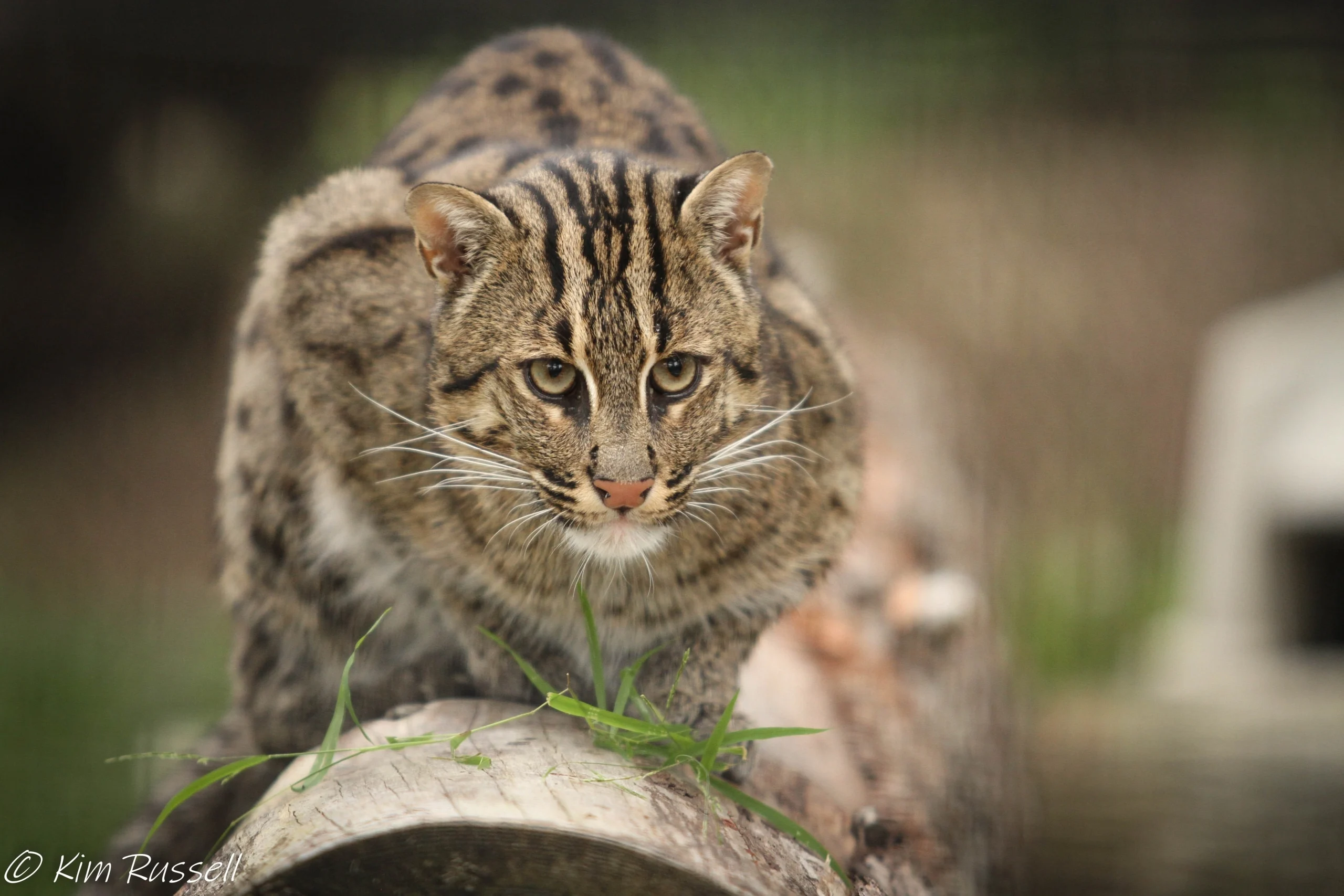
March 3rd marks World Wildlife Day, a global observance established by the United Nations General Assembly to celebrate and raise awareness about the world’s wild fauna and flora. This year, the theme, "Partnerships for Wildlife Conservation," resonates particularly strongly with the plight of the fishing cat, a species whose very existence is often overlooked, yet whose survival hinges on collaborative efforts. At the forefront of this vital conservation narrative is River, a six-year-old fishing cat residing at the Hawk Creek Wildlife Center, who serves as a living testament to the power of ambassador animals in fostering public engagement and scientific understanding.
The Silent Struggle of the Fishing Cat
The fishing cat (Prionailurus viverrinus) is a medium-sized wild cat native to Southeast Asia and South Asia. Unlike many of its more charismatic feline relatives, the fishing cat is largely aquatic, possessing semi-webbed paws that make it an adept swimmer and fisher. Its diet consists primarily of fish, but it also preys on crustaceans, amphibians, and small mammals. Historically, these elusive creatures were found in a wide range of wetland habitats, including mangrove swamps, tidal marshes, and riverine forests. However, their populations have experienced a drastic decline, leading to their classification as "Vulnerable" on the International Union for Conservation of Nature (IUCN) Red List.
The IUCN Red List, established in 1964, is the world’s most comprehensive inventory of the conservation status of biological species. The "Vulnerable" designation signifies that a species is facing a high risk of extinction in the wild. For fishing cats, the primary drivers of this decline are habitat loss and degradation, largely due to the expansion of agriculture, aquaculture, and urban development into their wetland homes. Pollution of waterways also impacts fish populations, a crucial food source for these specialized predators. Furthermore, retaliatory killings by local communities, who may perceive fishing cats as a threat to their livelihoods, contribute to their dwindling numbers.
Despite these significant threats, a pervasive lack of public awareness about the fishing cat’s existence and its ecological importance poses a formidable challenge to conservation efforts. Many individuals remain unaware that such a unique feline species even inhabits their planet, let alone the precarious position it occupies on the brink of endangerment. This knowledge gap directly translates into a deficit in public support, funding, and political will necessary for effective conservation initiatives.
River: An Ambassador for a Species in Peril
River, a vibrant six-year-old fishing cat at the Hawk Creek Wildlife Center, plays a pivotal role in bridging this awareness gap. As an ambassador animal, her presence allows thousands of individuals to connect with the fishing cat species on a personal level. Through educational programs and public appearances, River embodies the challenges faced by her wild counterparts, transforming abstract conservation concerns into tangible realities for visitors. Her unique adaptations for an aquatic lifestyle, her playful demeanor, and her inherent wildness captivate audiences, sparking curiosity and fostering a sense of empathy.
The impact of ambassador animals like River extends far beyond mere public fascination. They serve as invaluable educational tools, providing a living, breathing example of a species that might otherwise remain unknown. By inspiring empathy and a desire to learn more, these animals lay the groundwork for genuine engagement with conservation issues. When people see River, they begin to understand that fishing cats are not just distant creatures in far-off lands, but living beings with specific needs and vulnerabilities that require our collective attention. This emotional connection is often the catalyst for further action, prompting individuals to consider how they can contribute to protecting these animals and their habitats.
The Power of Partnerships: A Collaborative Approach
The theme of World Wildlife Day 2024, "Partnerships for Wildlife Conservation," underscores the critical need for collaboration across various sectors to address the complex challenges facing endangered species. The fishing cat’s conservation journey is a prime example of this principle in action. The success of initiatives aimed at protecting this elusive species hinges on the synergistic efforts of wildlife centers, conservation organizations, scientific researchers, local communities, and governmental bodies.
A compelling illustration of this collaborative spirit was the recent visit of the founder of the Fishing Cat Conservancy to Hawk Creek Wildlife Center to meet River. This encounter exemplifies a vital partnership between a dedicated conservation organization and a reputable wildlife center. The founder’s journey to observe River firsthand highlights the scientific value of well-managed ambassador animals.
Fishing cats are notoriously difficult to study in their natural habitats due to their secretive nature and preference for dense wetland environments. Researchers often face significant logistical hurdles and prolonged periods of observation with limited success. However, ambassador animals like River offer a unique opportunity for in-depth, controlled observation. By studying River’s movements, her hunting techniques, and her paw usage in a semi-naturalistic enclosure, scientists can gather invaluable data. This direct observation of an individual fishing cat allows for a deeper understanding of their behavior, diet, and physiology.
This knowledge is then extrapolated to inform conservation strategies for wild populations. For instance, understanding how River effectively uses her paws to catch fish can provide insights into the importance of specific habitat features that facilitate such foraging behaviors. This data can then guide habitat restoration efforts, ensuring that protected areas are designed to meet the ecological needs of wild fishing cats. The ability to observe and document these behaviors in a controlled environment significantly accelerates the pace of scientific discovery and provides critical intelligence for designing effective conservation programs.
The Fishing Cat Conservancy: Champions of Habitat and Awareness
The Fishing Cat Conservancy is a non-profit organization dedicated to the protection and conservation of fishing cats and their habitats. Their work embodies the spirit of partnership by engaging in a multi-pronged approach that addresses both ecological preservation and human-wildlife coexistence.
One of their key initiatives involves the creation of nature preserves. These protected areas serve as vital havens for fishing cats, offering safe spaces for breeding, foraging, and raising young, away from the direct threats of human encroachment and development. The establishment of such preserves is a complex undertaking, often requiring extensive land acquisition, habitat restoration, and ongoing management to ensure their long-term viability.
Furthermore, the Conservancy actively forms partnerships with landowners. This collaborative approach recognizes that much of the remaining fishing cat habitat exists on private lands. By working with farmers, landowners, and local communities, the Conservancy aims to foster a sense of stewardship and encourage the adoption of land-use practices that are compatible with fishing cat conservation. This might involve promoting sustainable agriculture, reducing pesticide use in riparian areas, or establishing buffer zones around sensitive wetland ecosystems. These partnerships are crucial for creating a mosaic of protected and managed landscapes that can support viable fishing cat populations across a wider geographic range.
Beyond habitat preservation, the Fishing Cat Conservancy is committed to inspiring change through education and advocacy. They work to raise public awareness about the plight of the fishing cat, highlight the importance of wetland ecosystems, and promote a greater understanding of human-wildlife coexistence. This educational outreach is essential for building a supportive constituency for conservation efforts and for fostering a shift in societal attitudes towards wildlife.
Supporting Conservation Through Direct Action
World Wildlife Day presents an opportune moment for individuals to contribute directly to fishing cat conservation. By making a donation to organizations like Hawk Creek Wildlife Center on this significant day, individuals can play a tangible role in supporting these crucial efforts. Funds generated through donations are instrumental in sustaining the daily care and enrichment of ambassador animals like River, ensuring their health and well-being. More importantly, these contributions directly fuel vital conservation programs.
Donations can support a variety of initiatives, including:
- Habitat Restoration and Protection: Funding the acquisition of land for preserves, the restoration of degraded wetland habitats, and the implementation of anti-poaching patrols in critical fishing cat territories.
- Scientific Research: Supporting field studies, camera trap surveys to monitor wild populations, and research into the genetic diversity and health of fishing cats.
- Community Engagement: Funding educational programs for local communities, promoting human-wildlife conflict mitigation strategies, and supporting initiatives that provide alternative livelihoods to reduce reliance on activities that harm fishing cat habitats.
- Ambassador Animal Programs: Covering the costs associated with the care, feeding, and veterinary needs of ambassador animals like River, as well as the development of educational materials and outreach programs that utilize their presence.
The financial support provided by the public is the lifeblood of many conservation organizations. It enables them to conduct essential fieldwork, advocate for policy changes, and implement on-the-ground conservation actions that directly benefit endangered species.
Broader Implications and the Future of Wildlife Partnerships
The story of River and the Fishing Cat Conservancy serves as a microcosm of the broader challenges and opportunities in global wildlife conservation. The success of protecting vulnerable species like the fishing cat is increasingly dependent on innovative and inclusive partnerships.
Data-driven Conservation: The increasing availability of technological tools, such as GPS tracking, camera traps, and genetic analysis, allows for more precise monitoring and understanding of wild populations. Partnerships between research institutions and conservation organizations are vital for leveraging these technologies effectively and translating data into actionable conservation plans.
Community-Based Conservation: Recognizing the interdependence between human communities and wildlife, conservation efforts are increasingly emphasizing the involvement of local populations. This involves empowering communities to become stakeholders in conservation, ensuring that they benefit from the presence of wildlife through ecotourism, sustainable resource management, and job creation.
Cross-sector Collaboration: Effective conservation requires collaboration beyond the traditional environmental sector. Partnerships with governments, businesses, educational institutions, and international organizations are crucial for securing funding, influencing policy, and raising global awareness. For instance, collaborations with the aquaculture industry could lead to the development of more sustainable practices that minimize impact on wetland ecosystems.
The Economic Argument for Conservation: Increasingly, conservation efforts are highlighting the economic benefits of protecting biodiversity. Healthy ecosystems provide invaluable services, such as water purification, flood control, and climate regulation. Protecting species like the fishing cat contributes to the overall health and resilience of these ecosystems, which in turn supports human well-being and economic development.
The ongoing work of organizations like the Fishing Cat Conservancy, amplified by the vital role of ambassador animals like River, demonstrates that even for the most elusive and overlooked species, hope for survival exists. As World Wildlife Day reminds us, it is through forging strong, diverse, and dedicated partnerships that we can truly champion the cause of wildlife conservation and secure a future for all species, including those that swim in the shadows of our wetlands. The information available at fishcat.org offers a gateway for further engagement and support for these critical initiatives.
The photo credit for this insightful coverage is attributed to Kim Russell, whose visual contributions help to bring the story of River and the fishing cat to a wider audience.
