
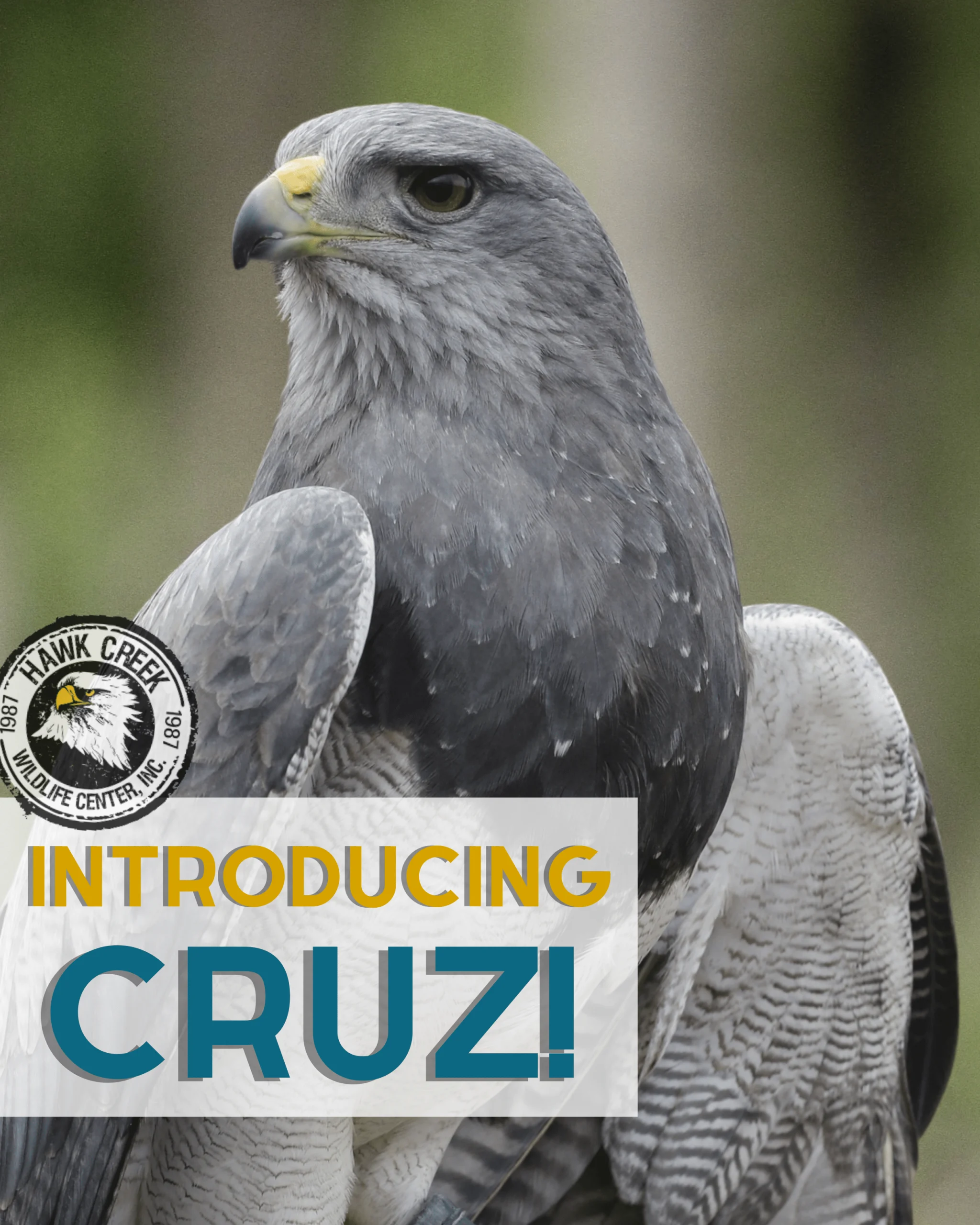
Hawk Creek, a renowned center for wildlife education and conservation, has officially welcomed a magnificent new resident to its expansive grounds: a Black-chested Buzzard-eagle, known affectionately by the staff as Cruz. This striking raptor, a species celebrated across South America by various regional names including the Chilean Blue Eagle, Patagonian Eagle, or Gray Buzzard Eagle, now finds a temporary home at Hawk Creek, offering the local community a rare glimpse into the lives of these remarkable, understudied birds of prey. The introduction of Cruz is not merely an addition to Hawk Creek’s impressive avian collection; it represents a significant milestone in the organization’s commitment to global eagle conservation and cross-cultural scientific exchange.
A Majestic Predator Takes Flight at Hawk Creek
Cruz, the Black-chested Buzzard-eagle ( Geranoaetus melanoleucus), is a formidable predator native to the elevated open landscapes of South America. These birds are characterized by their impressive wingspan and keen eyesight, essential for their primary hunting strategy: soaring through the skies in search of sustenance. Their diet predominantly consists of small mammals, such as the agile degu, and, in some regions, they have proven adept at preying on invasive species like the European hare, playing a crucial role in the ecological balance of their native habitats. The decision to bring Cruz to Hawk Creek underscores the organization’s dedication to showcasing species that are rarely observed in the United States, thereby fostering a broader understanding and appreciation for avian biodiversity on a global scale.
The arrival of Cruz was facilitated through a vital partnership with Sia, a leading eagle conservation organization based in Oklahoma. This collaboration highlights a shared vision between Hawk Creek and Sia to advance the cause of eagle conservation through education, research, and species exchange programs. By working in tandem, these two entities are able to support various eagle conservation initiatives that span continents, ultimately aiming to protect these iconic birds of prey and their critical habitats. This partnership not only enables the introduction of species like Cruz to new audiences but also strengthens the global network of conservationists dedicated to the survival of raptors.
A Legacy of Conservation and Cross-Cultural Exchange
Hawk Creek’s commitment to showcasing rare eagle species extends beyond Cruz. The sanctuary is also home to Jara, a Short-toed Snake Eagle (Circaetus gallicus), and Onyx, a Verreaux’s Eagle (Aquila verreauxii). These introductions have consistently provided invaluable educational opportunities for visitors, allowing them to witness firsthand the diverse adaptations and ecological roles of different eagle species. The presence of Jara, known for its specialized diet of reptiles, and Onyx, a powerful hunter of rock hyraxes in its African homeland, further exemplifies Hawk Creek’s dedication to presenting a comprehensive picture of eagle diversity.
The collaborative efforts with Sia are spearheaded by Global Eagle Conservationist Waha Thuweeka, widely known as William "Two-Raven" Voelker. Voelker, a prominent figure within the Comanche Ethno-Ornithological Initiative, brings a wealth of knowledge and a unique perspective to the field of raptor conservation. His involvement signifies a profound integration of scientific understanding with indigenous ecological wisdom, a potent combination for addressing the complex challenges facing endangered species. Voelker’s participation in Hawk Creek’s upcoming "Wild Earth" event on May 13th is anticipated to be a highlight, offering attendees an unparalleled opportunity to delve into the intricacies of eagle conservation from a multifaceted viewpoint.
The "Wild Earth" Event: A Convergence of Expertise
The "Wild Earth" event on May 13th is poised to be a landmark occasion, bringing together experts, enthusiasts, and the general public to celebrate and learn about the vital work of eagle conservation. The event’s primary focus will be on the collaborative efforts between Hawk Creek and Sia, with a special emphasis on the unique challenges and triumphs in protecting these majestic birds. William "Two-Raven" Voelker’s presentation will undoubtedly be a cornerstone of the event, providing insights into the ecological significance of eagles, the threats they face, and the innovative strategies being employed to ensure their survival.
The choice of location for such an event is also significant. Hawk Creek, with its established reputation for environmental education and wildlife rehabilitation, provides an ideal backdrop for discussions on conservation. The organization’s history of rescuing and caring for injured raptors, combined with its educational outreach programs, has cultivated a community deeply invested in the well-being of local and global wildlife. The partnership with Sia, a group actively involved in ground-level conservation work in diverse ecosystems, further amplifies the impact and reach of these educational initiatives.
Supporting Data and Ecological Significance
The Black-chested Buzzard-eagle, Cruz’s species, inhabits a vast range across South America, from the arid plains of Patagonia to the Andes mountains. Their presence in these open, often harsh environments speaks to their remarkable adaptability and resilience. Data from ornithological studies indicate that populations of Geranoaetus melanoleucus are generally considered stable, though localized threats such as habitat fragmentation due to agricultural expansion and direct persecution can pose risks. For instance, a 2018 study published in the Journal of Raptor Research highlighted the impact of land-use change on buzzard-eagle nesting success in the Argentine Pampas, underscoring the need for ongoing monitoring and conservation strategies.
The introduction of invasive species, such as the European hare in South America, presents a complex ecological dynamic. While some predators may adapt to exploit these new food sources, the long-term consequences for native prey populations and the overall ecosystem can be detrimental. Buzzard-eagles’ ability to prey on these invasive hares can, in some instances, serve as a natural biological control mechanism, demonstrating their integral role in maintaining ecological equilibrium. This aspect of their diet is particularly relevant in regions where invasive species have significantly altered the native landscape.
Chronology of Collaboration and Introduction
The partnership between Hawk Creek and Sia has been a gradual but impactful development, built on a shared passion for raptor conservation. While specific dates for the initial discussions and agreement are not publicly detailed, the sustained collaboration points to a multi-year commitment. The introduction of Jara and Onyx, preceding Cruz, suggests a phased approach to species exchange, allowing both organizations to refine their protocols for animal welfare, acclimatization, and public education.
The decision to introduce Cruz, a species less commonly represented in North American collections, likely stems from a desire to broaden the scope of educational offerings and highlight the unique biodiversity of South America. The process of acquiring and transporting such a sensitive animal across international borders is a complex undertaking, requiring meticulous planning, veterinary clearances, and adherence to stringent wildlife transport regulations. This logistical feat underscores the deep commitment and expertise of both Hawk Creek and Sia. The "Wild Earth" event on May 13th marks a significant public unveiling of this latest endeavor, building upon the momentum of previous introductions and the ongoing dialogue fostered by the partnership.
Official Statements and Future Implications
While direct quotes from Hawk Creek or Sia representatives beyond the initial announcement are not available, the strategic nature of this partnership and species introduction speaks volumes. The continued investment in global conservation programs by Hawk Creek, as evidenced by their work with species like Cruz, Jara, and Onyx, indicates a long-term vision for fostering international cooperation in wildlife protection. The inclusion of William "Two-Raven" Voelker in the upcoming event suggests a commitment to integrating diverse perspectives into conservation dialogues, recognizing that effective solutions often arise from a synthesis of scientific inquiry and traditional ecological knowledge.
The implications of this ongoing collaboration are far-reaching. For Hawk Creek, it signifies an expansion of its educational mission, bringing the wonders of global biodiversity to its doorstep. For Sia, it provides a platform to raise awareness and garner support for their conservation efforts in South America and beyond. For the broader community, it offers an invaluable opportunity to connect with and learn about species that might otherwise remain unknown, fostering a sense of global stewardship and responsibility. The presence of Cruz serves as a tangible reminder of the interconnectedness of ecosystems and the shared imperative to protect the planet’s natural heritage. As Hawk Creek continues to champion the cause of eagle conservation, the story of Cruz, Jara, and Onyx, and the dedicated individuals behind their care, will undoubtedly inspire future generations of conservationists and advocates.
