
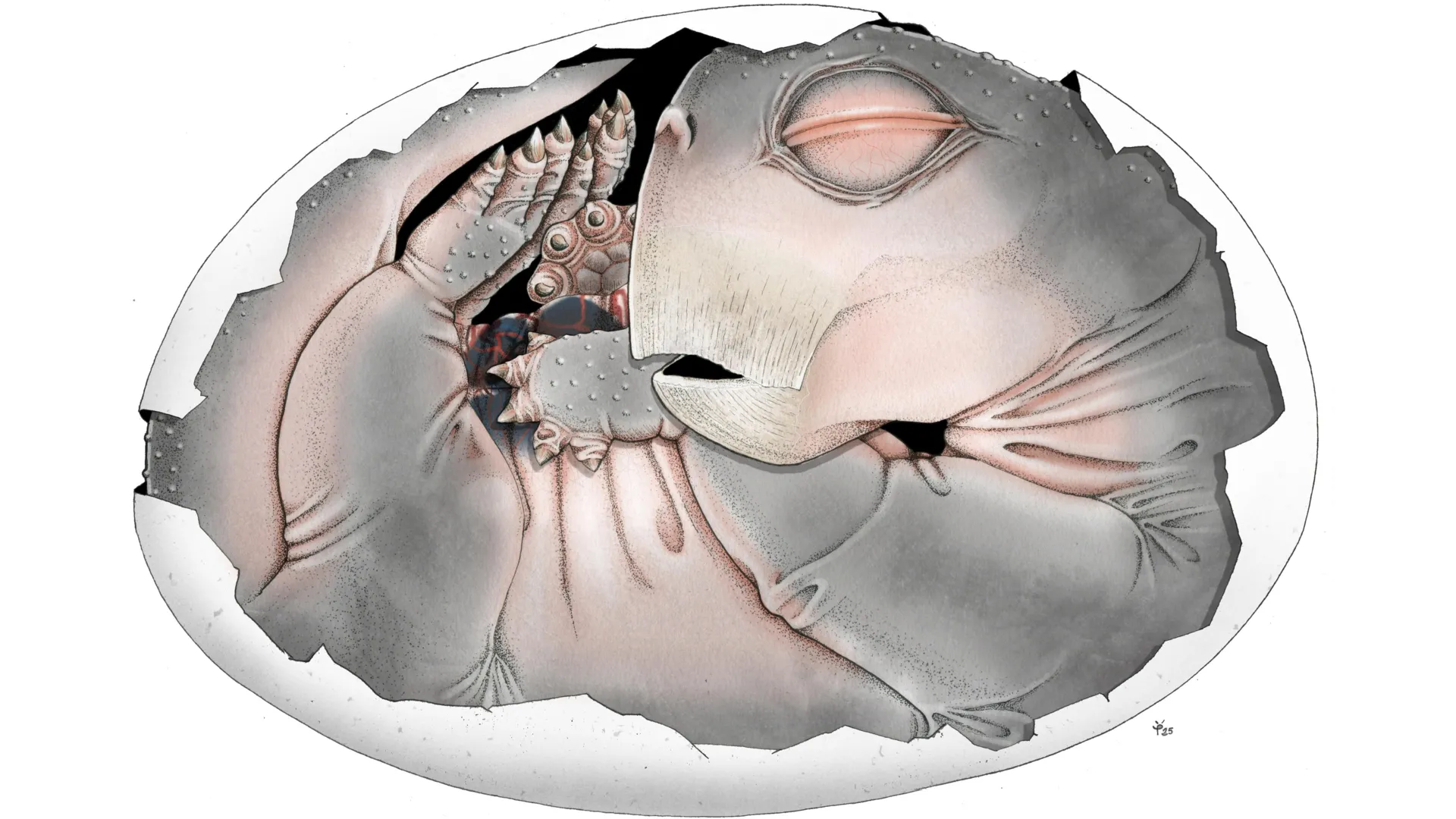
A groundbreaking fossil discovery is providing unprecedented insight into one of the most remarkable survival narratives in Earth’s history, simultaneously unraveling a scientific enigma that has perplexed researchers for decades. Lystrosaurus, a robust, plant-eating ancestor of mammals, rose to become one of the most dominant species following the catastrophic End-Permian Mass Extinction approximately 252 million years ago. This cataclysmic event, often dubbed "The Great Dying," obliterated the vast majority of life on the planet. Yet, against a backdrop of extreme heat, profound environmental instability, and protracted droughts, Lystrosaurus not only persisted but thrived, a testament to extraordinary evolutionary resilience.
The Great Dying: Earth’s Most Catastrophic Extinction Event
To fully appreciate the survival of Lystrosaurus, it is crucial to understand the scale of the disaster it endured. The End-Permian Mass Extinction, occurring roughly 252 million years ago, stands as the most severe extinction event in Earth’s geological record. Scientists estimate that it wiped out up to 96% of all marine species and approximately 70% of terrestrial vertebrate species. The primary driver of this ecological collapse is widely believed to be massive volcanic eruptions in what is now Siberia, forming the Siberian Traps large igneous province. These eruptions spewed immense quantities of greenhouse gases, primarily carbon dioxide and methane, into the atmosphere.
This influx of gases triggered a runaway greenhouse effect, leading to a dramatic increase in global temperatures, potentially by as much as 8 to 11 degrees Celsius. Ocean acidification and widespread anoxia (lack of oxygen) in marine environments followed, suffocating ocean life. On land, the conditions were equally dire. Extreme heat, widespread wildfires, and prolonged periods of drought ravaged ecosystems, leading to desertification and a drastic reduction in plant life. Food chains collapsed, and the planet was transformed into a largely desolate and hostile landscape. It took millions of years for biodiversity to recover, marking a stark reset for life on Earth. In this chaotic aftermath, Lystrosaurus emerged as a solitary success story.
Lystrosaurus: An Icon of Survival in a Desolate World
Lystrosaurus belongs to a group of synapsids known as dicynodonts, which are part of the broader therapsid lineage – the group from which mammals eventually evolved. Roughly pig-sized, though some species grew larger, Lystrosaurus possessed a distinctive, shovel-like snout and two prominent tusks, adaptations likely used for digging up roots and tubers, its primary food source. Its robust build, powerful limbs, and barrel-shaped body suggest it was well-adapted to a terrestrial, possibly semi-fossorial (burrowing) lifestyle.
What makes Lystrosaurus truly remarkable is its unparalleled success in the Early Triassic period, immediately following the End-Permian extinction. Fossil records from this era show Lystrosaurus comprising up to 90% of the vertebrate land fauna in some regions, a level of dominance rarely seen before or since. This incredible proliferation across Gondwana (the supercontinent comprising modern-day South America, Africa, Antarctica, Australia, and India) has long fascinated paleontologists. Its ability to adapt to extreme conditions, including fluctuating temperatures, limited food resources, and increased aridity, positioned it as a prime candidate for studying post-extinction recovery and evolutionary resilience. For decades, however, a crucial piece of its biological puzzle remained elusive: how did this creature reproduce?
Resolving a Decades-Old Enigma: The Search for Mammal Ancestor Eggs
The question of how early mammal ancestors, specifically therapsids like Lystrosaurus, reproduced has been a long-standing point of contention and speculation in paleontology. While modern mammals exhibit a range of reproductive strategies – from egg-laying monotremes (like platypuses and echidnas) to marsupials and placental mammals – the evolutionary transition from reptile-like egg-laying to live birth remains a complex area of study. Finding direct evidence of reproduction in extinct therapsids has proven exceptionally challenging.
Unlike the hard, mineralized eggs of many dinosaurs and birds, which often preserve well in the fossil record due to their robust calcium carbonate shells, it was hypothesized that early mammal ancestors might have laid soft-shelled eggs. Such eggs, similar to those of many modern reptiles (turtles, snakes, lizards) and the monotremes, are composed primarily of leathery organic material, making them highly susceptible to decay. They rarely fossilize, typically disintegrating long before mineralization can occur, thus creating a significant gap in the fossil record and fueling the decades-long scientific mystery. Without definitive fossil evidence, scientists relied on inferences from skeletal morphology and comparative anatomy with modern species, but direct proof remained elusive.
A Fortuitous Find: The Journey from Field Discovery to Scientific Breakthrough
The breakthrough came from an unexpected source, originating nearly seventeen years ago in 2008 during a field excursion led by Professor Jennifer Botha of the Evolutionary Studies Institute at the University of the Witwatersrand, South Africa. It was during this expedition that John Nyaphuli, Professor Botha’s preparator and an exceptional fossil finder, identified a small nodule embedded in the ancient rock formations of the Karoo Basin, a region renowned for its rich therapsid fossils.
"My preparator and exceptional fossil finder, John Nyaphuli, identified a small nodule that at first revealed only tiny flecks of bone," Professor Botha recounted. As Nyaphuli meticulously prepared the specimen, a clearer image began to emerge: a perfectly curled-up Lystrosaurus hatchling. Professor Botha immediately suspected its significance. "I suspected even then that it had died within the egg," she explained, "but at the time, we simply didn’t have the technology to confirm it." The fossil was cataloged and preserved, awaiting the advent of tools capable of unlocking its secrets.
The Power of Synchrotron Technology: Unlocking Hidden Secrets
Years passed, and scientific imaging technology advanced dramatically. The opportunity to re-examine the fossil with cutting-edge techniques arose through an international collaboration involving Professor Botha, Professor Julien Benoit (Evolutionary Studies Institute, University of the Witwatersrand), and Dr. Vincent Fernandez (ESRF – The European Synchrotron, France). The team realized that modern synchrotron X-ray computed tomography (CT) scanning could finally provide the definitive answer they sought.
Synchrotron facilities, like the ESRF in Grenoble, France, are powerful particle accelerators that generate exceptionally intense and coherent X-ray beams. These X-rays are millions of times brighter than conventional laboratory X-ray sources, allowing for non-destructive imaging of internal structures with unparalleled resolution, even through dense materials. For a delicate fossil like the Lystrosaurus embryo, this technology was indispensable. It allowed researchers to "virtually" slice through the rock and the specimen, creating detailed 3D reconstructions without causing any damage.
Dr. Fernandez, who played a crucial role in the scanning process, described the moment of discovery as particularly exciting. "Understanding reproduction in mammal ancestors has been a long-lasting enigma, and this fossil provides a key piece to this puzzle. It was essential that we scanned the fossil just right to capture the level of detail needed to resolve such tiny, delicate bones." The high-resolution scans confirmed Professor Botha’s long-held suspicion: the Lystrosaurus embryo was indeed encased within an egg. Crucially, while no hard shell was present, the surrounding matrix and the embryonic stage strongly indicated a soft-shelled egg that had decayed, leaving the embryo preserved in situ. This finding, published in the prestigious journal PLOS ONE, conclusively provided the first confirmed egg ever found from a mammal ancestor, finally answering the question: Did the ancestors of mammals lay eggs? The answer, unequivocally, is yes.
Unveiling the Embryo: Clues to Ancient Reproductive Strategies
Beyond merely confirming egg-laying, the advanced imaging revealed critical details about the embryo’s developmental stage and, by extension, Lystrosaurus‘s reproductive strategy. One significant clue emerged from the examination of the embryo’s lower jaw.
"When I saw the incomplete mandibular symphysis, I was genuinely excited," stated Professor Benoit. The mandible, or lower jaw, of many vertebrates is initially formed from two separate halves that must fuse together before the animal can effectively feed. The scans clearly showed that this fusion had not yet occurred in the Lystrosaurus embryo. "The fact that this fusion had not yet occurred shows that the individual would have been incapable of feeding itself," Professor Benoit concluded. This observation was a vital piece of the puzzle, suggesting that the embryo was still in a pre-hatching stage of development, further bolstering the identification of the specimen as an egg-bound embryo rather than a free-living hatchling.
The absence of a mineralized eggshell, combined with the successful preservation of the delicate embryo, strongly supports the hypothesis that Lystrosaurus laid soft-shelled eggs. This explains their extreme rarity in the fossil record compared to the abundant, hard-shelled dinosaur eggs. Soft-shelled eggs are vulnerable to rapid decomposition, requiring exceptional taphonomic conditions (the processes of fossilization) for their preservation, making this discovery incredibly unique.
The Lystrosaurus Blueprint for Survival: Large Eggs, Precocial Young, and Rapid Adaptation
The study went further, inferring key aspects of Lystrosaurus‘s reproductive biology based on the size of the egg relative to the animal’s body and the developmental stage of the embryo. The research indicates that Lystrosaurus produced relatively large eggs for its body size. In modern animals, larger eggs typically contain a greater volume of yolk, which serves as a nutrient-rich food source for the developing embryo. This abundance of yolk allows for a more extended period of in-egg development, meaning the hatchlings emerge at a more advanced, self-sufficient stage.
This suggests that Lystrosaurus hatchlings were likely "precocial," a term describing young animals that are relatively mature and mobile from birth or hatching, requiring minimal parental care. Unlike the altricial young of many modern mammals, which are born helpless and dependent on parental feeding (often milk), Lystrosaurus young would have been capable of feeding themselves, avoiding predators, and navigating their environment almost immediately after hatching. This strategy contrasts sharply with modern mammalian reproduction, particularly the milk-feeding of placental mammals.
The production of large, yolk-rich eggs offered another significant advantage in the harsh, post-extinction environment: enhanced resistance to desiccation. In a world characterized by long-lasting droughts and unstable climatic conditions, larger eggs, with their greater volume and potentially thicker organic membranes, would have been more resilient to drying out than smaller, less protected eggs.
In essence, Lystrosaurus thrived in a challenging world by combining several highly effective reproductive and developmental strategies: laying large, soft-shelled, yolk-rich eggs; producing precocial young that could quickly become independent; and, by extension, likely exhibiting fast growth rates and early sexual maturity. This "grow fast, reproduce early" approach was a winning formula in an unpredictable and resource-scarce environment, allowing populations to rebound quickly and exploit newly vacant ecological niches.
Broader Evolutionary Implications: Reshaping Our Understanding of Mammalian Lineage
This discovery represents a critical milestone in understanding the evolutionary trajectory of mammals. It provides direct evidence that our ancient therapsid ancestors, at least as exemplified by Lystrosaurus, laid eggs, linking them more closely to their reptilian predecessors than previously thought for such advanced synapsids. This finding offers a clearer picture of the gradual divergence of mammalian reproductive strategies from those of other amniotes, highlighting that the transition to live birth and milk-feeding was a complex, multi-stage process over millions of years, rather than an abrupt shift.
The context of the End-Permian extinction further underscores the profound impact of environmental pressures on evolutionary pathways. The "Great Dying" acted as a powerful evolutionary filter, selecting for species with traits that conferred adaptability and resilience. Lystrosaurus‘s successful reproductive strategy – large, drought-resistant eggs and self-sufficient young – was perfectly tailored to the unstable, post-extinction world. This provides a compelling example of how extreme global crises can drive significant evolutionary innovation and shape the survival of entire lineages.
A Deep-Time Perspective on Modern Challenges: Lessons from Ancient Resilience
The implications of this research extend far beyond the realm of paleontology, offering a "deep-time perspective" on pressing contemporary issues. As Professor Benoit emphasized, "In a modern context, this work is highly impactful because it offers a deep-time perspective on resilience and adaptability in the face of rapid climate change and ecological crisis."
The Earth is currently experiencing what many scientists term the "Sixth Mass Extinction," driven primarily by human activities, including habitat destruction, pollution, and anthropogenic climate change. Understanding how past organisms, like Lystrosaurus, navigated and survived periods of immense global upheaval provides invaluable insights into the mechanisms of survival and adaptation. By studying the reproductive strategies, physiological tolerances, and ecological behaviors that allowed certain species to persist through past crises, scientists can better predict how species today might respond to ongoing environmental stresses and rapid climate shifts. This knowledge can inform conservation strategies, biodiversity preservation efforts, and our broader understanding of ecological resilience in a changing world.
Reflections from the Research Team: A Milestone in Paleontology
The researchers involved expressed profound satisfaction with the outcome of their long-term collaborative efforts. Professor Julien Benoit reflected on the journey: "The opportunity to work at the European Synchrotron Radiation Facility alongside beamline scientists was also an unforgettable part of the journey. The cutting-edge data we generated there allowed us to ‘see’ inside the fossil in extraordinary detail, ultimately revealing that the embryo was still at a pre-hatching stage. That moment, when the pieces all came together, was incredibly rewarding." He highlighted the broader significance, stating, "This research is important because it provides the first direct evidence that mammal ancestors, such as Lystrosaurus, laid eggs, resolving a long-standing question about the origins of mammalian reproduction."
Professor Jennifer Botha echoed this sentiment, emphasizing the personal connection to the discovery’s origins. "What makes this work especially exciting is that we were able to quite literally follow in John Nyaphuli’s footsteps, returning to a specimen he discovered nearly two decades ago and finally solve the puzzle he uncovered." She underscored the historical impact for South African paleontology: "It is also thrilling because this discovery breaks entirely new ground. For over 150 years of South African paleontology, no fossil had ever been conclusively identified as a therapsid egg. This is the first time we can say, with confidence, that mammal ancestors like Lystrosaurus laid eggs, making it a true milestone in the field."
This remarkable discovery not only illuminates a critical chapter in the evolutionary history of mammals but also serves as a potent reminder of life’s enduring capacity for adaptation and resilience in the face of existential threats, offering vital lessons for our planet’s future.
