
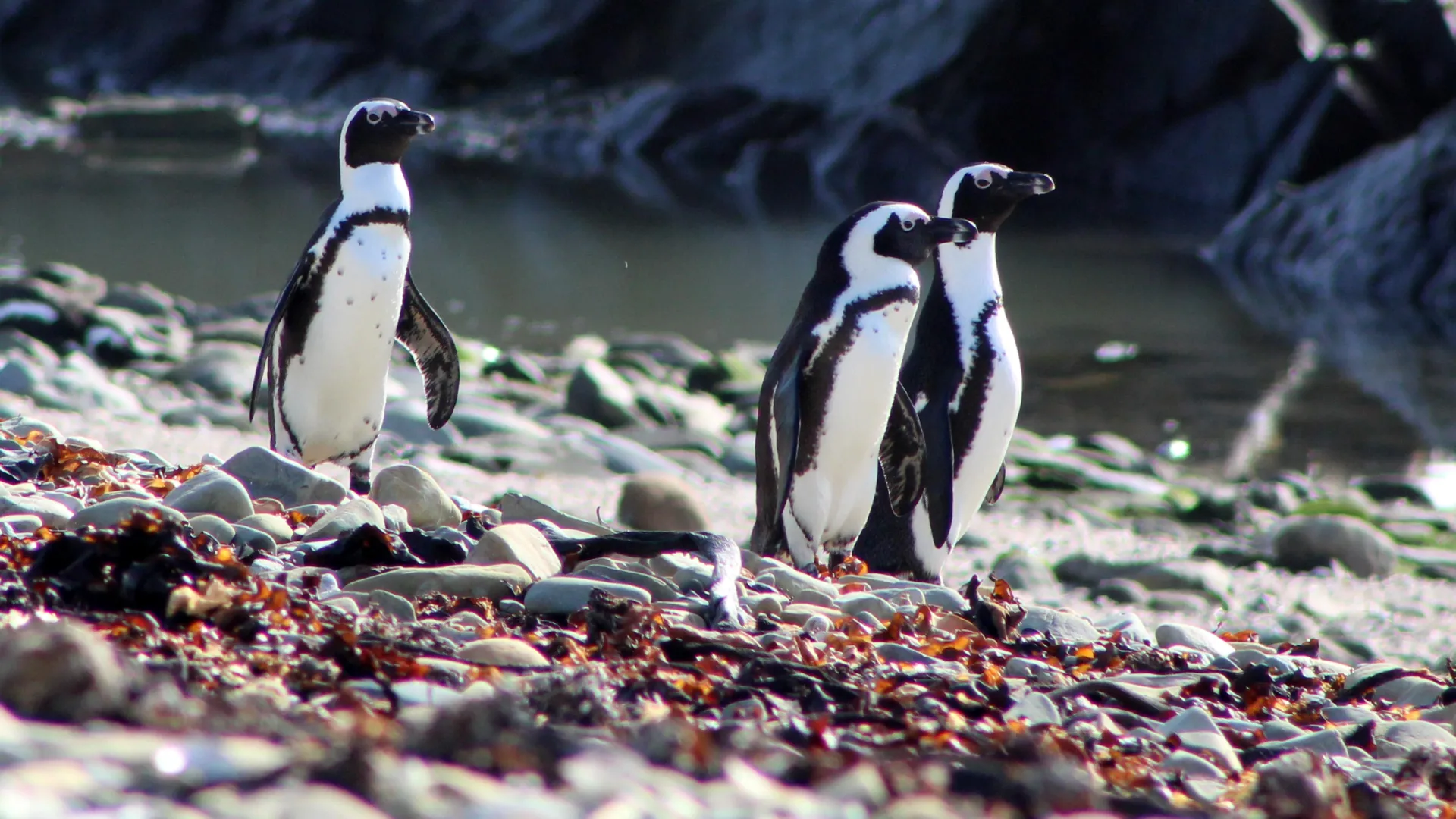
A groundbreaking study spearheaded by the University of St Andrews has brought to light a critical and concerning trend: Critically Endangered African penguins (Spheniscus demersus) are significantly more prone to foraging in the same marine areas as commercial fishing vessels during periods of reduced fish abundance. This escalating overlap intensifies competition for vital food resources, placing immense additional pressure on a species already teetering on the brink of extinction. The findings, published on November 17 in the prestigious Journal of Applied Ecology, introduce a novel analytical metric, "overlap intensity," which offers a more comprehensive assessment by quantifying not only the shared spatial domains but also the precise number of penguins affected by these interactions.
A Species in Peril: The Steep Decline of African Penguins
The African penguin population has suffered a catastrophic decline, with numbers plummeting by nearly 80% over the last three decades. This dramatic reduction underscores the urgency of understanding and mitigating the myriad threats facing these iconic birds. Historically, African penguins were once abundant, with estimates suggesting populations of over a million breeding pairs at the turn of the 20th century. However, factors ranging from guano harvesting that destroyed breeding habitats in the early 20th century, to oil spills, disease, and increasing human pressures, have systematically eroded their numbers. Today, the total population is estimated to be fewer than 10,000 breeding pairs, concentrated in a dwindling number of colonies along the coast of South Africa and Namibia.
One of the most significant and persistent drivers of this decline, as highlighted by numerous scientific investigations, is the intense competition with local fisheries. These commercial operations primarily target sardine (Sardinops sagax) and anchovy (Engraulis encrasicolus), which constitute the cornerstone of the African penguin’s diet. These small pelagic fish species are also fundamental to the larger Benguela Current ecosystem, one of the world’s most productive marine upwelling systems, supporting a diverse array of marine life and economically vital fisheries.
The fishing method predominantly employed for these species is purse-seine netting. This highly efficient technique involves encircling vast shoals of fish with a large wall of netting, which is then drawn closed at the bottom, much like a drawstring purse. While economically effective for the fishing industry, its capacity to rapidly remove large quantities of prey fish from the ecosystem poses a direct challenge to marine predators like penguins, which rely on these same schools for survival.
Dr. Jacqueline Glencross, the lead author of the study from the Scottish Oceans Institute at the University of St Andrews, articulated the impetus behind their research. "Our primary goal was to develop a more robust methodology for evaluating the potential impact on penguins when fisheries operate in proximity to their foraging grounds," she explained. "It’s not enough to simply identify areas of overlap; we needed to quantify how many penguins are actually being influenced by these interactions to truly understand the ecological risk."
Unpacking the Overlap: Tracking Data Reveals Alarming Trends
The research team meticulously analyzed tracking information gleaned from African penguins originating from two critical breeding colonies: Robben Island and Dassen Island. These islands, situated off the coast of South Africa, host some of the largest remaining penguin populations and are vital conservation areas. The study benefited from extensive collaboration with scientists from the University of Exeter, the South African Department of Forestry, Fisheries and the Environment (DFFE), and BirdLife South Africa, pooling expertise and data to paint a comprehensive picture.
Their rigorous analysis unveiled a stark and concerning pattern: a dramatic surge in the overlap between penguin foraging areas and active fishing vessels during years characterized by scarcity of prey fish. A particularly salient example emerged from 2016, a year notoriously marked by exceptionally low fish biomass along the South African coast. During this period, an alarming approximately 20% of the tracked penguin population was observed feeding in the very same regions as active commercial fishing vessels. In stark contrast, during years blessed with more robust and abundant fish stocks, this figure plummeted significantly, dropping to an average of around 4%.
These findings unequivocally demonstrate that the competition for food between African penguins and commercial fisheries intensifies drastically when prey resources become limited. Such conditions present an especially perilous challenge during the crucial chick-rearing season. During this period, adult penguins are under immense pressure to forage quickly and efficiently, making multiple trips to sea each day to gather sufficient food to nourish their rapidly growing young. Any increased travel time, greater energy expenditure due to reduced prey availability, or direct competition with fishing vessels can critically compromise their ability to provision their chicks, leading to reduced breeding success and, ultimately, contributing to population decline.
The Benguela Ecosystem: A Battleground for Resources
The Benguela Current Large Marine Ecosystem (BCLME) is renowned for its exceptional productivity, driven by cold, nutrient-rich waters upwelling along the southwestern coast of Africa. This process fuels a rich food web, supporting enormous biomasses of small pelagic fish, which in turn sustain a diverse array of marine predators, including seabirds, marine mammals, and predatory fish. However, this same productivity has also made the BCLME a highly coveted region for commercial fishing.
The South African small pelagic fishery, primarily targeting sardine and anchovy, is one of the largest and most economically significant fisheries in the country. It contributes substantially to the national economy through direct employment in fishing operations, processing plants, and related industries, as well as providing a crucial source of protein for both domestic consumption and export. The economic value of these fisheries often creates a complex socio-economic dilemma when conservation measures, such as fishing closures, are proposed.
Historically, the management of these fisheries has largely focused on single-species stock assessments, aiming to maintain fish populations at sustainable levels. However, the intertwined nature of the ecosystem, where the same fish stocks are vital for both human consumption and the survival of endangered species, necessitates a more holistic, ecosystem-based approach to management.
A New Metric for Conservation: Overlap Intensity and its Applications
By quantifying "overlap intensity" across the penguin population, the researchers have developed a powerful new analytical tool with significant implications for ecological risk assessment and the advancement of ecosystem-based fishery management. This metric moves beyond simple spatial mapping to provide a nuanced understanding of the scale of interaction, offering decision-makers a clearer picture of the real-world impact of fishing activities on vulnerable species.
The findings strongly advocate for the development and implementation of dynamic marine protected areas (MPAs). Unlike static MPAs, which are fixed in location, dynamic MPAs possess the flexibility to adapt to real-time shifts in the distribution and behavior of both predators (like penguins) and their prey (like sardines and anchovies). Given the highly mobile nature of these species and the variability of marine ecosystems, such adaptive management strategies are crucial for effective conservation in a rapidly changing environment. For instance, if real-time tracking data or oceanographic surveys indicate that fish stocks are aggregating in a particular area, a dynamic MPA could be temporarily established or expanded in that zone to provide a crucial refuge for foraging penguins.
Legal Battles and Policy Shifts: The Fight for Penguin Survival
The plight of the African penguin recently escalated to the forefront of South African public discourse, culminating in a landmark legal challenge. This significant South African High Court case specifically questioned the perceived inadequacy of fishing restrictions in the vicinity of critical penguin breeding sites. Conservation organizations, including BirdLife South Africa and the Southern African Foundation for the Conservation of Coastal Birds (SANCCOB), alongside other environmental groups, spearheaded this legal action, arguing that the existing management framework failed to adequately protect the endangered species.
The core of their argument centered on the "precautionary principle," a widely accepted tenet of environmental law that mandates taking preventative action in the face of uncertainty, especially when there is a threat of severe or irreversible harm to the environment. They contended that allowing fishing vessels to operate too close to penguin colonies, particularly during critical breeding periods or years of low fish availability, directly undermined conservation efforts and exacerbated the species’ decline.
Earlier this year, a pivotal agreement was reached in the High Court between the conservation organizations and representatives from the fishing industry. This agreement, a testament to growing awareness and collaborative spirit, formally acknowledged the urgent necessity for implementing fishery closures around key penguin colonies. This legal victory marked a significant turning point, underscoring the legal and moral imperative to prioritize conservation in areas critical for species survival.
Following this High Court decision, the South African government, through the Department of Forestry, Fisheries and the Environment (DFFE), acted decisively. They reinstated and enhanced "biologically meaningful" no-fishing zones around several key penguin colonies, including Robben Island, one of the primary sites examined in the St Andrews study. These closures are designed to create buffer zones, providing penguins with unimpeded access to essential foraging grounds, particularly during sensitive life stages. The DFFE’s decision reflected a commitment to balancing economic interests with the pressing demands of biodiversity conservation.
Dr. Glencross emphasized the direct relevance of their research to these policy changes. "This research provides crucial scientific justification for why those closures are not just advisable, but absolutely necessary," she stated. "Previously unprotected areas that exhibited high overlap intensity were precisely where the penguins were found to be most at risk. Our findings offer empirical evidence supporting the efficacy and critical importance of these conservation measures."
Broader Implications and the Path Forward
The implications of this study extend far beyond the immediate conservation of African penguins. It highlights a fundamental challenge facing marine ecosystems globally: the increasing competition between human resource extraction and the survival of marine wildlife. As human populations grow and demand for marine resources intensifies, such conflicts are likely to become more frequent and severe.
The methodology developed by the St Andrews team, particularly the "overlap intensity" metric, holds promise for informing conservation strategies for other marine predators worldwide that face similar pressures from fisheries. Species such as other seabirds, seals, and even certain cetaceans, which also rely on small pelagic fish stocks, could benefit from this more nuanced approach to assessing human-wildlife interactions.
Furthermore, the study underscores the overarching threat of climate change. Changes in ocean temperature, currents, and pH are already impacting the distribution and abundance of crucial prey species like sardines and anchovies. These climate-induced shifts exacerbate existing pressures, making the need for effective, adaptive management strategies even more critical. If prey fish move to new areas due to climate change, static closures may become less effective, reinforcing the need for dynamic MPAs that can respond to these environmental shifts.
For the African penguin, the path to recovery remains challenging. It will require a sustained, multi-faceted approach involving rigorous scientific research, adaptive fishery management, robust legal frameworks, and continuous monitoring. The collaboration between academic institutions, government bodies, and non-governmental organizations, as exemplified by this study and the subsequent legal agreement, represents a powerful model for tackling complex conservation challenges. By acknowledging the intricate interdependencies within marine ecosystems and prioritizing the needs of endangered species, there is hope that the iconic African penguin can be pulled back from the brink of extinction, securing its future in the rich waters of the Benguela Current.
