
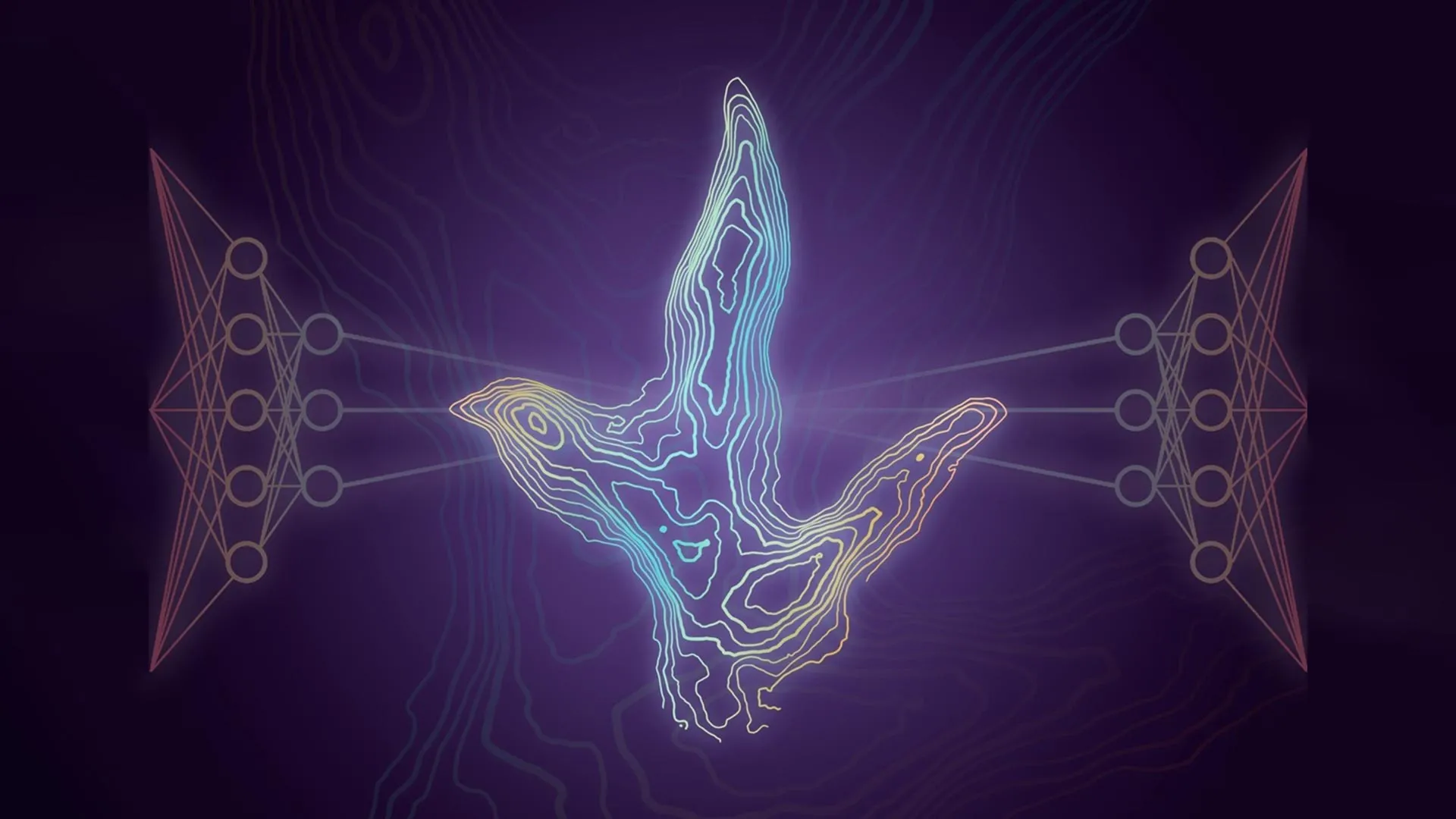
A newly developed application, powered by sophisticated artificial intelligence (AI), is transforming the study of dinosaur footprints, providing scientists and the public with an unprecedented tool to identify ancient tracks left behind millions of years ago. This innovative technology promises to unravel mysteries surrounding fossilized impressions that have historically presented significant challenges to paleontological researchers, offering a more objective and rapid method of analysis.
The Enigma of Ichnology: A Historical Challenge
For centuries, the study of fossil footprints, known as ichnology, has been a cornerstone of paleontology, offering unique glimpses into the lives of prehistoric creatures. Unlike skeletal remains, which provide information about anatomy, footprints reveal dynamic aspects of an animal’s existence: how it moved, its gait, its speed, and even social behaviors like herding or hunting. They can also provide crucial data about ancient environments, climate, and substrate conditions.
However, interpreting these trace fossils has always been fraught with difficulty. Paleontologists have frequently debated the identity of the track-makers, with some impressions attributed to carnivorous theropods, others to herbivorous sauropods or ornithopods, and some even raising contentious questions about the early presence of avian species. This ambiguity stems from several factors inherent in the fossilization process and the nature of animal locomotion.
One primary challenge is taphonomic alteration. A footprint’s original shape can be significantly modified by the sediment it was made in, subsequent erosion, infilling, and compression over geological timescales. A track made in soft, wet mud will appear different from one made by the same animal on firmer ground. Overprinting, where one animal’s track disturbs another’s, further complicates analysis. Furthermore, different species can possess remarkably similar foot anatomies, leading to convergent ichnology, where distinct animals leave indistinguishable tracks. Conversely, a single species might leave varied footprints depending on its speed, substrate, or behavior.
Historically, researchers have relied on comparative anatomy, expert experience, and manually constructed computer databases that attempted to link specific footprint morphologies to known dinosaur species. This approach, while valuable, often introduced subjective biases. When a track’s identity was uncertain or disputed, expert opinions could diverge, leading to prolonged debates within the scientific community. The sheer volume of discovered tracks globally, coupled with their often fragmented or poorly preserved nature, meant that many valuable insights remained locked within these ancient impressions.
DinoTracker: The AI-Powered Solution
To overcome these long-standing interpretive hurdles, a collaborative research team spearheaded by the Helmholtz-Zentrum research centre in Berlin, in conjunction with the University of Edinburgh, embarked on developing a fundamentally new approach. Their solution leverages advanced algorithms that enable computers to independently learn and discern the intricate variations in dinosaur footprint shapes, moving beyond rigid, human-defined classification rules.
The centerpiece of this innovation is the DinoTracker app. Designed for both seasoned researchers and amateur enthusiasts, the app allows users to upload a photograph or drawing of a footprint directly from a mobile phone. This image is then subjected to immediate analysis, with the AI evaluating the track’s shape and structure to provide an estimated identification of the dinosaur type that likely created it. This instant feedback loop represents a significant departure from traditional methods, which often involved lengthy manual comparisons and expert consultations.
The development of the AI system involved a rigorous and extensive training regimen. The model was initially exposed to nearly 2,000 real fossil footprints, meticulously documented and cataloged from various paleontological sites around the world. Crucially, this dataset was augmented by millions of additional simulated examples. These synthetic tracks were not merely random variations but were meticulously designed to reflect realistic taphonomic changes that footprints undergo during preservation. Factors such as compression due to overlying sediment, edge displacement, and erosion were simulated to teach the AI to recognize the ‘essence’ of a footprint despite its altered appearance. This comprehensive training ensured the AI could robustly handle the natural variability and degradation common in the fossil record.
What the AI Looks For: Decoding Ancient Impressions
During its training, the AI system autonomously learned to recognize eight key features that are instrumental in distinguishing one footprint type from another. These critical metrics include:
- Toe Spread: The angle and distance between the digits, indicating how splayed or compact the toes were.
- Heel Position: The relative placement and prominence of the heel impression, which can vary significantly between bipedal and quadrupedal dinosaurs, or even within bipedal forms.
- Surface Area Contact: The total area of the foot that made contact with the ground, providing clues about the animal’s weight, foot structure, and substrate interaction.
- Weight Distribution: How pressure was exerted across different parts of the foot, offering insights into gait, posture, and balance.
- Digit Length and Proportions: The relative lengths of individual toes, which are often characteristic of specific dinosaur groups.
- Claw Impressions: The presence, absence, and morphology of claw marks, a key differentiator for many theropods.
- Overall Shape and Outline: The general contour of the track, often providing initial broad classification.
- Depth Variation: The differing depths within the footprint, which can indicate points of greater pressure and the animal’s stride.
By analyzing these nuanced variations, the AI system effectively creates a unique "fingerprint" for each track. When presented with a new, unknown footprint, it compares this data profile with its extensive database of known and simulated examples, predicting with a high degree of probability which dinosaur species or group was its most likely maker. When independently evaluated against human expert classifications, the algorithm demonstrated an impressive accuracy rate, matching expert opinions approximately 90 percent of the time. This reliability extended even to species whose tracks are traditionally considered controversial or exceptionally difficult to identify, underscoring the AI’s robust analytical capabilities.
Unearthing Evolutionary Surprises: The Avian Connection
One of the most remarkable and potentially paradigm-shifting findings generated by the DinoTracker AI emerged from its analysis of footprints dating back over 200 million years. The system detected striking similarities between certain ancient dinosaur footprints and the feet of both extinct and modern birds. This discovery has profound implications for our understanding of avian evolution.
Current paleontological consensus, largely based on skeletal evidence, places the emergence of birds much later, typically around 150 million years ago, with iconic fossils like Archaeopteryx from the Late Jurassic. If the AI’s interpretation holds true, these 200-million-year-old tracks, corresponding to the Triassic period, could indicate that birds or their very close ancestors evolved tens of millions of years earlier than previously believed. This would necessitate a significant revision of the avian evolutionary timeline and potentially redefine the relationships between early dinosaurs and the lineage that led to modern birds.
The research team acknowledged that another possibility exists: that some early dinosaur species simply happened to possess feet that closely resembled avian feet through convergent evolution. Convergent evolution is a phenomenon where unrelated species evolve similar traits independently due to adapting to similar environmental pressures or lifestyles. While this remains a plausible alternative, the AI’s ability to identify such deep morphological connections provides a powerful new avenue for investigating this long-standing evolutionary puzzle. Further paleontological discoveries and refined AI analyses will be crucial in disentangling these hypotheses.
Solving Scottish Mysteries: The Isle of Skye Revelation
Beyond its global evolutionary insights, the AI system also shed new light on a specific, localized paleontological enigma: mysterious footprints found on the Isle of Skye in Scotland. These tracks, preserved in the muddy edges of an ancient lagoon approximately 170 million years ago during the Middle Jurassic period, have puzzled scientists for decades due to their unusual morphology and the limited fossil record from that specific time and location.
The AI’s rigorous analysis of these Scottish footprints suggests that they may have been left by some of the oldest known relatives of duck-billed dinosaurs, scientifically known as hadrosaurs. Hadrosaurs were a highly successful and diverse group of herbivorous dinosaurs that flourished during the Late Cretaceous, renowned for their distinctive broad snouts and large dental batteries. Identifying their early relatives from the Middle Jurassic in Scotland would make these among the earliest examples of this group identified anywhere in the world. This finding is significant as it provides crucial data points for tracing the geographical distribution and evolutionary diversification of hadrosaurs, potentially indicating an earlier global spread or a European origin for the lineage than previously assumed. It highlights the power of AI to resolve ambiguities even in well-studied, iconic fossil sites.
Democratizing Paleontology: A Tool for Scientists and Enthusiasts
Beyond its scientific breakthroughs, the DinoTracker app embodies a broader vision for the future of paleontology: one that is more accessible and inclusive. Researchers emphasize that this technology not only creates unprecedented opportunities for scientists to study how dinosaurs lived, moved, and interacted with their environments across the Earth but also empowers the public to actively participate in fossil research.
By making advanced analytical tools available on a mobile platform, the app transforms every dinosaur enthusiast with a smartphone into a potential contributor to scientific discovery. Citizen scientists can now photograph and analyze footprints they encounter, contributing valuable data that can then be cross-referenced and validated by experts. This democratizing aspect fosters greater public engagement with science, potentially accelerating the rate of discovery and data collection, especially in remote or less-studied regions. For professional paleontologists, the app serves as an invaluable fieldwork tool, providing immediate, objective analysis on site, which can guide excavation strategies and hypothesis testing in real-time. It also holds immense potential for educational purposes, allowing students to engage directly with paleontological methods.
Funding and Collaboration: The Driving Forces
The development of this groundbreaking AI system was made possible through significant funding and interdisciplinary collaboration. Key financial support was provided by the innovations pool of the BMBF-Project: Data-X, the Helmholtz project ROCK-IT, the Helmholtz-AI project NorMImag, the National Geographic Society, and the Leverhulme Trust. This diverse funding portfolio underscores the broad recognition of the project’s scientific merit and its potential impact. The collaborative effort between the Helmholtz-Zentrum research centre and the University of Edinburgh highlights the increasing importance of inter-institutional and interdisciplinary approaches in tackling complex scientific challenges. The study’s findings were formally published in the esteemed scientific journal PNAS (Proceedings of the National Academy of Sciences), a testament to the rigor and significance of the research.
Expert Perspectives on a Paradigm Shift
Leading figures in the research team have voiced their enthusiasm for the new technology. Dr. Gregor Hartmann of the Helmholtz-Zentrum research centre commented, "Our method provides an unbiased way to recognize variation in footprints and test hypotheses about their makers. It’s an excellent tool for research, education, and even fieldwork." His statement emphasizes the AI’s objectivity, a critical advancement over subjective human interpretation, and its versatile application across different facets of paleontological work.
Professor Steve Brusatte, Personal Chair of Palaeontology and Evolution at the School of GeoSciences, University of Edinburgh, echoed this sentiment, adding a historical perspective: "This study is an exciting contribution for paleontology and an objective, data-driven way to classify dinosaur footprints — something that has stumped experts for over a century." Professor Brusatte’s remarks underscore the AI’s achievement in solving a problem that has long perplexed the field. He further noted, "It opens up exciting new possibilities for understanding how these incredible animals lived and moved, and when major groups like birds first evolved. This computer network might have identified the world’s oldest birds, which I think is a fantastic and fruitful use for AI." His excitement regarding the potential re-evaluation of avian evolutionary timelines highlights the profound implications of the AI’s findings.
The Future of Ichnology: Broader Implications
The introduction of the DinoTracker app marks a significant milestone in ichnology and computational paleontology. Its ability to quickly and accurately analyze fossil footprints promises to accelerate research, uncover hidden patterns, and challenge long-held assumptions about prehistoric life. This technology is likely to inspire similar AI-driven approaches in other areas of paleontology, such as the classification of fossilized bones, teeth, or microfossils.
The implications extend beyond mere identification. By providing a standardized and objective method, the AI can facilitate large-scale comparative studies across vast geographical regions and geological timeframes, revealing trends in dinosaur movement, distribution, and behavior that were previously too complex or time-consuming to discern. It encourages a new era of data-driven paleontology, where AI and human expertise work in tandem – the AI handling the immense task of pattern recognition and initial classification, and human experts focusing on interpreting the broader scientific context and conducting follow-up investigations.
While the AI’s findings, particularly concerning avian origins, will undoubtedly spark further debate and require validation through additional fossil discoveries, its arrival undeniably represents a powerful new lens through which to view the ancient world. It ensures that the silent, stony imprints of dinosaurs continue to speak, now with a clearer, more data-informed voice, to scientists and the public alike.
