
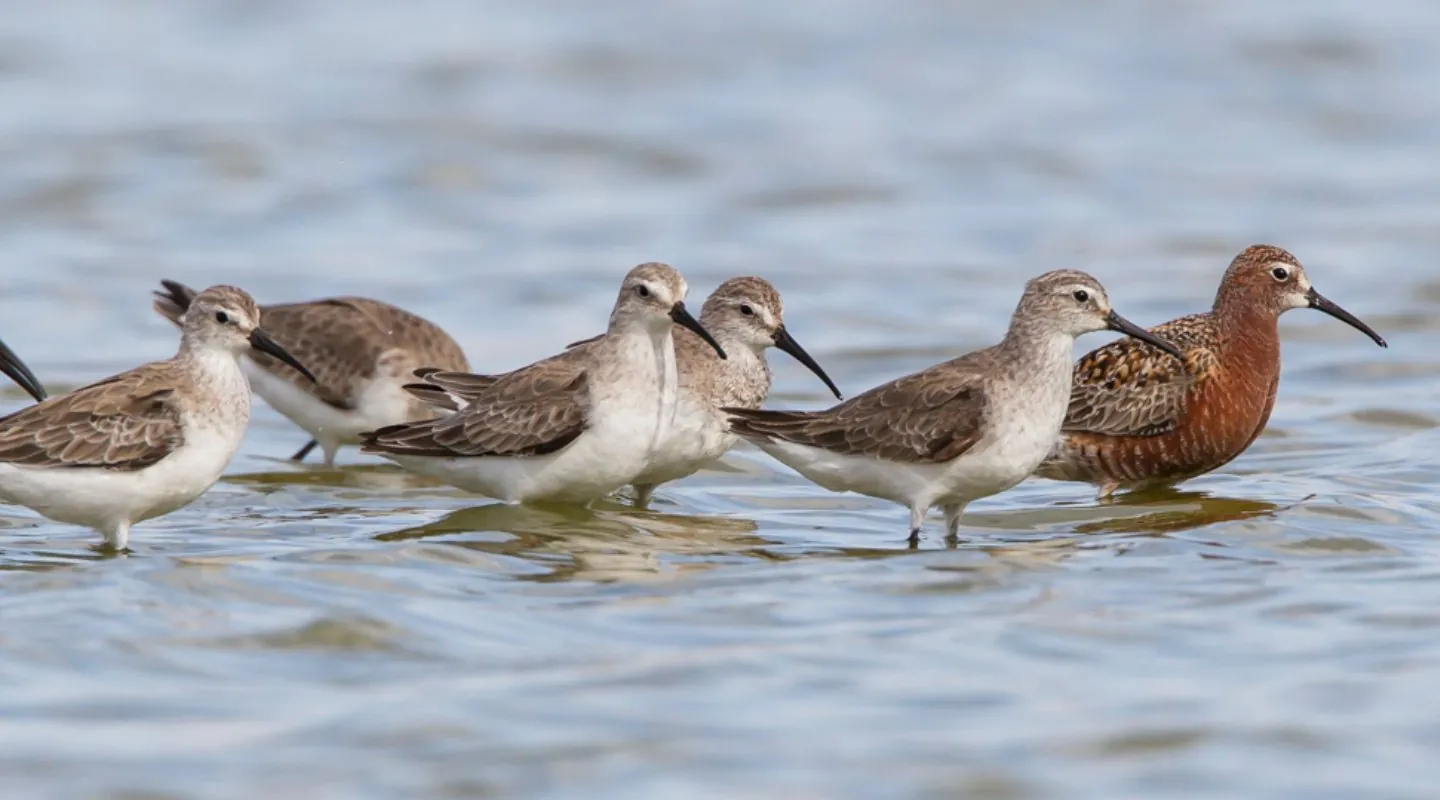
The skies above Africa have borne witness to a truly extraordinary feat of avian endurance, as a diminutive Curlew sandpiper, affectionately nicknamed ‘Delta,’ has completed a staggering 3,870-kilometer non-stop migration from the southern tip of Africa to South Sudan. This remarkable journey, spanning approximately 60 hours and undertaken by a bird weighing a mere 60 grams, represents a significant milestone in our understanding of migratory bird capabilities and the vital role of wetland ecosystems along their routes.
This groundbreaking achievement is part of a larger collaborative effort between Birdlife South Africa and Wetlands International, which is tracking 20 Curlew sandpipers and three Grey plovers on their annual northward migration to the Arctic tundra. While the journeys of all these birds are considered remarkable, Delta’s solo flight has captivated researchers and ornithologists alike, pushing the boundaries of what was previously thought possible for such a small creature.
The Epicurean Journey of Delta: A Chronology of Endurance
Delta’s epic voyage began in early March from its wintering grounds in South Africa. Before embarking on its arduous northbound flight, the sandpiper spent approximately 1.5 months at the Makgadikgadi Pans in neighboring Botswana, a critical stopover site for many migratory species. This period of rest and refueling is crucial for accumulating the energy reserves necessary for such an extensive flight.
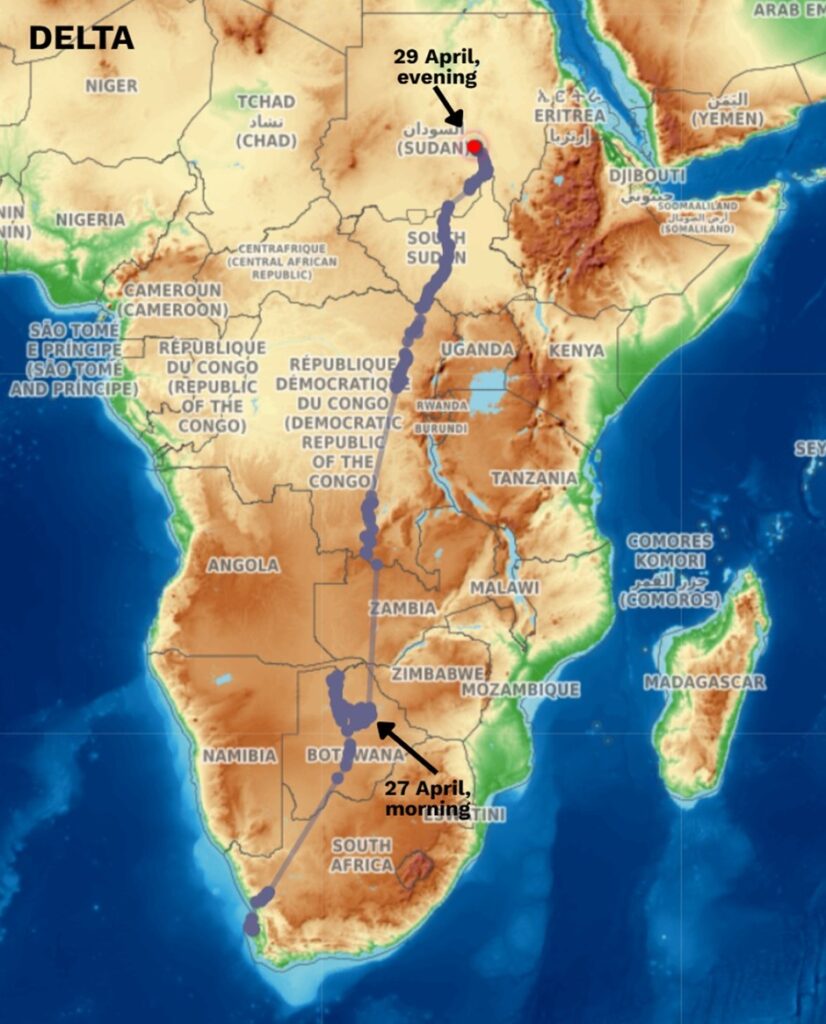
The most astonishing leg of Delta’s journey commenced in the early hours of April 27th. Data transmitted from its tiny tracking device reveals a precisely calculated departure, setting a course directly north. The sandpiper’s flight path took it over Zimbabwe and Zambia, demonstrating an impressive directional accuracy. By early afternoon on the 27th, Delta had already crossed the border into the Democratic Republic of Congo (DRC). As evening descended, the bird was observed to be deep within the DRC’s vast interior, still maintaining its relentless pace and heading towards South Sudan.
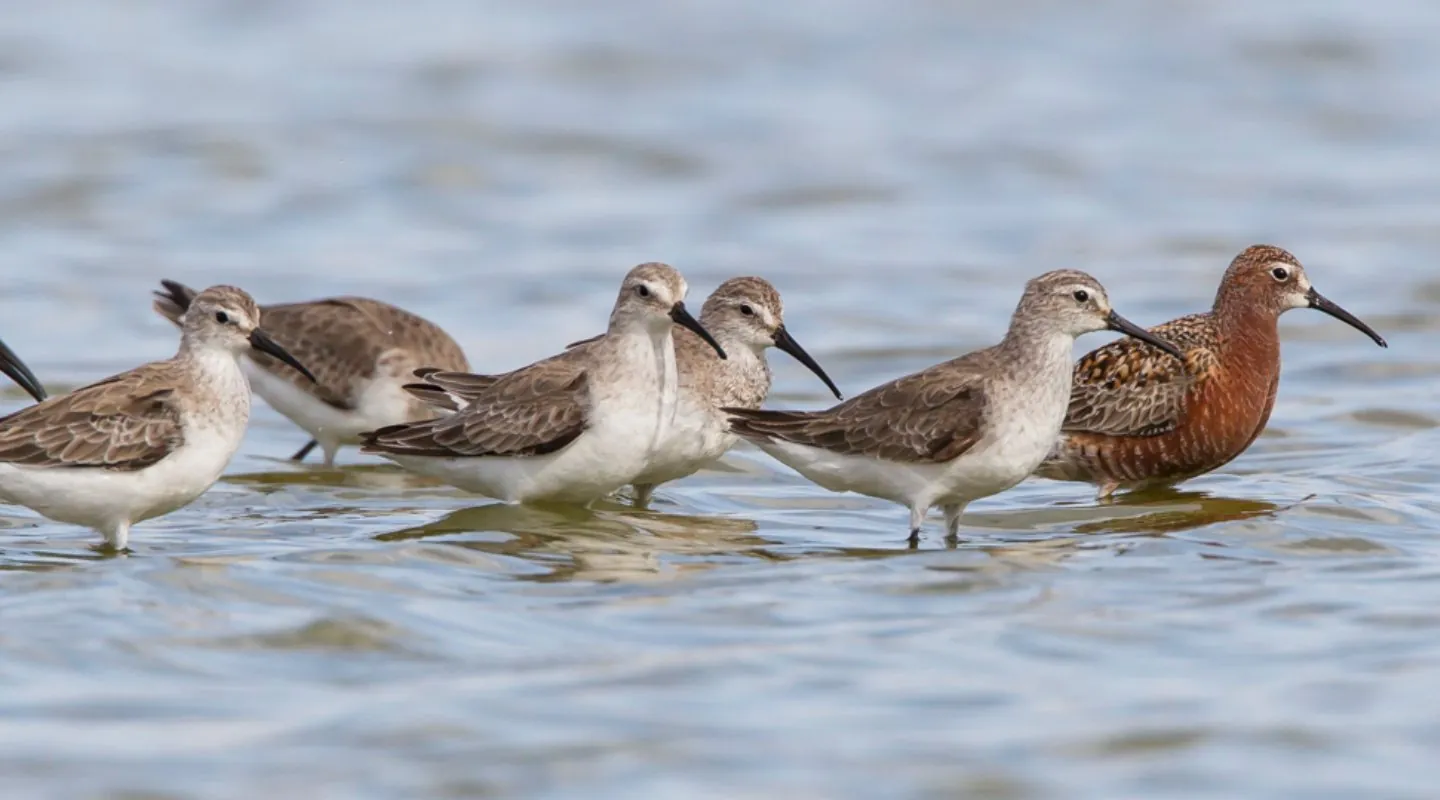
The following day, April 28th, saw Delta continue its determined flight. Around midnight, it reached the southern reaches of the Sudd Marshes in South Sudan. The Sudd, one of Africa’s largest and most ecologically significant wetlands, is a vital staging ground for numerous migratory birds. While several other tagged Curlew sandpipers in the study have utilized this wetland to rest and replenish their energy stores, Delta bypassed this opportunity, opting to press onward.
By 8:00 AM on April 29th, Delta had successfully navigated the immense expanse of the Sudd region. Its trajectory then shifted towards the White Nile valley, indicating its continued progress further north into Sudan. The sandpiper’s unwavering flight culminated on the afternoon of April 29th, when it finally touched down, having covered an astonishing 3,870 kilometers from its departure point in South Africa.
The sheer scale of this achievement is staggering: a bird weighing approximately 60 grams sustained flight for roughly 60 hours, maintaining an average speed of 64.5 kilometers per hour. This sustained effort, without any documented stops for rest or refueling, represents an unparalleled demonstration of physiological adaptation and navigational prowess.
Scientific Collaboration and Technological Innovation
This ambitious tracking project, a testament to international cooperation, involves a consortium of leading ornithological and conservation organizations. Birdlife South Africa spearheads the initiative, working in close partnership with Wetlands International, the Department of Ornithology at the Max Planck Institute for Biological Intelligence in Germany, the FitzPatrick Institute of African Ornithology at the University of Cape Town, and Conserve Eden in Plettenberg Bay.
The project is made possible by funding from the Royal Society for the Protection of Birds and the Ecological Restoration Fund, underscoring a shared commitment to understanding and conserving migratory bird populations and the critical habitats they depend upon.

The tracking technology employed is a marvel of miniaturization. Lightweight, solar-powered GPS loggers, weighing only a few grams, are attached to the birds. These devices record location data at regular intervals, transmitting it wirelessly to researchers. This allows for near real-time monitoring of the birds’ movements, providing invaluable insights into their migratory routes, stopover sites, and flight behavior.
The Significance of Wetlands in the African-Eurasian Flyway
The Curlew sandpiper’s migration route traverses the vast African-Eurasian Flyway, a network of critical habitats that migratory birds rely on for survival during their annual journeys between breeding and non-breeding grounds. Wetlands International’s involvement highlights the pivotal role of these ecosystems.
The Sudd Marshes, where Delta flew over without stopping, are a prime example of such a critical wetland. Its vast network of channels, lakes, and seasonally flooded grasslands provides essential foraging and roosting opportunities for a multitude of bird species. However, these vital habitats face numerous threats, including drainage for agriculture, water abstraction, pollution, and the impacts of climate change, which can alter rainfall patterns and water availability.
The fact that Delta did not stop at the Sudd, while other sandpipers did, raises intriguing questions for researchers. It could suggest that Delta was exceptionally well-provisioned with energy reserves, or perhaps it was seeking more optimal foraging grounds further north. It also underscores the importance of a chain of suitable habitats along the flyway, as different individuals may rely on different stopover points based on their condition and the availability of resources.
Broader Implications for Conservation
The data gathered from tracking Delta and its counterparts is not merely academic; it has profound implications for conservation efforts. By precisely mapping migratory routes and identifying key stopover and refueling sites, conservationists can prioritize the protection and management of these crucial areas.
The African-Eurasian Flyway is a shared resource, and the conservation of migratory birds requires international cooperation. Understanding the full extent of their journeys and the specific needs at each stage is essential for developing effective transboundary conservation strategies.
"This project provides us with an unprecedented window into the incredible journeys these birds undertake," stated Dr. Anya Sharma, a lead researcher with Wetlands International. "Delta’s flight is a powerful reminder of the resilience and adaptability of nature, but it also highlights the fragility of these migratory systems. Ensuring the availability and quality of wetlands across the flyway is paramount for the survival of species like the Curlew sandpiper."
Future Research and Public Engagement
The tracking project is ongoing, and researchers are eager to learn more about the migratory patterns and ecological needs of these shorebirds. Future research will focus on analyzing the detailed flight data, understanding the factors influencing stopover decisions, and assessing the conservation status of key wetlands along the flyway.
To foster public engagement and raise awareness about the importance of migratory birds and their habitats, the project has launched a dedicated WhatsApp channel. This platform provides daily updates on the birds’ journeys, offering a unique opportunity for the public to follow Delta and its companions in near real-time. This initiative aims to connect people with the natural world and inspire support for conservation efforts.
"We believe that by sharing these incredible stories of migration, we can build a stronger connection between people and nature," commented a spokesperson for Birdlife South Africa. "Delta’s flight is not just a scientific marvel; it’s an inspiration, a testament to the wildness that still exists in our world and a call to action to protect it."

The remarkable flight of Delta, the 60-gram sandpiper, serves as a powerful testament to the enduring spirit of wildlife and the critical importance of interconnected ecosystems. As researchers continue to unravel the mysteries of avian migration, such discoveries reinforce the urgent need for concerted conservation efforts to safeguard these natural wonders for generations to come.
