
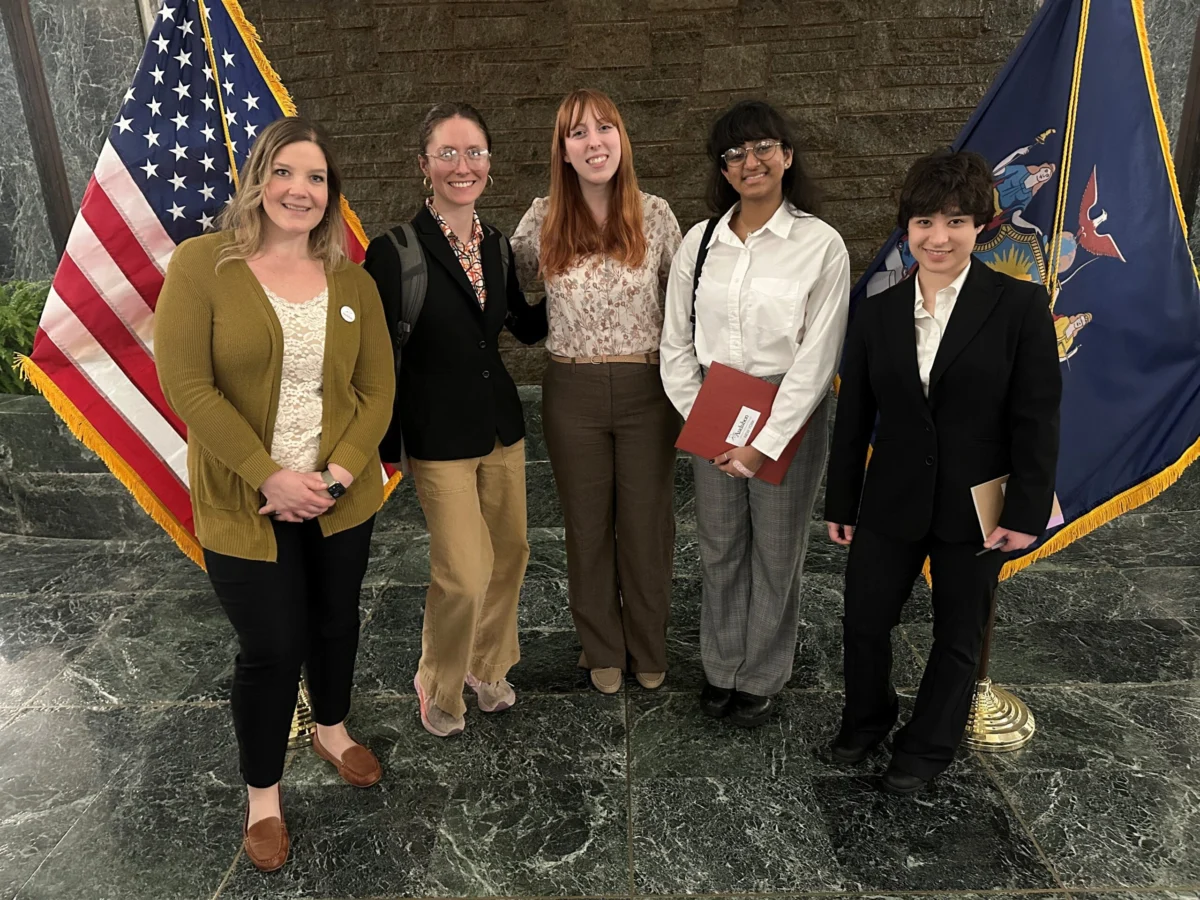
Each year, a pivotal event unfolds in Albany, where the voices of New York’s youngest conservationists resonate through the halls of the State Capital. This annual Youth Advocacy Day, orchestrated by Audubon New York, brings together students and educators from across the state, often requiring them to rise as early as 4:00 am to embark on journeys to Albany. Their mission is clear: to engage directly with legislators, sharing compelling narratives and firsthand experiences from their local ecosystems, elucidating their intrinsic value, and highlighting the critical work underway to safeguard them. This initiative is more than a field trip; it is a profound exercise in civic engagement and environmental stewardship, designed to empower the next generation of leaders and inform current policymakers.
The Genesis and Evolution of Youth Advocacy
Audubon New York’s Youth Advocacy Day is rooted in the conviction that direct engagement with elected officials is paramount for effective conservation. For years, the program has served as a bridge, connecting passionate young constituents with the lawmakers who represent them, often fostering interactions that might not occur otherwise. Erin McGrath, policy director for Audubon New York, encapsulates the program’s essence, stating, "I look forward to these Youth Advocacy Days every year. We get to connect our students with their legislators, and we also get to connect these legislators with constituents they may not otherwise have the opportunity to speak with. It’s a win-win." This symbiotic relationship ensures that legislative decisions are informed not just by expert reports but also by the tangible experiences and emotional connections of those directly impacted by environmental changes.
The program’s structure is designed for maximum impact. Students are prepared to articulate complex ecological issues in accessible terms, often drawing from personal projects and observations. One particularly resonant account came from a participant from Long Island, who detailed his involvement in constructing vital shelters for Least Terns. He recounted the moment of awe he experienced witnessing a chick finally approach one of these structures, seeking refuge in its shade. This vivid, personal anecdote immediately captivated the attention of the lawmaker, who promptly requested to see photographs of the project and the birds—a testament to the power of storytelling in policy advocacy. The Least Tern ( Sternula antillarum ), a small migratory seabird, faces significant conservation challenges, primarily due to habitat loss, human disturbance on nesting beaches, and the impacts of climate change, which threatens their low-lying coastal nesting sites. Efforts like building shelters are crucial for the species’ survival, particularly in densely populated coastal areas.
Nurturing Future Leaders: The Youth Climate Summit
A significant pipeline for these young advocates is the Youth Climate Summit program, spearheaded by the Constitution Marsh Audubon Center and Sanctuary in the Hudson Valley. Lexi Klahn, who previously attended Youth Advocacy Day as a young professional representing the Hudson Valley, now leads this program as a manager for Audubon’s Hudson Valley sanctuaries, including the Constitution Marsh center. This year, she proudly brought a team of her students to Albany, marking a full-circle journey in her own advocacy and mentorship.
Inspired by The Wild Center’s nationally recognized Youth Climate Program, Constitution Marsh launched its own Youth Climate Summits in 2022. The Wild Center, located in the Adirondacks, has pioneered a model for empowering youth to address climate change through education and action, a model that has been adopted by institutions globally. Constitution Marsh adapted this successful framework, evolving it into a series of interactive lessons that Klahn delivers directly within classrooms across the Hudson Valley throughout the fall semester. This embedded approach ensures that climate education and advocacy training are integrated into students’ regular learning environments, maximizing reach and impact.
The curriculum is comprehensive, covering the science of climate change, principles of conservation, and practical advocacy techniques. A core component of these lessons is dedicated entirely to advocacy, employing real-world case studies—many drawn from the extensive network of the National Audubon Society—and other practical tools. Klahn meticulously demonstrates how individuals and organizations are actively advocating for environmental protection and, crucially, how her students can become integral participants in this vital work.
Klahn emphasizes the profound importance of this empowerment for teenagers. "In this day and age, many teenagers are struggling to find ways to make a difference in the world they live in," she observes. "It is so important for them to know that even if they aren’t yet able to vote, they’re still constituents and they still have a voice." This sentiment underscores a fundamental principle of democracy: that citizenship extends beyond the ballot box, encompassing active participation and vocal expression on issues that affect one’s community and future.
The Advocacy Day Experience: A Transformative Journey
When the opportunity arose for Klahn’s students and their teachers to attend the latest Youth Advocacy Day, she seized it without hesitation. The full-day trip to Albany involved four dedicated students and their teachers. Throughout the day, they engaged in direct conversations with various legislators, focusing on the localized impacts of climate change within the Hudson Valley region and articulating the profound significance of their local ecosystems. The Hudson Valley, a region of immense ecological diversity and historical importance, faces specific climate vulnerabilities, including increased frequency of extreme weather events, altered precipitation patterns, and potential impacts on the Hudson River estuary, a critical nursery for numerous fish species and a vital migratory bird flyway. These discussions brought a local, tangible dimension to the broader climate crisis, making the issue more immediate and actionable for lawmakers.
For the accompanying educators, the experience was equally enlightening and empowering. Kathleen Westervelt, a teacher from Putnam Valley Central School District, remarked, "As a teacher and an environmentalist, I never knew it was possible for me and my students to lobby together. I was very proud to see my students share what the environment and environmental education means to them." This highlights a critical aspect of the program: it educates not only students but also expands the horizons of their mentors, demonstrating new avenues for civic engagement within the educational framework.
Nicolette Viano-Burnett, a teacher at Highland Falls-Montgomery Central School District, echoed this sentiment, stating, "It was incredibly empowering for both students and adults to advocate for their passion and love of nature. This experience will be remembered not only for the events that took place, but also for the valuable skills gained in turning ideas into real change at the state level." Her observation points to the practical, transferable skills—public speaking, critical thinking, persuasive argumentation, and understanding legislative processes—that participants acquire.
The students themselves found the experience profoundly transformative. Minisha Singh, a student from Putnam Valley High School, reflected on her day, "That day had a lot of firsts for me, and I’m very grateful. I learned that youth advocates are just as important as adult advocates when lobbying. Voices coming from a variety of people make a significant impact, and I learned that my experience and voice hold value, and can impact people and the environment. I’m incredibly grateful for the educational experience and hope to lobby again in the future!" Singh’s reflection underscores the core message of the program: that age does not diminish the validity or impact of one’s voice in the democratic process, particularly when advocating for universally shared values like environmental protection.
Beyond Albany: Sustained Action and Broader Implications
While Youth Advocacy Day is a powerful annual event, the commitment to fostering environmental leadership extends far beyond a single day of lobbying. Already, students and teachers are signing up for next year’s event, indicating a sustained enthusiasm and recognition of its value. However, the true measure of the program’s success lies in the ongoing opportunities for participating in advocacy and climate action that continue throughout the year.
As the academic year progresses, students involved in the Youth Climate Summit program transition from classroom learning and legislative visits to designing and executing their own Climate Action Plans. These plans are not theoretical exercises but practical, community-based projects. Students draw upon the lessons learned from Klahn’s instruction, their experiences in Albany, and their own observations to identify and address environmental problems within their communities and, in some cases, envision solutions with broader reach. These projects can range from local recycling initiatives and habitat restoration efforts to advocating for sustainable practices in their schools or municipalities.
Rebecca Schultz, director of the Hudson Valley Sanctuaries, articulates the overarching vision of this sustained engagement: "The Youth Climate program shows what’s possible when Audubon brings young people together and gives them real opportunities to connect, learn, and lead. When students are empowered, they bring the energy and creativity that will help shape the future of conservation—and they remind all of us why investing in youth leadership matters now more than ever." This statement highlights the program’s strategic importance in cultivating a new generation of environmental stewards and leaders. In an era marked by complex environmental challenges, the innovative thinking and passionate dedication of young people are indispensable.
The Impact on Policy and Public Discourse
The direct engagement of youth with legislators through programs like Audubon’s Youth Advocacy Day carries significant implications for policy development and public discourse. First, it ensures that diverse perspectives, particularly those of younger generations who will inherit the planet’s environmental legacy, are heard directly by decision-makers. This personal connection can often be more impactful than abstract data, humanizing complex issues and fostering empathy among lawmakers. Second, it demystifies the legislative process for students, transforming abstract civics lessons into tangible experiences of democratic participation. This can lead to increased civic engagement later in life and a more informed citizenry.
Furthermore, the program implicitly challenges the notion that environmental advocacy is solely the domain of adult professionals. By showcasing the capacity of young people to articulate complex issues and propose solutions, it broadens the base of environmental activism and inspires peers to get involved. The "win-win" scenario described by Erin McGrath extends beyond the immediate interactions, contributing to a more responsive government and a more empowered populace.
The Constitution Marsh Audubon Center and Sanctuary’s Youth Climate Summit, a cornerstone of this advocacy, is made possible through dedicated support. Lifelong birder Doug Bloom, past president and current vice-president of the Bronx River-Sound Shore Audubon Society, is a generous benefactor. Bloom’s personal journey, having joined his local chapter over 65 years ago at the age of nine and serving on its board for 35 years, embodies the very spirit of lifelong commitment to conservation that the Youth Climate Summit aims to instill. His support underscores the intergenerational continuity of environmental stewardship and the critical role of sustained investment in youth education and empowerment.
In conclusion, Audubon New York’s Youth Advocacy Day and the underlying Youth Climate Summit program represent a vital, multi-faceted approach to conservation. By empowering young people to become active, informed advocates, these initiatives are not only protecting New York’s precious ecosystems but also cultivating a generation of engaged citizens and future leaders, ensuring that the critical dialogue around environmental protection continues with vigor and passion for decades to come.
