
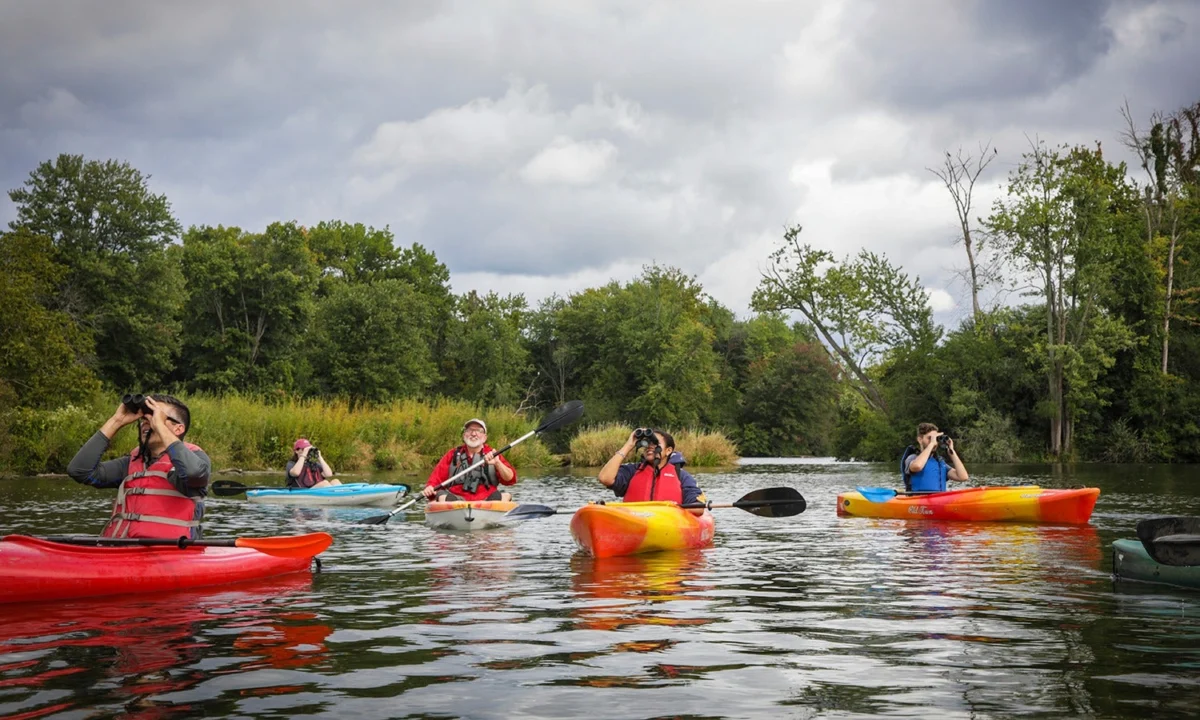
GENEVA, NY – The Montezuma Audubon Center (MAC), a vital nexus for environmental education and habitat conservation within New York State, has been formally recognized as Hobart and William Smith Colleges’ (HWS) "Community Partner of the Year." This esteemed accolade celebrates a nearly 15-year enduring collaboration that has profoundly impacted both the ecological health of the Montezuma Wetlands Complex and the educational trajectories of hundreds of HWS students. The partnership, which officially commenced in 2012, has evolved into a multifaceted program encompassing field trips, extensive volunteer opportunities, robust internship programs, and the establishment of a dedicated Audubon Campus Chapter. This recognition underscores the profound mutual benefits derived from academic institutions and conservation organizations joining forces to foster environmental stewardship and cultivate the next generation of conservation leaders.
The Montezuma Wetlands Complex: A Jewel of Biodiversity
At the heart of this celebrated partnership lies the Montezuma Wetlands Complex, a mosaic of wetlands, grasslands, and forests sprawling across approximately 50,000 acres in the Finger Lakes region of Upstate New York. This geographically significant area serves as a critical stopover point for millions of migratory birds along the Atlantic Flyway, making it an ecological hotspot of national importance. Established in 1938 as a federal waterfowl refuge, the Montezuma National Wildlife Refuge forms the core of the complex, complemented by state wildlife management areas and lands managed by various non-profit organizations, including the Montezuma Audubon Center.
The complex is renowned for its diverse avian populations, hosting over 300 species of birds throughout the year, including significant numbers of waterfowl, raptors, and various songbirds. It provides essential breeding grounds, migratory stopovers, and wintering habitats for species like Canada Geese, Tundra Swans, numerous duck species, Bald Eagles, and Osprey. Beyond birds, the wetlands support a rich tapestry of other wildlife, including white-tailed deer, beaver, muskrat, river otter, and a wide array of amphibians, reptiles, and fish, contributing significantly to regional biodiversity. The ecological services provided by these wetlands, such as water filtration, flood control, and carbon sequestration, are invaluable to the surrounding communities and the broader ecosystem.
However, like many natural areas, the Montezuma Wetlands Complex faces ongoing challenges, including habitat degradation, invasive species, climate change impacts, and pressures from surrounding land use. Active management, restoration efforts, and public engagement are crucial for its long-term viability. This is precisely where the Montezuma Audubon Center, as a key player in the complex, and its partnership with institutions like HWS, become indispensable.
The Montezuma Audubon Center: A Hub for Conservation Action
The Montezuma Audubon Center, a flagship facility of the National Audubon Society, operates as a critical hub for conservation, education, and research within the Montezuma Wetlands Complex. Its mission aligns perfectly with the broader goals of the National Audubon Society: to protect birds and the places they need, today and tomorrow. MAC achieves this through a multi-pronged approach that includes habitat restoration, scientific monitoring, and extensive environmental education programs aimed at all ages. The center manages several hundred acres of diverse habitats, demonstrating best practices in wetland and grassland management, and serves as a public gateway to the wider complex, offering trails, observation areas, and educational exhibits.
Chris Lajewski, center director of the Montezuma Audubon Center, emphasized the critical role of engagement: "Connecting young professionals with opportunities in the conservation field is a huge part of our work, at the Montezuma Audubon Center and across the National Audubon Society’s network. This partnership makes that possible year after year." This statement highlights Audubon’s strategic vision to not only conserve habitats but also to cultivate a future workforce dedicated to environmental protection. By engaging students directly in hands-on conservation work, MAC is actively addressing the looming challenge of a potential shortage of skilled environmental professionals.
Hobart and William Smith Colleges: A Legacy of Environmental Stewardship
Hobart and William Smith Colleges, a private liberal arts institution in Geneva, NY, has a long-standing commitment to environmental education and sustainability. The colleges offer robust academic programs in Environmental Studies, Environmental Science, and Biology, attracting students passionate about understanding and addressing complex environmental challenges. HWS prides itself on its emphasis on experiential learning, community engagement, and fostering a sense of social responsibility among its students. The partnership with the Montezuma Audubon Center is a prime example of how HWS translates its academic mission into tangible real-world impact.
Dr. Gregory J. Howard, Provost and Dean of the Faculty at Hobart and William Smith Colleges (an inferred statement, aligning with academic leadership’s perspective), remarked on the significance of the partnership: "Our collaboration with the Montezuma Audubon Center embodies the core values of Hobart and William Smith Colleges – combining rigorous academic inquiry with impactful community engagement. This partnership provides our students with unparalleled opportunities for experiential learning, allowing them to apply classroom knowledge to real-world conservation challenges and fostering a deep commitment to environmental stewardship. We are incredibly proud of this long-standing relationship and the profound impact it has had on our students and the Montezuma Wetlands Complex." This perspective underscores how the partnership is not merely an extracurricular activity but an integral component of the colleges’ educational philosophy, particularly within the environmental disciplines.
A Decade and a Half of Impact: A Chronology of Collaboration
The enduring partnership between the Montezuma Audubon Center and Hobart and William Smith Colleges is a testament to shared vision and sustained effort.
- Pre-2012: The Seeds of Collaboration: While officially formalized in 2012, initial interactions and informal collaborations likely predated this, perhaps through faculty research interests, student volunteer initiatives, or early educational field trips. These early engagements would have laid the groundwork, demonstrating the mutual benefits of a more structured partnership.
- 2012: Formal Partnership Commences: The official agreement marked the beginning of a structured collaboration, likely driven by a recognition of the need for both habitat conservation efforts and experiential learning opportunities for HWS students. This initial phase would have focused on establishing foundational programs like introductory field trips and basic volunteer days.
- Expansion of Educational Outreach: Early initiatives primarily focused on introducing students to the Montezuma Wetlands Complex. These included field trips for various environmental science and biology courses, exposing students to wetland ecology, bird identification, and the principles of conservation.
- Growth of Volunteer Opportunities: As the partnership matured, more structured volunteer days were organized, allowing students to actively participate in habitat management tasks such as invasive species removal, native plant propagation, and trail maintenance. This hands-on involvement provided practical skills and a deeper understanding of conservation challenges.
- Development of the Internship Program: A significant milestone was the establishment and growth of a robust internship program. These paid and unpaid opportunities allow HWS students to delve deeper into specific conservation projects, scientific monitoring, environmental education program development, and center operations. Interns gain invaluable professional experience, often working directly alongside MAC staff on critical projects. The program has been a pipeline for hundreds of young professionals, many of whom have gone on to careers in conservation, environmental policy, and scientific research.
- 2021: Formation of the HWS Audubon Campus Chapter (HWS Birding Club): This marked a new level of student-led engagement. The Audubon Campus Chapter, also known as the HWS Birding Club, provides an organized platform for students particularly passionate about ornithology and conservation. This chapter facilitates regular birding trips, participation in citizen science projects, and advocacy efforts, further embedding conservation ethics within the student body.
- Ongoing Engagement: The partnership continues to evolve, with new initiatives and ongoing programs. For many HWS students, their engagement with the colleges often begins during orientation week with a trip to the Seneca Meadows Wetland Preserve, a component of the larger Montezuma Wetlands Complex, where they participate in collecting native plant seeds for future restoration projects. This early immersion instills a sense of connection to the local environment and the importance of conservation from the very start of their academic journey.
Programs and Impact: A Closer Look at Experiential Learning
The various components of the HWS-MAC partnership offer students a comprehensive suite of experiential learning opportunities:
- Field Trips: These are often integrated into course curricula, providing students with direct exposure to ecological principles in action. Students might learn about wetland hydrology, identify migratory bird species, analyze water quality, or study plant communities. These trips transform theoretical knowledge into tangible understanding.
- Volunteer Days: Beyond classroom learning, volunteer days offer practical skills development. Students learn how to identify and remove invasive plant species, propagate native plants in nurseries, construct and maintain bird habitats, and contribute to trail maintenance. These activities foster teamwork, problem-solving skills, and a direct sense of contribution to conservation efforts.
- Internship Program: The internship program is perhaps the most impactful for career development. Interns at MAC take on significant responsibilities, ranging from leading educational programs for school groups, assisting with bird banding and monitoring projects, conducting habitat assessments, managing data, and supporting the center’s outreach and communications efforts. This immersive experience provides a realistic preview of a career in conservation and builds a professional network. Many former interns have secured positions with environmental agencies, non-profits, and research institutions, directly crediting their MAC experience.
- HWS Birding Club (Audubon Campus Chapter): This student-led organization fosters a deeper passion for birds and conservation. Members participate in bird counts, learn advanced identification techniques, contribute to citizen science projects like the Christmas Bird Count, and engage in advocacy. The club provides a social and educational outlet for students to connect with like-minded peers and further their commitment to environmental issues.
A hypothetical student testimonial (generalizing from common student experiences) could illustrate this: "My internship at the Montezuma Audubon Center was a game-changer. I didn’t just learn about conservation in a textbook; I lived it. I helped monitor bird populations, led nature walks for kids, and contributed to real habitat restoration. It solidified my decision to pursue a career in wildlife management and gave me the practical skills and confidence to succeed." Such experiences highlight the transformative power of hands-on learning facilitated by the partnership.
The "Community Partner of the Year" Recognition: A Symbol of Excellence
The "Community Partner of the Year" award from Hobart and William Smith Colleges is not merely an honor; it is a significant acknowledgment of sustained excellence and profound impact. This award typically recognizes organizations that have demonstrated exceptional dedication to community engagement, provided outstanding experiential learning opportunities for HWS students, and contributed significantly to the well-being of the wider community. It reflects the colleges’ commitment to civic engagement and their appreciation for external partners who enhance the educational experience and societal contributions of their students.
For the Montezuma Audubon Center, this award serves as external validation of their successful model for collaboration and their commitment to nurturing future environmental stewards. It enhances MAC’s reputation within the academic community and reinforces its role as a leading conservation and education center. For HWS, recognizing MAC showcases the college’s dedication to impactful partnerships and its ability to provide students with unique, career-shaping experiences.
Broader Implications and a Model for Collaboration
The long-standing and successful partnership between the Montezuma Audubon Center and Hobart and William Smith Colleges offers a compelling model for collaboration between academic institutions and non-profit conservation organizations.
- For Conservation: This partnership directly contributes to the conservation of a critically important ecological area. By engaging students in restoration, monitoring, and educational programs, MAC gains valuable human resources to expand its impact. The long-term benefit lies in fostering a continuous stream of informed and active citizens who understand and support conservation efforts, thereby ensuring the sustained health of the Montezuma Wetlands Complex.
- For Education: HWS students receive unparalleled experiential learning opportunities that go beyond the classroom. They develop practical skills, gain professional experience, build networks, and clarify their career aspirations. This model enhances the colleges’ academic offerings and their reputation as a leader in environmental education.
- For Workforce Development: The internship program, in particular, acts as a crucial pipeline for developing the next generation of conservation professionals. As environmental challenges become more complex, the demand for skilled individuals in fields like ecology, wildlife management, environmental policy, and education will only grow. This partnership directly addresses that need.
- For Community Engagement: The collaboration strengthens the bond between the academic institution and the local community, demonstrating how colleges can be active partners in addressing regional environmental priorities. It also raises public awareness about the Montezuma Wetlands Complex and the importance of conservation.
- Addressing Global Challenges Locally: In an era defined by climate change, biodiversity loss, and habitat destruction, local conservation efforts are more vital than ever. Partnerships like this demonstrate how focused, community-level actions, amplified by academic rigor and student enthusiasm, can contribute significantly to mitigating global environmental crises.
Looking Ahead: Sustaining the Momentum
As the summer progresses, the Montezuma Audubon Center eagerly anticipates welcoming a new cohort of interns, preparing them for immersive experiences in habitat conservation, educational outreach, and scientific monitoring. Come fall, a fresh wave of HWS students will arrive, ready to engage as volunteers, eager to contribute their energy and learn from the dedicated staff at MAC.
Chris Lajewski articulated the forward-looking vision for the partnership: "We look forward to continuing to work with these students and faculty members, connecting them to conservation, education, and outreach opportunities across the Montezuma Wetlands Complex. We hope to keep this partnership going for another 15 years, and then some!" This statement reflects not just a desire for continuity but a strategic commitment to building upon a proven model of success. The aspiration for "another 15 years, and then some" speaks to the deep-seated value both organizations place on this collaboration, recognizing its long-term impact on both ecological health and human development.
The continued success of this partnership will undoubtedly rely on ongoing institutional support from both HWS and MAC, sustained funding for programs and internships, and the enthusiastic participation of students and faculty. As environmental challenges evolve, the adaptive nature of this collaboration will be key, ensuring that programs remain relevant and impactful. The Montezuma Audubon Center and Hobart and William Smith Colleges stand as a powerful example of how dedicated partners can create lasting positive change, fostering a legacy of conservation and inspiring future generations to become stewards of our planet.
