
On Albania’s southwestern coast, where the Vjosa, one of Europe’s last great wild rivers, meets the Adriatic Sea, lies the Vjosa-Narta Protected Landscape – a vast and intricate mosaic of lagoons, salt marshes, and ancient coastal forests. This dynamic ecosystem, where the boundaries between water and land are in constant flux, is currently at the heart of an international environmental controversy. Despite its designation as a protected area of immense ecological significance, including under the EU’s Natura 2000 framework and the Ramsar Convention, the site has seen destructive incursions by heavy machinery, clearing the way for a proposed luxury resort development linked to prominent international investors. This development threatens to dismantle one of the Mediterranean’s finest remaining wild coastlines, triggering widespread protests and raising critical questions about environmental governance, sustainable development, and Albania’s commitment to its natural heritage.
A Pristine Ecosystem Under Siege
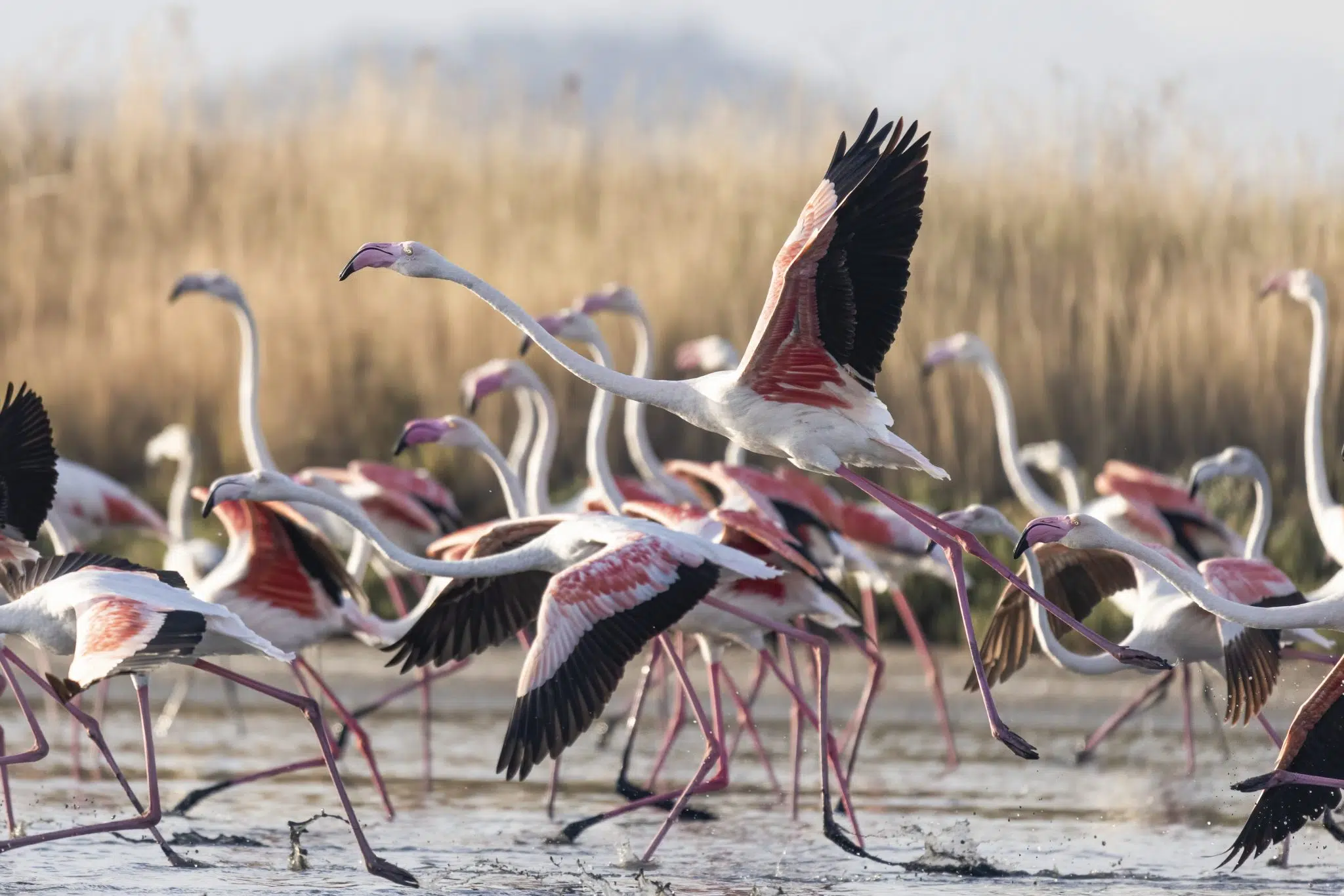
The Vjosa-Narta delta, spanning over 250 square kilometers, is a biodiversity hotspot. Its unique geographical position and hydrological characteristics create a sanctuary for an extraordinary array of flora and fauna. At dawn, the landscape comes alive with a delicate symphony of nature. Mist often hovers above the still waters, catching the first rays of the sun that illuminate the reeds. Greater Flamingos, with their pale pink plumage, stand motionless, their perfect reflections mirroring the glass-flat lagoon. Dalmatian pelicans, critically endangered and emblematic of Europe’s wetlands, glide overhead with an unhurried grace, while egrets forage in the shallows and herons stand sentinel at the water’s edge. This scene is not merely picturesque; it is a testament to a functioning, undisturbed natural system.
Behind the vibrant lagoon, an ancient pine forest, shaped by centuries of salt winds, provides a crucial buffer and habitat. These trees, deeply rooted in sandy soil, filter sunlight into shifting patterns on the forest floor, releasing a unique aroma of pine and sea. For millions of migratory birds traversing the Adriatic Flyway – one of Europe’s most critical corridors connecting northern breeding grounds with African wintering grounds – this forest is an indispensable stopover. Species like the Wood Warbler, Wryneck, and Collared Flycatcher pause here, drawing sustenance and finding shelter before continuing their arduous continental journeys. The irreplaceable value of a forest of this age and strategic location on such a vital flyway cannot be overstated.
Beyond the forest, a dynamic system of dunes rolls gently towards the sea, sculpted by wind and tide over millennia. These golden undulations are more than just beautiful; they are structural keystones of the ecosystem. This dune belt forms the physical boundary between the saline lagoon system and the open Adriatic, acting as a natural barrier that absorbs storm surges, prevents saltwater intrusion into the freshwater system, and maintains the delicate hydrological balance that makes the wetland habitable. Within this seemingly harsh terrain, resilient wildflowers find purchase, and Loggerhead sea turtles, ancient mariners returning faithfully to their natal beaches, come ashore to nest, a ritual they have observed since long before human maps gave this coastline a name.

Ecological Significance and Protected Status
The ecological value of Pishë Poro-Nartë, the core area of the Vjosa-Narta Protected Landscape, is globally recognized. The wider delta is home to 18 distinct habitat types listed under the European Union’s Natura 2000 framework, with six of these classified as EU priority habitats – a designation reserved for ecosystems of the highest ecological significance requiring stringent protection. More than 2,300 species depend on this landscape for survival. Among them are some of the world’s most endangered creatures, including the Mediterranean monk seal, with only a few hundred individuals remaining globally. The Dalmatian pelican, once on the brink of local extinction in Europe, has seen a partial recovery thanks to the existence of such pristine habitats. Over 70 species found here are classified as endangered under various international conservation criteria. Furthermore, the Narta lagoon easily meets the criteria of the Ramsar Convention on Wetlands of International Importance, an international treaty for the conservation and sustainable use of wetlands. This collective recognition underscores its status as one of the finest remaining wild coastlines in the Mediterranean.
Chronology of Destruction and Controversy
Despite its legally protected status and ecological importance, the Vjosa-Narta Protected Landscape has been subjected to significant environmental damage since early May 2026. Heavy machinery, including bulldozers and trucks, began operating within the core protected area. This sudden and unauthorized activity proceeded without a published project plan, without a mandatory environmental impact assessment (EIA) being conducted or approved, and critically, without any public consultation, in clear violation of both Albanian and international environmental laws.
Reports from local conservation groups, particularly the Protection and Preservation of Natural Environment in Albania (PPNEA) and its international partners like BirdLife Europe, documented immediate and severe damage. Roads were cut through the ancient pine forest, disrupting vital habitats. Sand dunes, which are designated as Natural Monuments under Albanian law, were desecrated with dumped gravel. New roads were carved through previously untouched areas, causing profound disruption to the breeding and migration cycles that the entire ecosystem relies upon. Scientists have warned that the damage to the dune system alone is so extensive that, even with active restoration efforts, it would take centuries to repair. The interconnectedness of the ecosystem means that the destruction of one component, such as the dunes or forest, inevitably degrades the entire system, impacting salinity levels in the lagoon, water quality, and the critical breeding margins for numerous species.
The scale and nature of the destruction quickly pointed towards a large-scale development. It was soon revealed that the destructive works were linked to a proposed luxury resort development. This project gained significant international attention due to the involvement of Jared Kushner and Ivanka Trump. In May, Ivanka Trump publicly expressed her enthusiasm for the project, stating she was "just captivated" after visiting a nearby island and describing the venture as "the culmination of all of my experience in real estate."

Albanian Prime Minister Edi Rama subsequently confirmed the connection and publicly defended the development, arguing that projects should not be condemned "before they exist." The Albanian government initially claimed that the ongoing works were merely for "technical surveys and environmental measurements" rather than actual construction. However, the extent and nature of the earth-moving operations, coupled with the lack of appropriate permits and assessments, contradicted these claims.
Public Outcry and Calls for Action
The revelation of the project and the visible damage sparked immediate and widespread public outrage across Albania. Hundreds of thousands of Albanians took to the streets of Tirana daily, protesting the destruction of their natural heritage. Protesters, many armed with symbolic pink flamingos, demonstrated a profound devotion to the wildlife sanctuary, highlighting the deep cultural and ecological value the site holds for the nation. Local environmental organizations, supported by international bodies such as BirdLife Europe, WWF, EuroNatur, and the Patagonia-backed Save the Blue Heart of Europe campaign, have been vocal in their condemnation, demanding an immediate halt to all activities and the permanent cancellation of the project.
The mounting pressure from civil society, environmental activists, and international organizations appears to have had an immediate effect. Works at the site have reportedly halted, for now. However, the Albanian government maintains that the project continues, albeit in a paused state. Conservationists and activists are adamant that a temporary halt is insufficient. They demand the complete abandonment of the development, followed by comprehensive active restoration of the damaged areas, and the establishment of genuine, robust legal protections that cannot be easily amended or circumvented by future governments or opportunistic investors.
Legal and International Implications
The ongoing activities at Vjosa-Narta raise serious questions regarding Albania’s adherence to its national environmental laws and international commitments. As a candidate country for European Union membership, Albania is expected to align its legislation and practices with the EU’s environmental acquis, including the Birds and Habitats Directives which underpin the Natura 2000 network. The reported violations – lack of EIA, public consultation, and direct destruction within a protected area – are in direct conflict with these principles.

Furthermore, the Narta lagoon’s designation under the Ramsar Convention signifies an international obligation to conserve and sustainably manage the site. Any action that degrades its ecological character constitutes a breach of this convention. The designation of sand dunes as Natural Monuments under Albanian law further underscores the legal protection these specific features should receive, making their destruction illegal under domestic legislation. The apparent disregard for these legal frameworks not only jeopardizes the future of the Vjosa-Narta ecosystem but also risks undermining Albania’s credibility on the international stage and its aspirations for EU integration.
The Broader Debate: Sustainable Tourism vs. Exploitation
This controversy reignites the critical debate about the nature of tourism development, particularly in ecologically sensitive regions. Environmentalists argue that there is a fundamental difference between tourism that harmonizes with a place and tourism that consumes it. The inherent allure of Vjosa-Narta – its ancient pines, dynamic dunes, and the serene, flamingo-dotted lagoon at dawn – represents precisely the kind of authentic, nature-based experience that draws discerning travelers seeking genuine engagement with wild landscapes. This form of sustainable tourism is entirely possible within the region, and infrastructure can be developed in already-degraded or urbanized areas at the delta’s periphery, minimizing ecological impact while still fostering economic growth.
However, the current luxury resort proposal exemplifies a model of development that prioritizes rapid, high-impact construction over long-term ecological integrity and sustainable economic benefits. The irreversible loss of critical habitat, such as the ancient forest and dune systems, cannot be mitigated or "managed" on a developer’s timeline. The unique ecological processes that have shaped this landscape over millennia cannot be replicated or quickly restored. For endangered species like the Mediterranean monk seal, the Dalmatian pelican, and the Loggerhead sea turtle, there is no contingency plan; their survival depends on the continued existence of intact, undisturbed habitats like Vjosa-Narta.
Implications for Albania’s Future
The fate of the Vjosa-Narta Protected Landscape is more than a local environmental issue; it is a litmus test for Albania’s commitment to environmental protection, its rule of law, and its vision for sustainable development. Allowing destructive development in such a critical protected area sends a troubling signal to both its citizens and the international community. It could jeopardize future foreign investment that aligns with sustainability principles, tarnish the country’s image, and undermine the significant efforts made to conserve other natural treasures, such as the recent designation of the entire Vjosa River as Europe’s first wild river national park.

The demands from environmental groups and the public are clear and uncomplicated: Stop the development. Reverse the damage where possible. And protect this irreplaceable landscape with genuine and enduring legal frameworks. The Vjosa-Narta ecosystem has sheltered life through centuries of storms, migrations, and change, remaining one of the last places in the Mediterranean where nature still moves according to its own ancient logic. It deserves the chance to continue its vital role.
As the political and legal battles unfold, the Greater Flamingos continue to gather on the Narta lagoon. Whether they, and countless other species, will remain a permanent fixture of this extraordinary landscape, depends entirely on the actions taken by the Albanian government and the resolve of those who champion its protection in the coming months. The stakes are profoundly high, not just for Albania, but for the conservation of Europe’s natural heritage.
