
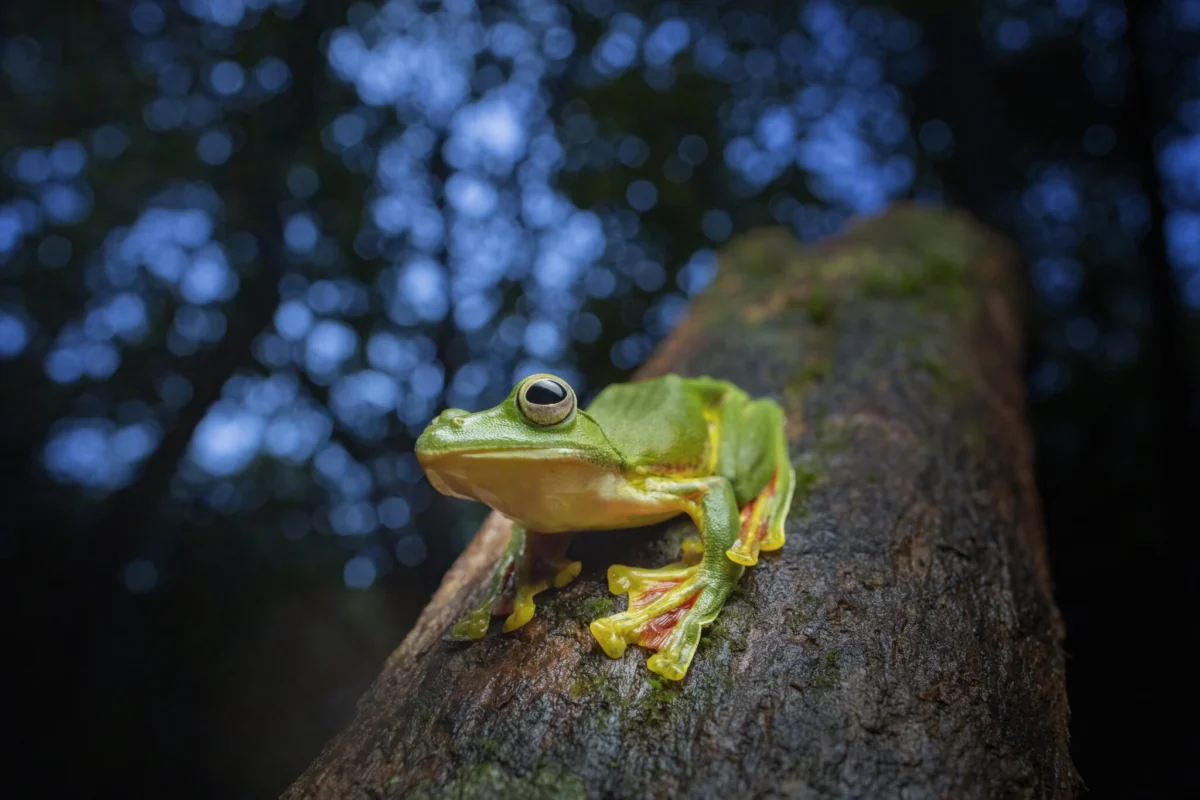
Using a wide-angle lens to capture a small subject within its natural habitat has emerged as a profoundly powerful method for creating immersive, storytelling images in nature photography. This perspective transcends mere depiction, transporting the viewer directly into the scene, fostering a sense of being part of the subject’s intricate world. Beyond merely revealing fine details of an organism, it meticulously places them within their broader context, highlighting the delicate and often precarious balance between the creature and its surrounding ecosystem. The resultant images are not just visually striking; they are invitations to a deeper understanding, allowing audiences to experience the world from the subject’s unique vantage point.
The Evolution of Immersive Nature Photography

The landscape of nature photography has continuously evolved, driven by technological advancements and a growing desire for more profound narratives. For decades, macro photography primarily focused on isolating minute subjects, emphasizing intricate details against often blurred or absent backgrounds. While undeniably beautiful and scientifically valuable, this traditional approach sometimes sacrificed the broader ecological story. The rise of wide-angle macro photography represents a significant shift, bridging the gap between detailed close-ups and expansive environmental portraits. This technique gained prominence as photographers sought to convey not just the "what" but also the "where" and "how" of a creature’s existence. It speaks to a contemporary audience’s appetite for immersive content that offers context and a holistic view of nature, moving beyond pure aesthetics to ecological awareness.
Technically, wide-angle macro photography involves utilizing a wide-angle lens at extremely close focusing distances to achieve magnified reproductions of subjects while retaining a substantial portion of the background. Unlike traditional macro photography, which typically relies on dedicated macro lenses for true 1:1 or greater magnification ratios, wide-angle lenses often do not meet this strict definition. However, the term "wide-angle macro photography" has been widely adopted within the photographic community to describe this distinctive style of imagery. For the sake of clarity and common understanding, this guide will continue to use this accepted terminology.
Essential Gear for the Wide-Angle Macro Photographer

To master this fascinating technique, a specific set of equipment is required, each playing a crucial role in overcoming the inherent challenges and maximizing creative potential.
Camera Body: The Foundation of Your Vision
The adage, "the best camera is the one you already own," holds true even in specialized fields like wide-angle macro. Photographers can initiate their journey with any DSLR or mirrorless camera, irrespective of brand or model. However, modern mirrorless cameras offer distinct advantages. Features such as advanced autofocus systems, animal eye detection, and sophisticated focus tracking significantly simplify the demanding process of capturing fast-moving or elusive macro subjects. Furthermore, cameras equipped with live view and articulating or tilt screens prove invaluable in the field, allowing for creative low-angle shots without requiring the photographer to contort into uncomfortable positions. A camera boasting a superior dynamic range, robust weather sealing – crucial for unpredictable natural environments – and a high burst rate further enhances capability, especially when dealing with skittish subjects or fleeting moments. While cutting-edge gear offers convenience and performance, it is imperative for beginners to remember that a strong image is primarily a product of vision and technique, not solely the latest model.
Lenses: The Key to Immersive Perspective
This is arguably the most critical component. A wide-angle lens with an exceptionally low minimum focusing distance (MFD) is non-negotiable for producing impactful wide-angle macro images. Standard wide-angle lenses, typically employed for landscape photography, are often inadequate as their MFDs do not permit close enough proximity to the subject while maintaining focus. Fortunately, several leading camera brands and third-party manufacturers now offer specialized wide-angle lenses, some even featuring true macro capabilities (1:1 reproduction ratio) alongside very short MFDs. A lens with a short MFD allows the photographer to fill the frame with the subject while simultaneously rendering a significant portion of its environment in focus, thereby creating a more engaging and contextual composition. Without this specific lens characteristic, the subject may appear diminutive and become lost amidst a distant, indistinct background, negating the primary goal of this photographic style.

External Flash: Illuminating the Scene
Despite wide-angle macro photography often being conducted during daytime or early evening, an external flash unit is an indispensable addition to any photographer’s kit. The necessity arises from the requirement to narrow the aperture significantly (e.g., f/11 or f/16) to ensure both the minute subject and its expansive environment remain in sharp focus. This narrowed aperture dramatically reduces the amount of ambient light reaching the sensor, leading to underexposure. An external flash effectively compensates for this light loss, allowing for proper exposure while maintaining the desired depth of field. When selecting a flash, key features to prioritize include: ETTL (Through-The-Lens) and manual modes for flexible exposure control; a fast recycle time to capture successive shots; a guide number exceeding 60 for ample power; high-speed sync (HSS) capability to balance flash with bright ambient light; and remote operation functionality for off-camera lighting setups. These features provide unparalleled control and flexibility in diverse shooting scenarios.
Diffusers: Softening the Light, Enhancing the Subject
To mitigate harsh highlights and shadows, particularly on subjects that are wet, glistening, or possess reflective surfaces, a diffuser is absolutely essential. Standard diffusers designed for traditional macro lenses (typically 90–100 mm in diameter) are often impractical for wide-angle setups due to their size and potential to appear in the wider frame. Without adequate base support, the front section of a larger diffuser can also droop, causing unwanted vignetting or obstructions. To circumvent these issues, photographers often resort to smaller, purpose-built diffusers or construct custom solutions tailored to their wide-angle lenses.
Smaller diffusers, such as dome diffusers or mini softboxes, are more manageable with wide-angle lenses but may offer a less extensive diffusion surface. It is a known principle in lighting that the larger the light source relative to the subject, the softer the light. Consequently, achieving ideal diffusion with very small units can be challenging. Creative adaptations can overcome this. One technique involves elevating a regular, larger diffuser by mounting the flash on a trigger attached to the camera, then placing the diffuser on top of the flash. Another effective method is using a disc-style diffuser positioned to provide top-lighting. For advanced control, an off-camera flash setup with a diffuser can be employed, though this often requires significant dexterity or an assistant in the field.

Protective Clothing and Field Gear: Prepared for the Wild
Successful wide-angle macro photography often requires venturing into dense, humid, or otherwise challenging natural habitats. Therefore, appropriate protective clothing and field gear are as crucial as the photographic equipment itself. This includes robust rain gear to safeguard both the photographer and sensitive electronics, durable waterproof footwear, and leech guards or gaiters to protect against reptiles, insects, and leeches, enabling confident movement across diverse terrains like forest floors and marshy lands. Finally, reliable mosquito and insect repellents are indispensable for comfort and focus during prolonged shoots in insect-rich environments.
Preferred Time of Day: Strategies for Illumination and Context
The choice of shooting time profoundly impacts the outcome of wide-angle macro photography, particularly given the genre’s emphasis on environmental context.

Daytime Shooting: Embracing Natural Light and Habitat Visibility
The primary objective of wide-angle macro photography – showcasing the subject within its habitat – is optimally achieved during daylight hours when the environment is fully illuminated. One of the genre’s most significant challenges lies in capturing nocturnal creatures, such as many reptiles and amphibians, within their natural surroundings. These captivating subjects, often most active and photogenic in the rainforest at night, present a dilemma: traditional flash photography at night frequently results in images where the subject is well-lit but appears against a dark, featureless background, entirely losing the crucial context and intricate details of its habitat.
Since the rules of nature cannot be altered, thorough preliminary research is vital. This includes understanding the specific location, the species found there, and their diurnal (daytime) behaviors, if any. Consulting with local naturalists or guides can prove invaluable, offering insights into expected wildlife activity patterns. It is paramount to uphold ethical photography practices; the practice of captivating an animal for photography, even with the intention of later release, is strongly discouraged. Images must be captured in situ and reflect the animal’s natural state and behavior. This commitment to authenticity ensures that the resulting photographs truly tell a story of the subject’s life within its undisturbed environment.
Nighttime Shooting: Mastering Artificial Illumination
Without meticulous lighting strategies, nighttime wide-angle macro photography risks producing images indistinguishable from traditional macro photographs – a well-lit subject against a dark or black background, devoid of environmental context. This outcome fundamentally undermines the storytelling essence of wide-angle macro.

However, advanced lighting techniques can overcome this challenge. By employing multiple external flashes, photographers can illuminate both the subject and its background, thereby creating a more natural and contextual image. One effective approach involves using a master trigger on the camera to wirelessly fire multiple slave flashes positioned strategically around the scene. These slave flashes can be angled and powered to selectively illuminate elements of the background, revealing the habitat. Alternatively, constant LED lights can be used to illuminate backgrounds at night, offering a continuous preview of the lighting effect, though they may require higher ISO settings or longer exposures. The strategic placement and power balancing of these artificial light sources are critical to achieving a balanced exposure that highlights both the subject and its vibrant nighttime world.
Framing and Composition: Crafting the Narrative
The essence of wide-angle macro photography lies in its ability to tell a story through composition. While most standard rules of composition (e.g., rule of thirds, leading lines) apply, special emphasis must be placed on balancing the subject, foreground, and background to create a harmonious and informative frame.

- Layering and Depth: Incorporate multiple layers or depth elements to add visual interest and guide the viewer’s eye through the scene. A foreground element, the subject in the mid-ground, and a discernible background create a rich, three-dimensional feel.
- Dynamic Angles: Experiment with varied camera angles. Shooting from a very low perspective, at eye level with the subject, can include elements of the canopy or sky, adding drama and a sense of scale. Conversely, a slightly higher angle might reveal more of the forest floor or surrounding vegetation, enriching the environmental context.
- Leading Lines and Natural Framing: Actively seek out leading lines, such as a blade of grass, a fallen branch, or a ripple in water, that naturally direct the viewer’s gaze towards the subject. Similarly, utilize natural elements like leaves, twigs, or flowers to organically frame the subject, drawing attention to it while maintaining its connection to the habitat. These compositional techniques transform a mere snapshot into a compelling visual narrative.
Challenges and Expert Solutions in Wide-Angle Macro Photography
Despite its immense potential, wide-angle macro photography presents a unique set of technical and practical challenges. Understanding and proactively addressing these can significantly improve results.
- Perspective Distortion: Wide-angle lenses inherently exaggerate perspective, making foreground subjects appear disproportionately large compared to background elements. While this can be a creative tool, it can also lead to an unnatural or cartoonish appearance if not composed meticulously. Solution: Carefully choose your subject-to-background distance. Position subjects slightly further from the very edge of the frame, and experiment with different focal lengths (within the wide-angle range) and camera angles to control the degree of distortion.
- Shallow Depth of Field: At macro focusing distances, depth of field becomes incredibly shallow, even with a wide-angle lens. Achieving sharp focus across both the subject and a meaningful portion of the background can be difficult. Solution: Employ the narrowest possible aperture (e.g., f/16, f/22) to maximize depth of field. However, be mindful that apertures that are too narrow can introduce diffraction, reducing overall sharpness. A careful judgment of the optimal balance is required. Focus stacking, where multiple images are taken at different focus points and later combined, is an advanced technique to overcome this entirely.
- Lens Flare and Corner Softness: Wide-angle optics, particularly when combined with extension tubes or close-up filters (which are generally less common in wide-angle macro compared to traditional macro), can be susceptible to lens flare and exhibit reduced sharpness at the edges. Solution: Avoid direct light sources entering the lens to prevent flare. A lens hood is crucial. For corner softness, investing in high-quality wide-angle macro lenses designed for sharpness across the frame is beneficial. Avoid extension tubes or adapters unless a specific, often softer, aesthetic is desired.
- Blocking Light: Due to the extremely close working distances, the camera lens itself, or even the photographer’s body, can inadvertently cast shadows on the subject, especially when using on-camera flash. Solution: A carefully chosen and positioned diffuser, often mounted off-camera or strategically angled, is essential. Experiment with different diffuser shapes and sizes to find one that illuminates the subject evenly without creating shadows.
- Balancing Lighting: Macro subjects often require strong, precise illumination, while the wide background demands natural, even exposure. Harmonizing both within a single frame is a significant challenge. Solution: This often necessitates a combination of techniques: using diffusers on the main flash for the subject, employing fill lights or secondary flashes for the background, and in complex scenarios, blending multiple exposures (one for the subject, one for the background) in post-processing.
- Limited Working Distance: Wide-angle macro setups frequently feature extremely short minimum focusing distances, sometimes just a few centimeters. This makes it challenging to position the camera without disturbing the subject or its delicate environment. Solution: Patience and stealth are paramount. Use live view and a tilt screen to compose from less intrusive angles. Practice approaching subjects slowly and quietly. In some cases, a longer wide-angle macro lens (e.g., 20mm or 24mm instead of 15mm) might offer a slightly more comfortable working distance.
- Gear Size vs. Diffusion: While larger diffusers generally produce softer, more appealing light, an oversized setup can become cumbersome and easily disturb a skittish subject during approach. Solution: This is a trade-off requiring field judgment. In situations with sensitive subjects or confined spaces, a smaller, more maneuverable diffuser might be more effective, even if it offers slightly less diffusion. Custom-built, compact diffusers designed for specific wide-angle lenses can offer an optimal balance.
- Stability: Shooting at such close distances with a wide-angle lens demands exceptionally precise focus and unwavering camera positioning. Even minor movements by the photographer or the subject are magnified, leading to blurry images. Solution: A sturdy tripod or monopod is highly recommended, especially for static subjects. For handheld shots, a high shutter speed and a stable shooting stance are crucial. Leveraging camera features like in-body image stabilization (IBIS) can also provide a significant advantage.
Beyond the Lens: The Broader Impact of Wide-Angle Macro Photography

Wide-angle macro photography sits at the compelling intersection of intimacy and grand storytelling. It allows us to reveal not only the exquisite, fine details of tiny subjects but also the rich, expansive environments they inhabit. While the technique undeniably comes with its share of challenges—from the constraints of lighting and the demands of short working distances to the complexities of compositional balance—the strategic combination of appropriate equipment, creative use of diffusers, and thoughtful fieldcraft can transform these obstacles into profound opportunities.
By mastering the delicate balance between showcasing the minute subject and its encompassing surroundings, photographers are empowered to create images that feel simultaneously personal and expansive. These photographs transcend mere visual records; they capture not only what a creature looks like but also where it inherently belongs within the intricate tapestry of nature. In its essence, wide-angle macro photography is more than a technical pursuit; it is a profound way of connecting the smallest, most often overlooked wonders of the natural world with the larger, interconnected ecosystems in which they thrive. Its increasing popularity highlights a growing appreciation for comprehensive ecological narratives, fostering a deeper connection between humanity and the diverse life forms that share our planet, ultimately contributing to greater conservation awareness and appreciation for biodiversity.
