
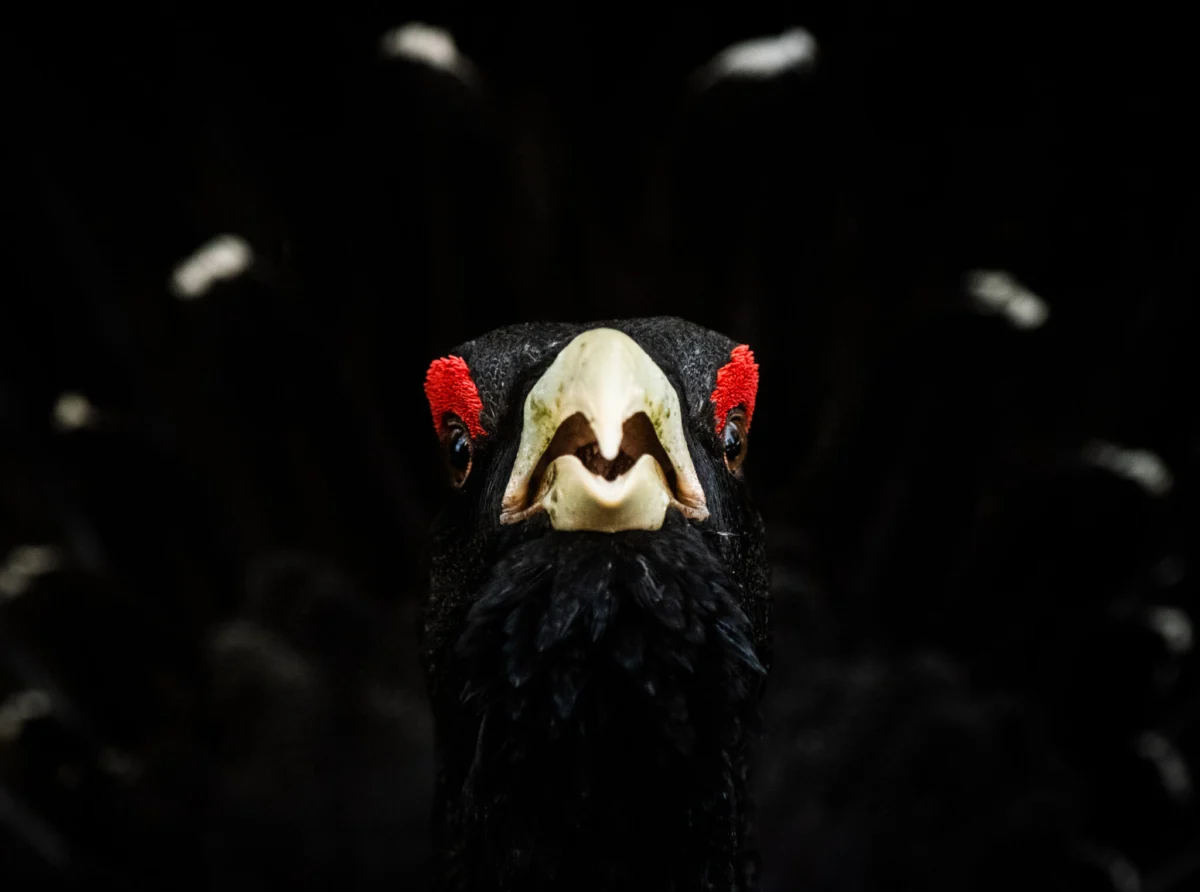
In the dynamic realm of nature photography, a burgeoning philosophy champions the deliberate exploration of technical and compositional extremes to transcend mere representation and instead convey profound emotional narratives and intrinsic impressions. This approach posits that by venturing to the edges of photographic techniques – from ultra-wide to super-telephoto, blackout to whiteout, and conventional to unconventional compositions – artists can strip away distractions, amplify essential elements, and forge a more compelling story within each frame. This perspective challenges traditional paradigms, asserting that the true artistry lies not just in capturing nature’s beauty, but in translating the photographer’s visceral experience of it, seeking order amidst its inherent chaos.

The foundational principle of this photographic ethos is the conviction that nature, often perceived as an overwhelming collection of disparate elements – a dense forest, a migrating herd, the intricate plumage of a bird – can be distilled into powerful visual statements. Photographers adopting this method endeavor to unearth the hidden structures and patterns within this apparent randomness, transforming them into cohesive and emotionally resonant images. This task, while seemingly straightforward, demands a high degree of skill, intuition, and a willingness to push technical boundaries. By consciously seeking the extreme ends of photographic techniques, practitioners aim to tell a stronger story, one that directly communicates their personal emotions and experiences to the viewer, fostering a deeper connection than purely documentary imagery might achieve.

The Evocative Power of Exposure: Crafting Atmosphere
Central to conveying the photographer’s experience is the mastery of atmosphere, a crucial element often overlooked or understated in conventional photography. In the field, human perception is a multi-sensory phenomenon, where sights, sounds, smells, and textures coalesce to form a holistic impression. For still photographers, recreating this rich tapestry of sensory input with only visual cues presents an inherent challenge. It is a common experience for photographers to feel a disconnect between the profound emotions felt during a natural encounter and the resulting photographs, which often fall short of evoking the same intensity. This gap underscores the need for techniques that can artificially enhance and immortalize specific atmospheres and emotions.

One potent method involves working with the extreme ends of exposure: intentionally underexposing to create dark, moody images (known as "blackout") or overexposing for bright, airy scenes ("whiteout"). These techniques are not merely technical adjustments but serve as powerful tools for emotional emphasis. A blackout image can imbue a scene with drama, mystery, and a sense of gravitas, drawing the viewer into a contemplative space. Conversely, a whiteout image often conveys purity, elegance, and serenity, ideal for highlighting the delicate qualities of a subject or its ethereal surroundings. The deliberate manipulation of exposure transforms it from a technical setting into a language of emotion, guiding the viewer toward the specific feelings the photographer encountered. This artistic choice can dramatically alter the narrative, allowing the artist to dictate the emotional tenor of the visual experience. The psychological impact of light and shadow, long recognized in art history, is here harnessed with precision, moving beyond merely ‘correct’ exposure to ‘expressive’ exposure.

Redefining Perspective: The Extreme Lens Spectrum
Just as exposure shapes the emotional atmosphere, perspective dictates the viewer’s relationship with the subject. Focal length, a fundamental tool in a photographer’s arsenal, is paramount in altering the appearance of a subject in relation to its environment. The spectrum from ultra-wide-angle to super-telephoto offers distinct storytelling possibilities, with the impact intensifying as one moves further from standard focal lengths. This deliberate choice of perspective becomes a narrative device, reinforcing the intended message of the image.

Ultra-wide lenses, typically ranging from 14mm to 24mm, immerse the viewer in the scene, emphasizing grand landscapes, expansive skies, and the subject’s place within a vast ecosystem. They can exaggerate proximity, creating a sense of intimacy even in broad scenes, and are particularly effective for environmental portraits where the habitat is as important as the inhabitant. Conversely, super-telephoto lenses, extending from 400mm to well over 1000mm, isolate the subject, compressing backgrounds and foregrounds to create abstract patterns and intense detail. These lenses excel at capturing distant wildlife, revealing intricate textures, and reducing environmental clutter, effectively transforming a distant scene into an intimate portrait. The choice between these extremes profoundly influences how a subject is perceived—whether as an integral part of a sprawling vista or a singular entity commanding attention.

Recent technological advancements have significantly expanded the possibilities for photographers, particularly concerning extra-long focal lengths. The advent of mirrorless camera systems has brought about lighter, more compact, and often more affordable telephoto lenses. Crucially, mirrorless technology, with its enhanced autofocus capabilities and improved sensor performance, allows even mid-range telezoom lenses to be effectively paired with teleconverters while maintaining usable autofocus and good image quality. This democratization of extreme focal lengths has opened new worlds of perspective, making it feasible for a wider range of photographers to experiment with previously inaccessible magnifications. Brands like Sony, Canon (with its R series), and Nikon (with its Z series) have led this innovation, offering high-performance telephoto options that, when combined with 1.4x or 2x teleconverters, can achieve focal lengths of 800mm, 1000mm, or even 1200mm with remarkable clarity and speed. This represents a significant shift from the DSLR era, where such extreme reach typically required prohibitively expensive prime lenses.

This application of extreme focal lengths is particularly powerful when both ends of the spectrum are utilized within a portfolio to construct a comprehensive narrative. A compelling example comes from the seabird island of Hornøya in Norway, an ecological marvel located above the Arctic Circle. Here, a thriving population of European shags returns annually for the breeding season, often amidst harsh conditions where the island remains blanketed in snow. The photographer documented the shags establishing territories, engaging in courtship displays, and battling relentless snowstorms. By employing focal lengths ranging from 24mm for expansive environmental shots to 1200mm for detailed close-ups and creative abstract perspectives, a multifaceted story emerged. The wide-angle shots conveyed the raw, unforgiving beauty of the Arctic environment and the shags’ resilient presence within it, while the super-telephoto images revealed the nuanced expressions, intricate feather details, and dynamic interactions that would otherwise be lost. This comprehensive approach allowed for a rich, immersive portrayal of the species and its habitat, demonstrating the storytelling potential of combining diverse perspectives.

The Alchemy of Movement: Shutter Speed as an Artistic Brush
Photography, at its essence, is the art of freezing moments. However, exploring extreme shutter speeds allows photographers to capture movements in ways the human eye cannot perceive, adding a layer of magic and abstraction to the visual narrative.

Long exposures, especially when combined with Intentional Camera Movement (ICM), unlock a new universe of photographic possibilities. Instead of merely documenting the landscape, colors, and shapes surrounding a subject, ICM transforms the camera into an artist’s brush, allowing the photographer to "paint" the image with structures and tones from the entire scene. By moving the camera during a long exposure, the resulting image becomes a unique, unrepeatable blend of abstraction and reality, creating painterly effects, blurred textures, and a sense of dynamic flow. Each ICM photograph is inherently one-of-a-kind, impossible to replicate precisely due to the unpredictable nature of hand-held movement. This technique demands immense patience and a high tolerance for "failed" images, as success often emerges from a multitude of experiments. However, the rewards—images that evoke mood, motion, and an ethereal quality—are profoundly gratifying, contributing to a growing movement in fine art nature photography that prioritizes expression over pure realism.

Conversely, mirrorless camera technology has also enabled the use of incredibly fast shutter speeds, far beyond the 1/8000th of a second limit common in the DSLR era. Modern mirrorless cameras, equipped with electronic shutters, can achieve speeds of 1/32,000th of a second or even higher. This capability proves invaluable in extremely bright conditions, such as shooting directly into the midday sun or capturing subjects against highly reflective surfaces. Previously, such scenarios often resulted in blown-out highlights or required heavy use of neutral density filters. Now, photographers can freeze ultra-fast motion or reveal intricate details in scenes that appear blinding to the naked eye. This allows for intriguing images that capture the texture of the sun’s corona or the delicate structure of backlit clouds, offering a perspective entirely alien to human vision and adding a unique dimension to high-contrast compositions.

Beyond the Rulebook: The Art of Unconventional Compositions
Composition in photography is often taught through clear, established rules, such as the Rule of Thirds or the Golden Ratio. These guidelines, while excellent for achieving balanced and aesthetically pleasing images, can sometimes inadvertently stifle creativity. The pursuit of extreme expression necessitates a willingness to challenge and even break these conventions.

For photographers seeking to create truly impactful images, composition transcends strict adherence to rules and evolves into an intuitive understanding of how elements within the frame interact. While classic advice, such as leaving space in the direction a subject is facing, often yields harmonious results, rigidly following such directives can lead to missed opportunities for more compelling, dynamic compositions. An unconventional approach might place a subject deliberately off-center, allowing another, perhaps unexpected, element to create balance, tension, or a focal point. This interplay of forms, lines, and negative space can imbue an image with greater power and uniqueness. Training the eye to perceive these nuanced interactions, rather than merely applying a formula, is considered one of the most critical skills for elevating photographic artistry. This approach allows the photographer to craft a visual dialogue that resonates more deeply, creating images that challenge viewer expectations and linger in the mind.

The Imperative of Play: Cultivating Creative Discovery
In a field often governed by intentionality – where every compositional choice, exposure setting, and shutter speed decision is made with a clear purpose – the concept of "creativity for creativity’s sake" offers a vital counterpoint. While a systematic approach yields consistent results, balanced exposures, and predictable outcomes, it can also inadvertently curb artistic exploration and playfulness.

True innovation often springs from moments of unplanned experimentation. Not every powerful photograph can be entirely pre-visualized; the human eye and mind are limited in their ability to predict serendipitous occurrences such as unexpected reflections, ephemeral movements, or unforeseen light interactions. It is precisely these coincidences and random elements that can infuse an image with a missing piece of magic. Embracing a playful, experimental mindset – daring to move the camera when a subject is static, or underexposing when conventional wisdom dictates overexposure – allows for the discovery of new visual effects and techniques. This approach inevitably leads to a significant number of "failed" shots, yet among these discards, moments of "gold" can emerge. Sometimes, this gold takes the form of a spectacular, singular image; more often, it manifests as a new understanding of an effect or a technique that can be further refined and integrated into the photographer’s evolving style.

This philosophy of exploration and experimentation is particularly crucial in nature photography. It encourages photographers to interact with the natural world not just as observers, but as active participants in a creative dialogue. When examining the work of other photographers, what often captivates most are images that defy immediate explanation, prompting questions about their creation. These are often the works of individuals who dared to ignore established rules, employed techniques nobody else had considered, and explored the intricate interplay between the natural world and the camera’s capabilities. Whether through the deliberate blurring of long shutter speeds, the isolating power of extreme focal lengths, or the tension of unconventional compositions, the wellspring for unique and creative images is a blend of playfulness, rigorous experimentation, and an abiding interest in the natural world. Ultimately, curiosity stands as the paramount creative tool for any nature photographer, driving both technical mastery and profound artistic expression.
