
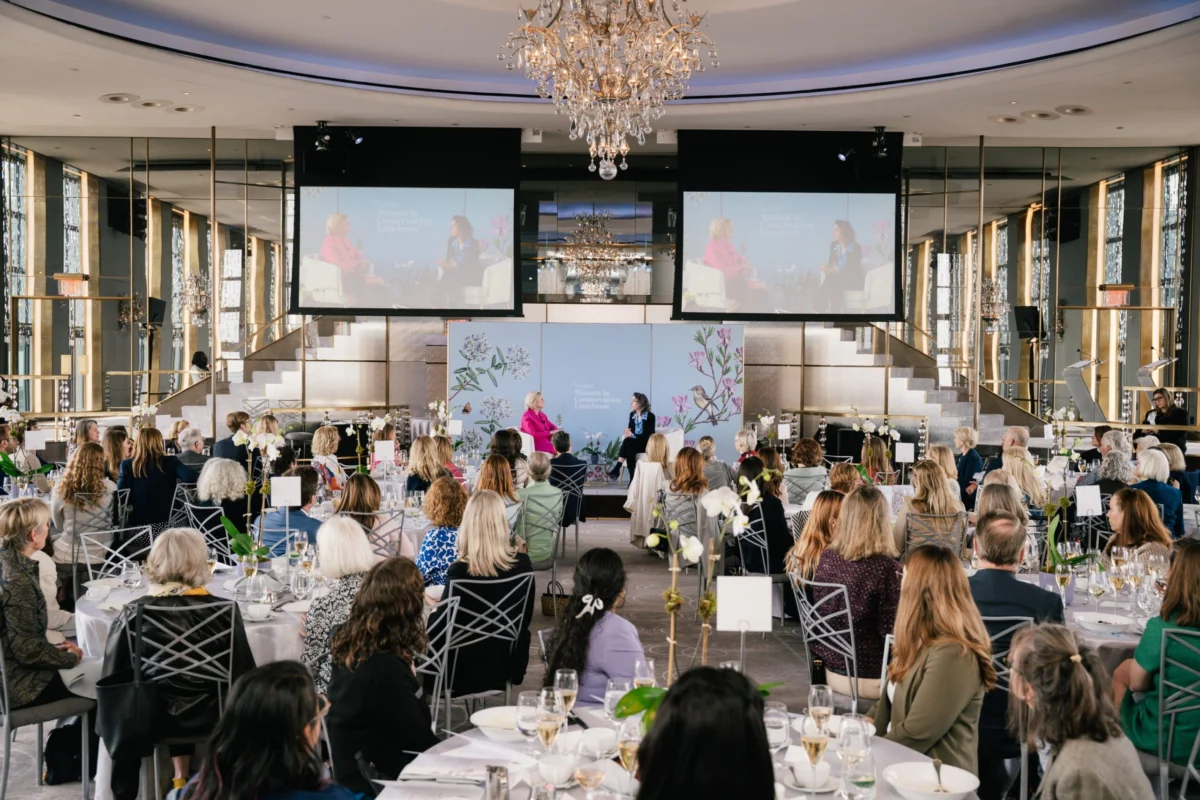
NEW YORK (May 14, 2026) – The National Audubon Society, a leading voice in conservation for over a century, bestowed its esteemed Rachel Carson Award upon environmental journalist and Pulitzer Prize-winning author Elizabeth Kolbert at the annual Women in Conservation Luncheon. The event, held at the iconic Rainbow Room in Manhattan, celebrated Kolbert’s profound and influential work in illuminating the critical issues of climate change and biodiversity loss, echoing the trailblazing spirit of Rachel Carson herself. This recognition underscores the vital role of powerful environmental communication in shaping public understanding and inspiring action at a time of unprecedented ecological challenges.
Honoring a Legacy: The Rachel Carson Award
Established in 2004 by Allison Whipple Rockefeller, the Rachel Carson Award has rapidly become one of the nation’s most prestigious honors for environmentalists. It serves as a living tribute to the marine biologist and author of the seminal work Silent Spring, a book whose meticulous research and compelling narrative in 1962 helped ignite the modern environmental movement by exposing the devastating impact of pesticides like DDT on ecosystems and human health. Carson’s courageous stand against powerful industrial interests, her dedication to scientific accuracy, and her ability to translate complex ecological concepts for a broad audience set a precedent for environmental advocacy that continues to resonate today. The award bearing her name specifically celebrates women who demonstrate exceptional vision and courage in advancing public understanding of environmental challenges and in inspiring future generations to become champions for nature. Over the past two decades, the award has recognized more than 60 remarkable women across various fields, including science, journalism, policymaking, and activism, all of whom embody Carson’s enduring legacy. Notable past recipients include renowned figures such as Jane Fonda, Sigourney Weaver, Isabella Rossellini, Kathy Sullivan, Bette Midler, and Sylvia Earle, each of whom has used their unique platform to advocate for environmental protection and scientific literacy. Their collective contributions have broadened our collective understanding of the natural world and have served as powerful catalysts for careers in sustainability and conservation.
Elizabeth Kolbert: A Voice for a Planet in Peril
Elizabeth Kolbert’s selection for the Rachel Carson Award highlights her extraordinary ability to communicate complex scientific realities with clarity, urgency, and compelling narrative power. Her work, particularly her Pulitzer Prize-winning book The Sixth Extinction: An Unnatural History, has been instrumental in bringing the unfolding biodiversity crisis into mainstream consciousness. In this landmark book, Kolbert meticulously chronicles five previous mass extinction events in Earth’s history and presents a chilling, evidence-based account of a sixth, ongoing extinction event driven by human activity. Her subsequent works, including Under a White Sky: The Nature of the Future, which was named a top ten book of the year by The Washington Post, and her most recent publication, Life on a Little-Known Planet, continue to explore humanity’s profound and often problematic relationship with the natural world, examining both the scale of our impact and the often-desperate measures proposed to mitigate it.
Through her insightful and often sobering investigations, Kolbert has masterfully translated the intricate science of climate change and biodiversity loss into accessible narratives that resonate deeply with readers. Her long-standing role as a staff writer for The New Yorker has provided her with a powerful platform to explore these critical issues, earning her two National Magazine Awards and the Blake-Dodd Prize from the American Academy of Arts and Letters. Her reporting often takes her to the front lines of environmental change, from melting glaciers to vanishing rainforests, allowing her to provide firsthand accounts that are both rigorously factual and profoundly human. Her prose builds directly on the legacy of Rachel Carson, employing scientific rigor and narrative artistry to bring clarity and urgency to the most pressing environmental challenges of our time, thereby inspiring a new generation of leaders and concerned citizens.
The Women in Conservation Luncheon: A Gathering of Champions
The 2026 Women in Conservation Luncheon served as a powerful testament to the National Audubon Society’s commitment to fostering and celebrating female leadership in the environmental sector. Dr. Elizabeth Gray, CEO of the National Audubon Society, articulated the event’s profound significance, stating, "The Women in Conservation Luncheon brings together a community committed to advancing trailblazing, courageous women who are advancing conservation action and awareness through their work." Dr. Gray emphasized the direct connection between the award and Carson’s enduring influence, adding, "Through the Rachel Carson Award, we recognize individuals like Elizabeth Kolbert, whose work has shaped public understanding of the most pressing environmental challenges facing our world. Her writing builds on the legacy of Rachel Carson, bringing clarity and urgency to these challenges while helping inspire the next generation of leaders."
The atmosphere at the Rainbow Room was one of collective purpose and shared commitment, as environmental advocates, philanthropists, scientists, and media personalities gathered to honor Kolbert and support Audubon’s critical programs. The event was expertly emceed by Anne Thompson, NBC News’ Chief Environmental Affairs Correspondent, who brought her extensive journalistic experience and passion for environmental issues to the stage. The luncheon is not merely a celebratory occasion but a crucial fundraising initiative. Proceeds from the event directly support Audubon’s vital conservation efforts, including the Long Island Sound and Coastal Stewardship Program and the Audubon Women in Conservation Internship. These programs are instrumental in protecting critical habitats and nurturing the next generation of conservation professionals. The Long Island Sound program, for instance, focuses on restoring coastal ecosystems, protecting bird populations, and engaging local communities in stewardship, while the internship program provides invaluable hands-on experience and mentorship to aspiring women in conservation, empowering them to become future leaders in the field.
Upon receiving the award, Elizabeth Kolbert expressed her deep gratitude, remarking, "I’m tremendously honored to receive the Rachel Carson Award from the National Audubon Society. This is a critical time for all living things and Audubon’s work could not be more important than it is right now." Her statement underscored the immense urgency of the environmental crises she so eloquently covers, reinforcing the idea that the work of organizations like Audubon, and the voices they champion, are more vital than ever before. Attendees, including numerous young women aspiring to careers in environmental science and advocacy, responded to Kolbert’s words with palpable enthusiasm, recognizing the profound impact of her work and the inspiration she provides. The event served as a powerful reminder that while environmental challenges are daunting, the collective will and intellect of dedicated individuals can drive meaningful change.
The Power of Environmental Storytelling and its Broader Impact
The recognition of Elizabeth Kolbert with the Rachel Carson Award highlights the indispensable role of environmental journalism in the broader conservation movement. In an era marked by information overload and complex scientific debates, skilled communicators like Kolbert are crucial for translating scientific findings into accessible, engaging, and actionable narratives. Her work serves as a powerful bridge between the scientific community and the general public, fostering a deeper understanding of issues like anthropogenic climate change, species extinction, and ecosystem degradation. Without such compelling storytelling, the urgency of these challenges might remain confined to academic circles, failing to galvanize the public and political will necessary for effective solutions.
The implications of honoring such a voice extend beyond mere recognition. It sends a clear message about the value placed on accurate, impactful environmental reporting. This, in turn, can inspire more journalists to specialize in environmental issues, encouraging deeper investigative work and fostering a more informed public discourse. Furthermore, by linking Kolbert’s work to Rachel Carson’s legacy, Audubon reinforces a tradition of brave, science-driven advocacy that challenges conventional wisdom and pushes for systemic change. This historical context is particularly relevant today, as scientific consensus on climate change and biodiversity loss faces ongoing scrutiny and, at times, active disinformation campaigns.
Supporting organizations like the National Audubon Society, through events like the Women in Conservation Luncheon, directly contributes to a robust ecosystem of environmental protection. The funds generated are not just for operational costs but for tangible programs that make a difference on the ground and in policy. The investment in the Audubon Women in Conservation Internship, for example, is a direct investment in human capital, ensuring a pipeline of diverse, talented women are equipped to tackle future environmental challenges. This strategic focus on mentorship and professional development is critical for building a resilient and effective conservation workforce capable of addressing issues from local habitat restoration to global climate policy.
Audubon’s Enduring Commitment to Conservation
The National Audubon Society, with its 120-year history, stands as a pillar of science-based, community-driven conservation. Dedicated to protecting birds and the vital places they need, today and for future generations, Audubon operates on the foundational understanding that birds serve as powerful indicators of our planet’s health. They are, in essence, sentinels whose changing populations and habitats warn us of broader environmental shifts and inspire urgent action. The organization’s work spans the entire Western Hemisphere, recognizing that ecological challenges transcend national borders and require collaborative, international solutions.
Audubon’s approach is characterized by its collaborative, nonpartisan ethos, working across diverse habitats, political spectra, and community lines to achieve meaningful and lasting conservation outcomes. With a robust network of over 900 staff and a formidable base of more than 2.5 million supporters, Audubon is a dynamic and ever-growing force. Its initiatives range from direct habitat protection and restoration to advocacy for sound environmental policies and extensive public education programs. The organization’s commitment extends beyond birds to the intricate web of life that sustains all species, including humans. By focusing on what is good for birds, Audubon inherently promotes practices that are beneficial for the entire planet, striving to ensure a better world for both wildlife and people for generations to come. This overarching mission aligns perfectly with the spirit of the Rachel Carson Award and the urgent message conveyed by recipients like Elizabeth Kolbert, emphasizing the interconnectedness of all life and the shared responsibility to protect it.
About Elizabeth Kolbert
Elizabeth Kolbert is a celebrated author and staff writer for The New Yorker, widely recognized for her insightful and often stark explorations of humanity’s impact on the natural world. Her seminal work, The Sixth Extinction: An Unnatural History, earned her the Pulitzer Prize for General Nonfiction in 2015, critically examining the ongoing biodiversity crisis. Her other acclaimed books include Under a White Sky: The Nature of the Future, which was selected as a top ten book of the year by The Washington Post, and Life on a Little-Known Planet, her most recent publication. In addition to her literary awards, Kolbert has received two National Magazine Awards and the Blake-Dodd Prize from the American Academy of Arts and Letters for her impactful journalism. She resides in Williamstown, Massachusetts, with her husband and children, continuing her vital work in bringing environmental issues to the forefront of public consciousness.
About the National Audubon Society
The National Audubon Society is a premier nonprofit conservation organization, boasting a 120-year legacy of science-based, community-driven impact. Its core mission is the protection of birds and the essential habitats they require, both now and in the future. Recognizing birds as critical indicators of planetary health, Audubon leverages their status as sentinels to inform and inspire action on environmental change. The organization’s extensive work spans the entire Western Hemisphere, driven by the conviction that beneficial outcomes for birds inevitably lead to positive impacts for the planet as a whole. Through a collaborative and nonpartisan methodology, engaging across diverse habitats, international borders, and political divides, Audubon is dedicated to achieving significant and enduring conservation results. With a dedicated team of over 900 staff members and a vast network of more than 2.5 million supporters, Audubon stands as a powerful and continuously expanding force, committed to safeguarding a healthier planet for both avian populations and human communities for generations to come. Further information can be found at www.audubon.org and on their Facebook and Instagram platforms @audubonsociety.
