
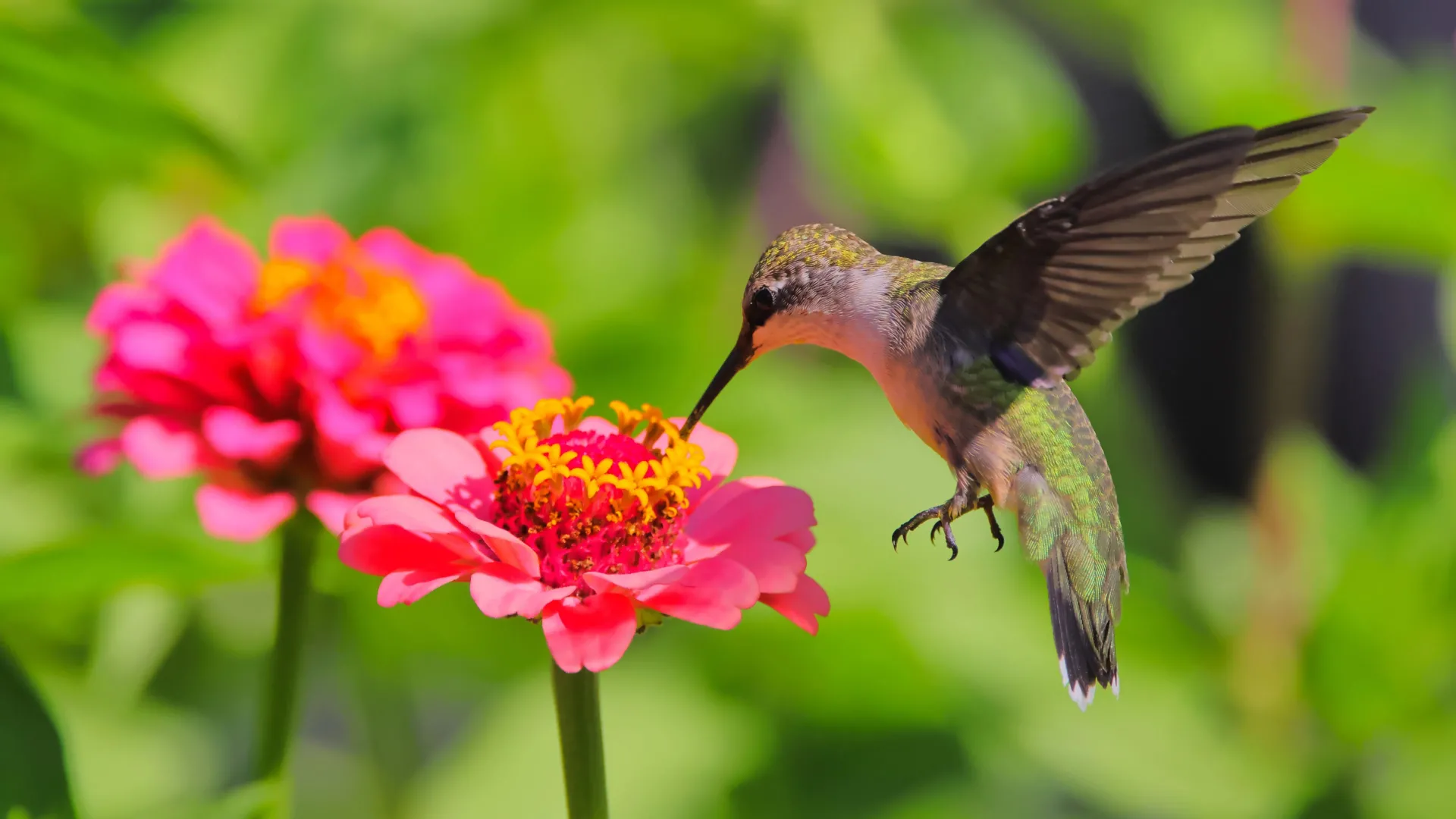
As the natural world awakens each day, a silent, intricate dance unfolds between flowering plants and their essential pollinators. Bees, hummingbirds, and a myriad of other creatures flit from bloom to bloom, seeking the sweet sustenance of nectar. This vital exchange, critical for plant reproduction and ecosystem health, has long been understood as a simple transaction of sugar for service. However, groundbreaking research from the University of California, Berkeley, has unveiled an unexpected and pervasive element within this dietary staple: small but significant amounts of alcohol. This discovery fundamentally alters our understanding of pollinator diets and raises intriguing questions about the evolutionary adaptations and behavioral ecology of these crucial species.
The Science Behind the Buzz: A Deep Dive into Nectar’s Hidden Content
The initial findings, published on March 25 in Royal Society Open Science, detail the first large-scale survey of alcohol in floral nectar. Biologists, led by doctoral student Aleksey Maro and postdoctoral fellow Ammon Corl, under the guidance of UC Berkeley professor Robert Dudley, detected ethanol in at least one sample from 26 of the 29 plant species examined. While most nectar samples contained only trace amounts, a notable exception reached an ethanol concentration of 0.056% by weight, which translates to roughly 1/10 proof. To put this into perspective for a human audience, a typical alcoholic beverage might range from 5% (beer) to 40% (spirits) alcohol by volume. Thus, 0.056% appears minimal, yet its ubiquity and chronic consumption by pollinators make it a significant dietary component.
More Than Just Sugar: The Nectar Matrix
Nectar is far more than just a sugary liquid; it’s a complex cocktail of carbohydrates, amino acids, minerals, vitamins, and secondary compounds. These secondary compounds, such as nicotine and caffeine, have long been known to influence pollinator behavior, sometimes acting as deterrents or, paradoxically, as rewards that subtly manipulate foraging patterns. The addition of ethanol to this intricate matrix introduces another layer of chemical complexity and potential influence. The primary sugars found in nectar — sucrose, glucose, and fructose — are readily fermentable, providing an ideal substrate for microbial activity.
The Yeast Connection: Natural Fermentation
The presence of ethanol in nectar is not a deliberate botanical production but rather a byproduct of microbial activity. Yeasts, ubiquitous in natural environments, are particularly adept at fermenting sugars into ethanol and carbon dioxide in anaerobic conditions. These microscopic organisms are commonly found on the surfaces of flowers, fruits, and leaves, constantly interacting with their environment. As nectar sits within the floral structure, exposed to yeast spores and ambient conditions, fermentation can occur. Factors such as temperature, humidity, and the sugar concentration of the nectar itself can influence the rate and extent of ethanol production. Warmer temperatures, for instance, tend to accelerate yeast activity, potentially leading to higher alcohol levels in certain climates or during specific seasons. This natural process ensures that dietary alcohol is a consistent, albeit low-level, feature of many floral ecosystems.
Quantifying the ‘Spirits’: From Trace to Trivial
To accurately measure the ethanol levels, the Berkeley team employed an enzymatic assay, a biochemical method that uses specific enzymes to detect and quantify target substances. This precise analytical technique allowed them to identify even minute concentrations of ethanol across a broad range of plant species, confirming its widespread presence. The fact that ethanol was found in such a high percentage of species underscores its commonality in the natural diets of pollinators. While a 0.056% concentration might seem negligible at first glance, the sheer volume of nectar consumed by some pollinators daily means that even these low levels translate into a substantial cumulative intake.
Pollinators’ Daily ‘Drink’: Understanding Consumption Levels
While the percentage of alcohol in nectar may be low, the consumption habits of many pollinators mean their daily intake is far from insignificant. Nectar is not merely a snack; it is the primary energy source for a vast number of species, dictating their daily caloric needs and activity levels.
A Hummingbird’s Daily Tipple
Consider the hummingbird, a creature renowned for its astonishing metabolism and high energy demands. Hummingbirds, such as the Anna’s hummingbird (Calypte anna) commonly found along the Pacific coast, drink an astonishing 50% to 150% of their body weight in nectar each day to fuel their rapid wingbeats and active lifestyles. Based on these voracious feeding habits, the UC Berkeley researchers estimated that an Anna’s hummingbird consumes approximately 0.2 grams of ethanol per kilogram of body weight daily. This figure, surprisingly, is comparable to the amount of ethanol a human might consume from a single standard alcoholic drink. A standard drink for a human is often defined as containing about 14 grams of pure alcohol, found in 12 ounces of regular beer, 5 ounces of wine, or 1.5 ounces of distilled spirits. For an average human weighing 70 kg, one standard drink would equate to roughly 0.2 grams of ethanol per kilogram of body weight. The parallel between a tiny hummingbird’s daily intake and a human’s occasional drink highlights the biological significance of this seemingly minor discovery.
A Spectrum of Intake: Comparing Across the Animal Kingdom
To provide further context, the research team extended their analysis to compare the estimated daily alcohol intake of nectar-feeding birds with other animals known to encounter ethanol in their diets. They focused on two hummingbird species and three species of sunbirds, which occupy a similar ecological niche in Africa, feeding on plants like honeybush (Melianthus major). The results were illuminating.
The European honeybee, a ubiquitous pollinator, registered the lowest intake at approximately 0.05 g/kg/day. At the other end of the spectrum was the pen-tailed tree shrew (Ptilocercus lowii), an arboreal mammal native to Southeast Asia, which is famous for its nearly constant consumption of fermented nectar from the bertam palm, reaching an intake of up to 1.4 g/kg/day. Fruit-eating chimpanzees, known to consume fermented fruits, also formed part of the comparison. Humans consuming one standard drink per day averaged around 0.14 g/kg/day. Nectar-feeding birds, with an estimated intake of 0.19 to 0.27 g/kg/day when feeding on native flowers, fell squarely within this comparative range, demonstrating that their exposure to dietary ethanol is a natural and consistent part of their lives. Interestingly, feeder experiments suggested that Anna’s hummingbirds might ingest even more alcohol from fermented sugar water in artificial feeders (0.30 g/kg/day) than from natural nectar, perhaps due to higher sugar concentrations or greater fermentation in these human-provided sources.
Beyond Intoxication: Behavioral and Physiological Insights
Despite this regular and, for some species, substantial intake, bees and birds do not exhibit clear signs of intoxication in the wild. This observation points towards remarkable physiological and behavioral adaptations to chronic, low-level alcohol consumption.
Early Clues: Observing Pollinator Preferences
The UC Berkeley team’s current findings build upon a decade of prior research into pollinator alcohol consumption. Earlier experiments conducted at a feeder outside Professor Robert Dudley’s office provided critical insights into hummingbird preferences. These studies showed that Anna’s hummingbirds were largely indifferent to low alcohol concentrations (below 1% by volume) in sugar water. However, when the concentration reached 2%, their visits to the feeder dropped by approximately half. This behavioral response suggests that hummingbirds possess a mechanism for metering their intake, perhaps detecting higher alcohol levels and actively avoiding them. This avoidance threshold (around 1%) aligns with the observation that most natural nectar samples contained only trace amounts, implying that wild pollinators are rarely exposed to intoxicating levels. "Somehow they are metering their intake," Dudley noted, "so maybe zero to 1% is a more likely concentration that they would find in the wild than anything higher."
The Metabolic Signature: Processing Alcohol
Further substantiating the notion of chronic alcohol exposure and processing, another study led by former graduate student Cynthia Wang-Claypool revealed that feathers, including those of Anna’s hummingbirds, contain ethyl glucuronide. Ethyl glucuronide is a direct byproduct of ethanol metabolism, serving as a reliable biomarker for alcohol ingestion and processing in many species, including mammals. Its presence in hummingbird feathers unequivocally indicates that these birds not only ingest alcohol but also metabolize it in a manner similar to humans and other mammals. This discovery was a pivotal piece of the puzzle, bridging the gap between observed ethanol in nectar and the physiological reality of the birds’ bodies. As Ammon Corl summarized, "The laboratory experiment was showing that yes, they will drink ethanol in their nectar, though they have some aversion to it if it gets too high. The feathers are saying that, yes, they will metabolize it. And then this study is saying that ethanol is actually pretty widespread in the nectar they consume."
The Question of "Buzz": Subtle Effects and Adaptation
While overt intoxication is rare, the researchers are exploring the possibility of more subtle effects. Nectar is known to contain other compounds like nicotine and caffeine, which influence animal behavior without necessarily causing intoxication. Ethanol could similarly have nuanced impacts on pollinator behavior, potentially affecting foraging efficiency, communication, navigation, or even mate selection. Doctoral student Aleksey Maro emphasized this point: "Hummingbirds are like little furnaces. They burn through everything really quick, so you don’t expect anything to accumulate in their bloodstream. But we don’t know what kind of signaling or appetitive properties the alcohol has. There are other things that the ethanol could be doing aside from creating a buzz, like with humans." Professor Dudley echoed this sentiment, suggesting potential "other kinds of effects specific to the foraging biology of the species in question that could be beneficial." The rapid metabolism of ethanol by these high-energy animals likely prevents accumulation to intoxicating levels, but the chronic presence of even small amounts could still trigger physiological responses or influence decision-making processes.
Expert Perspectives: Unraveling the ‘Why’ and ‘How’
The UC Berkeley team’s findings have opened a new chapter in the study of pollinator ecology and evolutionary biology. The researchers involved express a mixture of surprise, curiosity, and a drive for deeper investigation.
Researchers Weigh In: A New Frontier in Ecological Study
Professor Robert Dudley, a leading expert in biomechanics and evolutionary physiology, highlighted the pervasive nature of this exposure. "They’re burning it so fast, I’m guessing that they probably aren’t suffering inebriating effects. But it may also have other consequences for their behavior." This perspective underscores the complexity of understanding ecological interactions, where seemingly minor dietary components can have far-reaching, yet subtle, impacts. The collaborative effort involving integrative biology professors Rauri Bowie and Jimmy McGuire, alongside Maro, Corl, and Dudley, reflects the interdisciplinary nature of this research, drawing on expertise from various fields within biology. The scientific community’s reaction, while not explicitly quoted, can be inferred as one of keen interest, as this research challenges previous assumptions about pollinator diets and opens numerous avenues for future exploration into behavioral ecology and evolutionary adaptation. The consistency of these findings across multiple studies and species suggests that dietary alcohol is not an anomaly but a fundamental aspect of many ecological systems.
Broader Implications: Evolution, Ecology, and Our Understanding of Nature
This research is part of a broader five-year National Science Foundation project, which aims to collect extensive genetic data from hummingbirds and sunbirds. The overarching goal is to understand how these species adapt to diverse environments and food sources, including high altitudes, sugar-rich diets, and now, frequently fermented nectar. The discovery of widespread alcohol consumption adds a crucial dimension to this ongoing investigation.
Evolutionary Pathways: Adapting to Dietary Alcohol
The consistent exposure to dietary ethanol over evolutionary timescales likely led to the development of specific physiological adaptations in pollinators. Just as fruit-eating mammals, including human ancestors and the pen-tailed tree shrew, evolved more efficient alcohol dehydrogenase (ADH) enzymes to metabolize ethanol, pollinators may have developed similar or alternative detoxification pathways. This suggests that the ability to process and tolerate alcohol is a widespread evolutionary trait, driven by its natural occurrence in many food sources. "These studies suggest that there may be a broad range of physiological adaptations across the animal kingdom to the ubiquity of dietary ethanol," Dudley stated, "and that the responses we see in humans may not be representative of all primates or of all animals generally." This challenges anthropocentric views of alcohol metabolism and toxicity, pushing scientists to explore the diverse ways life on Earth has adapted to this common chemical.
Ecological Ripple Effects: Unseen Influences on Behavior
The potential behavioral effects of chronic, low-level alcohol intake, even without overt intoxication, are a critical area for future research. Could ethanol subtly alter a pollinator’s flight patterns, its ability to locate flowers, its memory for profitable foraging sites, or its interactions with other pollinators and predators? For social insects like bees, might it affect communication via pheromones or their waggle dance? Even minor changes in these behaviors could have significant ecological ripple effects, impacting plant reproduction rates and the overall health of ecosystems. Furthermore, environmental changes, such as rising global temperatures, could lead to increased rates of fermentation in nectar, potentially elevating alcohol levels and presenting new challenges or opportunities for pollinator populations. Understanding these complex interactions is crucial for predicting how pollinator communities might respond to a changing climate.
The Road Ahead: New Avenues for Research
The UC Berkeley study serves as a powerful catalyst for new scientific inquiry. Future research will likely delve into the specific enzymes involved in ethanol metabolism in different pollinator species, the genetic basis for alcohol tolerance, and the precise behavioral and physiological impacts of chronic low-level alcohol consumption. Scientists will also explore whether certain plants produce nectar that is more prone to fermentation, and if there are ecological benefits or drawbacks for plants whose nectar contains ethanol. "Maybe there are other physiological detoxification pathways or other kinds of nutritional effects of ethanol for animals that are consuming it every day of their lives," Dudley pondered. "That’s the interesting thing — this is chronic through the course of the day, but that’s a lifetime exposure post-weaning. It just means that the comparative biology of ethanol ingestion deserves further study."
In conclusion, the discovery of widespread alcohol in floral nectar redefines our understanding of pollinator diets and the intricate chemical ecology of flowering plants. Far from a simple sugary treat, nectar is a complex brew, and ethanol is a consistent, albeit low-level, ingredient. This revelation opens exciting avenues for exploring the evolutionary adaptations that have allowed pollinators to thrive in an environment where a daily ‘drink’ is a fundamental part of their existence, profoundly impacting our appreciation for the subtle yet profound mechanisms that govern life in the natural world.
