
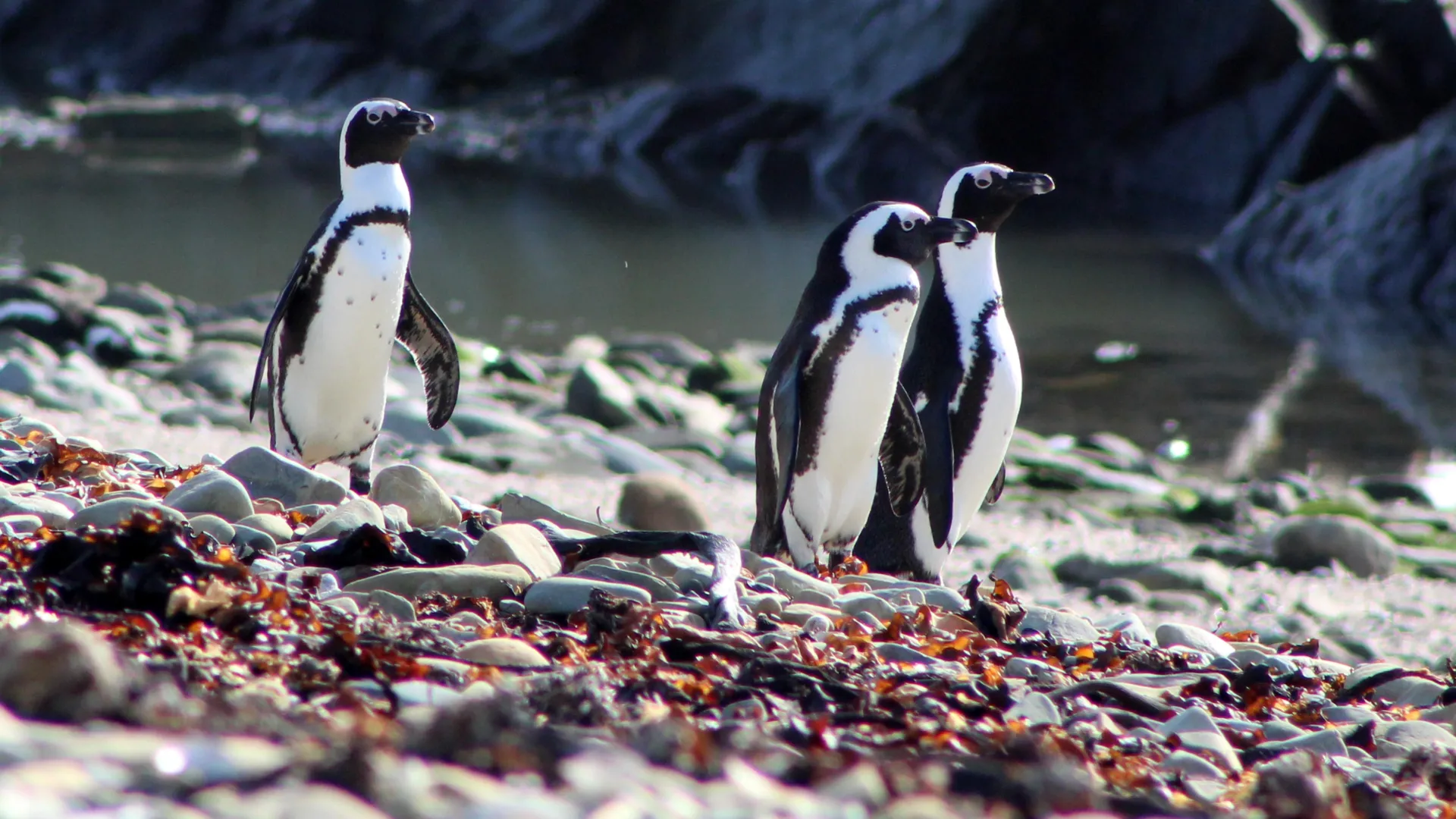
Published on November 17 in the Journal of Applied Ecology, the seminal research introduces a novel metric termed "overlap intensity." This innovative tool moves beyond mere spatial coincidence, quantitatively assessing not only where penguins and fishing vessels share critical marine space but, crucially, how many individual penguins are directly influenced by these interactions. The findings underscore the escalating crisis faced by African penguins and provide a robust scientific foundation for more adaptive and effective conservation strategies.
The Plight of the African Penguin: A Species on the Brink
The African penguin, an iconic seabird endemic to the coastlines and islands of southern Africa, is confronting an existential threat. Once numbering in the millions at the turn of the 20th century, its population has plummeted by an alarming nearly 80% over the past three decades. From an estimated 141,000 breeding pairs in 1956, the population dwindled to just over 10,000 pairs by 2010, leading to its reclassification from Vulnerable to Endangered on the IUCN Red List. By 2021, the numbers were even starker, with only approximately 10,400 breeding pairs remaining globally, solidifying its Critically Endangered status. This precipitous decline places the species just one step away from extinction in the wild.
A major driver of this catastrophic decline is the intensifying competition with local commercial fisheries for essential prey species, primarily sardines and anchovies. These small pelagic fish form the cornerstone of the African penguin’s diet, providing the high-energy sustenance vital for adult survival, successful breeding, and the rearing of healthy chicks. The fisheries targeting these species predominantly employ purse-seine nets, an extremely efficient method designed to encircle and capture entire schools of fish. While economically significant for coastal communities, the efficiency of this gear can lead to localized depletion of fish stocks, directly impacting the foraging success of marine predators like penguins.
Dr. Jacqueline Glencross, lead author of the study and a researcher at the Scottish Oceans Institute at the University of St Andrews, articulated the urgent motivation behind the research. "Our aim was to develop a more precise and comprehensive method for evaluating the potential impact on penguin populations when fishing activities occur in close proximity," she stated. "It’s not enough to simply know where overlap happens; we need to understand the scale of that impact on the birds themselves."
Unveiling Overlap Intensity: A New Scientific Metric
The research team, comprising scientists from the University of St Andrews, the University of Exeter, the South African Department of Forestry, Fisheries and the Environment (DFFE), and BirdLife South Africa, meticulously analyzed tracking information gathered from penguins nesting on Robben and Dassen Islands. These islands represent two of the most significant and historically robust breeding colonies for African penguins. Using advanced GPS loggers temporarily affixed to adult penguins, researchers collected vast datasets on foraging movements, ranges, and durations. This data was then cross-referenced with vessel monitoring system (VMS) data from commercial fishing fleets operating in the same waters.
The newly developed "overlap intensity" metric goes beyond traditional spatial analysis by incorporating the number of individual penguins present within an overlapping zone, alongside the frequency and duration of these shared encounters. This allows for a more accurate assessment of the cumulative pressure exerted on the penguin population. The analysis revealed a stark and concerning trend: a dramatic increase in overlap intensity during years characterized by low fish biomass.
For instance, in 2016, a year widely acknowledged for its exceptionally low abundance of sardine and anchovy stocks off the South African coast, approximately 20% of the tracked penguin population was observed foraging in the exact same regions as active commercial fishing vessels. This represents a five-fold increase compared to years with more robust fish stocks, where the figure dropped significantly to around 4%. These figures are not merely statistical anomalies; they represent a direct measure of heightened competition for a dwindling resource.
The implications of this intensified competition are particularly dire during critical life stages, such as chick-rearing. During this period, adult penguins face immense energetic demands, needing to undertake frequent and successful foraging trips to feed their rapidly growing young. Any increased difficulty in finding food, whether due to scarcity or competition, can directly translate into reduced chick survival rates, further exacerbating the species’ decline. The study highlights that when prey is limited, the efficiency of foraging becomes paramount, and the presence of highly effective fishing operations directly compromises this efficiency.
The Benguela Upwelling System and Prey Dynamics
To fully grasp the context of these findings, it is crucial to understand the ecological dynamics of the Benguela Upwelling System. This highly productive marine ecosystem, stretching along the southwestern coast of Africa, is one of the world’s major upwelling systems. Nutrient-rich cold water from the deep ocean rises to the surface, fueling massive blooms of phytoplankton and zooplankton, which in turn support vast populations of pelagic fish like sardines and anchovies. This abundance makes the Benguela system a biodiversity hotspot and a critical foraging ground for numerous marine predators, including seabirds, seals, and whales.
However, the abundance of small pelagic fish is not constant. It naturally fluctuates due to a complex interplay of oceanographic factors, including El Niño-Southern Oscillation (ENSO) events, localized upwelling strength, and sea surface temperatures. These natural cycles mean that years of high fish biomass are often interspersed with years of scarcity. It is precisely during these periods of natural scarcity that the additional pressure from commercial fishing becomes most acutely felt by marine predators. When fish stocks are naturally low, the localized depletion caused by purse-seine nets can push penguins beyond their energetic limits, forcing them to travel further, dive deeper, or spend more time foraging, all of which come at a significant energetic cost.
The South African small pelagic fishery is a multi-million-rand industry, supporting thousands of livelihoods in coastal towns. Balancing the economic needs of this industry with the imperative of conserving a critically endangered species presents a formidable challenge for governmental bodies like the DFFE. The study’s findings provide undeniable evidence that this balance is currently skewed, particularly in periods of environmental stress for the penguins.
A Timeline of Conservation Efforts and Legal Intervention
The escalating crisis of the African penguin has not gone unnoticed by conservationists, leading to a prolonged period of advocacy and, more recently, significant legal action.
- Early 2000s: Growing scientific consensus highlights the severe decline of African penguins, with concerns increasingly voiced about the impact of fishing.
- 2010: The African penguin is reclassified from Vulnerable to Endangered on the IUCN Red List, a stark warning of its deteriorating status.
- Late 2010s: Conservation organizations, including BirdLife South Africa and the Southern African Foundation for the Conservation of Coastal Birds (SANCCOB), intensify calls for more stringent fishery management measures, particularly fishing closures around key breeding colonies. Scientific studies consistently demonstrate the benefits of such closures for penguin foraging success and breeding outcomes.
- 2020-2022: A series of experimental fishing closures are implemented by the DFFE around several penguin colonies. However, the effectiveness and scope of these closures are met with criticism from conservation groups, who argue they are insufficient in size, duration, and strategic placement to offer meaningful protection.
- Early 2023: The lack of robust and biologically meaningful fishing restrictions near breeding sites culminates in a significant legal challenge. Conservation organizations initiate a high court case in South Africa, arguing that the DFFE’s management of the pelagic fishery failed to adequately protect a Critically Endangered species.
- Mid-2023: Following intensive mediation and negotiation, a landmark high court agreement is reached between conservation organizations, representatives from the fishing industry, and the DFFE. This agreement formally acknowledges the urgent need for more effective fishery closures around penguin colonies.
- Late 2023: In response to the court agreement and the mounting scientific evidence, the South African government, through the DFFE, reinstates and revises no-fishing zones near Robben Island and other primary colonies. These new zones are designed to be "biologically meaningful," implying larger areas, strategic placement based on penguin foraging patterns, and potentially dynamic adjustments based on real-time ecological data. The current study, published shortly after these legal developments, provides critical scientific validation for these policy shifts.
Official Responses and Stakeholder Reactions
The publication of this study and the recent legal developments have elicited varied but generally constructive responses from key stakeholders.
Dr. Jacqueline Glencross emphasized the direct relevance of her team’s research to the recent policy changes: "This research unequivocally highlights why those closures are not just beneficial, but absolutely necessary for the survival of the African penguin. Our data show that previously unprotected areas with high overlap intensity were precisely where the penguins faced the most significant risks from competition with fisheries."
The South African Department of Forestry, Fisheries and the Environment (DFFE) has acknowledged the importance of scientific data in guiding management decisions. While not issuing a direct statement on this specific study, a DFFE spokesperson, speaking on the broader issue of penguin conservation and fishery management, would likely reiterate the department’s commitment to implementing an ecosystem approach to fisheries management. This approach seeks to balance the socio-economic importance of the fishing industry with the ecological imperatives of conservation. The reinstatement of the revised no-fishing zones demonstrates a tangible response to scientific and legal pressure, signifying a governmental recognition of the need for enhanced protection.
Conservation organizations, such as BirdLife South Africa, have cautiously welcomed the study’s findings and the recent court-mandated closures. Dr. Alistair McInnes, Seabird Conservation Manager at BirdLife South Africa, while not directly quoted on this study, has previously stated the importance of robust scientific evidence. He would likely emphasize that "this research provides critical, granular detail that validates years of advocacy. It reinforces the urgent need for dynamic management strategies that adapt to the real-time needs of a struggling species, especially during periods of prey scarcity." SANCCOB, focused on seabird rehabilitation, would likely stress that prevention through effective fishery management is far more impactful than reactive interventions.
Representatives from the fishing industry, who were party to the high court agreement, have expressed a willingness to collaborate on sustainable solutions. While concerned about the economic implications of closures, industry leaders have acknowledged the long-term imperative of ecosystem health. A representative might state, "We understand the critical situation of the African penguin and are committed to working with scientists and government to find sustainable fishing practices that ensure both our livelihoods and the health of the marine ecosystem. Studies like this provide the data we need to make informed decisions." This collaborative spirit, albeit borne out of legal necessity, is a crucial step forward.
Broader Impact and Implications: A Blueprint for Ecosystem-Based Management
The "overlap intensity" metric developed by the St Andrews team represents a significant advancement in conservation science. It provides a powerful, quantifiable tool that can inform and guide ecosystem-based fishery management (EBFM). EBFM is a holistic approach that considers the entire ecosystem – including habitats, predator-prey relationships, and the impacts of human activities – rather than focusing solely on the target fish species. By precisely measuring the ecological risk to a vulnerable predator, this metric allows managers to make more informed decisions about fishing quotas, spatial closures, and temporal restrictions.
Furthermore, the findings strongly support the development and implementation of dynamic marine protected areas (MPAs). Traditional MPAs are often fixed in location and size, which can be less effective in highly variable marine environments where prey populations and predator movements fluctuate significantly. Dynamic MPAs, conversely, can adapt to real-time shifts in predator behavior, prey distribution, and oceanographic conditions. For example, if satellite data indicate a sudden decline in sardine biomass in a particular area, or if penguin tracking data show increased foraging effort in a specific zone, a dynamic MPA could be temporarily expanded or shifted to provide immediate protection. This study provides the scientific underpinning for such adaptive management, demonstrating that static measures may not be sufficient to protect mobile predators from highly efficient, mobile fishing fleets.
The methodology employed in this study holds significant promise for application beyond the African penguin. Predator-prey conflict, exacerbated by commercial fishing, is a global issue affecting numerous marine species, from other seabirds and marine mammals to sharks and turtles. By adapting the "overlap intensity" metric, conservationists and fishery managers in other regions facing similar challenges could gain a more nuanced understanding of ecological risks and develop targeted, science-backed interventions. This research could serve as a blueprint for better coexistence between human resource extraction and biodiversity conservation worldwide.
The ongoing challenge remains balancing the short-term economic gains derived from fishing with the long-term ecological sustainability of marine ecosystems and the preservation of biodiversity. The African penguin’s struggle is a stark reminder that unchecked exploitation, even of seemingly abundant resources, can have cascading and devastating effects on vulnerable species. The scientific rigor of the St Andrews study, coupled with the recent legal and policy shifts in South Africa, offers a glimmer of hope that a more sustainable path is possible. However, the ultimate success will depend on continuous monitoring, adaptive management, and the unwavering commitment of all stakeholders to prioritize the survival of this critically endangered species. Future research will need to rigorously assess the effectiveness of the newly implemented closures and continue to monitor both penguin populations and fish stock dynamics in a rapidly changing ocean environment.
