
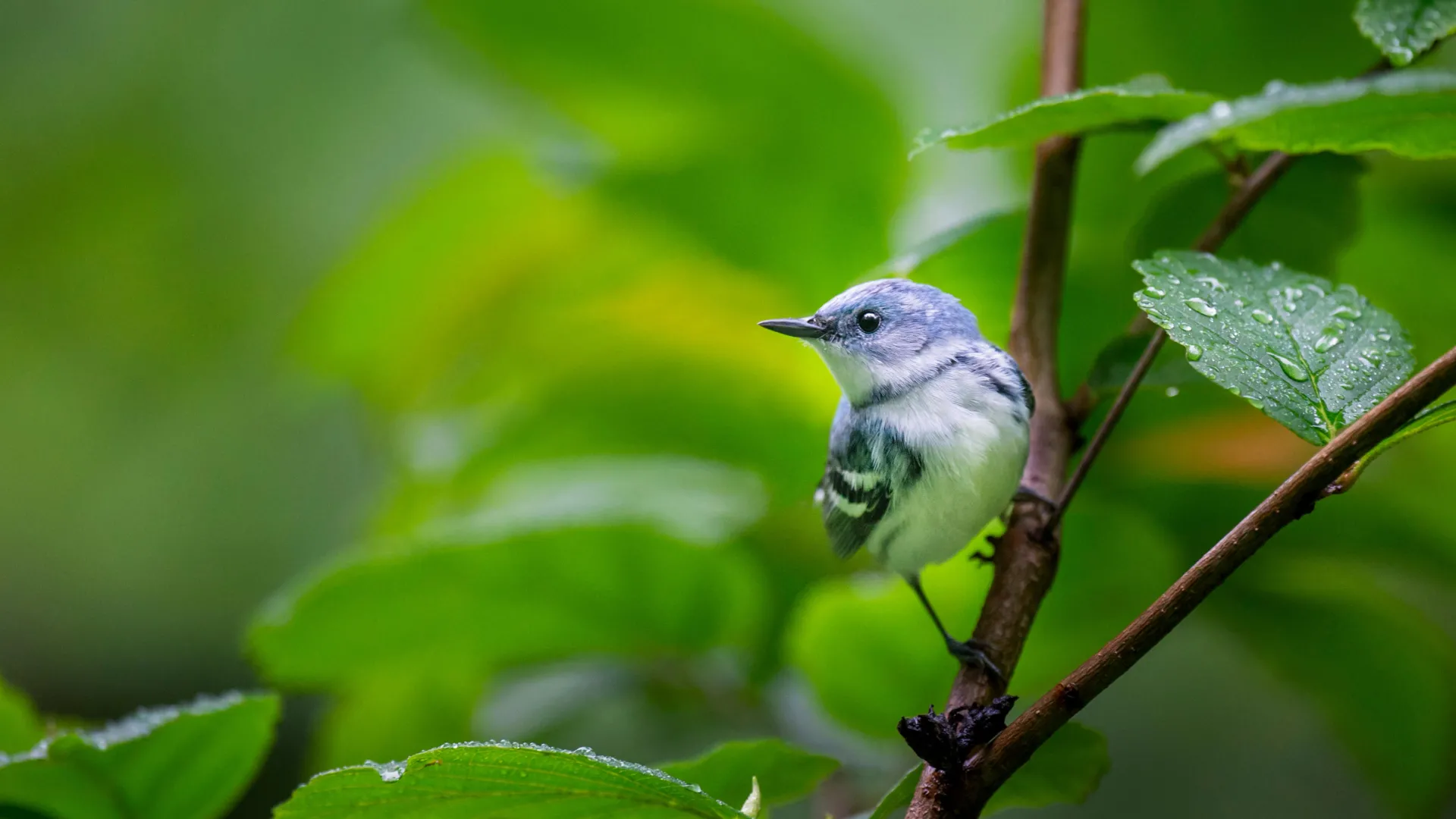
Every spring, the familiar songs of Wood Thrushes and warblers drift back into parks and neighborhoods across eastern North America, a cherished herald of warmer months. Few people realize that these birds spend most of their lives much farther south, relying on the lush and often remote forests of Central America to survive the rest of the year. A recent groundbreaking study, a collaboration between the Wildlife Conservation Society (WCS) and the Cornell Lab of Ornithology (Cornell Lab), published in the peer-reviewed journal Biological Conservation, underscores the profound and often overlooked ecological connection between these two distant regions. The research unequivocally demonstrates that a network of interconnected forest blocks, collectively known as the Five Great Forests of Central America—stretching from the Yucatán Peninsula in southern Mexico through Central America to northern Colombia—are not merely tropical wildernesses but indispensable havens for a substantial portion of North America’s migratory bird populations, many of which are experiencing alarming declines.
Unveiling a Hemispheric Connection: The Study’s Core Findings
The study leverages an unprecedented scale of data, utilizing millions of bird sightings meticulously submitted by citizen scientists to the Cornell Lab’s global eBird platform. This robust dataset allowed researchers to map detailed weekly bird distributions, revealing the critical reliance of migratory species on these specific Central American forest ecosystems. The findings are stark: these five forest complexes collectively provide essential habitat for between one-tenth and nearly one-half of the global populations of 40 migratory bird species. These species include iconic North American forest dwellers such as the Wood Thrush, Magnolia Warbler, Scarlet Tanager, Kentucky Warbler, Golden-winged Warbler, and Broad-winged Hawk, all of which spend more than half their annual cycle in these southern climes. The sheer concentration of avian life in these relatively confined areas makes their preservation a conservation imperative for the entire hemisphere.
Anna Lello-Smith, the lead author of the study and a dedicated conservation scientist at WCS, emphasized the direct link between these distant lands and familiar sights closer to home. "What happens in Central America directly affects the birds we love in the United States and Canada," Lello-Smith stated. "These forests aren’t just tropical wilderness—they’re at the heart of migration, sustaining many of our birds for more than half the year. They provide the food and shelter that allow Wood Thrushes, Magnolia Warblers, and so many others to return north to fill our spring with song and color." Her statement highlights the intricate web of life that spans continents, where the health of one ecosystem directly influences another thousands of miles away.
The Five Great Forests: A Biodiversity Hotspot Under Threat
The Five Great Forests comprise distinct yet ecologically linked regions: the Selva Maya (spanning Mexico, Guatemala, and Belize), Moskitia (Honduras and Nicaragua), Indio Maíz-Tortuguero (Nicaragua and Costa Rica), La Amistad (Costa Rica and Panama), and Darién (Panama and Colombia). Together, these regions form a continuous ecological corridor roughly the size of the U.S. state of Virginia. This vast, unbroken expanse of forest is a biological treasure trove, not only for migratory songbirds but also for a staggering array of resident wildlife, including iconic megafauna such as jaguars, Baird’s tapirs, and vibrant scarlet macaws. For birds embarking on annual migrations spanning thousands of miles, these forests serve as indispensable wintering grounds and critical stopover points, offering vital sustenance and refuge.
Viviana Ruiz-Gutierrez, director of Conservation Science at the Cornell Lab of Ornithology and a co-author of the study, further elucidated the density and significance of these areas. "Every fall, billions of birds pour south through the narrow land bridge of Central America," she explained. "The density of migratory warblers, flycatchers, and vireos crowded into these five forests is astounding, and means that each hectare protected there safeguards a disproportionate number of birds." This perspective underscores the immense ecological leverage that conservation efforts in these specific regions can yield. Protecting even a relatively small area within these forests can have outsized positive impacts on global bird populations.
The phenomenon of avian migration itself is one of nature’s most extraordinary spectacles, an ancient biological rhythm refined over millennia. Birds navigate vast distances, often using celestial cues, geomagnetic fields, and learned routes, to exploit seasonal resource availability across different latitudes. Central America, owing to its unique geographical position as a narrow land bridge connecting two vast continents, naturally became a critical bottleneck and a crucial wintering destination for millions of birds traveling along the Mississippi Americas Flyway, among others. Understanding these specific wintering grounds, however, has been a more recent scientific endeavor, largely propelled by advanced tracking technologies and citizen science platforms like eBird, which aggregate observational data from millions of birdwatchers worldwide. eBird alone, launched in 2002, now houses over a billion bird observations, providing an unparalleled lens into avian distribution and migration patterns.
Rapid Deforestation: An Alarming Pace of Destruction
Despite their immense ecological value, these critical forests are disappearing at an alarming and accelerating pace. The primary driver of this deforestation is illegal cattle ranching, which has already claimed millions of acres across the region. This destructive practice often involves clear-cutting pristine forest, followed by burning, to create pastures for livestock, frequently linked to illicit land appropriation and money laundering schemes. The scale of the loss is staggering; in the Moskitia region alone, almost one-third of the forest has vanished in a mere 20 years. This rate of destruction far outstrips any sustainable use and represents an irreversible loss of biodiversity and ecosystem services.
Globally, tropical deforestation accounts for a significant portion of greenhouse gas emissions and is a leading cause of species extinction. Central America, while a smaller landmass, contributes disproportionately to this crisis due to its rich biodiversity and the intensity of land-use change pressures. The loss of these forests not only imperils migratory birds but also threatens the myriad resident species, disrupts crucial hydrological cycles, exacerbates climate change impacts, and undermines the livelihoods of indigenous and local communities who depend directly on healthy forest ecosystems.
Jeremy Radachowsky, Regional Director for WCS’s Mesoamerica Program, issued a stark warning regarding the trajectory of these losses. "If we lose the last great forests of Central America—and we are—we lose the birds that define our eastern forests in North America," he cautioned. His statement encapsulates the interconnected fate of ecosystems separated by thousands of miles, emphasizing that the health of North American bird populations is inextricably linked to the conservation success in Central America.
Guardians of the Forest: Indigenous and Local Communities
Amidst the grim statistics of deforestation, there is a powerful narrative of resilience and active conservation led by indigenous and local communities across Central America. These communities, often living in ancestral territories within or adjacent to these forests, are on the front lines of conservation efforts. They are engaged in vital work such as restoring damaged lands, implementing fire prevention strategies, and reviving traditional, bird-friendly livelihoods. Practices like sustainable allspice and cacao production, which can thrive under a forest canopy, offer economic alternatives that align with forest preservation rather than destruction.
However, these efforts are not without significant risk. Environmental defenders in Central America, particularly indigenous leaders, frequently face threats, intimidation, and violence for their work in protecting forests from illegal logging, mining, and agricultural expansion. Their courage and dedication are paramount, yet they often operate with limited resources and support. Recognizing and empowering these communities is not just a matter of social justice but a pragmatic conservation strategy. Their traditional ecological knowledge, deeply rooted in generations of living harmoniously with the land, provides invaluable insights and effective models for sustainable forest management.
Viviana Ruiz-Gutierrez articulated the potential for a powerful, unified conservation movement: "Imagine the possibility of linking with those efforts, so that we can work together across the Americas to bring back our shared migratory birds." This vision calls for a transcontinental collaboration that acknowledges the shared responsibility for migratory species and supports the local guardians of their critical habitats.
Mapping "Sister Landscapes": A Framework for Cross-Border Conservation
For many years, international cooperation on migratory bird conservation has been hampered by a lack of precise information detailing how specific bird populations connect different habitats and communities across their annual cycles. To overcome this critical data gap and facilitate more targeted, cross-border conservation initiatives, researchers utilized a groundbreaking framework developed by Partners in Flight and the Cornell Lab. This framework enabled them to map "stewardship connections," effectively identifying the specific regions in North America where species dependent on the Five Great Forests gather to breed.
These findings reveal a compelling geographical linkage: the Five Great Forests are closely tied to forest regions in North America such as the Appalachian Mountains, the vast Mississippi Delta, the critical Great Lakes basin, the diverse landscapes of New England, and even the fragmented yet vital green spaces surrounding New York City. Researchers have aptly coined these paired regions "sister landscapes" because they are ecologically linked by the same bird species at different points in their annual cycle. For example, a Wood Thrush nesting in a forest patch in the Appalachians during the summer may spend its winter months in the Selva Maya. Understanding these precise connections allows conservationists to prioritize efforts and foster partnerships between communities and organizations in both sister landscapes, creating a holistic approach to species protection.
This innovative approach moves beyond simply identifying species at risk; it provides a roadmap for where and with whom to focus conservation efforts to achieve maximum impact. By knowing that specific populations of Scarlet Tanagers or Golden-winged Warblers rely on particular Central American forests, conservationists in North America can advocate for and support protection efforts in those precise wintering grounds, knowing that their actions will directly benefit the birds that return to their local forests each spring.
Protecting Forests to Protect Migratory Birds: A Hemispheric Imperative
In many profound ways, the Five Great Forests serve as the tropical counterparts to North America’s eastern forests. They shelter the very same suite of forest-loving birds—including the Scarlet Tanager, Kentucky Warbler, Golden-winged Warbler, and Broad-winged Hawk—during the crucial months when these species are far from their breeding territories. These wintering and stopover habitats are not merely optional resting places; they are essential for the survival and reproductive success of these birds. Without adequate food, shelter, and safety during their non-breeding season, these populations cannot sustain themselves to make the arduous journey back north to breed. Safeguarding these vital southern habitats is therefore paramount for ensuring that these birds continue to return north each spring, enriching the biodiversity and cultural fabric of North America.
The implications of the WCS and Cornell Lab study extend far beyond avian conservation. The forests that sustain thrushes and warblers also provide invaluable ecosystem services that support human communities. These include regulating climate, purifying water, preventing soil erosion, and providing resources for sustainable livelihoods. The loss of these forests would trigger a cascade of negative effects, impacting not only biodiversity but also human well-being, economic stability, and the global fight against climate change.
Anna Lello-Smith concluded with a powerful call to action, emphasizing the widespread benefits of these conservation efforts. "Every hectare we protect in Central America has ripple effects for birds and people across the hemisphere," she affirmed. "The forests that sustain thrushes and warblers also support communities. If you love watching your birds come back each spring, we invite you to discover the tropical forests they call home for most of the year—and help protect them." This sentiment encapsulates the shared destiny of nature and humanity across the Americas. The future of North America’s beloved migratory birds, and indeed the health of both continents, hinges on a renewed commitment to protecting Central America’s invaluable Five Great Forests through collaborative, community-led, and scientifically informed conservation strategies.
