
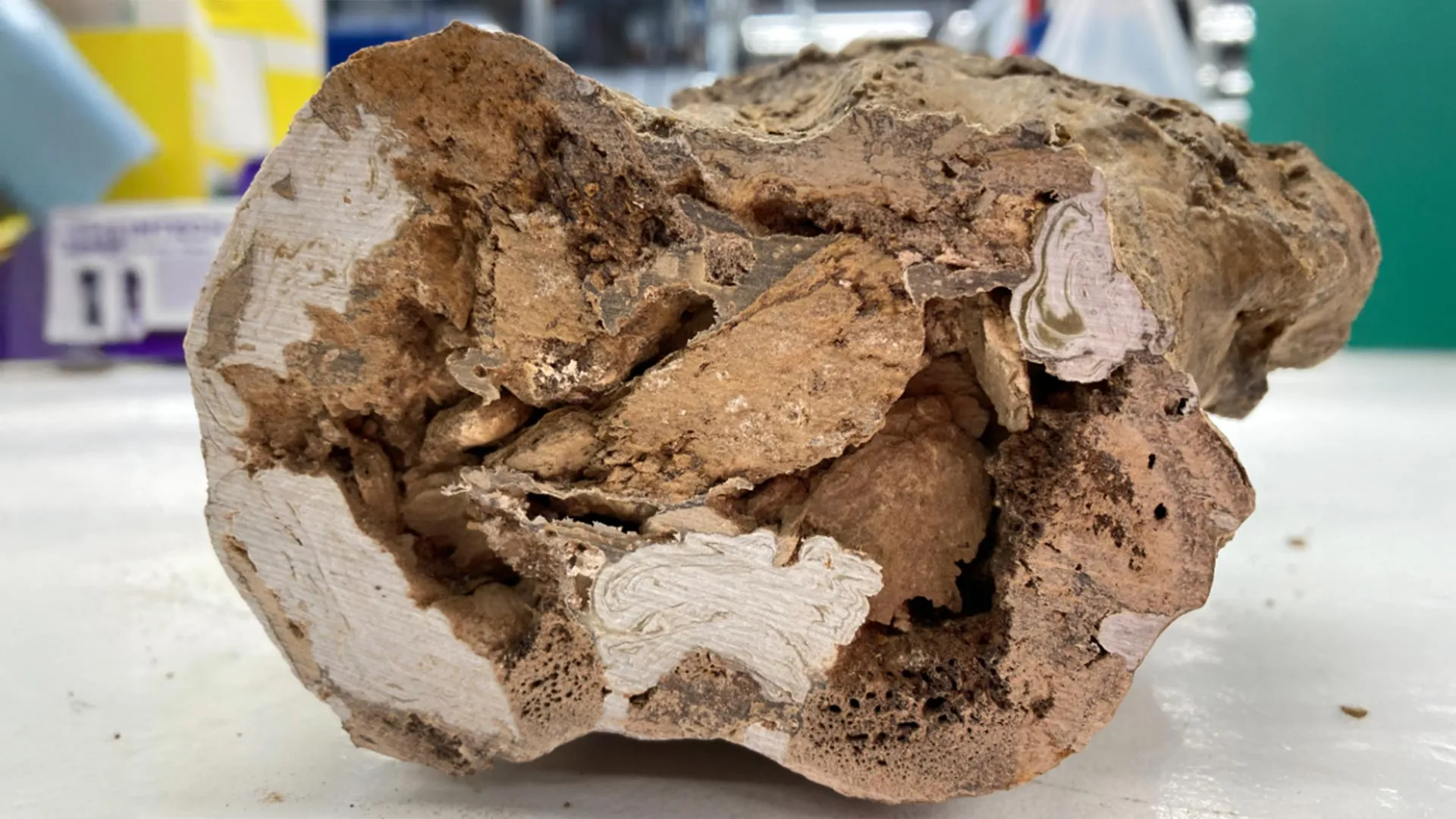
For decades, the prevailing scientific consensus held that dinosaur fossils were little more than mineralized rock, with any original biological material long since destroyed by the immense pressures of geological time. This fundamental assumption, deeply ingrained in paleontological thought, is now facing a profound challenge following an extraordinary study centered on a remarkably preserved Edmontosaurus fossil. Researchers, led by the University of Liverpool, have presented compelling evidence suggesting that traces of original organic molecules, including collagen, can indeed persist within dinosaur bones dating back approximately 66 million years. This discovery provides powerful new support for a controversial idea that has sharply divided the paleontological community for over three decades, potentially heralding a new era of molecular paleontology.
A Paradigm Shift in Understanding Fossil Preservation
The conventional wisdom regarding fossilization dictates that organic components — such as proteins, lipids, and nucleic acids — are rapidly degraded after an organism’s death, replaced over millennia by minerals, leaving behind only the skeletal architecture. This understanding has shaped how scientists have approached and interpreted fossil remains, primarily focusing on morphology and comparative anatomy. The notion of finding intact biomolecules within specimens tens of millions of years old was largely dismissed as improbable, if not impossible, due to the inherent instability of organic compounds over such vast timescales.
However, a growing body of evidence, initially met with considerable skepticism, has begun to chip away at this long-standing dogma. The latest findings from the University of Liverpool team represent a significant milestone in this evolving scientific narrative, offering some of the most robust data to date that challenges the complete destruction hypothesis. This research suggests that under specific, albeit rare, conditions, a fraction of an animal’s original biological chemistry can endure, preserved in a state that allows for its identification and analysis by modern scientific techniques.
The Fossil at the Heart of the Discovery: An Edmontosaurus Sacrum
At the core of this groundbreaking investigation lies a 22-kilogram Edmontosaurus annectens sacrum, a critical component of the dinosaur’s hip region. This particular specimen was meticulously recovered from the renowned Hell Creek Formation in South Dakota, a geological treasure trove famous for its exceptionally well-preserved fossils from the late Cretaceous Period. Edmontosaurus, a large, herbivorous duck-billed dinosaur, was a prominent inhabitant of ancient North America, coexisting with iconic predators like Tyrannosaurus rex just before the catastrophic K-Pg extinction event. The Hell Creek Formation, spanning parts of Montana, North Dakota, South Dakota, and Wyoming, is celebrated for providing a window into the final epoch of the dinosaurs, and its unique sedimentary environment has frequently yielded fossils of remarkable quality, often exhibiting fine details.
The choice of an Edmontosaurus fossil was particularly strategic. These hadrosaurs are already well-known for their exceptional preservation potential, with some specimens historically dubbed "dinosaur mummies" due to the retention of detailed skin impressions and other soft tissue features. More recent paleontological research has continued to uncover surprisingly detailed soft tissue preservation in Edmontosaurus specimens, including evidence of fleshy structures and preserved skin anatomy, making them prime candidates for investigations into molecular preservation.
Unveiling Ancient Proteins: Advanced Analytical Techniques
To probe the fossilized bone for biomolecular remnants, the research team employed a sophisticated array of advanced laboratory methods, combining the power of several analytical disciplines. These included high-resolution microscopy, various forms of mass spectrometry, and protein sequencing.
Specifically, the scientists detected remnants of collagen embedded within the fossilized bone. Collagen is not merely any protein; it is the most abundant protein in mammals and a primary structural protein found in bone, cartilage, tendons, and skin. Its complex triple-helix structure makes it remarkably robust, but its presence in a 66-million-year-old fossil is nonetheless extraordinary. Crucially, collagen is one of the hardest biomolecules to dismiss as contamination when identified in such an ancient context, largely due to its unique amino acid composition and characteristic fragmentation patterns under analysis.
The team utilized tandem mass spectrometry (MS/MS), a powerful technique that breaks down molecules into smaller, identifiable fragments, allowing for the sequencing of peptides and thus the identification of the parent protein. This method offers high specificity and sensitivity, enabling the detection of minute quantities of degraded proteins. Alongside this, other forms of mass spectrometry were likely employed for comprehensive chemical profiling.
Further strengthening the findings, researchers from UCLA contributed to the study by independently identifying hydroxyproline. Hydroxyproline is a non-standard amino acid that is particularly abundant and characteristic of collagen, forming a critical part of its unique structure and stability. Its presence in the fossil material served as an important, independent confirmation that degraded collagen fragments were genuinely present inside the fossil, providing a crucial cross-validation of the mass spectrometry results.
Professor Steve Taylor, chair of the Mass Spectrometry Research Group at the University of Liverpool’s Department of Electrical Engineering & Electronics, underscored the significance of the findings, stating, "This research shows beyond doubt that organic biomolecules, such as proteins like collagen, appear to be present in some fossils." He further elaborated on the broader implications: "Our results have far-reaching implications. Firstly, it refutes the hypothesis that any organics found in fossils must result from contamination." This assertion directly addresses the primary objection raised against previous claims of molecular preservation.
A Decades-Long Debate That Has Divided Paleontology
The idea of preserved soft tissues and proteins in dinosaur fossils is not entirely new, but it has been a contentious one, sparking fierce debate within the paleontological community since the early 2000s. For decades prior, any reports of organic material in ancient fossils were typically attributed to modern contamination from bacteria, fungi, or handling, or to the influx of more recent organic material from the surrounding environment.
Chronology of the Soft Tissue Controversy:
- Pre-2000s: General scientific consensus holds that all organic material degrades completely over geological timescales. Any reported "soft tissue" is almost universally dismissed as contamination or misinterpretation.
- 2005: Mary Schweitzer’s T. rex Discovery: Paleontologist Mary Schweitzer and her colleagues at North Carolina State University published a landmark paper reporting the discovery of remarkably preserved soft tissue structures, including what appeared to be flexible blood vessels and bone cells, inside the femur of a Tyrannosaurus rex fossil recovered from the Hell Creek Formation. This finding sent shockwaves through the scientific community.
- Initial Skepticism and Counter-Arguments: Many paleontologists and chemists initially reacted with deep skepticism, arguing that the reported materials were either modern contamination, bacterial biofilms mimicking ancient structures, or permineralized structures mistaken for original soft tissue. The primary argument was that proteins and other complex biomolecules simply could not survive for 68 million years.
- 2007: Collagen Peptides in T. rex: Schweitzer’s team followed up with further research, reporting the identification of collagen peptides from the T. rex fossil using mass spectrometry. This provided molecular-level evidence, linking the structures to a specific dinosaur protein. The debate intensified, with some researchers proposing alternative explanations, such as highly unusual preservation mechanisms or lingering contamination issues.
- Post-2007: Accumulation of Evidence: Subsequent studies by various research groups reported similar findings in additional dinosaur specimens, including other hadrosaurs related to Edmontosaurus, birds, and even mosasaurs. These included reports of possible collagen, elastin, and other protein fragments, as well as blood vessel-like and cellular structures. Each new discovery was met with renewed scrutiny and rigorous attempts to falsify the claims.
- The Need for Rigor: The scientific community increasingly called for more robust methodologies, independent replication, and comprehensive controls to unequivocally rule out contamination and confirm the endogenous (originating from the organism itself) nature of the biomolecules.
The new Edmontosaurus analysis stands out precisely because it addresses these demands for rigor. The researchers used multiple, independent testing methods to examine the same fossil material. By combining various microscopy techniques (which might include scanning electron microscopy (SEM) or transmission electron microscopy (TEM) for structural analysis), detailed chemical analysis (like spectroscopy), and advanced protein sequencing, the team aimed to build an irrefutable case. This multi-pronged approach significantly bolsters the argument against contamination, as it is highly unlikely that contamination would mimic authentic biological signals across such a diverse suite of analytical techniques. The findings were published in the prestigious journal Analytical Chemistry in 2025 under the definitive title "Evidence for Endogenous Collagen in Edmontosaurus Fossil Bone," a publication venue that emphasizes analytical precision and chemical validation.
Why This Discovery Matters: Unlocking New Paleontological Frontiers
The implications of definitively proving that proteins can survive in fossils for tens of millions of years are profound and far-reaching, potentially revolutionizing how scientists study extinct animals.
- New Insights into Evolutionary Relationships: Tiny molecular traces could potentially reveal evolutionary relationships between dinosaur species that are difficult, if not impossible, to discern from bones alone. While skeletal morphology provides a robust framework for phylogeny, molecular data offers an independent and often more granular level of detail. This could help resolve long-standing debates about dinosaur lineages and their connections to modern birds.
- Understanding Dinosaur Biology: Beyond evolution, molecular data could unlock unprecedented insights into dinosaur biology. Researchers may learn more about dinosaur growth rates, aging processes, their physiology (e.g., metabolic rates, thermoregulation), and even the diseases they suffered. For instance, specific collagen types or post-translational modifications could offer clues about bone density, tissue repair, or physiological stress.
- Revisiting Historical Collections: Professor Taylor highlighted a particularly exciting prospect: the need for scientists to revisit fossil samples collected over the past century. He noted that cross-polarized light microscopy images taken decades ago, often part of routine fossil documentation, could contain overlooked evidence of preserved collagen in ancient bones. "These images may reveal intact patches of bone collagen, potentially offering a ready-made trove of fossil candidates for further protein analysis," Taylor explained. This could unlock a vast, untapped resource of information hidden in plain sight within museum archives. "This could unlock new insights into dinosaurs, for example revealing connections between dinosaur species that remain unknown."
- Interdisciplinary Collaboration: This field necessitates intense collaboration between paleontologists, geochemists, analytical chemists, molecular biologists, and materials scientists, fostering a richer, more integrated understanding of ancient life.
The Enduring Mystery of Molecular Survival
The discovery of ancient collagen naturally raises a fascinating and critical scientific question: how did these delicate molecules survive for such an unimaginable span of time? Proteins are complex macromolecules, and their normal degradation pathways lead to rapid breakdown, especially across geological timescales marked by fluctuating temperatures, pressures, and chemical environments. Yet, some fossils appear capable of preserving microscopic biological structures under very specific, and still not fully understood, conditions.
Scientists are increasingly investigating several hypotheses to explain this remarkable molecular longevity:
- Mineral-Biomolecule Interactions: One leading theory posits that interactions between organic molecules and the surrounding mineral matrix of bone play a crucial protective role. Collagen, being intimately interwoven with hydroxyapatite crystals in bone, might become "locked" within the mineral structure soon after death. The inorganic minerals could act as a shield, encapsulating and protecting fragments of collagen from complete decay, particularly from enzymatic and hydrolytic degradation.
- Rapid Burial and Anoxic Conditions: Fast burial, especially in fine-grained sediments, can quickly isolate organic material from scavengers and oxygen. Anoxic (oxygen-free) environments are known to significantly slow down decomposition processes, creating conditions conducive to preservation.
- Specific Burial Environments: Certain burial environments, such as those rich in iron or clay minerals, might further aid preservation. Iron, for instance, has been proposed to act as a fixative, cross-linking proteins and making them more resistant to degradation.
- Microscopic Bone Structures: The intricate, hierarchical structure of bone itself, with its network of canaliculi and lacunae, might create micro-environments that shield fragments of collagen. These microscopic spaces could protect biomolecules from external chemical attack and physical disruption.
Edmontosaurus fossils are, as mentioned, already famous for their exceptional preservation. The phenomenon of "dinosaur mummies," where specimens retain detailed skin impressions and other soft tissue features, attests to the unique taphonomic conditions (the processes of fossilization) that some Edmontosaurus carcasses experienced. Rapid burial in fine sediments, possibly after mummification of soft tissues, likely contributed to this extraordinary preservation. These conditions, which allowed for the macroscopic preservation of skin and flesh, are precisely the kind that could also facilitate the microscopic preservation of biomolecules like collagen.
More recent paleontology research has continued uncovering surprisingly detailed soft tissue preservation in Edmontosaurus specimens, including evidence of fleshy structures and preserved skin anatomy, further reinforcing their status as ideal candidates for biomolecular studies.
A New Chapter in Paleontology
Together, these discoveries are profoundly reshaping how scientists think about fossils. Instead of viewing them solely as inert, stone replicas of ancient bones, researchers are beginning to see some fossils as potential molecular time capsules. These capsules, under rare and specific circumstances, can still preserve subtle, yet incredibly informative, traces of prehistoric biology millions of years later. This shift in perspective opens up entirely new avenues of research, promising to bring ancient creatures to life not just through their skeletal forms, but also through the very molecules that once animated them. The study of endogenous biomolecules in fossils marks a vibrant new chapter in paleontology, blurring the lines between geology, chemistry, and biology, and offering an unprecedented glimpse into the deep past.
