
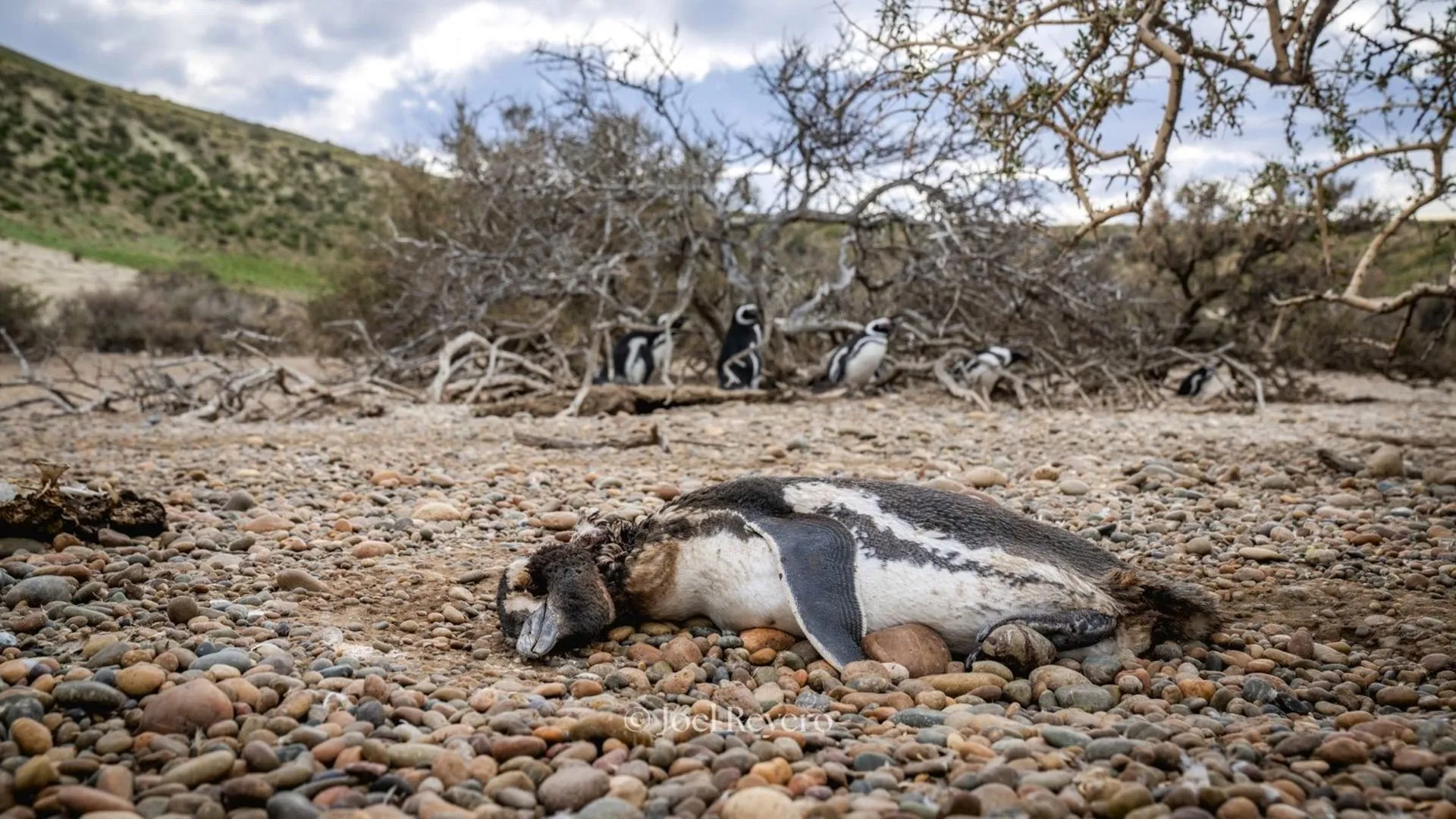
Monte Leon National Park, Argentina – Should conservation efforts focus on protecting one iconic species if that protection may harm another, especially in landscapes still recovering from human activity? This profound question lies at the center of a growing conservation challenge at Monte Leon National Park on Argentina’s Patagonian coast, where the resurgent puma population’s predation on Magellanic penguins presents a complex ecological dilemma for park authorities and researchers alike.
A Landscape Transformed: The Genesis of a Modern Conflict
The situation unfolding in Monte Leon is a poignant illustration of the intricate and often unpredictable dynamics inherent in restoring ecosystems altered by decades of human intervention. For much of the 20th century, the Patagonian steppes and coasts, including the lands that now comprise Monte Leon National Park, were dominated by extensive cattle ranching. This intensive agricultural activity fundamentally reshaped the landscape, suppressing native wildlife populations, particularly large carnivores like the puma ( Puma concolor), which were often hunted to protect livestock. Simultaneously, the absence of these apex predators created unusual opportunities for other species, setting the stage for the current interspecies conflict.
The Magellanic penguin (Spheniscus magellanicus), a charismatic seabird endemic to the coasts of South America, historically nested predominantly on offshore islands, a natural adaptation to avoid terrestrial predators. However, with the decline of land-based threats on the mainland, particularly the virtual eradication of pumas, penguin colonies began to expand, establishing new breeding grounds on the continent. This shift was a testament to their adaptability but also a gamble, predicated on an unnatural ecological vacuum that would not last.
The Return of the Apex Predator: A Chronology of Recovery
The pivotal turning point arrived in the 1990s. With a global shift in conservation paradigms and, more locally, the cessation of large-scale cattle ranching across southern Argentina, the vast Patagonian wilderness began a slow but steady process of ecological recovery. One of the most significant aspects of this recovery was the gradual return of the puma. These stealthy, adaptable big cats, also known as cougars or mountain lions, started reclaiming their historic territories, moving back into areas from which they had been absent for generations.
- Pre-1990s: Pumas were largely absent or severely suppressed on the mainland Patagonian coast due to human persecution related to ranching. Magellanic penguins thrived and expanded mainland colonies in this predator-free environment.
- 1990s: Cattle ranching declines and eventually ceases in many southern Argentine regions. Pumas begin a slow, natural recolonization of their ancestral range.
- Early 2000s: Penguins have firmly established several large mainland colonies, including those within what would become Monte Leon National Park, capitalizing on the perceived safety.
- 2004: Monte Leon National Park is officially established, encompassing a rich mosaic of marine and terrestrial environments, including significant penguin breeding grounds. The park’s creation aimed to protect the unique biodiversity of the Patagonian coast, facilitating natural ecological processes.
- Mid-2000s: Pumas, now recovering and dispersing, encounter these large, unprotected penguin colonies on the mainland for the first time in modern history. The novelty of this interaction meant that penguins, lacking inherent defenses against such large land predators, became easy and abundant prey.
- 2007-2010: This four-year period marks the initial phase of intensive monitoring by researchers, meticulously documenting puma-penguin interactions and their immediate impact.
- Post-2010: Data collection continues, leading to collaborative analysis and the recent publication of findings that shed light on the long-term implications.
Monte Leon National Park: A Sanctuary and a Laboratory
Monte Leon National Park, a jewel in Argentina’s national park system, spans over 62,000 hectares of Patagonian steppe and 36,000 hectares of marine environment. Established to preserve a vital segment of the Patagonian coastal ecosystem, it boasts dramatic cliffs, pristine beaches, and islands teeming with wildlife. Its terrestrial areas support guanacos, foxes, and a recovering puma population, while its marine zones are home to sea lions, various seabirds, and, crucially, the Magellanic penguins. The park’s unique position, where a recovering apex predator meets an expanding vulnerable prey species, makes it a critical natural laboratory for understanding the complexities of rewilding and trophic re-establishment.
Quantifying the Impact: A Startling Discovery of Surplus Killing
The initial observations by park rangers and researchers from the Centro de Investigaciones de Puerto Deseado of the Universidad Nacional de la Patagonia Austral, who have been closely monitoring penguin colonies since the park’s inception in 2004, confirmed the presence of puma predation. However, the true scale of the impact remained unclear until a collaborative study, partnering with researchers from Oxford University’s Wildlife Conservation Research Unit (WildCRU), meticulously analyzed the long-term data.
The findings were stark. Using comprehensive carcass counts from the 2007-2010 period, researchers estimated that more than 7,000 adult Magellanic penguins were killed by pumas within the Monte Leon colony during that four-year timeframe. This figure represents approximately 7.6% of the adult penguin population, estimated at around 93,000 individuals within the study area at the time.
A particularly striking observation was the phenomenon of "surplus killing." Many of the penguin carcasses showed signs of partial consumption or, alarmingly, no consumption at all. This indicates that the pumas were killing more penguins than strictly necessary for sustenance. Lead author Melisa Lera, a postgraduate student at WildCRU, Oxford University, articulated the gravity of this finding: "The number of carcasses showing signs of predation we found in the colony is overwhelming, and the fact that they were left uneaten means pumas were killing more penguins than they required for food. This is consistent with what ecologists describe as ‘surplus killing’. It is comparable to what is seen in domestic cats when prey are abundant and/or vulnerable: ease of capture can lead to cats hunting more birds, even when they do not end up actually eating them. We needed to understand if the penguin colony’s persistence could be threatened due to this behavior."
Surplus killing, while seemingly wasteful, is a known predatory behavior observed in various carnivores when prey is exceptionally abundant, easy to capture, or when the predator perceives an immediate threat to its cached food supply. In the case of Monte Leon, the naive penguins, unaccustomed to land predators, presented an unprecedentedly easy target for the returning pumas.
Beyond Predation: The Dominant Role of Environmental Factors
Despite the alarming number of penguin fatalities attributed to pumas, the population models developed by the research team offered a crucial insight: puma predation alone was unlikely to drive the Monte Leon penguin colony to extinction. Instead, the models highlighted other, more pervasive environmental factors as significantly more influential in determining the colony’s long-term viability. Specifically, the success of breeding efforts and the survival rates of juvenile penguins emerged as the primary determinants of population stability.
Extinction scenarios in the models were projected only under hypothetical and extreme conditions: very low juvenile survival (e.g., around 20% failing to reach adulthood) combined with extremely poor reproductive output (limited to a maximum of one chick per pair). In such dire circumstances, high levels of puma predation certainly exacerbated the decline, accelerating the path towards extinction, but they were not the initiating or primary cause. This finding shifts the focus from directly managing puma predation to understanding the broader ecological pressures on penguins.
Study co-author Dr. Jorgelina Marino (WildCRU, Oxford University) emphasized the broader implications: "This study captures an emerging conservation challenge, where recovering carnivores are encountering novel prey. Understanding how these dietary shifts affect both predators and prey is essential to inform conservation." The study underscores that while direct predation is a visible and dramatic event, the underlying health and resilience of the prey population are often shaped by more subtle, systemic factors.
Climate Change and Broader Pressures: A Looming Threat
The critical role of breeding success and juvenile mortality in penguin population dynamics draws a direct link to the escalating impacts of climate change. Magellanic penguins, like many seabirds, are highly sensitive to changes in their marine environment. Factors such as nutrient availability, the abundance and distribution of their primary food sources (like anchovies and sardines), and ocean temperatures directly influence their ability to find food, raise healthy chicks, and ensure the survival of their young.
Rising ocean temperatures can alter ocean currents and upwelling patterns, impacting the productivity of marine ecosystems and the availability of prey fish. Increased frequency and intensity of extreme weather events can destroy nests or expose vulnerable chicks. Furthermore, shifting food availability can force adult penguins to travel farther for food, increasing their energy expenditure and reducing their capacity to provision their young. These climate-induced stressors, often subtle and long-term, erode the resilience of penguin populations, making them more vulnerable to any additional pressures, including predation.
The Monte Leon case, therefore, serves as a microcosm for a much larger global conservation challenge. As human activity continues to reshape ecosystems and climate change accelerates, novel interactions between species, often with unpredictable consequences, are becoming increasingly common.
A Global Phenomenon: Parallels in Ecosystem Recovery
The Monte Leon dilemma is not an isolated incident but part of a growing pattern observed worldwide as ecosystems recover and species ranges shift. The restoration of natural processes, while a primary goal of conservation, often comes with unforeseen ecological adjustments.
- Coastal Predators in the USA: Along the Georgia coast in the USA, non-native feral hogs (Sus scrofa) have become major predators of loggerhead sea turtle (Caretta caretta) eggs. The hogs, an invasive species, exploit the vulnerability of turtle nests on sandy beaches, significantly impacting the reproductive success of an already endangered species.
- Coyotes on Barrier Islands: In eastern North America, coyotes (Canis latrans) are expanding their range onto coastal barrier islands. These islands, historically free of large terrestrial predators, provide critical nesting habitat for numerous seabird species and sea turtles. The arrival of coyotes introduces a new, significant predatory pressure that these island ecosystems are ill-equipped to handle, altering the delicate balance of these unique environments.
- Wolves and Caribou in Scandinavia: In parts of Scandinavia, the recovery of wolf populations has led to increased predation on reindeer and moose, sometimes sparking conflicts with traditional Sami herders and raising questions about managing large carnivore recovery in human-dominated landscapes.
- Otters and Shellfish in Coastal California: The reintroduction and recovery of sea otters along the California coast, while largely celebrated for their role in restoring kelp forests, have also led to increased predation on valuable shellfish, impacting local fisheries.
These examples highlight the universal challenge: rewilding is not merely about reintroducing species but about managing the complex and dynamic interactions that follow. It requires anticipating consequences, understanding trophic cascades, and developing adaptive management strategies.
Charting the Future: Adaptive Management and Continuous Vigilance
For Monte Leon National Park and similar conservation areas globally, the path forward demands a nuanced and adaptive approach. The study authors unequivocally stress that ongoing, robust monitoring is absolutely essential. This means not only continuing to track puma and penguin populations but also comprehensively monitoring environmental conditions that affect penguin breeding success and juvenile survival. Early detection of population declines is crucial to inform management decisions before irreversible ecological damage occurs.
Potential management strategies, though complex and ethically charged, could include:
- Habitat Management: Enhancing penguin nesting habitat to improve breeding success and chick survival, perhaps by creating more sheltered nesting sites or managing vegetation.
- Prey Diversification for Pumas: If possible, encouraging a more diverse prey base for pumas could potentially reduce their reliance on penguins, though this is difficult in a natural system.
- Targeted Interventions (Highly Controversial): In extreme hypothetical scenarios where penguin populations face imminent collapse directly attributable to predation, more direct interventions (such as localized puma deterrents or, in last resorts, translocation) might be considered, though these are typically met with significant ethical and practical challenges. The current study, however, suggests such measures are not warranted based on current puma impact alone.
- Climate Change Mitigation: Supporting broader efforts to combat climate change remains paramount, as it addresses the root causes of penguin vulnerability.
At Monte Leon National Park, authorities, in close collaboration with the scientific community, continue to navigate these complex consequences of ecosystem recovery. The park stands as a testament to the triumphs of conservation but also as a stark reminder that restoring nature’s balance is rarely a simple act. It is an ongoing process of observation, adaptation, and difficult decisions, where the well-being of one iconic species must often be weighed against the challenges faced by another, all within the context of a rapidly changing planet. The story of the pumas and penguins of Monte Leon is a powerful narrative for the future of conservation: one of hope, complexity, and the enduring need for scientific insight to guide our stewardship of the natural world.
