
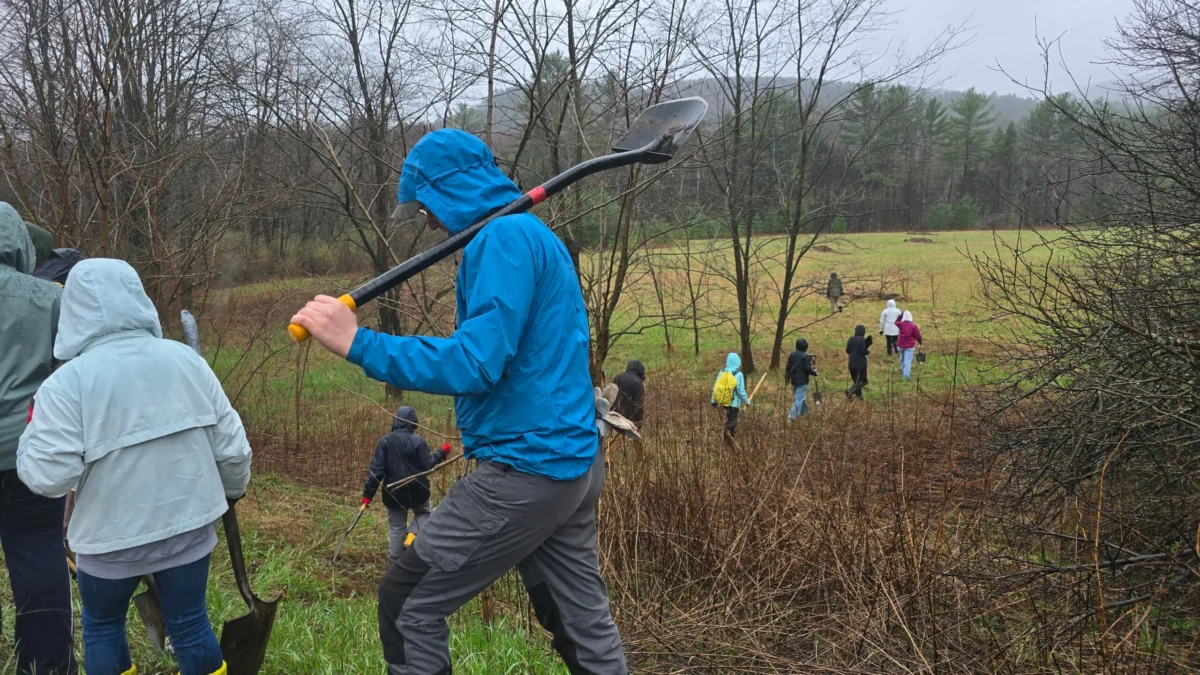
In a testament to unwavering dedication to environmental stewardship, thirty volunteers, undeterred by challenging April weather conditions that included sideways-blowing snow and biting cold, successfully planted 339 native trees and shrubs along a crucial seven-acre stretch of the Huntington River. This significant two-day endeavor, spearheaded by Audubon Vermont at its Green Mountain Audubon Center, aimed to enhance vital bird habitat and fortify the riverbanks against increasingly frequent and severe flooding events, marking a proactive step in regional climate resilience efforts.
The scene, to any casual observer, would have appeared surreal: a vibrant tableau of individuals clad in colorful rain gear, seemingly dancing amidst the adverse elements to the upbeat rhythms of 1970s music, all while meticulously restoring a critical riparian ecosystem. This concerted effort goes beyond mere tree planting; it represents a strategic intervention to repair the damage inflicted by recent catastrophic floods and to establish a robust, self-sustaining natural buffer that will benefit both wildlife and the surrounding community for decades to come.
The Genesis of a Resilient Riparian Zone
The initiative at the Green Mountain Audubon Center is a direct response to a series of devastating hydrological events that have plagued Vermont, particularly the Huntington River watershed, in recent years. The period between July 2023 and July 2024 witnessed multiple "100-year flooding events," an alarming frequency that underscores the escalating impacts of climate change on local ecosystems. These unprecedented deluges wreaked havoc on the riparian habitats along the Huntington River, causing severe erosion of riverbanks, depositing vast quantities of sediment in unusual patterns, and unfortunately, facilitating the widespread dispersal of invasive plant species. Such events not only degrade the natural beauty of the landscape but also compromise the ecological integrity of these vital corridors.
The confluence of destruction and opportunity presented itself when Audubon Vermont’s farming neighbors, who had historically used an adjacent seven-acre field for hay production, announced their decision to retire the land from agricultural use. This provided a unique and timely window for Audubon Vermont to expand its conservation footprint, allowing for the extension of the existing riparian buffer and the implementation of a comprehensive habitat restoration plan. Recognizing the urgent need and the potential for long-term ecological gains, the project was meticulously planned to jumpstart the natural regenerative process through the strategic planting of native shrubland clusters.
Riparian habitats—those critical zones bordering rivers, streams, and other waterways—are ecological linchpins. They serve as essential wildlife corridors, providing shelter, food, and breeding grounds for a diverse array of species, particularly migratory birds that rely on these "stop-over" locations during their arduous journeys. Beyond wildlife, healthy riparian buffers play an indispensable role in maintaining water quality by filtering pollutants, stabilizing riverbanks to prevent erosion, and mitigating the impacts of floods by slowing water flow and absorbing excess water. A robust riparian zone can host a mosaic of habitats, ranging from dense forests to open shrublands. Shrublands, in particular, are unique transitional habitats, not quite forests and not quite grasslands, dominated by short, woody plants interspersed with grasses, offering crucial resources for a wide range of wildlife.
Funding and Strategic Plant Selection
The ambitious project was made possible through crucial funding from two prominent conservation organizations: the National Fish and Wildlife Foundation (NFWF) and the Lake Champlain Basin Program (LCBP). The National Fish and Wildlife Foundation, a private nonprofit organization dedicated to sustaining, restoring, and enhancing the nation’s fish, wildlife, plants, and habitats, recognized the profound ecological significance of the Huntington River restoration. Similarly, the Lake Champlain Basin Program, which works to protect and restore Lake Champlain and its surrounding watershed, understood the direct impact of healthy riparian zones on the overall health of the larger aquatic system. Their combined support facilitated the purchase of the 339 native trees and shrubs, carefully selected for their ecological benefits and suitability to the local environment.
The selection of plant species was a critical phase of the project, guided by ecological principles to ensure maximum benefit for the recovering ecosystem. The chosen native species included a diverse array of plants known for their ability to thrive in riparian environments, provide diverse food sources, offer crucial shelter, and contribute to soil stability. Among the species planted were birch, dogwood, cherry, oak, arrowwood, and serviceberry. These plants are not only indigenous to the region but also offer specific advantages: birches and oaks provide structural diversity and acorns for wildlife, dogwoods and serviceberries produce berries that are vital food sources for birds and other small mammals, and arrowwood offers dense cover and nesting sites. This careful selection ensures a varied habitat structure, crucial for supporting a wide range of avian and insect species, including native pollinators.
The Planting Operation: A Symphony of Dedication
The arduous two-day planting operation commenced promptly at eight in the morning on the first day, with a small, dedicated team of Audubon Vermont staff initiating the meticulous logistical preparations. Despite the driving rain and the challenge of cold-numbed fingers grappling with soggy plant lists, the team worked with remarkable efficiency, akin to a well-oiled assembly line. One person would meticulously call out the required plants for each cluster, another would swiftly retrieve and confirm the species, while a third would label each plant and bind them together with flagging tape, indicating the cluster’s designated number. Each cluster comprised ten individual plants, ensuring a diverse mix for each planting plot. Once prepared, these clusters were loaded into a tractor bucket and strategically dropped off at their respective planting locations across the seven-acre field.
The core of the planting force was powered by Audubon Vermont’s esteemed Youth Conservation Leadership Program alumni, a testament to the long-term impact of environmental education. This dedicated cohort was augmented by local high school students, University of Vermont students, and AmeriCorps Members, creating a diverse and energetic team of 30 volunteers. The adage "many hands make light work" proved true, as the collective effort ensured that every single one of the 339 purchased plants found a new home in the ground within the two-day window.
"The conditions were certainly challenging, but the spirit of the volunteers was absolutely infectious," commented Amy Seidl, Conservation Manager at Audubon Vermont. "To see students and community members brave the snow and cold, laughing and working together, truly embodies the collaborative spirit needed for conservation. It’s not just about planting trees; it’s about fostering a connection to nature and empowering the next generation of environmental stewards."
Anticipated Ecological Outcomes and Long-Term Monitoring
The immediate impact of the planting is visible in the newly established rows of young native trees and shrubs, but the full ecological benefits will unfold over time. Audubon Vermont is committed to a rigorous monitoring program to track the success and establishment of these newly planted species. This includes assessing plant survival rates, growth patterns, and the overall regeneration of the habitat. Crucially, the organization will also monitor the response of avian communities to the restored riparian zone. While full habitat regeneration and the provision of necessary resources for wildlife may take several years, the long-term outlook is highly promising.
Once the regenerative process is firmly underway and the plants mature, Audubon Vermont expects to observe significant benefits for a variety of bird species. This includes ground-nesting and shrubland-dependent birds such as the Field Sparrow and Prairie Warbler, which thrive in the transitional habitats created by the shrubland clusters. Water-associated species like the Common Yellowthroat, Belted Kingfisher, and Tree Swallow are also anticipated to benefit from the improved water quality, increased insect populations, and enhanced nesting opportunities along the riverbanks. Furthermore, the diverse array of native flowering plants will provide crucial nectar and pollen sources for native pollinators, contributing to broader ecosystem health.
"This project is a critical step in healing our landscape after the severe flooding," stated David Mears, Executive Director of Audubon Vermont. "By restoring this riparian buffer, we’re not only creating essential habitat for birds and pollinators but also building natural infrastructure that will help our community adapt to a changing climate. It’s an investment in a more resilient future for both nature and people."
Broader Implications and Community Engagement
The Huntington River riparian restoration project serves as a powerful model for community-driven conservation and climate resilience. It highlights the importance of proactive measures in the face of increasing environmental challenges and demonstrates how collaborative efforts, combining scientific expertise, community volunteerism, and targeted funding, can yield significant ecological dividends. The engagement of youth, students, and AmeriCorps members also underscores the vital role of education and hands-on experience in fostering environmental literacy and a sense of stewardship.
The project aligns with broader regional and national conservation strategies aimed at restoring degraded ecosystems, enhancing biodiversity, and building natural resilience against climate change impacts. Healthy riparian corridors are increasingly recognized as essential components of integrated watershed management plans, playing a pivotal role in maintaining ecosystem services that benefit human populations, such as clean water and flood protection.
Visitors to the Green Mountain Audubon Center are encouraged to witness the initial stages of this ecological transformation. The newly planted areas are accessible along the center’s River Trail, offering an opportunity to observe the young plants and envision the vibrant ecosystem they will become. This initiative stands as a beacon of hope and a tangible example of how dedicated action can lead to a more sustainable and resilient future for both wildlife and human communities along the Huntington River and beyond.
