
A groundbreaking fossil discovery is providing unprecedented insight into one of Earth’s most remarkable survival sagas, simultaneously resolving a scientific enigma that has perplexed researchers for decades. The find centers on Lystrosaurus, a formidable, plant-eating ancestor of mammals, which rose to prominence as a dominant species in the aftermath of the End-Permian Mass Extinction approximately 252 million years ago. This catastrophic event, often dubbed "The Great Dying," obliterated the vast majority of life on the planet. Yet, against a backdrop of extreme heat, profound environmental instability, and prolonged droughts, Lystrosaurus not only persevered but flourished, its resilience becoming a testament to evolutionary adaptability.
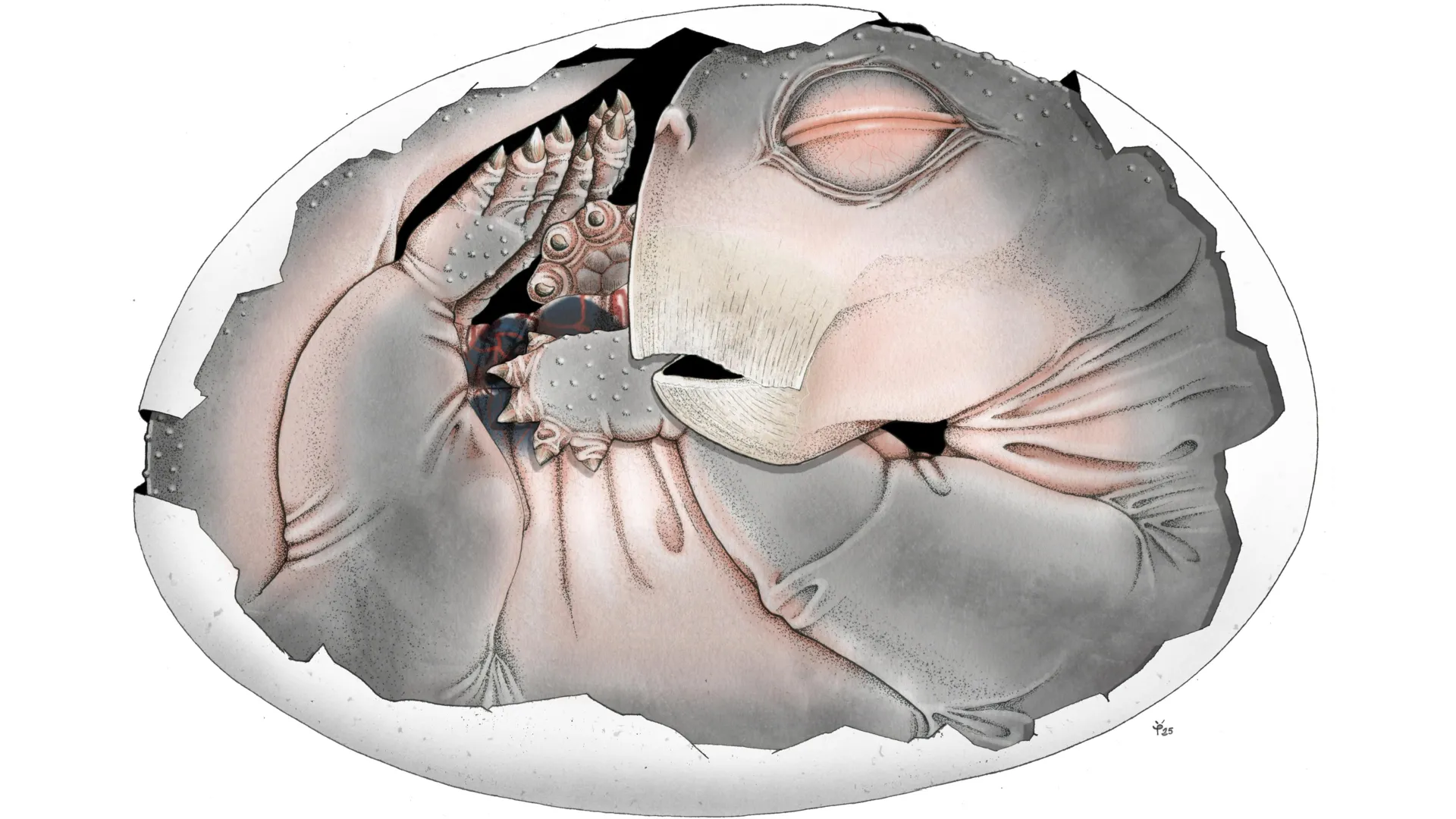
New research, meticulously detailed in the scientific journal PLOS ONE, unveils a discovery poised to fundamentally alter scientific understanding of this ancient animal and the broader lineage of mammals. An international research consortium, spearheaded by Professor Julien Benoit and Professor Jennifer Botha from the Evolutionary Studies Institute at the University of the Witwatersrand, South Africa, alongside Dr. Vincent Fernandez from ESRF – The European Synchrotron in France, has identified an extraordinary specimen: an egg containing a Lystrosaurus embryo, dating back some 250 million years. This remarkable fossil represents the first definitively confirmed egg ever recovered from a synapsid, the group of mammal ancestors, finally providing a conclusive answer to a long-standing question in early mammalian evolution: did the ancestors of mammals lay eggs? The unequivocal answer, affirmed by this discovery, is yes.
The End-Permian Mass Extinction: A World Remade
To fully appreciate the significance of Lystrosaurus‘s survival and this new fossil find, it is crucial to understand the cataclysmic scale of the End-Permian Mass Extinction. Occurring approximately 252 million years ago, it remains the most severe extinction event in Earth’s history. Unlike the more widely known asteroid impact that ended the reign of dinosaurs, the End-Permian extinction was driven by massive volcanic eruptions in what is now Siberia, forming the Siberian Traps large igneous province. These eruptions released colossal volumes of greenhouse gases, including carbon dioxide and methane, into the atmosphere.
This influx of gases triggered a cascade of environmental devastation. Global temperatures soared, leading to widespread ocean anoxia (lack of oxygen) and acidification, which proved deadly for marine life. On land, the climate became arid and volatile, marked by extreme heatwaves and protracted droughts. Estimates suggest that up to 96% of all marine species and 70% of terrestrial vertebrate species perished. Entire ecosystems collapsed, leaving behind a scarred planet struggling to recover. For millions of years following the extinction, Earth was a desolate "coal gap" with minimal vegetation and stark conditions, a period scientists refer to as the Permian-Triassic biotic crisis. It was within this crucible of ecological collapse that Lystrosaurus not only survived but thrived, becoming a key player in the rebuilding of terrestrial ecosystems.
Lystrosaurus: A Survivor’s Tale
Lystrosaurus, meaning "shovel lizard" due to its distinctive tusks and beak-like snout, was a dicynodont, a group of anomodont therapsids. These creatures were far from the agile, predatory dinosaurs that would later dominate the Mesozoic Era. Instead, Lystrosaurus was a stocky, pig-like herbivore, varying in size from a small dog to a large pig, with some species reaching up to 2.5 meters in length. Its robust build, powerful digging capabilities, and seemingly unspecialized diet made it incredibly versatile.
Following the End-Permian extinction, Lystrosaurus underwent an extraordinary evolutionary radiation, rapidly diversifying and colonizing vast swathes of the supercontinent Pangea. Fossil evidence indicates that in some areas, Lystrosaurus constituted as much as 90% of the vertebrate fauna during the Early Triassic period. Its ubiquity across what is now Antarctica, India, China, Africa, and parts of Russia made it an iconic "disaster taxon" – a species that proliferates in the wake of a mass extinction due to its generalist traits and ability to exploit disrupted ecological niches. Its success has long been a subject of intense scientific interest, offering a natural experiment in survival under extreme duress. However, a crucial piece of its biological puzzle – its reproductive strategy – remained elusive until now.
Unraveling an Evolutionary Enigma: The Mystery of Early Mammal Reproduction
The question of how early mammal ancestors reproduced has been a persistent source of debate and speculation among paleontologists and evolutionary biologists for decades. Modern mammals exhibit a diverse array of reproductive strategies, from the live-bearing placentals and marsupials to the egg-laying monotremes (platypus and echidna). Tracing the evolutionary origins of these distinct modes of reproduction back to their common ancestors, the synapsids, has been challenging due to a dearth of direct fossil evidence.
Scientists knew that reptiles, the ancestors of dinosaurs and birds, laid hard-shelled, mineralized eggs. However, the evolutionary path of mammal reproduction was less clear. Were the earliest synapsids live-bearers, or did they lay eggs? If they laid eggs, what kind were they? The absence of fossilized eggs from the synapsid lineage, particularly from key transitional forms like dicynodonts, fueled numerous hypotheses but offered no conclusive proof. The prevailing assumption, based on the reproductive biology of modern monotremes, was that egg-laying was likely the ancestral condition for mammals. Yet, without fossilized evidence, this remained an inference rather than a confirmed fact. This new discovery from Lystrosaurus directly addresses this fundamental question, providing the "missing link" in our understanding of early mammalian reproductive evolution.
The Discovery: From Field to Synchrotron
The journey of this extraordinary fossil began nearly 17 years ago during a field excursion in South Africa, a region renowned for its rich paleontological heritage. Professor Jennifer Botha recounts the initial discovery: "This fossil was discovered during a field excursion I led in 2008, nearly 17 years ago. My preparator and exceptional fossil finder, John Nyaphuli, identified a small nodule that at first revealed only tiny flecks of bone." Nyaphuli’s keen eye and meticulous preparation work gradually unveiled the specimen’s true nature. "As he carefully prepared the specimen, it became clear that it was a perfectly curled-up Lystrosaurus hatchling," Botha explains. "I suspected even then that it had died within the egg, but at the time, we simply didn’t have the technology to confirm it."
For years, the fossil remained a tantalizing enigma, a potential egg that could not be definitively proven. The limitations of conventional imaging techniques meant that the delicate internal structures, particularly any remnants of an eggshell, were beyond detection. It was not until the advent and application of advanced synchrotron X-ray CT scanning that the true nature of the fossil could finally be revealed. The powerful X-rays and unparalleled resolution available at facilities like the ESRF (The European Synchrotron) in France provided the technological leap necessary to peer inside the ancient nodule without causing any damage, unlocking its hidden secrets.
The Challenge of Soft-Shelled Eggs
One of the primary reasons why early mammal ancestor eggs have remained elusive for so long lies in their probable composition. The researchers now firmly believe that these ancient eggs were soft-shelled. Unlike the hard, mineralized eggs of dinosaurs, which possess robust calcified shells that readily fossilize and endure for millions of years, soft-shelled eggs are far more fragile. They are composed primarily of organic membranes, making them highly susceptible to decay and degradation before the slow process of fossilization can occur.
This inherent fragility explains why such finds are incredibly rare across the fossil record. While soft-shelled eggs are known from certain modern reptiles (like some snakes and lizards) and the monotremes, their preservation in deep time is an exceptional event. The specific conditions under which the Lystrosaurus embryo was preserved must have been extraordinarily conducive to fossilization, likely involving rapid burial in fine sediments, which shielded it from scavenging and decomposition long enough for mineralization to begin. This makes the discovery not merely significant for its biological insight but also a testament to the serendipity and extreme rarity of fossil preservation itself.
Advanced Imaging: Peering into the Past
The application of modern synchrotron X-ray CT scanning was the critical turning point in confirming Professor Botha’s long-held suspicion. This cutting-edge technology allowed the research team to conduct a non-invasive, high-resolution examination of the fossil’s interior. Synchrotron light sources generate extremely powerful and coherent X-ray beams, enabling scientists to penetrate dense materials and create detailed 3D reconstructions of internal structures at micron-level precision.
Dr. Vincent Fernandez, an expert in using these advanced techniques, described the moment of revelation as particularly thrilling. "Understanding reproduction in mammal ancestors has been a long-lasting enigma and this fossil provides a key piece to this puzzle," he stated. "It was essential that we scanned the fossil just right to capture the level of detail needed to resolve such tiny, delicate bones." The scans not only confirmed the presence of the embryo within an egg but also provided crucial developmental details. Professor Benoit highlighted one such detail that sparked immediate excitement: "When I saw the incomplete mandibular symphysis, I was genuinely excited. The mandible, the lower jaw, is made up of two halves that must fuse before the animal can feed. The fact that this fusion had not yet occurred shows that the individual would have been incapable of feeding itself." This specific anatomical detail offered profound clues about the Lystrosaurus hatchling’s developmental stage and its immediate post-hatching needs.
Reproductive Strategy: Large Eggs, Rapid Development
The insights gleaned from the Lystrosaurus embryo extend far beyond simply confirming egg-laying. The study indicates that Lystrosaurus produced relatively large eggs in proportion to its body size. In the animal kingdom, larger eggs typically contain a greater volume of yolk. This yolk serves as a vital nutrient reserve, providing sufficient energy for embryos to develop to an advanced stage before hatching, often without requiring extensive parental care post-hatching. This observation strongly suggests that Lystrosaurus did not provision its young with milk, a defining characteristic of modern mammals. The evolution of lactation would come later in the mammalian lineage.
Furthermore, these large, yolk-rich eggs offered another significant adaptive advantage: enhanced resistance to desiccation. In the parched and unstable climatic conditions that prevailed after the End-Permian Mass Extinction, preventing eggs from drying out would have been absolutely crucial for reproductive success. Smaller, less robust eggs would have been highly vulnerable to the extreme aridity.
The findings also point to Lystrosaurus hatchlings being precocial. This term describes young animals that are born at an advanced stage of development, relatively mature and capable of independent activity shortly after birth. For Lystrosaurus, this would have meant that the hatchlings were likely able to feed themselves, avoid predators, and achieve sexual maturity relatively quickly. In essence, Lystrosaurus maximized its chances of survival and population recovery by producing self-sufficient young that could rapidly contribute to the next generation. This strategy, combining large, resilient eggs with fast-developing offspring, provided a powerful reproductive advantage in a world grappling with environmental chaos.
A Blueprint for Survival in Harsh Climates
In the brutal and unpredictable conditions that followed the Permian-Triassic extinction, the reproductive strategy employed by Lystrosaurus proved extraordinarily effective. The ability to lay large, yolk-rich, and desiccation-resistant eggs, coupled with the production of precocial young, provided a crucial edge in a landscape devoid of consistent resources and stable environments. This discovery offers the first direct paleontological evidence that mammal ancestors laid eggs and, more importantly, provides a compelling explanation for why Lystrosaurus achieved such unparalleled success in the challenging post-extinction ecosystems.
As scientists continue to delve into the fossil record of ancient life and the response of species to past global crises, a clear and recurring pattern is emerging: survival during periods of extreme environmental upheaval hinges upon a synergistic combination of adaptability, resilience, and effective reproductive strategies. Lystrosaurus, through its unique biological toolkit, appears to have masterfully combined all three, solidifying its status as an icon of evolutionary endurance.
Broader Implications for Paleontology and Beyond
The ramifications of this discovery extend far beyond merely confirming egg-laying in an ancient animal. It offers a profound window into the early evolution of mammalian traits and the selective pressures that shaped them. The transition from egg-laying to live birth is a pivotal moment in mammalian history, and understanding the ancestral condition provides a baseline for tracing this evolutionary trajectory. This fossil not only clarifies a fundamental aspect of synapsid biology but also enriches our understanding of the broader sweep of vertebrate evolution.
Furthermore, the research carries significant relevance for contemporary challenges. Professor Julien Benoit articulates this broader impact: "In a modern context, this work is highly impactful because it offers a deep-time perspective on resilience and adaptability in the face of rapid climate change and ecological crisis. Understanding how past organisms survived global upheaval helps scientists better predict how species today might respond to ongoing environmental stress, making this discovery not just a breakthrough in paleontology, but also highly relevant to current biodiversity and climate challenges." The Lystrosaurus story serves as a powerful natural experiment, illustrating the reproductive and life-history strategies that can confer success during periods of profound environmental disruption.
Voices from the Research Team
The researchers involved in this landmark study shared their enthusiasm and insights into the multi-faceted significance of their work. Professor Benoit reflected on the technological aspect: "The opportunity to work at the European Synchrotron Radiation Facility alongside beamline scientists was also an unforgettable part of the journey. The cutting-edge data we generated there allowed us to ‘see’ inside the fossil in extraordinary detail, ultimately revealing that the embryo was still at a pre-hatching stage. That moment, when the pieces all came together, was incredibly rewarding."
Professor Jennifer Botha underscored the long-term nature of the scientific quest: "What makes this work especially exciting is that we were able to quite literally follow in John Nyaphuli’s footsteps, returning to a specimen he discovered nearly two decades ago and finally solve the puzzle he uncovered. At the time, all we had was a beautifully curled embryo, but no preserved eggshell to prove it had died within an egg. Using modern imaging techniques, we were able to answer that question definitively." She also emphasized the historical weight of the finding within South African paleontology: "It is also thrilling because this discovery breaks entirely new ground. For over 150 years of South African paleontology, no fossil had ever been conclusively identified as a therapsid egg. This is the first time we can say, with confidence, that mammal ancestors like Lystrosaurus laid eggs, making it a true milestone in the field."
The discovery of the Lystrosaurus embryo within its soft-shelled egg is a monumental achievement in paleontology. It not only resolves a critical, long-standing mystery about the reproductive biology of our ancient mammal ancestors but also paints a more complete picture of the adaptive genius that allowed life to rebound after Earth’s greatest catastrophe. In an era facing its own environmental uncertainties, the lessons learned from Lystrosaurus‘s deep-time survival strategies offer valuable insights into resilience, adaptability, and the enduring power of evolution.
