
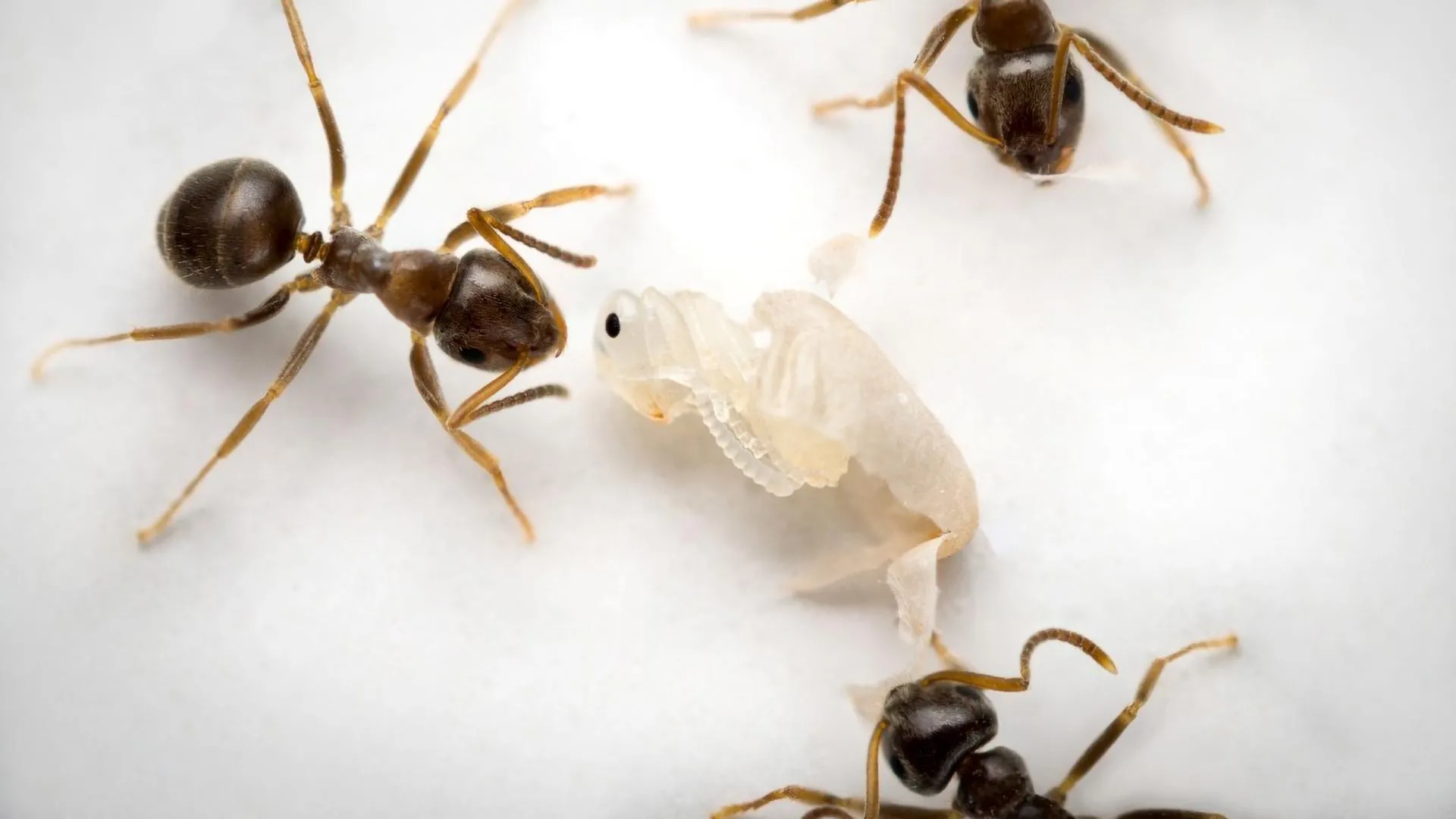
The intricate social structures of ant colonies have long fascinated scientists, revealing levels of cooperation and collective intelligence that challenge our understanding of individual versus group survival. This latest research from ISTA, building on decades of study into social insects, provides compelling evidence of a highly evolved "social immune system" within ant colonies, showcasing a remarkable parallel to the cellular defense mechanisms found in multicellular organisms. The discovery highlights how the collective health and longevity of a colony are prioritized even at the ultimate cost to its individual members.
The Superorganism Paradigm: A Deeper Dive
The concept of a "superorganism" was popularized by sociobiologist E.O. Wilson, who described it as a collection of individuals that function as a single unit, exhibiting division of labor, interdependence, and a unified response to external stimuli, much like the cells within a single body. Ant colonies, with their queen responsible for reproduction and specialized worker castes handling foraging, defense, and brood care, are prime examples. This division of labor allows for incredible efficiency and resilience, enabling colonies to thrive in diverse environments across the globe.
In this superorganism framework, the health of individual ants directly impacts the entire collective. Diseases, parasites, and pathogens pose a constant threat, and without robust defense mechanisms, an entire colony can be wiped out rapidly. Social immunity, a suite of collective behaviors and physiological adaptations to resist disease, is therefore paramount. This can range from hygienic behaviors like grooming and waste removal to the production of antimicrobial substances and, as this new research reveals, sophisticated chemical signaling.
Altruism in the Face of Death: A Chemical SOS
While many social animals, including certain mammals and birds, often exhibit behaviors to hide signs of illness to avoid ostracization or predation, ant pupae demonstrate a starkly different, self-sacrificial strategy. When confronted with an infection that is inevitably fatal, they actively produce a chemical alarm. This signal is not a cry for help to be cured, but a stark warning to their nestmates about the imminent danger they represent to the colony’s health. This altruistic act safeguards the collective at the expense of the individual, a hallmark of highly cooperative societies driven by kin selection.
The research specifically focused on ant pupae, the immobile developmental stage between larva and adult. Unlike adult ants, which can autonomously leave the nest to die away from the colony when sick—a behavior known as "social distancing"—pupae are entirely dependent on their worker nestmates. This immobility makes them particularly vulnerable as potential reservoirs for rapidly spreading pathogens, necessitating an external intervention system.
Worker Ants: The Colony’s Immune Responders
Upon detecting this urgent chemical signal emanating from a terminally ill pupa, worker ants respond with remarkable speed and precision. Their actions constitute a rapid, localized intervention akin to the immune system targeting an infected cell. They meticulously open the pupa’s cocoon, create small cuts in its outer surface, and apply formic acid. This potent natural antimicrobial compound, which worker ants produce themselves, effectively kills the pathogens proliferating within the pupa. However, this treatment is also lethal to the pupa itself, ensuring the complete removal of the infection source.
"What appears to be self-sacrifice at first glance is, in fact, also beneficial to the signaler: it safeguards its nestmates, with whom it shares many genes," explains Erika Dawson, first author of the study and a former postdoc in the Social Immunity research group headed by Sylvia Cremer at ISTA. "By warning the colony of their deadly infection, terminally ill ants help the colony remain healthy and produce daughter colonies, which indirectly pass on the signaler’s genes to the next generation." This statement underscores the profound evolutionary principle of kin selection, where individuals enhance their "inclusive fitness" by promoting the survival and reproduction of genetically related individuals, even if it means sacrificing their own direct reproductive potential or life.
The research, conducted in collaboration with chemical ecologist Thomas Schmitt from the University of Würzburg in Germany, represents the first documented instance of such altruistic disease signaling in social insects. Without such a sophisticated early warning system, a single dying ant pupa could become a highly infectious biohazard, capable of triggering an epidemic that threatens the survival of the entire colony. By signaling their dire condition early, the incurably ill pupae empower the colony to preemptively neutralize the threat before it escalates into a widespread disaster.
The Chemical Language of Distress: Specificity and Sensitivity
The precision of this "find-me and eat-me" signal is critical. For the system to be effective, it must be both highly sensitive—detecting all terminally ill pupae—and highly specific—avoiding false positives that would lead to the unnecessary sacrifice of healthy pupae or those capable of recovery. This balance ensures that colony resources are not wasted and valuable individuals are not prematurely eliminated.
Schmitt, an expert in chemical communication in social insects, shed light on the nature of this unique signal. He noted that worker ants are capable of targeting a single sick pupa amidst many healthy ones. This observation suggested that the scent could not simply be a volatile compound diffusing broadly through the nest chamber. Instead, the signal must be directly associated with the diseased pupa, requiring close proximity for detection. "Accordingly, the signal does not consist of volatile compounds but instead is made up of non-volatile compounds on the pupal body surface," Schmitt elaborated. These non-volatile cuticular hydrocarbons are common in insect communication, often serving as recognition cues or signals for physiological status.
The researchers identified that two specific components of the ants’ natural scent profile become significantly stronger when a pupa is fatally infected. This subtle but critical shift in the chemical signature acts as the definitive distress signal. To rigorously test whether this altered odor alone was sufficient to trigger the disinfection response, the research team conducted a series of elegant experiments. They extracted the chemical signature from signaling pupae and applied it to healthy pupae. The results were unequivocal: the presence of the altered scent alone was enough to induce worker ants to unpack and treat the healthy, but scent-altered, pupae. This confirmed that the modified odor of terminally infected brood functions precisely as the "find-me and eat-me" signal, mirroring analogous processes in infected body cells.
Differentiated Signaling: Queens vs. Workers
An intriguing aspect of this discovery is the specificity of the signaling behavior. Not all brood emit this alarm signal. According to Dawson, "Queen pupae, which have stronger immune defenses than worker pupae and can limit the infection on their own, were not observed to emit this warning signal to the colony." In contrast, worker pupae, lacking this inherent robust immune capability, consistently signaled for help when fatally infected.
This differentiation highlights a sophisticated colony-level cost-benefit analysis. Queen pupae represent the future reproductive potential of the colony; their survival is paramount. Their stronger immune systems allow them to fight off infections independently, making the drastic intervention of nestmates unnecessary and potentially wasteful. Worker pupae, while essential for the daily functioning of the colony, are reproductively sterile. Their sacrifice, when terminally ill, represents a calculated loss that preserves the overall health and genetic continuity of the colony. By signaling only when an infection is truly uncontrollable and poses an existential threat, the brood ensures that the colony’s drastic response is reserved for genuine crises, preventing the unnecessary loss of individuals that might otherwise recover. "This precise coordination between the individual and colony level is what makes this altruistic disease signaling so effective," Cremer concludes.
Broader Implications and Future Avenues
This groundbreaking research by ISTA and the University of Würzburg significantly advances our understanding of social immunity, the evolution of altruism, and the intricate chemical communication networks within ant societies. The parallels drawn between the cellular-level "find-me and eat-me" signals in multicellular organisms and the colony-level distress signals in ant superorganisms offer a powerful new perspective on convergent evolution and the fundamental strategies organisms employ to combat disease.
The findings have several profound implications:
- Evolutionary Biology: It provides a concrete example of how extreme altruism, driven by kin selection, can manifest in complex social systems, offering new insights into the selective pressures that favor such costly individual sacrifices for the benefit of the group.
- Immunology and Disease Ecology: Understanding how social insects manage disease spread within dense populations could inform strategies for disease control in other social species, including humans. While direct application is unlikely, the principles of early detection and rapid, targeted elimination are universally relevant.
- Bio-inspired Technologies: The precision and specificity of the chemical signaling system could inspire the development of novel biosensors for early disease detection in various contexts, from agriculture to environmental monitoring.
- Understanding Complex Systems: This research contributes to the broader field of emergent properties in complex systems, illustrating how simple individual rules can lead to sophisticated collective behaviors that ensure system stability and survival.
Future research will likely focus on identifying the precise chemical structures of the non-volatile compounds that constitute the distress signal. This could lead to a deeper understanding of their biosynthesis and how they are modulated by infection. Further studies might also explore variations in this signaling mechanism across different ant species and how environmental factors or pathogen types influence its efficacy. The discovery opens up exciting new avenues for exploring the unseen chemical language that governs the health and survival of some of the planet’s most successful social organisms.
Information on Animal Studies
To better understand fundamental biological processes, such as those in behavioral biology, immunology, or genetics, research involving animals is essential. No other methods, including in silico approaches, can fully replace these studies. All animals used in the experiments are collected, reared, and handled according to strict legal regulations, ensuring ethical treatment and minimizing any potential distress.
