
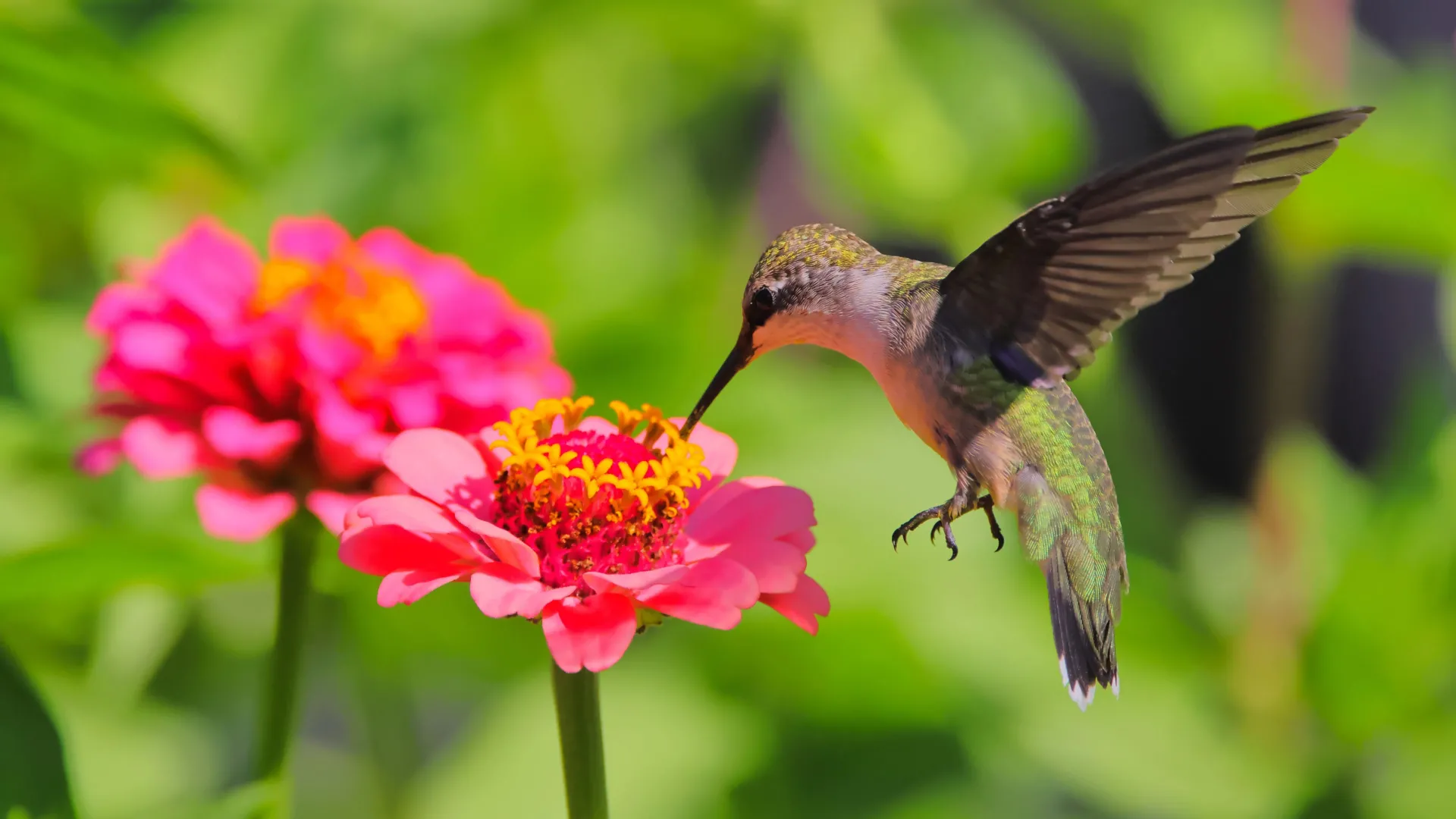
As bees and hummingbirds diligently flit from one blossom to another, engaging in the vital ecological dance of feeding on nectar and facilitating plant reproduction, they are unknowingly partaking in a surprising dietary component: small, yet consistent, amounts of alcohol. This groundbreaking discovery, detailed in a comprehensive study by biologists at the University of California, Berkeley, sheds new light on the intricate chemistry of floral nectar and its potential implications for pollinator behavior, physiology, and evolution.
The Unseen Ingredient: Ethanol in Nectar
For centuries, the sweet allure of nectar has been understood primarily as a sugar-rich reward designed by plants to attract pollinators. This mutualistic relationship is fundamental to ecosystems worldwide, underpinning the reproduction of countless plant species and providing critical energy for a vast array of insects and birds. However, the recent findings introduce a previously underestimated variable into this equation: ethanol.
The Berkeley research team conducted the first large-scale survey of alcohol content in floral nectar, revealing the pervasive presence of ethanol. Out of 29 plant species examined, at least one sample from 26 of them tested positive for ethanol. While most samples contained only trace amounts, a natural byproduct of yeast fermenting the sugars within the nectar, one particular sample recorded a concentration of 0.056% ethanol by weight. To put this into perspective, this is approximately 1/10 proof, a level that, while seemingly minuscule, becomes significant when considering the sheer volume of nectar consumed by these active creatures.
Yeast, microscopic single-celled fungi, are ubiquitous in nature, thriving in sugar-rich environments like ripening fruits and floral nectaries. Their metabolic processes convert sugars into ethanol and carbon dioxide, a process known as fermentation. This natural biochemical reaction means that alcohol production in nectar is not an anomaly but a widespread, inherent feature of many plant-pollinator systems. The presence of yeast in nectar has been documented in various studies, often linked to the microbial communities that inhabit flowers. These microbial residents can influence nectar chemistry in diverse ways, from altering sugar concentrations to producing secondary metabolites, including ethanol. The Berkeley study, however, is the first to systematically quantify the prevalence and levels of this alcoholic component across a significant range of plant species, moving beyond anecdotal observations to a broad ecological survey.
Unveiling the Discovery: UC Berkeley’s Landmark Survey
The findings, published on March 25 in the esteemed journal Royal Society Open Science, are the culmination of meticulous research by a team of integrative biologists and zoologists. Doctoral student Aleksey Maro, postdoctoral fellow Ammon Corl, and UC Berkeley Professor Robert Dudley led the primary investigations into nectar analysis and behavioral experiments. They were supported by Berkeley colleagues Rauri Bowie and Jimmy McGuire, both professors of integrative biology and curators at the campus’s Museum of Vertebrate Zoology, who contributed to the broader ecological and evolutionary context of the study.
The methodology involved collecting nectar samples from various plant species and meticulously analyzing their ethanol content using an enzymatic assay. This precise biochemical technique allowed the researchers to quantify even minute concentrations of alcohol, providing a robust dataset for their conclusions. The scale of the survey, encompassing nearly 30 distinct plant species, offers a foundational understanding of how widespread this phenomenon truly is across different floral ecosystems. Prior to this, the notion of animals consuming alcohol from natural sources was largely associated with fruit-eating species encountering fermented fruits. This study extends that understanding to nectarivores, highlighting a previously overlooked aspect of their daily diet.
The research builds upon a foundation of earlier work by the same UC Berkeley team, which had already begun to explore the interactions between pollinators and alcohol. These preliminary investigations laid the groundwork, suggesting that hummingbirds, in particular, might have a unique relationship with ethanol. The progression from initial behavioral observations to a comprehensive survey of nectar chemistry represents a systematic approach to unraveling a complex ecological mystery.
Quantifying the Intake: A Daily Dose for Pollinators
While the individual concentrations of ethanol in nectar samples might appear negligible, the sheer volume of nectar consumed by pollinators translates into a significant daily intake of alcohol. For many species, nectar is not just a snack but their primary and often sole energy source, demanding constant replenishment due to their high metabolic rates.
Hummingbirds, renowned for their frenetic energy and rapid wingbeats, exemplify this high-volume consumption. These avian marvels are known to drink between 50% and 150% of their body weight in nectar every single day. Projecting these feeding habits onto the ethanol concentrations detected in the survey, the researchers estimated that an Anna’s hummingbird (Calypte anna), a common resident of the Pacific coast, consumes approximately 0.2 grams of ethanol per kilogram of body weight daily. This intake level is remarkably comparable to that of a human consuming roughly one standard alcoholic drink.
To further contextualize this, a standard alcoholic drink for a human typically contains around 14 grams of pure alcohol. For an average 70 kg human, this translates to about 0.2 grams per kilogram of body weight. The similarity in relative intake between a tiny hummingbird and a human having a drink is striking and underscores the significance of these findings. Despite this regular intake, pollinators do not exhibit obvious signs of intoxication. This is largely attributed to their continuous, gradual consumption throughout the day, rather than a single large dose, and their incredibly high metabolic rates, which allow them to process substances very quickly. "Hummingbirds are like little furnaces. They burn through everything really quick, so you don’t expect anything to accumulate in their bloodstream," explained Aleksey Maro, emphasizing the birds’ efficient metabolism.
Beyond Intoxication: Subtle Effects and Evolutionary Adaptations
The absence of overt inebriation does not, however, negate the potential for ethanol to exert other, more subtle influences on pollinator biology and behavior. Nectar is a complex biochemical cocktail, known to contain various secondary metabolites beyond sugars, such as nicotine and caffeine. These compounds, even in trace amounts, are recognized to affect animal behavior, sometimes influencing foraging decisions or acting as mild stimulants. Ethanol could potentially operate in a similar fashion.
Professor Robert Dudley, a leading expert in biomechanics and animal physiology, elaborated on this possibility: "There may be other kinds of effects specific to the foraging biology of the species in question that could be beneficial. They’re burning it so fast, I’m guessing that they probably aren’t suffering inebriating effects. But it may also have other consequences for their behavior." These "other consequences" could range from subtle alterations in decision-making, memory, or even preferences for certain flowers. The idea that ethanol might have signaling or appetitive properties, similar to how it functions in humans, opens up new avenues for understanding plant-pollinator communication. Could plants inadvertently or even strategically leverage yeast-produced ethanol to enhance pollinator attraction or fidelity?
Ammon Corl echoed this sentiment, suggesting that ethanol’s role might be more nuanced than simply causing a "buzz." The evolutionary context is also critical here. If pollinators have been consistently exposed to dietary ethanol over millennia, it is plausible that they have developed physiological adaptations not only to tolerate it but potentially to utilize it. This could involve efficient detoxification pathways or even metabolic processes that derive some form of nutritional benefit from ethanol, however minor.
Experimental Insights: Tolerance and Metabolism
The Berkeley team’s investigation into alcohol consumption extends beyond mere detection in nectar. Earlier experiments provided crucial insights into how pollinators respond to varying alcohol concentrations and how they metabolize it.
One key set of experiments, conducted at a feeder positioned outside Professor Dudley’s office, focused on Anna’s hummingbirds. These controlled trials showed that the birds were largely indifferent to low alcohol concentrations in sugar water, specifically below 1% by volume. This suggests a natural tolerance for the levels typically found in natural nectar. However, a clear aversion emerged when concentrations reached 2%, with hummingbirds visiting the feeder approximately half as often. This behavioral shift indicates that while they can tolerate low levels, there is an upper threshold beyond which the alcohol becomes unpalatable or perceived as detrimental. "Somehow they are metering their intake, so maybe zero to 1% is a more likely concentration that they would find in the wild than anything higher," Dudley observed, highlighting a potential self-regulation mechanism.
Further evidence of physiological adaptation came from a study led by former graduate student Cynthia Wang-Claypool. This research revealed the presence of ethyl glucuronide in the feathers of birds, including Anna’s hummingbirds. Ethyl glucuronide is a direct byproduct of ethanol metabolism, serving as a reliable biomarker for alcohol ingestion and processing. Its detection in feathers provides concrete proof that these birds not only ingest alcohol but also metabolize it in a manner similar to mammals, including humans. This metabolic pathway is a crucial detoxification mechanism, indicating a long-standing evolutionary relationship with dietary alcohol.
Combined, these experimental findings paint a compelling picture. As Corl summarized: "The laboratory experiment was showing that yes, they will drink ethanol in their nectar, though they have some aversion to it if it gets too high. The feathers are saying that, yes, they will metabolize it. And then this study is saying that ethanol is actually pretty widespread in the nectar they consume." This tripartite evidence strongly supports the conclusion that dietary ethanol is a routine, metabolically processed component of many pollinators’ diets.
A Comparative Look: Alcohol Consumption Across the Animal Kingdom
To provide a broader ecological context, the research team went beyond hummingbirds, estimating daily alcohol intake for several other nectar-feeding species based on their caloric needs and typical feeding patterns. This comparative analysis included two hummingbird species (the Anna’s hummingbird and another), and three species of sunbirds. Sunbirds, found predominantly in Africa, fill an ecological niche similar to hummingbirds in the Americas, feeding on nectar from plants like the honeybush (Melianthus major).
The researchers then compared these avian intake rates with those of other animals known to consume alcohol, either from fermented fruits or other natural sources. This included the European honeybee, the pen-tailed tree shrew, fruit-eating chimpanzees, and, as a human benchmark, an individual consuming one standard alcoholic drink per day (estimated at 0.14 grams/kg/day).
The pen-tailed tree shrew emerged with the highest estimated intake at a remarkable 1.4 grams/kg/day, reflecting its diet rich in fermented palm nectar. The European honeybee, despite its association with fermented honey, had the lowest estimated intake from nectar at 0.05 grams/kg/day. Nectar-feeding birds, including both hummingbirds and sunbirds, fell within a similar range, consuming approximately 0.19 to 0.27 grams/kg/day when feeding on native flowers. This places their daily alcohol intake squarely within the range of other animals regularly exposed to ethanol in their diet.
Interestingly, the feeder experiments conducted with Anna’s hummingbirds suggested that these birds might ingest even more alcohol (0.30 grams/kg/day) from fermented sugar water in artificial feeders than they do from natural nectar. This highlights a potential area of concern for conservation, as human-provided feeders, if not properly maintained, could become sources of higher alcohol concentrations, potentially influencing bird behavior or health in unforeseen ways.
Broader Implications: Ecology, Evolution, and Conservation
This research has profound implications across several scientific disciplines, from ecology and evolutionary biology to conservation and even anthropology.
Ecological Implications: The consistent presence of ethanol in nectar could influence various aspects of plant-pollinator interactions. Could plants that produce slightly more fermentable nectar gain an advantage by subtly "rewarding" pollinators with a mild stimulant, thus encouraging more frequent visits or increasing pollinator fidelity? Conversely, could higher concentrations deter pollinators, serving as a quality control mechanism? The effect of ethanol on pollinator foraging efficiency, predator avoidance, and overall fitness remains an open question. For instance, a slightly inebriated pollinator might be less efficient at collecting nectar or more susceptible to predation. However, if the effects are subtle and appetitive, it could enhance pollination success.
Evolutionary Implications: The findings strongly suggest that dietary ethanol has been a ubiquitous environmental factor for many animal lineages for millions of years. This prolonged exposure would have driven the evolution of specialized physiological adaptations, including efficient detoxification pathways. Professor Dudley emphasizes this point: "These studies suggest that there may be a broad range of physiological adaptations across the animal kingdom to the ubiquity of dietary ethanol, and that the responses we see in humans may not be representative of all primates or of all animals generally." This challenges the anthropocentric view of alcohol metabolism and suggests that our own evolutionary history with alcohol, often linked to fruit consumption, might be part of a much larger, ancient story shared across diverse taxa. Understanding these varied adaptations could shed light on the mechanisms of alcohol tolerance and addiction across species.
Conservation Implications: As human activities alter ecosystems, changes in floral microbial communities or nectar chemistry could have unforeseen consequences for pollinators. Climate change, for example, might influence yeast growth rates or sugar concentrations in nectar, potentially leading to higher ethanol levels. If pollinators’ tolerance thresholds are exceeded, this could negatively impact their health, foraging efficiency, and reproductive success, exacerbating existing threats to pollinator populations already facing habitat loss, pesticide exposure, and disease. This research underscores the need for a holistic understanding of pollinator diets, including their microbial components.
The Road Ahead: Future Research and Unanswered Questions
This groundbreaking study is part of a broader, five-year National Science Foundation project designed to collect extensive genetic data from hummingbirds and sunbirds. The ultimate goal is to understand how these highly specialized birds adapt to diverse environments and challenging food sources, including high altitudes, sugar-rich diets, and now, frequently fermented nectar.
Future research will likely delve deeper into the specific genes and physiological mechanisms that underpin alcohol tolerance and metabolism in pollinators. Do different species exhibit varying degrees of tolerance, reflecting their unique dietary histories and ecological niches? What are the precise signaling or appetitive properties of ethanol at the levels consumed by pollinators? Are there any long-term health consequences, positive or negative, associated with chronic, low-level alcohol intake?
The question of whether ethanol offers any nutritional benefits to these animals is also ripe for exploration. While primarily a toxin, ethanol is also an energy-rich molecule. Could it serve as a supplementary energy source, especially for animals with incredibly high metabolic demands like hummingbirds? "Maybe there are other physiological detoxification pathways or other kinds of nutritional effects of ethanol for animals that are consuming it every day of their lives," Dudley pondered. "That’s the interesting thing — this is chronic through the course of the day, but that’s a lifetime exposure post-weaning. It just means that the comparative biology of ethanol ingestion deserves further study."
This research opens up an exciting new frontier in ecological and evolutionary biology. It forces us to reconsider the complex interplay between plants, microbes, and animals, revealing a hidden layer of chemical interaction that has likely shaped the evolution of life on Earth for millions of years. The ubiquitous presence of alcohol in nectar challenges conventional assumptions about animal diets and underscores the profound and often surprising ways in which organisms adapt to their natural environments. Understanding these intricate relationships is not only intellectually fascinating but also crucial for informing conservation efforts in a rapidly changing world.
