
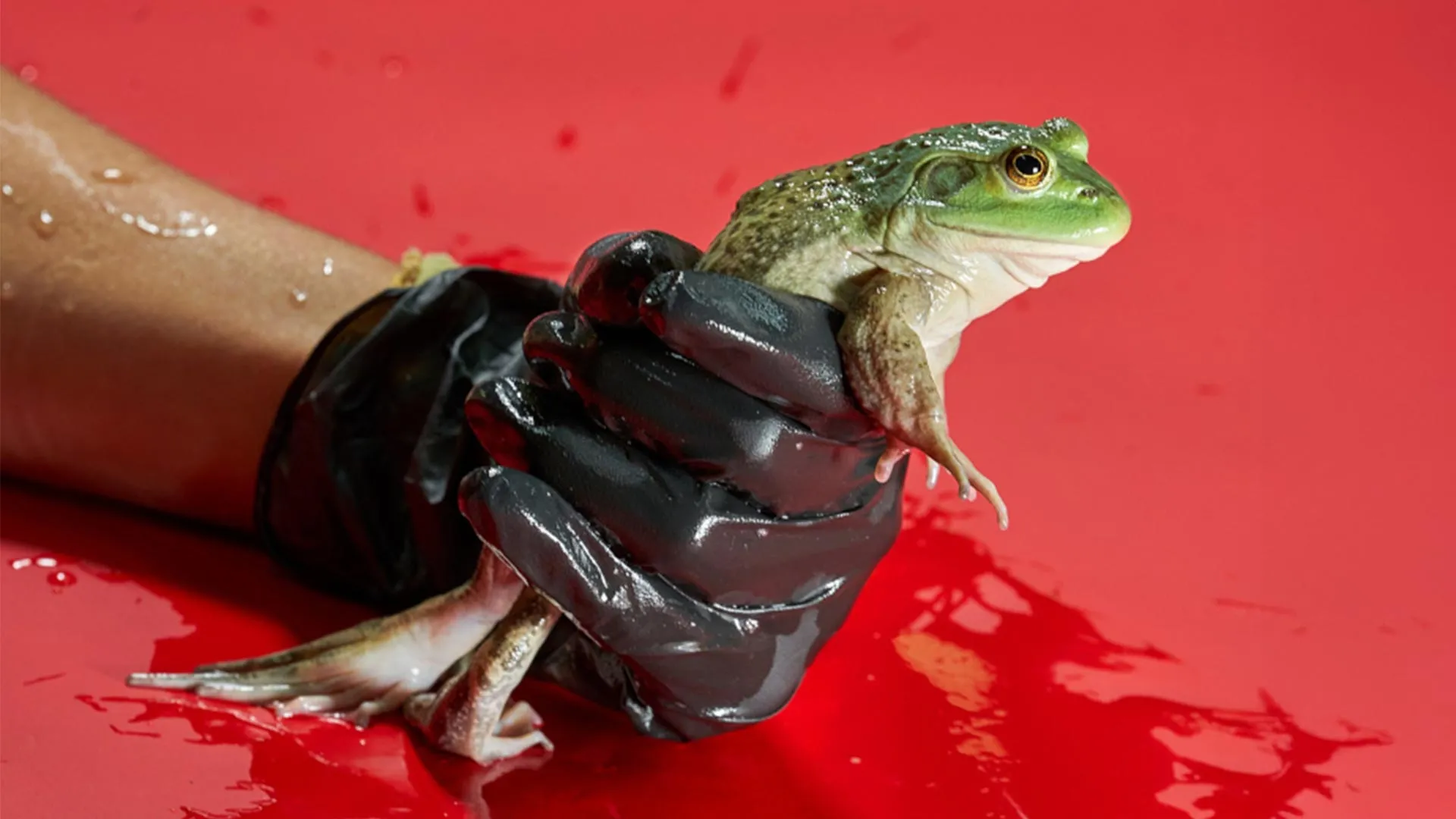
The chytrid fungus, Batrachochytrium dendrobatidis (Bd), stands as a formidable threat to global amphibian biodiversity, widely recognized as a primary driver behind the precipitous decline of these ecologically vital creatures worldwide. Scientists have painstakingly identified numerous genetic variants of this disease-causing fungus across diverse geographic regions, with these collective strains already contributing to catastrophic population crashes in at least 500 species of frogs and toads, marking one of the most significant disease-driven extinctions observed in recent history. The pervasive nature of Bd has led to a global conservation crisis, prompting intensive research into its origins, spread, and mitigation strategies.
The Global Threat of Chytridiomycosis
Chytridiomycosis, the disease caused by Bd, attacks the keratin-rich skin of amphibians, disrupting their ability to regulate water and electrolytes, ultimately leading to cardiac arrest and death. Its rapid and often fatal progression has decimated amphibian populations across continents, from the rainforests of Central America to the highlands of Australia. While the fungus was formally described in 1999, retrospective studies have shown its presence in amphibian populations much earlier, indicating a long, silent spread before its devastating impact became widely apparent. One particularly aggressive variant, Bd-GPL (Global Pandemic Lineage), believed to have originated in Asia, is considered responsible for a significant portion of the global amphibian die-offs. The international spread of such pathogens is often exacerbated by human activities, with the commercial trade of live animals frequently implicated.
Bullfrogs: A Vector of International Concern
A critical vector in the international dissemination of Bd has been identified as the American bullfrog (Aquarana catesbeiana). Native to North America, these large amphibians are extensively farmed globally for human consumption, particularly for their meat. Their robust nature, rapid growth, and adaptability make them ideal for aquaculture, but these same traits also render them highly effective carriers of Bd. Bullfrogs are often asymptomatic carriers, meaning they can harbor the fungus without showing signs of disease, effectively becoming silent reservoirs that can infect native amphibian populations when introduced to new environments.
The introduction of bullfrogs to Brazil, a biodiversity hotspot for amphibians, began in 1935, with a subsequent significant influx in the 1970s. These introductions were primarily for establishing a commercial bullfrog farming industry. However, these movements inadvertently created new and efficient pathways for the chytrid fungus to travel across international borders, establishing footholds in new ecosystems and potentially exposing vulnerable native species to the pathogen. The global demand for frog meat, particularly in Asian and European markets, has fueled a massive international trade network, inadvertently facilitating the movement of pathogens like Bd across continents. Estimates suggest that millions of bullfrogs are traded annually, often with insufficient biosecurity protocols.
A Disputed Origin Reexamined: The Case of Bd-Brazil
One specific strain of the chytrid fungus, initially designated Bd-Brazil, was first identified in the country in 2012. Its geographical namesake implied a Brazilian origin, but this conclusion soon became the subject of intense scientific debate. In 2018, a high-profile study published in the prestigious journal Science posited a dramatically different origin, proposing that the Bd-Brazil strain had, in fact, emerged on the Korean Peninsula. Consequently, the strain was provisionally renamed Bd-Asia-2/Bd-Brazil, reflecting this revised hypothesis and highlighting the uncertainty surrounding its true genesis. This renaming signaled a significant shift in the scientific understanding of this particular lineage’s epidemiology.
However, new and compelling findings are now challenging the 2018 Science conclusion, presenting a robust body of evidence that strongly supports Brazil as the actual origin point for this strain. A groundbreaking study published in the journal Biological Conservation, with substantial support from the São Paulo Research Foundation (FAPESP), details this re-evaluation. The research was spearheaded by a team of scientists from the State University of Campinas (UNICAMP) in São Paulo, Brazil. This revised understanding carries significant implications for tracing the global spread of the pathogen and for implementing effective conservation strategies. The Bd-Brazil strain has since been detected in various other countries, including the United States, Japan, and indeed, the Korean Peninsula, further underscoring its international reach and the importance of accurately identifying its source.
Evidence from the Archives: Museum Specimens and Genetic Records
The foundation for re-examining the origin of Bd-Brazil rests upon a multi-faceted approach, drawing on both historical records and cutting-edge genetic analysis. Earlier research, specifically a 2014 study published in Molecular Ecology, provided crucial initial insights. This study, which analyzed preserved frog specimens meticulously stored in museums since the 19th century, revealed the presence of Bd-Brazil in Brazilian amphibians as early as 1916. This finding is profoundly significant because it predates the first documented introduction of bullfrogs to Brazil by approximately two decades (1935). This temporal disconnect immediately cast doubt on the notion that bullfrogs were solely responsible for introducing this particular strain to Brazil, suggesting an endemic presence. The ability to extract and analyze fungal DNA from these decades-old specimens, despite the challenges of preservation, provided a unique window into the historical ecology of the pathogen.
The new Biological Conservation study significantly expanded upon these initial findings by combining multiple lines of evidence, creating a comprehensive picture of the strain’s history and spread. Researchers meticulously reviewed existing scientific literature on Bd distribution and genetics, critically re-evaluating previous assumptions. They then embarked on an extensive examination of amphibian museum specimens from institutions across the globe, broadening the geographical and temporal scope of their analysis. Crucially, they also conducted novel genetic analyses of fungal samples obtained directly from Brazilian bullfrog farms, which are known hotbeds for Bd, and from bullfrogs sold internationally. By synthesizing these diverse datasets – historical records, global genetic patterns, and contemporary trade data – the researchers converged on Brazil as the most likely source of the Bd-Brazil strain, simultaneously identifying the global frog meat trade as the primary conduit for its international dissemination.
Luisa P. Ribeiro, the study’s first author, who conducted this pivotal research during her doctoral studies at the Institute of Biology (IB) at UNICAMP with funding from FAPESP, highlighted the unique prevalence of this genotype in Brazil. "This genotype is highly prevalent in different native Brazilian species, with very old records," Ribeiro stated. "When we look elsewhere, the records are much more recent and occur only in bullfrogs and other exotic species. Here, however, the strain is present both in frog farms and in the wild, including some native species that do not develop the disease." This observation suggests a long co-evolutionary history between the Bd-Brazil strain and local amphibian populations, a hallmark of an endemic origin rather than a recent introduction. The presence of the strain in native species that show no signs of disease indicates a potential for host adaptation or reduced virulence in certain contexts, which is often observed in pathogens endemic to a region.
The overarching work is part of the larger project, "From Natural History to the Conservation of Brazilian Amphibians," a comprehensive initiative supported by FAPESP and coordinated by Luís Felipe Toledo, a professor at IB-UNICAMP and Ribeiro’s doctoral advisor. This project underscores the commitment of Brazilian scientists to understanding and protecting their nation’s rich amphibian heritage.
Tracing the Fungus Through History: Challenges and Breakthroughs
Reconstructing the historical distribution of a microscopic pathogen from preserved specimens presents considerable scientific challenges. "We were unable to identify the exact strain in a large sample of amphibians deposited in museums, since conservation isn’t always ideal for maintaining this information," explained Professor Toledo. "Therefore, we only identified the presence or absence of the fungus in these individuals and sought other evidence that could indicate whether or not Bd-Brazil originated in Brazil." The degradation of genetic material over long periods in museum collections means that while the presence of Bd can be confirmed through PCR techniques, pinpointing the exact genetic lineage (e.g., Bd-Brazil vs. Bd-GPL) can be significantly more difficult.
To overcome these limitations and provide a comprehensive historical context, the research team, in collaboration with international partners, undertook an ambitious task: examining 2,280 amphibian specimens collected between 1815 and 2014, meticulously stored in zoological museums worldwide. This extensive survey aimed to build the most detailed timeline of Bd presence globally.
"Even without knowing the strain, we found records older than those previously reported in the literature and presented a review of historical records of Bd worldwide," added Ribeiro, who is now a postdoctoral researcher at the Federal University of São Paulo (UNIFESP) with ongoing support from FAPESP. This broad historical review established a global baseline for Bd’s presence, against which the specific timeline of Bd-Brazil could be compared.
Out of the thousands of specimens analyzed, 40 tested positive for the presence of Bd. The earliest confirmed cases hailed from five frogs of the species Alytes obstetricans (Midwife Toad) collected in 1915 in the Pyrenees region of France. These specimens now represent the oldest known infected amphibians from that country, pushing back the established timeline of Bd’s European presence. The second oldest record of Bd was found in a specimen of Megophrys goeldii, a species currently found in Rio de Janeiro, Brazil, collected in 1964. While this specific finding in Brazil is later than the 1916 Bd-Brazil record, it contributes to the overall understanding of the fungus’s deep historical roots within the country. This chronological mapping of Bd’s presence across different continents provides invaluable context for understanding the global epidemiology of chytridiomycosis.
Mapping Global Trade Routes and Dissemination
To further validate their theory that Bd-Brazil spread internationally via bullfrog exports, the researchers embarked on a detailed analysis of historical trade records, integrating this with their genetic findings from Brazilian frog farms and bullfrogs sold in foreign markets. This multi-pronged approach allowed them to connect the dots between the presence of the fungus, the movement of its carriers, and the timing of its detection in new regions.
Within Brazil, the Bd-Brazil strain is notably widespread, with more than half of all recorded cases directly linked to commercial frog farms. While this strain is endemic, it is generally considered less aggressive in its impact on native amphibian populations compared to the highly virulent Bd-GPL variant, which is believed to have originated in Asia and has caused more dramatic die-offs. This difference in virulence might explain why the Bd-Brazil strain could persist endemically without causing widespread extinctions among native species, even while being transported globally.
The team meticulously examined 3,617 frog meat trade routes, involving a total of 48 countries. This extensive dataset revealed a complex web of international commerce: 12 countries acted exclusively as exporters of frog meat, 21 primarily as importers, and 15 played dual roles, both exporting and importing. By combining these detailed trade data with the genetic evidence of Bd-Brazil and the specific timelines of its detection in different countries, the researchers were able to reconstruct the most probable pathways of the strain’s global dissemination.
Eight primary dissemination routes were identified as critical for the spread of Bd-Brazil. Notably, Brazil directly exported bullfrogs to the United States between 1991 and 2009. Subsequently, the United States exported bullfrogs to South Korea in 2004 and 2008. Crucially, the researchers found no documented records of exports from South Korea to other affected countries, such as Japan. This absence of outbound trade from Korea to other regions, coupled with the earlier and more extensive presence of Bd-Brazil in Brazil and the direct trade links, strongly supports the conclusion that Brazil was the original source of the strain, which then spread to other countries through these commercial chains. The United States, acting as an intermediary, appears to have played a significant role in onward transmission.
Implications for Conservation and Policy: A Call for Stronger Safeguards
The findings of this comprehensive study carry profound implications for global amphibian conservation and underscore an urgent need for re-evaluating current biosecurity measures. The researchers unequivocally conclude that their results highlight the critical necessity for stronger preventive actions to mitigate the risk of future pathogen outbreaks and protect already vulnerable amphibian populations.
These recommended actions are multifaceted and require international cooperation. They include the implementation of stricter import regulations for live animals, particularly amphibians destined for trade or aquaculture. Such regulations would involve routine pathogen screening of all incoming shipments, employing advanced molecular diagnostic techniques to detect even asymptomatic carriers of Bd and other potential pathogens. Furthermore, robust quarantine measures for imported amphibians are essential, allowing for a period of observation and testing before animals are released into new environments or integrated into existing farming operations.
Beyond national borders, the study advocates for coordinated global monitoring programs. Such programs would involve standardized surveillance protocols across different countries, allowing for the early detection of emerging strains or the spread of known pathogens. This real-time data would be crucial for rapid response efforts, enabling conservationists and policymakers to implement targeted interventions before outbreaks escalate into widespread epidemics. The economic incentives behind the global frog meat trade are powerful, but the ecological costs of unchecked pathogen spread are catastrophic. This study serves as a stark reminder that economic activities involving live animal trade must be conducted with the highest standards of biosecurity and ecological responsibility.
The re-evaluation of Bd-Brazil’s origin is not merely an academic exercise; it fundamentally reshapes our understanding of how pathogens emerge and spread globally. By accurately identifying the source, scientists and policymakers can better target intervention strategies, from strengthening biosecurity in source countries to implementing more stringent controls along trade routes. This research exemplifies the dynamic nature of scientific inquiry, where previous conclusions are rigorously re-examined in light of new evidence, ultimately advancing our collective ability to address complex global challenges like the amphibian extinction crisis. The fate of countless amphibian species hinges on the willingness of nations to adopt and enforce these crucial safeguards.
