
Hinesburg, VT – The Green Mountain Audubon Center, a cornerstone of environmental education in Vermont, has long championed an immersive approach to learning, particularly for its youngest participants. This philosophy was profoundly experienced and articulated by a recent Spring Education Intern whose journey from urban Brooklyn to the verdant hills of Vermont culminated in a transformative understanding of pedagogy, deeply rooted in observing the natural world. This intern’s tenure at Audubon Vermont offered a unique lens into the effectiveness of hands-on environmental education, highlighting how the simple act of interacting with insects and local wildlife can fundamentally reshape an educator’s approach.
The intern’s reflections underscore a pivotal shift in educational philosophy: moving from a model of direct instruction to one that fosters student-led discovery and empowers children to demonstrate their innate understanding and capabilities. This insight, gained through daily interactions with toddlers and preschoolers in the center’s acclaimed Nature Playgroup, provides valuable lessons for educators across all disciplines, emphasizing trust in a child’s capacity for learning and stewardship.
The Foundations of Nature Play: Fostering Early Stewardship
Audubon Vermont’s Nature Playgroup is a cornerstone program designed for children aged 0-5 and their caregivers, offering weekly outdoor explorations that encourage sensory engagement with the natural world. These sessions are not merely recreational; they are carefully structured to introduce fundamental ecological concepts and cultivate an early appreciation for conservation. The program operates on the principle that direct interaction with nature in early childhood is crucial for developing cognitive, emotional, and social skills, alongside instilling a lifelong ethic of environmental responsibility.
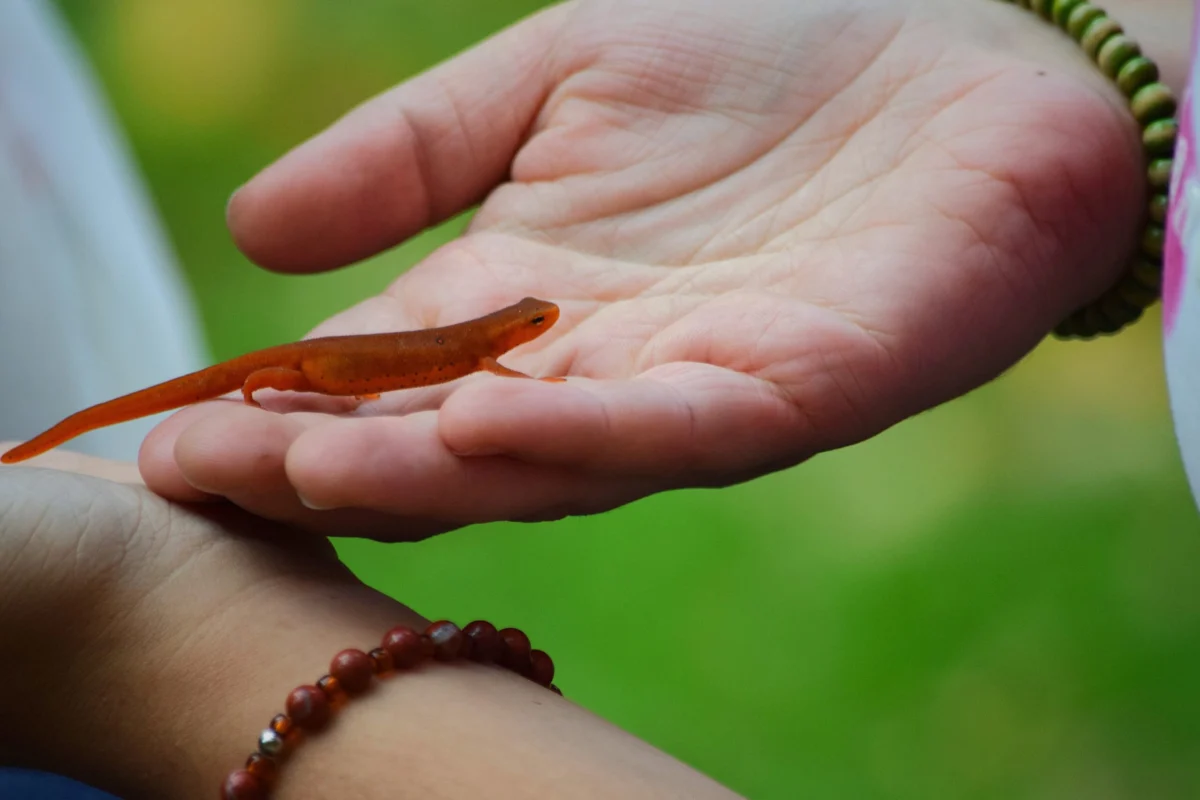
During a recent Nature Playgroup session at the Green Mountain Audubon Center, the Spring Education Intern led a group of enthusiastic young learners and their parents on an excursion to Beaver Pond. The day’s focus: respectful interaction with salamanders, a delicate component of Vermont’s diverse ecosystem. Before embarking, the intern initiated a familiar call-and-response, a pedagogical technique designed to reinforce established guidelines for wildlife interaction. "Who remembers the four rules?" she queried, holding up her fist to prompt the children. The responses were immediate and enthusiastic: "Scoop them!", "Wet your hands!", "Put them back at home!", "Close to the ground!" Each shouted rule was met with the extension of a finger, a tactile affirmation of their collective knowledge, culminating in the triumphant display of the pinky finger signifying a passed test. This pre-hike ritual not only served as a critical safety and ethical reminder but also demonstrated the children’s remarkable retention of complex instructions, an early indicator of their capacity for environmental stewardship.
A Pivotal Mindset Shift: Learning from the Learners
The journey to Beaver Pond offered an unexpected, yet profound, lesson for the intern. En route, the group encountered a decaying log, a micro-habitat teeming with life. Children, instinctively drawn to exploration, immediately moved to investigate, flipping the log over to reveal hidden roly-polies and carpenter ants. The intern, recalling the guidance of experienced Audubon educator Emily Calder, began to articulate the standard instruction: "Make sure you roll the logs back to the same place when you leave." However, before the sentence could be completed, a student had already meticulously returned the log to its original position.
This seemingly minor incident sparked a significant realization for the intern. It challenged the conventional notion that teaching is primarily about the delivery of instructions. Instead, it highlighted the profound importance of providing opportunities for students to actively demonstrate their learning and inherent strengths. The child’s proactive action was not merely compliance but an independent application of previously learned environmental care principles. This moment marked a pivotal mindset shift, revealing that effective education often involves stepping back, creating space for pride, confidence, and independence to flourish within the learners. It underscored a core tenet of experiential education: that children often learn best by doing, and their capacity for understanding and application can surpass adult expectations.
Upon arrival at Beaver Pond, the focus returned to salamander observation. The intern initially demonstrated the established four steps for interacting with these amphibians: wetting hands to protect their delicate skin, gently scooping them from the sides, lifting them only a few inches above the water’s surface, and returning them precisely to their discovery spot. Following this demonstration, the children, eyes wide with curiosity, eagerly commenced their own search. Armed with the lesson from the rotting log, the intern consciously resisted the urge to hover, choosing instead to observe from a distance. The result was largely successful; the children adhered to most of the rules, with the most challenging aspect being the natural desire to proudly display their discoveries, often requiring a gentle reminder to keep the salamanders close to the water. This observation further solidified the intern’s evolving understanding of teaching as a process of guided discovery and trust.
The Intern’s Journey: From Brooklyn Pavement to Vermont Wilderness
The intern’s path to Audubon Vermont was itself a testament to the transformative power of nature. Growing up in Brooklyn, New York, her early encounters with wildlife were primarily through books, such as the tactile version of The Very Hungry Caterpillar. This urban upbringing, while rich in other experiences, offered limited direct interaction with expansive natural environments. Her transition to the University of Vermont marked a significant geographical and experiential shift, a "fledging from her concrete nest" into the immersive landscapes of the Green Mountains.
By her second year at the university, her exploration of Vermont’s natural beauty led her to discover the Green Mountain Audubon Center via signs along Sherman Hollow Road. Intrigued, she researched the center that evening and found its internship page, a discovery that would profoundly shape her academic and professional trajectory. Since then, she has served as the Spring Education Intern, a role that has provided unparalleled opportunities to lead diverse educational programs. These programs ranged from exploring the unique ecosystems of Hemlock Swamp to understanding traditional sugaring practices in the sugarhouse, catering to a wide age demographic, from two-year-old budding ecologists to seventeen-year-old aspiring conservationists. Her responsibilities also extended to co-leading the Vermont Woodlands Association Kids Conference, demonstrating the breadth of her involvement and the trust placed in her by the Audubon team.
Audubon Vermont: A Beacon for Environmental Education
Audubon Vermont, with its Green Mountain Audubon Center located in Hinesburg, has been a leading force in environmental conservation and education for decades. Established to protect birds and the places they need, Audubon Vermont extends its mission through robust educational programs that connect people of all ages to the natural world. The Green Mountain Audubon Center itself encompasses over 250 acres of diverse habitats, including forests, fields, wetlands, and streams, providing an ideal living laboratory for experiential learning.
The center’s educational philosophy is deeply rooted in fostering an understanding of ecological principles through direct engagement. Programs like the Nature Playgroup are crucial for early childhood development, promoting not only scientific literacy but also critical thinking, problem-solving, and social skills in an outdoor setting. For older children and teenagers, Audubon Vermont offers a range of programs that delve into ornithology, botany, wildlife tracking, and sustainable forestry, often integrating citizen science initiatives that allow participants to contribute to real scientific research. These programs collectively aim to cultivate a generation of environmentally conscious citizens who are equipped with the knowledge and passion to advocate for conservation.
The internship program, such as the Spring Education Internship, is vital to Audubon Vermont’s operations. It provides aspiring environmental educators and conservationists with invaluable hands-on experience in program development, delivery, and audience engagement. Interns work alongside seasoned professionals, gaining mentorship and practical skills that are essential for careers in non-profit management, outdoor education, and environmental science. These programs not only benefit the interns but also significantly augment Audubon Vermont’s capacity to reach a broader audience and deliver high-quality educational content.
The Broader Implications: Redefining Environmental Education
The intern’s experience at Audubon Vermont provides a powerful case study for the evolving landscape of environmental education. Traditionally, environmental education might have been perceived as a rigid curriculum focused on memorizing facts about flora and fauna, or adhering to strict rules about outdoor conduct. However, the intern’s reflections, honed through observation and practical application, suggest a more nuanced and ultimately more effective approach.
The core lesson gleaned is that the true objective of environmental education is not rote memorization, however engaging it might be, but rather to cultivate a reciprocal and meaningful relationship with the natural world. This involves teaching individuals how to explore, how to observe, and how to interact with the life around them in ways that are both respectful and enriching. This approach empowers learners to become active participants in their own education and, by extension, active stewards of the environment.
The implications of this understanding are far-reaching:
- Empowerment of Learners: By trusting children to demonstrate their understanding and allowing them space for independent action, educators foster self-confidence, critical thinking, and a sense of ownership over their learning and the environment. This moves beyond passive reception of information to active engagement and problem-solving.
- Long-term Stewardship: When children develop a personal, meaningful connection with nature through hands-on experiences, they are far more likely to develop a lifelong commitment to conservation. The intrinsic motivation derived from discovery and respect is more enduring than adherence to externally imposed rules.
- Holistic Development: Environmental education, when approached experientially, contributes significantly to a child’s holistic development. It enhances sensory awareness, encourages physical activity, promotes social interaction and collaboration, and nurtures emotional intelligence through empathy for living creatures.
- Role of Mentorship: The intern’s journey highlights the critical role of experienced educators, like Emily Calder, in modeling effective teaching practices. Mentorship in environmental education extends beyond curriculum delivery to demonstrating pedagogical approaches that prioritize student agency and natural curiosity.
- Adaptability in Education: The intern’s urban background and subsequent immersion in rural Vermont underscore the universal applicability of nature-based learning. While the specifics of the environment may differ, the principles of observation, respect, and experiential engagement are transferable, emphasizing that valuable outdoor learning opportunities exist everywhere.
The experience of the Spring Education Intern at Audubon Vermont is a compelling narrative of personal and professional growth, demonstrating that the most profound lessons in teaching often come not from instruction, but from observation and interaction with the students themselves, especially when those students are immersed in the boundless classroom of nature. It reinforces Audubon Vermont’s enduring commitment to an educational philosophy that truly connects people to the environment, fostering not just knowledge, but a deep, reciprocal relationship with the world around them. This approach is not just enriching for the individual; it is foundational for building a sustainable future.
