
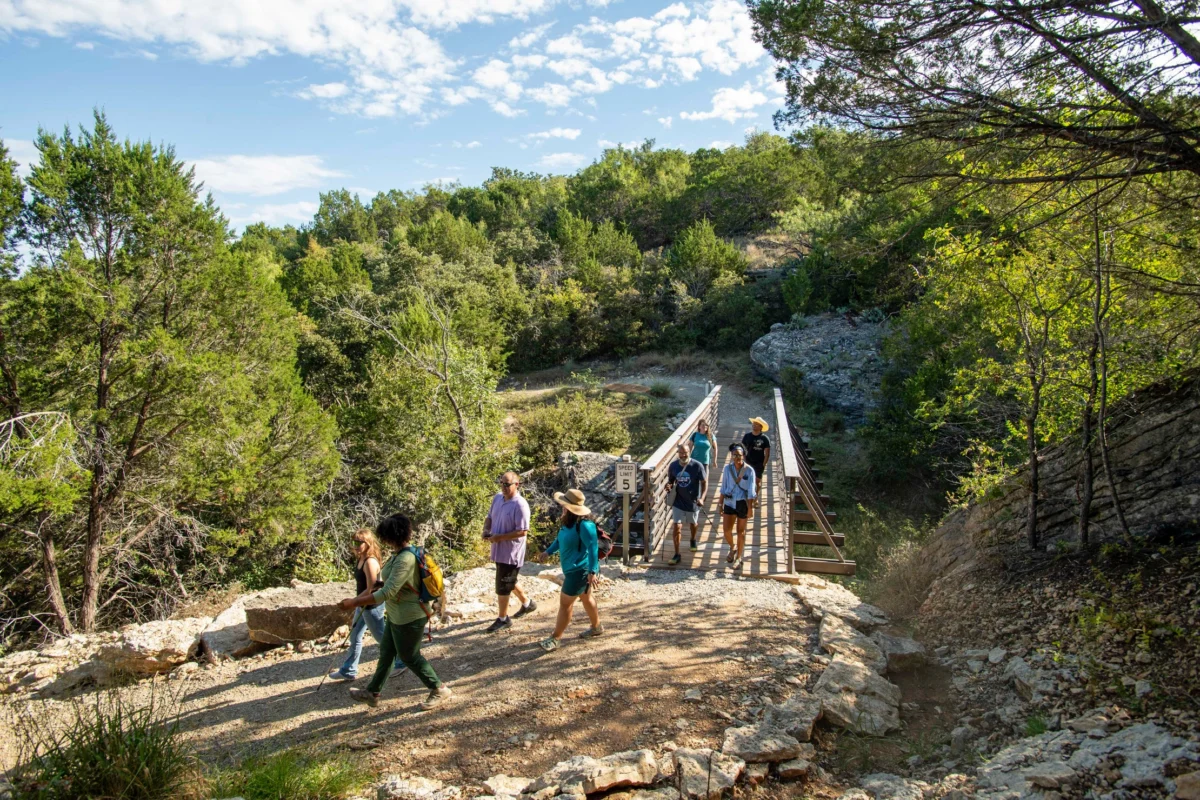
The landscape of Texas’s public lands has entered a transformative period with the recent opening of Palo Pinto Mountains State Park, the first new state park in the state in 25 years. This significant development, unveiled in March, is a cornerstone of the ambitious Centennial Parks Conservation Fund, a statewide initiative allocating $1 billion to acquire and develop new public lands and expand existing ones across Texas. Situated approximately 75 miles west of the bustling Dallas-Fort Worth metroplex, the 4,780-acre park offers a unique blend of ecological diversity, serving as a critical habitat for numerous species, including the endangered Golden-cheeked Warbler, while providing much-needed recreational opportunities for a rapidly growing population.
The park’s dawn reveals a breathtaking tableau: the Texas sunrise casts dusty pink-and-orange hues across the horizon, illuminating a series of rolling hills often referred to as mountains. These "mountains" are verdant with the deep green of juniper trees, interspersed with the delicate specks of lingering spring wildflowers that adorn the park’s extensive trail system. Where the topography gently descends and opens, vast stretches of native grass meet the shimmering waters of Tucker Lake, its banks embraced by patches of wild mesquite and resilient cacti. This convergence of arid and more verdant ecosystems creates a mosaic of microhabitats, encapsulating the ecological richness that characterizes various regions of Texas, from its drier western plains to its more lush, central riverine environments.
A Sanctuary for Rare Songbirds: The Golden-cheeked Warbler
At the heart of Palo Pinto’s ecological significance is its role as a vital sanctuary for the endangered Golden-cheeked Warbler. Each morning, as park interpreter Katherin Fisher embarks on her rounds, her ears are attuned to the distinctive chips and the pulsing zee-zee-zee call of this high-profile resident. The Golden-cheeked Warbler, a striking bird with a black back and throat, bright yellow cheeks bisected by bold black eyelines, is one of North America’s rarest songbirds. Its breeding range is exclusively confined to the juniper-oak woodlands of Central Texas, a specific habitat type abundantly found within Palo Pinto’s rolling hills and canyons.
These woodlands provide the warbler with both nesting material – strips of bark from mature Ashe juniper trees – and insect prey. The reliance on this specific habitat makes the species particularly vulnerable to habitat loss and fragmentation, largely due to urban development and land conversion. The protection offered by Palo Pinto Mountains State Park is therefore crucial for the species’ long-term survival. Fisher notes the topographical variety within the park that supports such diverse avian life: "Up on the top, there’s a lot of juniper trees. As you start going down the hill into the canyons, along the creek beds, you have cottonwoods and pecan and oak trees. Then you have pocket prairies that are full of native wildflowers.” This intricate arrangement of ecosystems ensures a robust habitat for the Golden-cheeked Warbler and a myriad of other species.
The Centennial Parks Conservation Fund: A Historic Investment
The establishment of Palo Pinto Mountains State Park marks a pivotal moment, signaling a renewed commitment to public land acquisition and conservation in Texas. For a quarter of a century, Texas, despite its rapid population growth and increasing demand for outdoor recreation, had not opened a new state park. This hiatus was largely due to inconsistent funding and competing land-use priorities. The state’s existing 89 state parks and natural areas often struggled with overcrowding and resource limitations, highlighting a critical need for expansion.
The landscape shifted dramatically in 2023 with the legislative approval of the Centennial Parks Conservation Fund (CPCF). This monumental initiative, backed by a $1 billion allocation, was designed to address the growing disparity between public land availability and recreational demand. The fund’s creation was a response to decades of advocacy from conservation groups, outdoor enthusiasts, and a recognition by state leaders of the intrinsic value of preserving Texas’s natural heritage for future generations. The CPCF is tasked with a dual mandate: establishing entirely new state parks and natural areas, and significantly expanding existing ones to enhance recreational access and bolster conservation efforts across the vast and ecologically diverse state.
Richard Gibbons, director of conservation for Audubon Texas, expressed enthusiastic support for the initiative. "We’re very excited that Texas Parks and Wildlife Department was able to secure this property and several others to expand or establish more habitat and recreation destinations around Texas," Gibbons stated, adding, "Palo Pinto is a great addition to the state park portfolio." His remarks underscore the importance of such acquisitions for conservation organizations that recognize the critical role of protected areas in maintaining biodiversity and ecological health.
A Vision for the Future: Expanding Texas’s Public Lands
Palo Pinto is merely the vanguard of a broader expansion effort. The Centennial Parks Conservation Fund has outlined several future projects slated for completion within the next three to four years. These include:
- Chinati Mountains State Natural Area: Located in West Texas, this vast natural area is expected to protect significant desert ecosystems and unique geological formations, offering unparalleled stargazing and wilderness experiences.
- Bear Creek State Park: Situated outside Uvalde, this park will provide much-needed green space and recreational opportunities in a rapidly developing region of South-Central Texas.
- Post Oak Ridge: Near Austin, this park will safeguard critical hill country habitat, providing urban residents with accessible natural escapes.
- Enchanted Rock State Park Expansion: One of Texas’s most iconic state parks, Enchanted Rock near Fredericksburg, is slated for a massive expansion, tripling its current size. This will alleviate pressure on its popular summit and protect more of its unique granite dome and surrounding ecology.
These projects collectively represent a strategic investment in Texas’s natural capital, aiming to create a more robust and accessible state park system that can accommodate the state’s projected population growth while simultaneously preserving its ecological treasures.
Connecting People with Nature: The Role of Park Interpretation
Park interpreter Katherin Fisher’s role extends beyond merely identifying the park’s diverse avian residents; it encompasses making the park and its wildlife accessible and meaningful to visitors. Through outdoor lessons and activities such, including archery, hiking, and specialized bird walks, Fisher aims to cultivate a deeper connection between people and the natural world. On Palo Pinto’s opening day this past March, she led a "Birding 101" tour for a segment of the nearly 1,000 people who flocked to the park.
Fisher finds immense satisfaction in witnessing visitors encounter nature in new and unexpected ways. "It’s extremely rewarding. You’ll see wildlife doing things that you don’t normally see," she explains. "It’s just very interesting to be a part of the whole thing. Like when somebody hears a Golden-cheeked Warbler for the first time, they’re like, ‘that’s an endangered species!’ And they just heard it.” This immediate, personal connection to a rare species often sparks a profound sense of wonder and responsibility.
One of the initial concerns for park management was how the influx of visitors would impact the sensitive Golden-cheeked Warblers. While these birds typically favor less accessible hardwood and rocky hillside areas, the abundant juniper-oak habitat within Palo Pinto means they are often found close to established paths and more frequented zones. To Fisher’s pleasant surprise, the park’s opening did not appear to disrupt the birds’ behavior in any noticeable way. In fact, shortly after the park opened, the first breeding pair of the season was recorded, a testament to effective park management and the resilience of the species within a protected environment.
A Haven for Avian Diversity
Palo Pinto Mountains State Park is not just a haven for the Golden-cheeked Warbler; it boasts a remarkable avian diversity, making it a premier destination for birdwatchers. According to Fisher, the park is home to over 130 species of birds throughout the year. The eBird platform has already recorded 109 different species in the park in 2026 alone, with a total of 206 species observed since records began, underscoring its rich biodiversity.
During spring and summer, visitors can spot vibrant southern specialties like the Painted Bunting, with its kaleidoscope of colors; the fiery Summer Tanager; and the graceful Mississippi Kite, known for its aerial acrobatics. Beyond the Golden-cheeked Warbler, two other significant Texas highlights, the Black-capped Vireo (another endangered species nesting in similar habitats) and the Black-crested Titmouse, are also frequently observed during breeding months. As the seasons change, the park continues to offer unique birding opportunities. In winter, Harris’s Sparrows, distinctive with their black faces and bibs, migrate from the frigid northern reaches of Canada to seek refuge in the milder southern Great Plains, including Palo Pinto. This year-round avian presence highlights the park’s importance as a critical stopover point and wintering ground for migratory birds, as well as a permanent home for many resident species.
Recreational Opportunities and Trails
The park offers a comprehensive network of nine different trails, catering to various fitness levels and interests. Ranging from a leisurely half-mile stroll to challenging routes just under six miles, these winding paths allow visitors to experience the park’s full spectrum of views and habitats. Hikers can traverse lush creek beds, explore expansive prairie grasses, or ascend to the panoramic vistas from limestone cliffs and hills overlooking Tucker Lake. For those seeking a more rigorous adventure and a taste of the rugged Texas spirit, the Texas and Pacific trail, the park’s longest at 5.7 miles, leads visitors to the western extreme of the park, where the landscape evokes the feeling of "a real cowboy." These trails are designed not only for recreation but also for immersive environmental education, allowing visitors to directly engage with the diverse ecosystems Fisher describes.
Broader Implications and a Call for Conservation
The opening of Palo Pinto Mountains State Park and the broader investment through the Centennial Parks Conservation Fund carry significant implications for Texas. Ecologically, it signifies a major step in habitat preservation, particularly for endangered species, and contributes to the establishment of critical wildlife corridors. These protected areas are vital for maintaining biodiversity in the face of climate change and continued development pressures.
Economically, new state parks like Palo Pinto serve as powerful engines for local economies. Drawing visitors from the Dallas-Fort Worth metroplex and beyond, they stimulate tourism, generating revenue for local businesses such as hotels, restaurants, gas stations, and outdoor gear retailers. This influx of tourism also creates job opportunities, providing a boost to rural communities adjacent to the parks.
Socially, the expansion of public lands offers invaluable benefits to Texas residents. In a state experiencing rapid urbanization, access to natural spaces is crucial for physical and mental well-being. Parks provide opportunities for exercise, stress reduction, and reconnecting with nature, fostering a healthier and more engaged citizenry. They also serve as outdoor classrooms, offering environmental education that instills a sense of stewardship in future generations.
For newcomers to Palo Pinto or those venturing into birding for the first time, Katherin Fisher hopes the opportunities to connect with nature are merely a stepping stone toward deeper conservation efforts. She strongly advocates for visitors to begin by learning about the wildlife around them, from the smallest wildflowers to the most elusive birds. This foundational knowledge, she believes, encourages a sense of belonging and, crucially, responsibility. "You don’t know how to protect something if you don’t know that it exists, right?” she posits, encapsulating the park’s dual mission of recreation and education in the service of conservation.
Palo Pinto Mountains State Park stands as a powerful symbol of Texas’s renewed commitment to its natural heritage. As the first of many new parks envisioned by the Centennial Parks Conservation Fund, it heralds a new era of public land expansion and conservation, promising to safeguard the state’s ecological treasures and provide unparalleled outdoor experiences for generations to come.
